Polestar 4 MY27 Reaches the Peak of Range
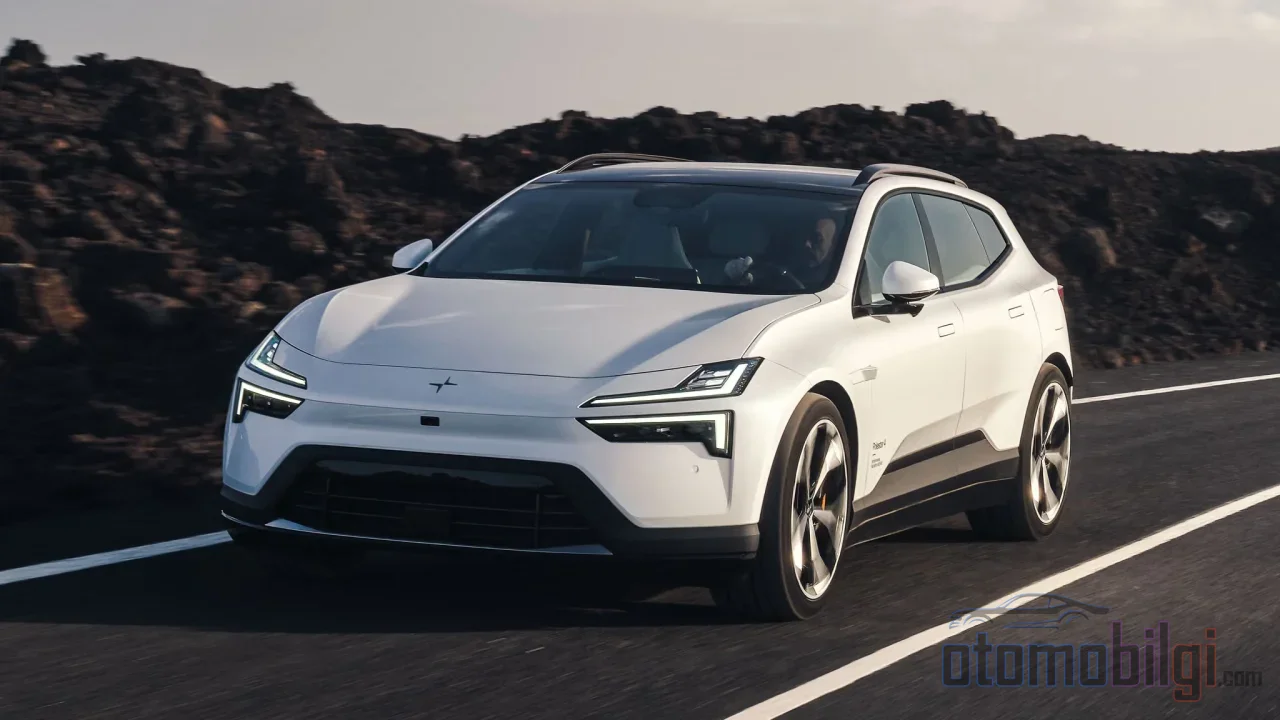
When it was introduced in 2023, the Polestar 4 set out as an aerodynamics-first coupé crossover whose camera-less rear sparked debate. The MY27 model year update takes that story to a whole different place: The family now consists of two body styles, and range figures are higher than ever before. So what does the 630 km WLTP figure really mean, where does the 10 km difference between the SUV and the coupé come from, and where does the Polestar 4 stand against the Tesla Model Y, Kia EV6 and Hyundai IONIQ 5? On this page we look at all of these questions, together with the engineering logic behind the numbers.
Two Bodies, One Platform: What Changes with MY27?
As of MY27, the Polestar 4 family has two members: the original Polestar 4 coupé and the Polestar 4 SUV, which joined the family in 2026. The coupé is defined by a positioning that combines aerodynamics with the SUV body's width; the SUV claims to combine the volume of the Estate body with the versatility of an SUV. The critical distinction is not visual but functional: The SUV features roof rails, a real rear window and external cameras; the camera-less rear, the coupé's signature design element, remains in place. The SUV went on sale on 2 September 2026 with a starting price of 57,900 euros, positioned with a longer range, more interior volume and a lower price than the coupé. Production, unlike the coupé's line in China, takes place in South Korea.
MY27 Range Figures: The Road to the 630 km Peak
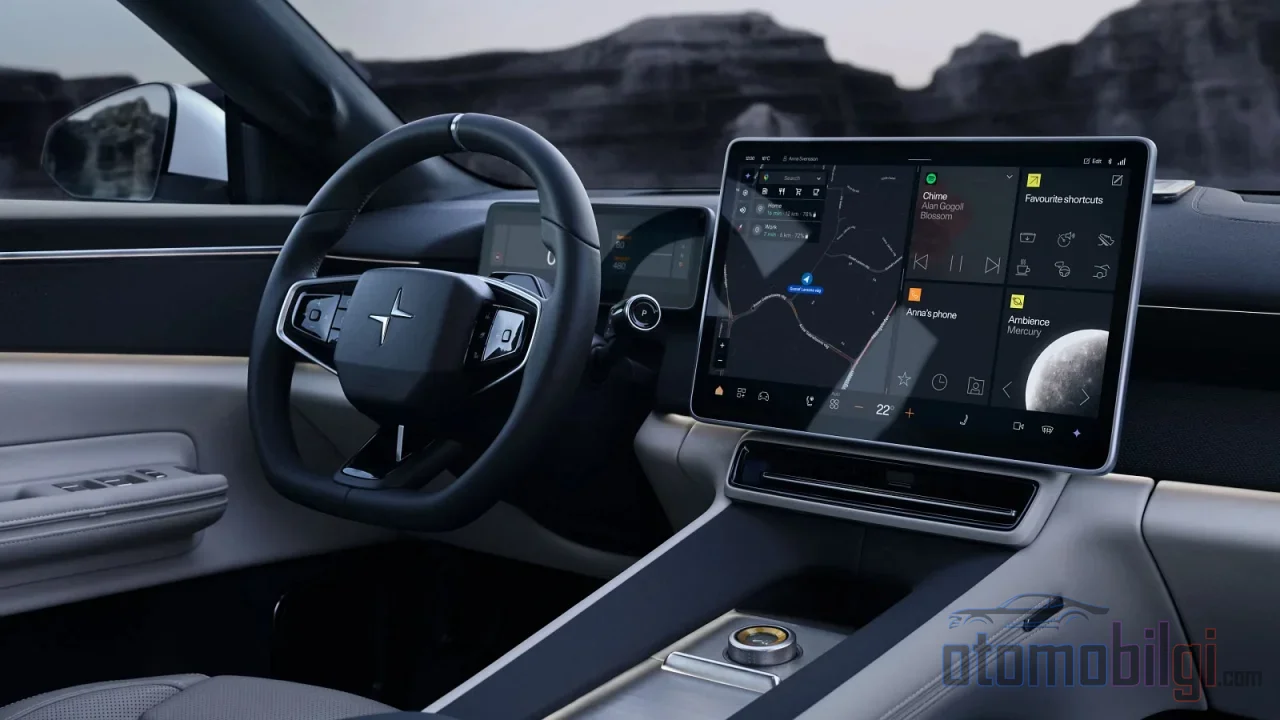
The update's most tangible gains are on the range side. The Polestar 4 SUV offers up to 630 km of WLTP range in the rear-motor version; that figure is 10 km more than the coupé with the same hardware level. The dual-motor SUV version stands at 600 km, while the dual-motor coupé is at the 590 km level. The coupé is rated in a 590-630 km band in a single list. If we place this range within the whole brand line-up, the range of Polestar models spans 554-678 km; the Polestar 4 MY27 is positioned at the upper end of that band.
Highlights
- Polestar 4 SUV rear-motor version with 630 km WLTP range
- Dual-motor version with 400 kW of power and 0-100 km/h in 3.9 seconds
- 100 kWh battery, with 200 kW DC fast charging 10-80% charge in 30 minutes
- SUV starting price of 57,900 euros, on sale since 2 September 2026
- New trim structure: Rear motor, Dual motor and Dual motor with Performance pack
There is no single magic formula behind the range increase; three elements work together. The first is body optimization: The SUV managed to surpass the coupé by rearranging the roofline and the rear window angle. The second, shared across all MY27 versions, is the 100 kWh 400 V lithium-ion battery: The pack, made up of 110 cells, uses a cell-to-pack integrated architecture that reduces dead weight. The third is consumption: the dual-motor version's WLTP consumption band of 19.0-21.6 kWh/100 km points to an impressive level of efficiency in this segment.
What Is the Range in the Real World?
WLTP is measured with a laboratory cycle at an average speed of 46.5 km/h, in summer conditions, with the battery depleted from one hundred percent to zero; real-world usage is always lower. For the glassless coupe, sources in Turkiye estimate that the 610 km WLTP figure corresponds to 500-550 km in real conditions. Independent real-world range estimates point to a band of 345-685 km across the brand's lineup; the dual-motor SUV version's city estimate in cold weather is around 470 km. North American standards also clarify the difference: in the EPA cycle, the single motor measures 310 miles (approximately 499 km), the dual motor 280 miles; Canadian estimates are 499 and 451 km. In short, the WLTP's 630 km means a vehicle that can exceed 500 km in intercity use in a temperate climate.
Battery and Charging: What Does Staying on a 400 V Architecture Mean?
Polestar's news feed talks about a switch to an 800 Volt architecture and 350 kW DC charging; but those are developments belonging to its sibling model, the Polestar 3. The Polestar 4 remains on the 400 V architecture in MY27 as well. The practical result: With a maximum DC charging power of 200 kW, the charging time from 10 percent to 80 percent is 30 minutes. On the AC side, standard 11 kW and optional 22 kW charging are available. These values are above the segment average but not the technological peak of the class; the Polestar 4's trump card is range and consumption efficiency, not charging speed.
Performance and Chassis: Was Only the Range Updated?
No; the deepest changes in MY27 are actually in the chassis. The suspension has been recalibrated: high-capacity passive dampers, revised springs and updated anti-roll bars improve body control, while the inner rebound spring coils have been replaced with polyurethane rebound stops. According to Polestar, this package noticeably increases steering precision. On the performance side, the dual-motor version produces 400 kW of power (544 hp) and 686 Nm of torque; 0-100 km/h acceleration takes 3.9 seconds - some measurements show 3.8 seconds. The rear-motor version offers 268-272 hp and 343 Nm of torque with 7.1-7.3 second acceleration. The coupe's weight distribution and aerodynamics define its driving character, while the SUV is positioned with a calmer character on the same platform.
New Version and Equipment Structure: Rear Motor, Dual Motor, Performance Pack
MY27 simplifies the complex equipment trees. Motor options are reduced to three: Rear motor, Dual motor, and Dual motor with Performance pack; Business and Prime trim levels are offered on both motor types. The visual coding is also clear: rear-motor versions are distinguished with black accents, dual-motor ones with black and gold details, and Performance pack versions with Swedish gold highlights.
- Business: Pilot Assist, Lane Change Assist, Park Assist Pilot and rear privacy glass.
- Prime: Harman Kardon sound system, head-up display, illuminated Star Knit door panels, rear control screen, 12-way electric front seats, folding and heated rear seats, three-zone climate control, PM2.5 particle filter, adaptive Pixel LED headlights, illuminated Polestar logo and power tailgate with foot sensor.
Interior volume strengthens the SUV's hand: a standard 530-liter cargo area expands to 655 liters when loaded up to the roof with the digital interior mirror, and reaches 1,665 liters with the seats folded. Behind the coupé's glassless tail, part of this volume has been sacrificed in the name of aerodynamics.
Position Against Rivals: Model Y, EV6 and IONIQ 5
The established names of the segment are the Tesla Model Y, Kia EV6 and Hyundai IONIQ 5. On the range axis, the picture is clearly in Polestar's favor: with the listed figures, the base Kia EV6 offers 528 km and the Hyundai IONIQ 5 451 km of WLTP range. The Polestar 4 SUV's 630 km is clearly above both of them. In terms of overall positioning, Polestar competes in almost exactly the same price bracket as Tesla; the 2,000 Australian dollar discount applied to the MY27 dual-motor version in the Australian market shows that this competition also spills over to the pricing side. On the power side, the 400 kW dual-motor output exceeds the standard versions of all three rivals; at a level that can match the performance versions of the Model Y and EV6.
| Version | Power | Torque | 0-100 km/h | WLTP range |
|---|---|---|---|---|
| 4 SUV Rear motor | 268-272 hp | 343 Nm | 7.3 s | 630 km |
| 4 SUV Dual motor | up to 400 kW (544 hp) | 686 Nm | 3.9 s | 600 km |
| 4 coupé Rear motor | 272 hp | 343 Nm | 7.1 s | 620 km |
| 4 coupé Dual motor | 400 kW (544 hp) | 686 Nm | 3.8-3.9 s | 590 km |
On the pricing side, the UK MY27 coupé list opens at 56,750 pounds for the rear motor and 63,750 pounds for the dual motor; the SUV, starting at 57,900 euros, sits below the coupé. The answer to the question of which body to choose lies in the mode of use: while the SUV offers longer range, a larger cargo area and a lower entry price, the coupé carries lower consumption and a sharper aerodynamic character.
The Sustainability Ledger and Global Market Position
The MY27 makes progress not only in range but also in the carbon ledger. The cradle-to-gate carbon footprint calculated for UK deliveries is 19.4 tCO₂e for the rear motor and 20.3 tCO₂e for the dual motor on the coupé; on the SUV these figures are 20.2 and 21.1 tCO₂e. According to the launch specification, the dual-motor version has achieved a reduction of 1.1 tons of CO₂e compared to the previous situation.
On the market side, the picture is strong: Polestar closed the first half of 2026 with record global retail sales of 30,423 vehicles; this is the brand's strongest six-month performance. Excluding China, the sales network grew by 39.1 percent to reach 235 sales points. The Polestar 4 SUV's expansion into global markets will continue in the fourth quarter of 2026, along with the Estate body; The brand plans to launch three more electric models for sale by 2028. In the US, meanwhile, third-quarter sales rose 1 percent as 2026 models approach sell-out.
Conclusion: Does MY27 Really Move the Range to Its Peak?
It does - and it does so not only through battery capacity, but through body strategy. When the 630 km SUV, the 590-620 km coupé band, and the 554-678 km range across the brand's lineup are read together, the MY27 update is a step that places the Polestar 4 at the very top of its segment in terms of range. There is an engineering choice here that accepts staying with the 400 V architecture but compensates for it with 19-21.6 kWh/100 km consumption; 30-minute 10-80% charging at 200 kW is a sufficient balance for practical long-distance use. As for its rivals: The Model Y, EV6 and IONIQ 5 fall below the Polestar 4 on the range axis, but can pull ahead on the charging speed axis. For MY26 owners, the arrival of the new park assist via an OTA update is not yet a confirmed plan; for new buyers, the 630 km rear-motor SUV stands out as the longest and most practical member of the family.
Sources
- MY27 Polestar 4 coupé raises the bar on driving dynamics and sustainability
- Polestar 4 SUV - Overview
- Polestar 4 coupé - Overview
- New Polestar 4 SUV on sale from 2 September
- Polestar 4 SUV variant announced, starting from €57900 - electrive
- UK: MY27 Polestar 4 gets an upgrade - electrive
- Polestar 4 updated for 2027 - carsales.com.au
- Polestar 4 SUV Dual Motor (MY27) - EV Database
- Polestar reports record nine-month retail sales
- Polestar 4 2027: Swedish luxury EV gets tweaked chassis - Chasing Cars