Where Does the BMW i4 Stand Against the Model 3 and Ioniq 6?
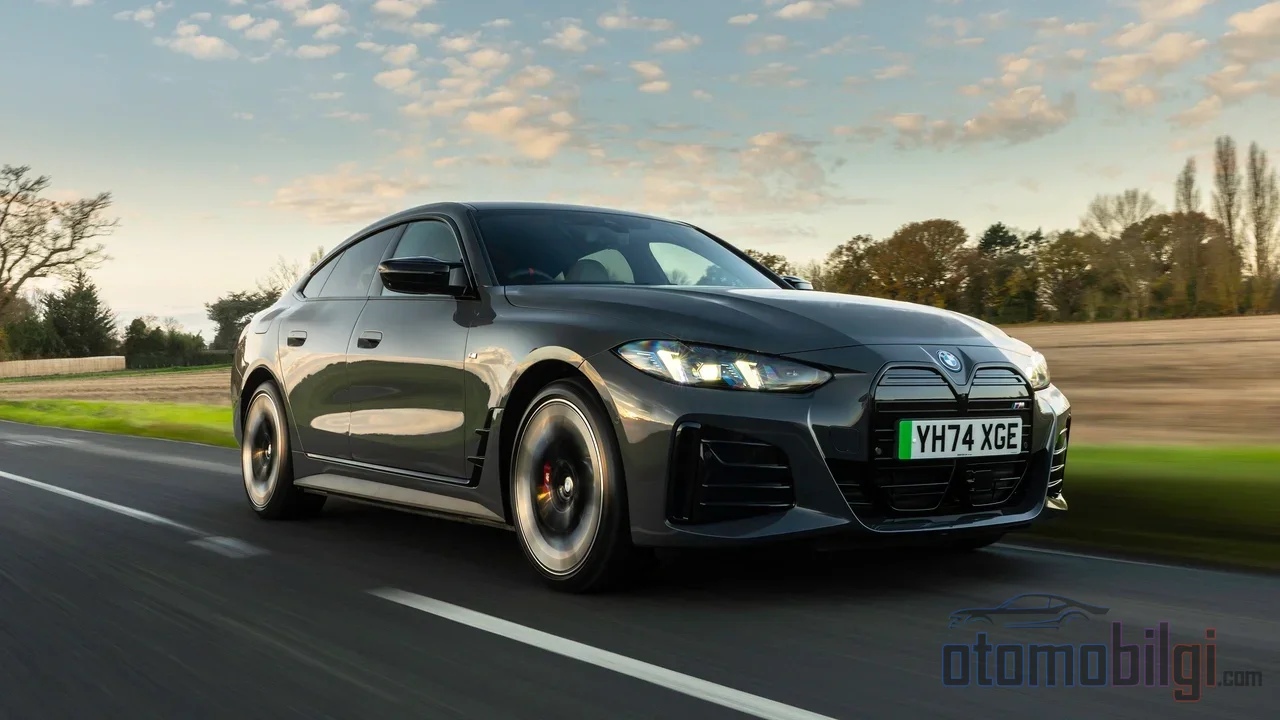
The first problem you encounter when looking for a benchmark model in the electric sedan class is the definition itself: Some manufacturers reinterpret the fastback body with electricity, others the classic three-box silhouette. The BMW i4, amid all this confusion, gives a clear answer. Produced since 2021 and sold exclusively with the five-door Gran Coupé body, the i4 is the only model carrying the brand's compact luxury sedan tradition with a battery and an electric motor. So why is this car really referred to as the benchmark of its class? The answer lies not in a single figure; it is hidden in the character of the powertrain, the charging curve, the cabin technology, and the tangible differences it establishes with its rivals.
What Kind of Car Is the i4, and When Was It Introduced?
The BMW i4 is a fully electric (BEV) compact luxury sedan, known by the model code G26. Its production started in 2021, and it is marketed as a five-door liftback, in BMW's language a Gran Coupé. This approach, which prefers a fastback silhouette instead of the tall crossover stance, distinguishes the i4 at first glance from rivals in the same segment with high seating positions.
As of the 2026 model year, the lineup has been reduced to three powertrain options: eDrive40, xDrive40 and the peak performance model M60. While 2025 offered four versions (eDrive35, eDrive40, xDrive40, M50), the 2026 structure simplified and settled on this trio. All versions use the same battery pack: a lithium-ion unit with 83.9 kWh gross and 81.2 kWh usable capacity.
Highlights
- The M60 version offers 593 hp of power and acceleration from 0-100 km/h in 3.7 seconds.
- The eDrive40 can reach a range of up to 600 km according to WLTP measurements.
- With 205 kW DC fast charging, the battery fills the 10-80% range in 30 minutes.
- All versions share a common battery pack with a 83.9 kWh gross capacity.
- The cabin is equipped with the BMW Curved Display with 12.3 + 14.9-inch screens.
Three Versions, Three Different Characters: Power and Performance Data
To understand the i4's technical identity, the three versions need to be examined separately; because the difference between them is not just horsepower on paper, but the entire driving character.
eDrive40: The Range-Focused Single Motor
The single-motor, rear-wheel-drive eDrive40 produces 335 hp of power and 430 Nm of torque; it completes the 0-60 mph sprint in 5.5 seconds. Its real trump card is range: In WLTP measurements it reaches up to 536 km, and in official Turkiye figures up to 600 km. The US EPA measurement, on the other hand, varies between 307-333 miles; the difference stems from the different measurement cycles, and both values are correct within their own standard.
xDrive40 and M60: The Dual-Motor Options
The all-wheel-drive xDrive40 completes 0-100 km/h in 4.4 seconds with 396 hp of power and 600 Nm of torque; its range is 462 km and its electronically limited top speed is 196 km/h. The flagship M60, with 593 hp and a 3.7-second value in 0-100 km/h, is the fastest member of the lineup; its range is 447 km. The M60's torque value is worth paying attention to: While Sport Boost mode briefly unlocks higher torque, the base figure sits at around 586 lb-ft (approximately 795 Nm). These kinds of short-term torque boosts are a standard engineering method used to protect the electric motor's thermal limits.
| Version | Power | Torque | 0-100 km/h | Range (WLTP) |
|---|---|---|---|---|
| eDrive40 (rear-wheel drive) | 335 hp | 430 Nm | 5.5 s (0-60 mph) | 536-600 km |
| xDrive40 (AWD) | 396 hp | 600 Nm | 4.4 s | 462 km |
| M60 (AWD) | 593 hp | approximately 795 Nm | 3.7 s | 447 km |
| Battery (all versions) | 83.9 kWh gross / 81.2 kWh usable, lithium-ion | |||
Range and Charging: The 30-Minute Solution with 205 kW
An electric sedan's character in daily use is determined more by range and charging behavior than by power. The i4 sits above the segment average in both of these areas.
On the DC fast charging side, the maximum power is 205 kW. With this power, the battery charges from 10% to 80% in about 30 minutes. The practical result is also impressive: A 10-minute high-power charging session adds between 154 and 197 km of extra range, depending on the version. For home or workplace charging, going from zero to full with 11 kW AC power takes about 8.25 hours; that is enough time to start every day with a fully charged battery overnight. Coming with the 2025 model year, Plug & Charge function introduced with the 2025 model year is another practical innovation: The vehicle authenticates itself at the charging station using digital contracts and initiates payment automatically.
The effect of cold weather, as with every electric car, is concrete: The xDrive40, measured at 462 km range in mild conditions of 13-18°C, drops to 369 km in cold weather between 4-9°C. Observations made in Quebec show a range loss of 18-30% in extreme cold. Another practical detail: At speeds above 110 km/h, consumption increases noticeably; aerodynamic drag growing with the square of speed is a classic physical fact, and the i4 is not exempt from it.
The most significant technical innovation of the 2026 model year is not the transmission, but the power electronics: A new inverter with improved semiconductor components both increases range and lowers energy consumption. Keeping the battery and motor the same while raising the system's efficiency through power electronics is a fine example of a mature engineering approach.
Cabin Technology: Curved Display and Operating System 8.5
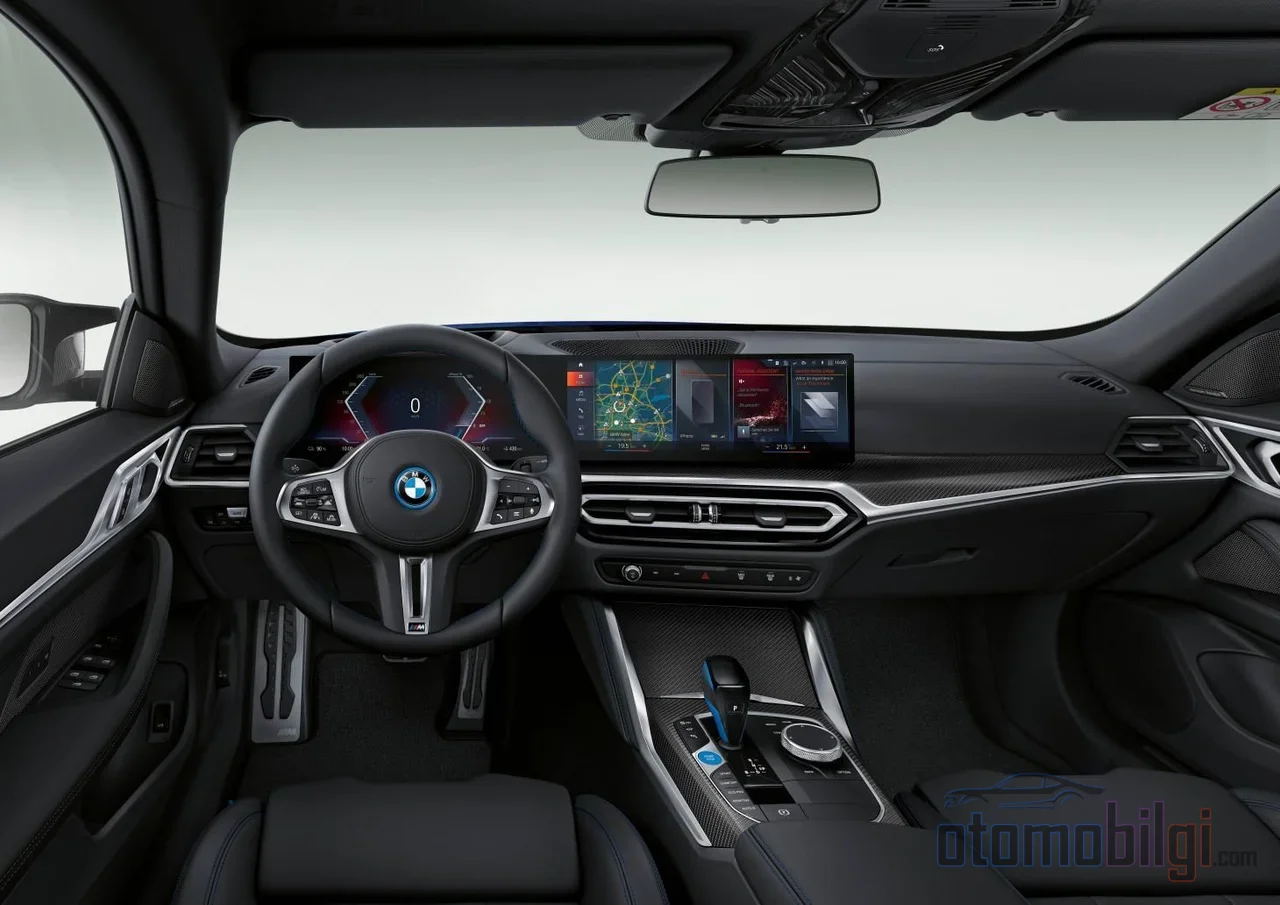
The i4's interior carries BMW's new-generation digital architecture. The BMW Curved Display combines a 12.3-inch digital instrument cluster and a 14.9-inch central information screen under a single curved glass panel. On the interface side, Operating System 8.5 is running; While the QuickSelect menu logic offers faster access to frequently used functions, the improved voice assistant increases its capacity to understand commands.
Looking at the connectivity and comfort equipment, the list is quite full: Wireless Apple CarPlay and Android Auto, BMW Digital Key, cloud-based augmented reality navigation, and an optional 16-speaker Harman Kardon surround sound system. On the driver assistance side, lane keeping and distance assist can operate up to 210 km/h; the parking assistant with 3D vehicle view also eases the burden of maneuvering.
The material hierarchy is clearly laid out too: The options range from standard SensaTec upholstery to optional Vernasca or Merino leather, crowned in M versions by M PerformTex sport seats and an M Sport leather steering wheel. Luggage capacity is 470 liters; with the rear seats folded it reaches 1,290 liters. The liftback opening is a practical advantage that makes loading easier compared to classic sedan bodies.
Dimensions and Practical Values
| Measurement | Value |
|---|---|
| Length | 4,783-4,787 mm |
| Width | 1,852 mm |
| Height | 1,448 mm |
| Curb weight | approximately 2,146-2,272 kg |
| Luggage capacity | 470 L / 1,290 L (folded) |
| Braked towing capacity | approximately 1,588 kg |
A length of 4.78 meters places the car on the larger side of the compact luxury segment; the 1,448 mm height is the inevitable result of the fastback silhouette. The braked towing capacity of roughly 1.6 tons shows it is more capable in terms of load than many electric cars in its segment.
The i4's Position Against the Tesla Model 3 and Hyundai Ioniq 6
Comparing it with two strong representatives of the class clarifies the i4's identity. In pure efficiency figures, the Tesla Model 3 and the single-motor Ioniq 6 are ahead: While both models offer up to 550 km of range in official cycles, the single-motor i4 eDrive35's range remained at 428 km. TrueCar's efficiency comparison paints a similar picture: The Ioniq 6 consumes 151 MPGe in the city and 120 MPGe on the highway, while the i4 sits at around 121 in the city and 115 MPGe on the highway.
However, the i4's claim to being a benchmark lies not in the efficiency chart but on a completely different axis: driving dynamism and cabin quality. The common thread of user experiences is that the i4 carries traditional BMW driving character, a carefully appointed quiet cabin, and a premium material feel into the electric era. In cargo space, the Model 3 leads with about 24 cu ft (approximately 680 L); in return, the i4 offers a more luxurious feel in its cabin. The choice ultimately depends on what you value: maximum range and cargo volume, or road holding and interior quality.
Independent reviews also support this balanced picture: The i4 earns praise for its smooth power delivery, quick acceleration, firm road holding, and quiet cabin, and in 2026 it was deemed worthy of an award in the compact sport sedan category. The fact that its range is higher than most rivals in the segment is also among the common emphases of these reviews.
So Is the i4 Really a Benchmark?
The answer to the question is clear: The BMW i4 earns its place as the benchmark of the electric sedan class not through range records, but through its balance. The 205 kW fast charging capacity, 30-minute 10-80% charging time, a wide power range extending from 335 to 593 hp, the option of a range-focused or performance-focused setup on the same battery pack, and BMW's current cabin technology - all combined in a single car, this vehicle sets the reference benchmarks of its segment. The Ioniq 6 and Model 3 may lead in efficiency, but when it comes to premium driving character, cabin quality, and liftback practicality, the i4 is the benchmark of the comparison.
The preferences in owner forums also confirm this synthesis: Those who choose the eDrive40 do so for longer range, a lower price, and weight that is not unnecessary, while those seeking performance go for the M versions. The fact that both ends of this polarized preference can be served with the same body and the same battery is the most concrete proof of the flexibility in the i4's technical design. When you are unsure what to buy in the electric sedan market, looking at the i4 first and evaluating the others accordingly is still the most sensible approach.
Sources
- BMW i4
- BMW i4 Technical Data - BMW Türkiye
- 2026 BMW i4 Review, Pricing, and Specs - Car and Driver
- 2026 BMW i4: Range, Charging and Specs in Canada - Plug'n Drive
- 2026 BMW i4: price and range - BMW West Island
- 2026 BMW i4 Price, Reviews, Pictures & More - KBB
- 2026 BMW i4 Road Test Report - Consumer Reports
- 2026 BMW i4 Model Review - Sewickley BMW
- BMW i4 vs. Hyundai IONIQ 6 - TrueCar
- Hyundai IONIQ 6 vs BMW i4 vs Tesla Model 3 - EVFinder