Volkswagen ID.3 Neo: 630 km Range and New Interior
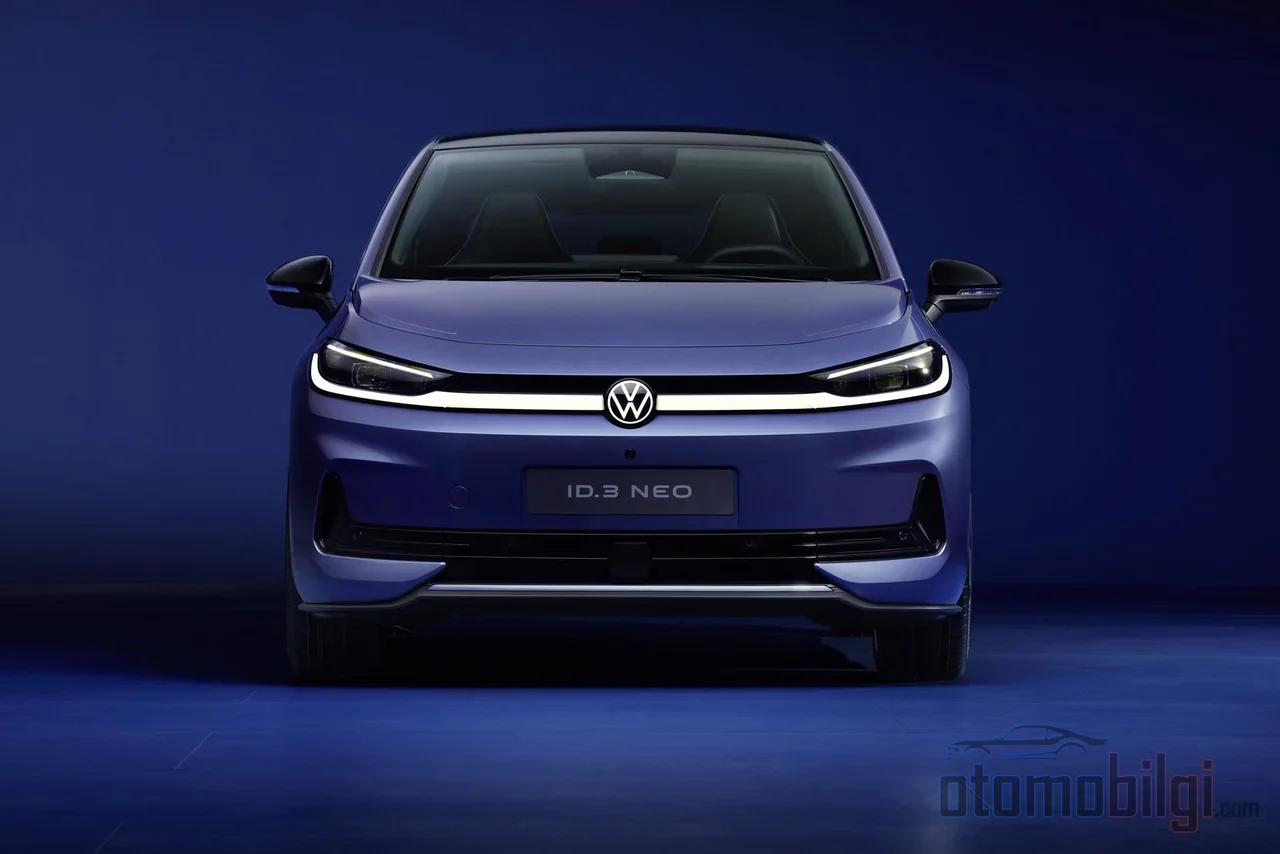
A Golf-sized, fully electric, rear-wheel-drive hatchback with a longer wheelbase than the Golf: When the Volkswagen ID.3 was introduced in 2019, it was the first concrete step in Volkswagen's plan for the electric era. Seven years on, with a string of rivals arriving, falling sales in China, and the extensively revised ID.3 Neo, the picture has changed. So is the first mass-produced Golf-sized electric Volkswagen still the pioneer of this segment today, or has it become an experienced member of the crowd? The answer lies in reading the technical character of the platform together with global market data.
The MEB Platform and the Founding Model Identity of the Segment
The ID.3 was the first passenger car to use the MEB platform, which Volkswagen Group developed from scratch for electric vehicles, arriving as the first model of the ID. arrived as the first model of the series. The I.D., whose concept was displayed at the 2016 Paris Motor Show, study displayed at the 2016 Paris Motor Show, the car began deliveries in Germany in 2020, following its Frankfurt launch in September 2019. Production started at the Zwickau factory and expanded in 2021 with the production line known as the glass factory in Dresden. Demand was strong at launch: pre-orders exceeded 10,000 units in the first 24 hours and 30,000 reservations before the launch.
With a 5-door hatchback body in the C segment, the ID.3's dimensions fit the definition of the compact class: length 4,262 mm, width 1,809 mm, height 1,552 mm. The critical figure is the wheelbase: 2,770 mm, which is noticeably longer than a Golf of the same size. The MEB architecture's placement of the battery flat in the floor enables a short-nosed body and an interior that is spacious for its class. The drag coefficient is 0.267 and the frontal area is 2.36 m2; compared to the Golf 8's value of 0.275, it is aerodynamically advantageous, but the net difference remains small due to its larger frontal area. With a minimum turning circle of 10.2 m, urban usability is at a good level.
Range, Battery, and Charging Character
The ID.3 is rear-wheel drive with the APP 310 electric motor located at the rear. This permanent magnet motor works with a single-speed transmission, and in the most common version produces 150 kW (204 PS) of power and 310 Nm of torque. Battery options define the usage profile: smaller packages serve daily city use, while larger packages deliver longer range. The Pro S version, with its 77/82 kWh battery, offers 548 km of WLTP range, while consumption is at the level of 16.2 kWh/100 km. Added in 2024, the GTX version forms the sporty end of the segment with 201 kW (270 PS) of power, 545 Nm of torque, and a WLTP range of up to 600 km; the GTX Performance, meanwhile, brings 0-100 km/h acceleration down to 5.6 seconds with 240 kW (322 PS) of power.
On the charging side, the MEB architecture supports DC power of up to 125 kW according to factory figures; the GTX can reach up to 175 kW. In practical tests, the ID.3 stands out with the high average of its charging curve rather than its peak value: measurements have observed 185 kW of peak power, and DC charging from 10% to 80% is completed in 26 minutes. On the home side, a full charge of the Pro version takes about 8-8.5 hours with 11 kW AC. The battery comes with a warranty of at least 70% capacity after 8 years or 160,000 km, and liquid-cooled thermal management is used.
Highlights
- First passenger vehicle of the MEB platform: 150 kW (204 PS) of power, 310 Nm of torque, rear-wheel drive
- GTX Performance: 0-100 km/h in 5.6 seconds, top speed 200 km/h
- Pro S: 548 km WLTP range, 10-80% DC charging in about 30 minutes
- ID.3 Neo in 2026: refreshed interior, range of up to 630 km
- The most common fully electric car in German fleets since January 2026
Transformation with the ID.3 Neo: What Changed?
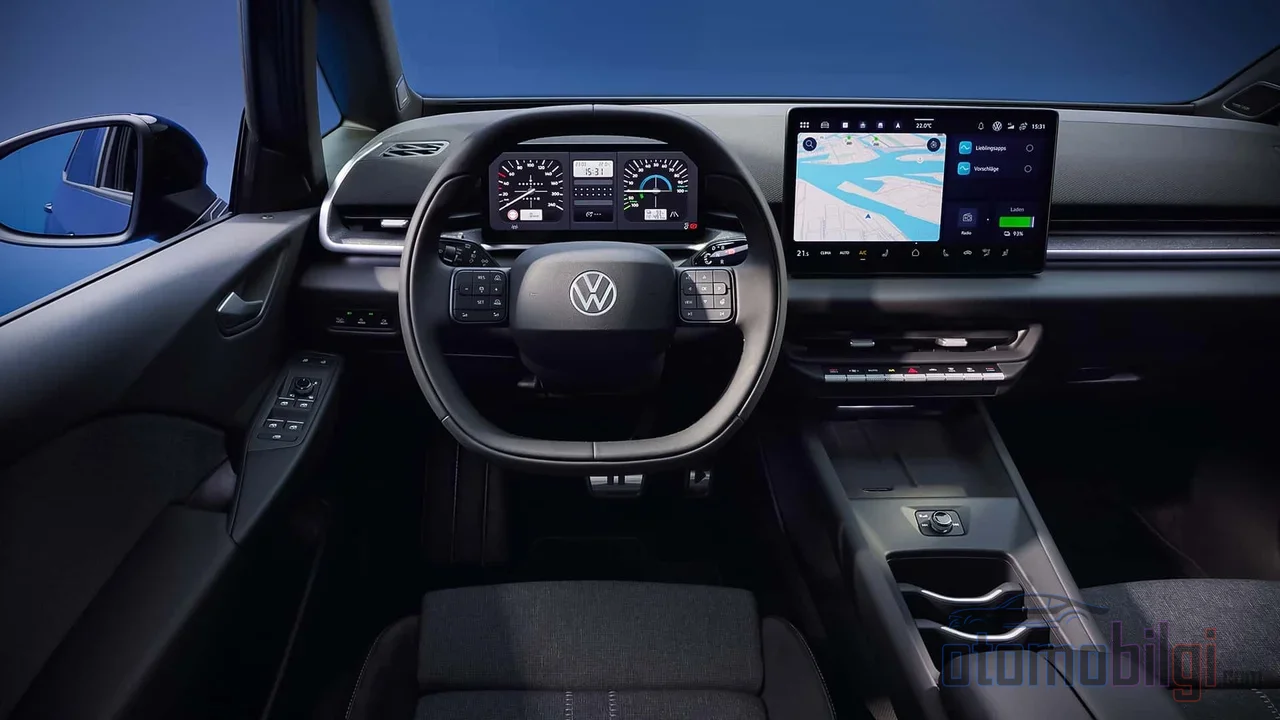
In April 2026, Volkswagen announced the extensively revised version under a new name: the ID.3 Neo. This second facelift targets the interior and powertrain more than aesthetics. While the new front face with light strip is carried over from the ID.Polo, the black contrast roof and C-pillar graphics were dropped. Inside, there is a clear change of direction: Alongside the 12.9-inch center screen and 10.3-inch instrument panel, a new steering wheel with physical controls and four window buttons have returned. More powerful powertrain, expanded driver assistance and infotainment technologies, One Pedal Driving, digital vehicle key and Vehicle-to-Load support were added to the list.
On the technical side, 50/58 kWh LFP and 79 kWh NMC battery options are offered; depending on the battery version, 10-80% DC charging takes about 26-29 minutes. The top package pushes the range up to 630 km. The starting price was announced as €33,995, and the base 45 kWh version is said to start below €30,000. The upcoming ID.3 GTI, meanwhile, will be the most powerful version in its segment with 240 kW (326 PS) of power and 545 Nm of torque; 0-100 km/h in 5.6 seconds, with top speed electronically limited to 200 km/h.
Technical Data: ID.3 by Version
| Version | Power | Torque | 0-100 km/h | Range (WLTP) |
|---|---|---|---|---|
| Pure Performance | 110 kW (148 hp) | 310 Nm | 8.9 s | 348 km |
| Pro | 107 kW (143 hp) | 310 Nm | 9.6 s | 425 km |
| Pro Performance | 150 kW (201 hp) | 310 Nm | 7.3 s | - |
| Pro S | 150 kW (204 PS) | 310 Nm | 7.9 s | 548 km |
| GTX | 201 kW (270 hp) | 545 Nm | 6.0 s | 600 km |
| GTX Performance | 240 kW (322 hp) | 545 Nm | 5.6 s | - |
The table summarizes the segment's wide power band: The spectrum extending from the 148 hp entry version to 322 hp makes the ID.3 a model family that does not squeeze into a single character. Top speeds vary from 160 km/h (Pro S) to 200 km/h in the GTX Performance.
Differentiation from the Cupra Born: What Sets the Platform Sibling Apart
The Cupra Born, which shares the same MEB base, is the ID.3's closest relative and most natural point of comparison. The size difference is small: The ID.3 is 6.1 cm shorter and 2.8 cm taller than the Born. The real distinction lies in character. The Born offers a sportier drive with more direct steering response and lowered suspension than the ID.3; and it also carries a somewhat more premium feel in the interior. The ID.3, however, tends to be more affordable with the smaller battery options and can undercut a Golf of similar age and mileage on the used market.
In terms of equipment, too, the fork in the road becomes clear: The ID.3 Neo's 170 hp entry version is not available on the Born, while (for now) the 326 hp performance version is offered only on the ID.3 side. Both cars offer excellent range with the 77 kWh battery; and although the Born is slightly quicker with e-Boost, in daily driving the difference between the 204 hp versions is practically negligible.
Against the Golf: Electric Successor or Side by Side?
The ID.3's identity is closely intertwined with the Golf question. They are directly comparable in size, and their prices were also close to each other: In the UK market, the Golf starts at £28,900 and the ID.3 at £30,900, meaning there is a difference of roughly £2,000. In aerodynamics the ID.3 is ahead (0.267 versus 0.275), while the Golf has a smaller frontal area (2.21 m² versus 2.36 m²).
On the practicality side, the ID.3 is strong: its boot is larger than key rivals such as the MG4, Astra Electric and e-308. Its overall driving character is found to be more fun, spacious, comfortable and efficient than the crossovers; there is a common assessment that, in contrast to the Golf's familiar comfort, the ID.3 carries a different visual and driving identity that makes it easy to love. The current version makes the smaller batteries more efficient with improved technology and a new, more frugal electric motor.
Global Market Scorecard and the Answer to the Question of Leadership
Sales figures concretize the ID.3's weight in its segment: The series started with 64,259 units in 2020, reached 142,216 units in 2023 and 149,100 units in 2024. However, the geographic distribution is shifting: China sales, which were 92,928 units in 2024, fell to 38,801 in 2025, and total production dropped to 117,700 units. In Europe, the picture is the reverse: Since the beginning of January 2026, the ID.3 has been the most common fully electric car in Germany's vehicle fleets. The ID.4 and ID.3 are Volkswagen's best-selling BEV models worldwide in the electric era.
Context matters, too: Global electric car sales are expected to reach 23 million in 2026, or 28% of total sales, with the biggest growth forecast in Europe. At group level, while the global market contracted, Volkswagen maintained its market share with 2.05 million vehicles in the first quarter of 2026; despite declines of 78% in EV sales in the US and 42% in China, the electric city car segment in Europe continues to be a source of hope.
So is the ID.3 still a pioneer? The answer: yes on its technical foundation, largely yes in its market weight, but it is no longer alone. As the first series-production electric Volkswagen in Golf size to establish the segment, with the MEB platform's rear-wheel-drive packaging, a range span of up to 548-630 km, 26-minute 10-80% charging times and, with the Neo revision, a return to physical buttons, it still carries its engineering claim. Fleet leadership in Germany and a production volume crossing the two-million electric vehicle milestone support this claim with market data. In contrast, the sharp decline in China and an increasingly crowded roster of rivals show that leadership is no longer sustained on its own, but with strong hardware and quality. The ID.3 has not lost its lead; it has entered a stage where it must win it back every year.