Cupra Born Review: What Makes It Different from the ID.3?
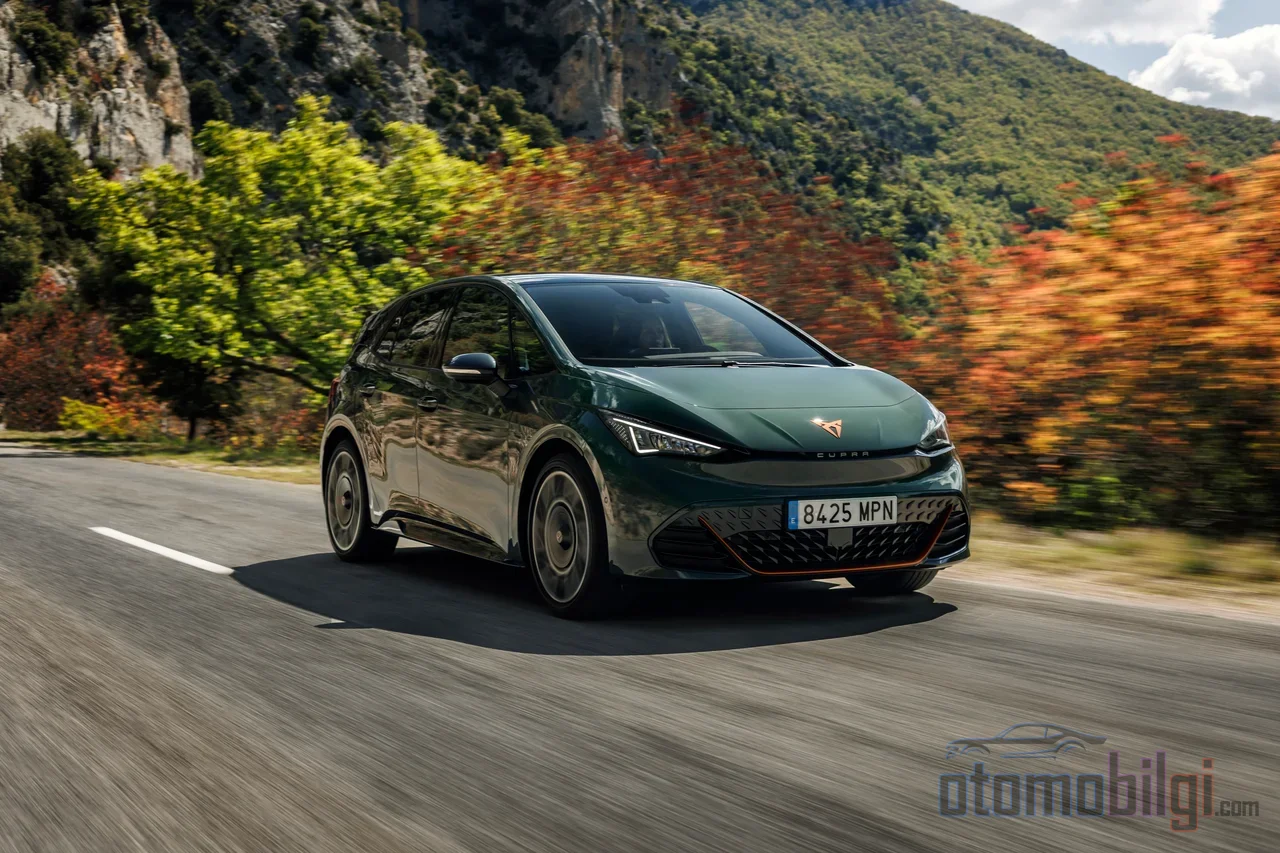
Why is one of two electric hatchbacks produced in the same factory, on the same platform, and with largely the same hardware architecture considered more driver-focused? This question sits at the heart of the Cupra Born's story. Produced on the same line in Zwickau, Germany as the Volkswagen ID.3, the Born is mechanically very close to its sibling; however, the suspension, steering, and powertrain character that Cupra has worked on moves it to a different point in the small electric hatchback segment.
The Born is the first fully electric model of SEAT's performance-focused Cupra brand. Introduced as the SEAT el-Born concept at the 2019 Geneva Motor Show, the vehicle became the production version as the Cupra Born in May 2021 and entered series production in Zwickau in September 2021. The model, named after the El Born neighborhood in Barcelona, comes with a five-door hatchback body in the C segment. So do the sporty settings placed inside this body create a genuine distinction against its rivals?
Why the Cupra Born Is Different: Points Where It Diverges From Its Platform Sibling
Both vehicles use Volkswagen Group's MEB platform developed for electric cars and are produced in the same factory. This means the fundamental architecture is shared: rear-wheel drive layout, packaging logic, and battery concept are the same. However, Cupra has built a different driving character on top of this shared skeleton.
The most concrete differences are as follows: The Born is about 6 cm longer than the ID.3 (4,322 mm); it visually stands out with its aggressive bumper design and body lines with copper details. More importantly, the lowered sport suspension and the progressive steering mechanism (EPS) with variable ratio, quicker than the ID.3's, belong to the Born. McPherson suspension geometry at the front, multilink at the rear, and a 10.15-meter turning radius are also among the chassis's fundamental dimensions. So the difference is not merely visual; steering feel and body control have been tuned directly differently.
Highlights
- Rear-wheel drive MEB platform, production in the same factory as the VW ID.3
- VZ version: 326 PS, 545 Nm, 0-100 km/h in 5.6 seconds
- Up to 551 km of WLTP range with the 77 kWh battery
- DC fast charging: 5-80 percent in 30-35 minutes (77 kWh, 170 kW)
- 2026 facelift: new triangular headlights, physical steering wheel buttons, Android-based infotainment
Versions, Motor, and Battery: The Born in Numbers
The Born is offered with a single electric motor and rear-wheel drive layout. The standard motor is the permanent magnet synchronous type APP 310 unit; the top version, the VZ, uses the more powerful APP 550 motor. Battery options are listed by usable capacity as 45, 58, 59, 77, and 79 kWh in the VZ (the 45 kWh entry version was discontinued).
| Version | Power | Torque | 0-100 km/h | WLTP range |
|---|---|---|---|---|
| Born 58 | 150 kW (201 hp) | 310 Nm | 7.3 s | 376-426 km |
| Born 58 e-Boost | 170 kW (228 hp) | 310 Nm | 6.6 s | 373-422 km |
| Born 77 | 170 kW (228 hp) | 310 Nm | 7.0 s | 495-551 km |
| Born VZ (79 kWh) | 240 kW (322 hp) | 545 Nm | 5.6 s | 508-599 km |
The e-Boost package adds 26 hp of extra power to the same motor via software; this is not a mechanical difference, but a practical reflection of the characteristic flexibility of electric motors. The VZ, meanwhile, moves up a class: it produces 240 kW (326 PS) of power and 545 Nm of torque from the rear APP 550 motor, completes 0-100 km/h acceleration in 5.6 seconds, and promises a WLTP range of up to approximately 600 km. In all versions, the top speed is electronically limited to 160 km/h; this figure is the result of the typical hatchback limitation and the balance of electric efficiency.
Consumption and Weight
WLTP consumption varies between 15.4 and 17.5 kWh/100 km depending on the version. While the 204 PS version with the 58 kWh battery consumes 15.4-17.3 kWh/100 km, the more powerful versions with the 77 kWh battery were measured in the 15.7-17.5 kWh/100 km range. The vehicle's weight also completes the efficiency picture.
Range and Charging Character: How Does It Behave in Daily Use?
In terms of range, the Born offers flexibility above the segment average. The 58 kWh battery enables a WLTP range of 376-426 km, while the 77 kWh battery enables 495-551 km. Despite its 79 kWh battery, the VZ moves in the 508-599 km band; the fact that range loss remains limited despite the performance increase is a concrete indicator of the efficient motor architecture.
AC charging is limited to 11 kW: the 58 kWh battery charges from zero to one hundred percent in 6 hours 15 minutes, while the 77 kWh battery takes 7 hours 30 minutes. This means that overnight planning on a home wall unit is sufficient.
On the DC fast charging side, power varies by version: while the 58 kWh battery charges from 5 to 80 percent in 35 minutes at 120 kW, the 77 kWh battery completes the same range in 30 minutes at 170 kW. The 59 kWh e-Boost at 165 kW and the 77 kWh e-Boost at 175 kW, while the VZ, with its 185 kW peak power, is the fastest-charging version. The manufacturer gives the following practical figure: in fast charging, 100 km of range is added in seven minutes. User experiences show that the charging curve stays below the peak power, and the power drops especially at high charge levels; this is a characteristic behavior seen in all MEB-based vehicles.
On the other hand, charging the 58 kWh battery from 10 to 100 percent from a regular household outlet (2.3 kW) takes about 25 hours. So for the Born, a permanent solution should be planned through a wall unit or the fast charging network.
Interior and Technology Equipment
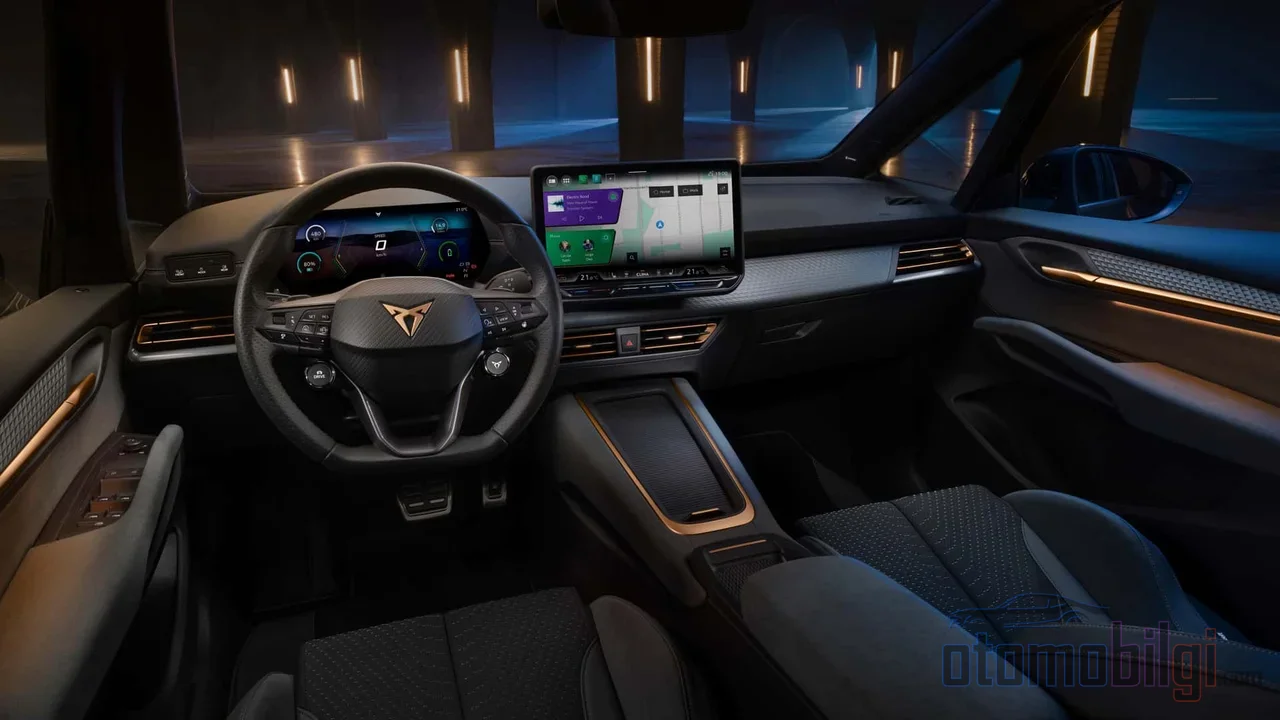
The Born's interior continues its sporty identity: sport seats with integrated headrests, a 12-inch (300 mm) central touchscreen, and a 5.3-inch digital instrument panel are part of the standard offering. In higher trims, options include an augmented reality head-up display, 12-way electrically adjustable seats with massage function, and the BeatsAudio sound system with nine speakers delivering 395 watts. The VZ version, however, features a Sennheiser sound system with 10 speakers.
On the driver assistance front, Adaptive Cruise Control (ACC), semi-autonomous Travel Assist, traffic sign recognition and automatic braking are available. On the chassis side, the optional Dynamic Chassis Control Sport adaptive damper system readjusts the suspension character according to the drive mode. In terms of exterior equipment, Matrix LED headlights and 20-inch FIRESTORM Copper alloy wheels (with 235 mm tires) carry the brand's visual signature.
What Did the 2026 Facelift Change?
The facelift, implemented in March 2026, responded to the Born's most criticized aspects: conventional physical steering wheel buttons replaced the touch-heavy controls, interior materials were improved, and the triangular-shaped headlights and taillights were redesigned. The new Android-based infotainment system comes with wireless Apple CarPlay and Android Auto support; the driver display was also enlarged to 10.25 inches. The heat pump is offered as an option; however, it is not offered on versions with the 77 kWh battery; this is a detail buyers living in cold climate regions should consider when choosing equipment.
Its Position in the Segment and Among Its Rivals
In the C-segment electric hatchback class, the Born has few equals. Its direct rival in the same body format is the ID.3; however, more compact or similarly priced electric models such as the Renault Megane E-Tech, MG4 and Fiat 500e are also on buyers' lists. There are three measurable factors that set the Born apart in this crowd: its rear-wheel-drive layout (most rivals in the segment are front-wheel drive), the 545 Nm torque value in the VZ version, and the range flexibility extending up to 551 km. Larger battery options and matured chassis tuning position it as a sportily profiled option among compact EVs.
Sales figures also show that the model has attracted global interest: Production, which started with 4,801 units in 2021, reached 36,153 in 2022 and 45,300 units in 2023, and settled at 43,503 units in 2025. The combined total of SEAT and Cupra reached an all-time sales record in 2025 with 586,300 vehicles; the Born carries a steady share in this picture.
Is the Cupra Born Really a Hot Hatch?
The clear answer to the question is this: The Born, especially in its VZ version, is one of the rare C-segment models that meets the definition of an electric hot hatch thanks to its rear-wheel-drive layout, 5.6-second acceleration and sporty chassis tuning. In doing so, it differs only slightly mechanically from the ID.3; the real difference lies in Cupra's calibration of the suspension, steering and powertrain. While the standard versions, with power in the 201-228 hp range, present a dynamic but limited profile, the VZ establishes a measurable performance gap against its rivals.
From an engineering standpoint, the Born's story is an elegant example of efficiency: an existing platform was completed with the right set of tuning and a strong top version, giving the brand its first electric identity. With the 2026 facelift, the rough edges in the user experience were also smoothed out. For readers looking for a sporty electric hatchback, the Born is a candidate that deserves to be examined high on the list.