New Dacia Spring Electric: 250 km Range and Updated Platform
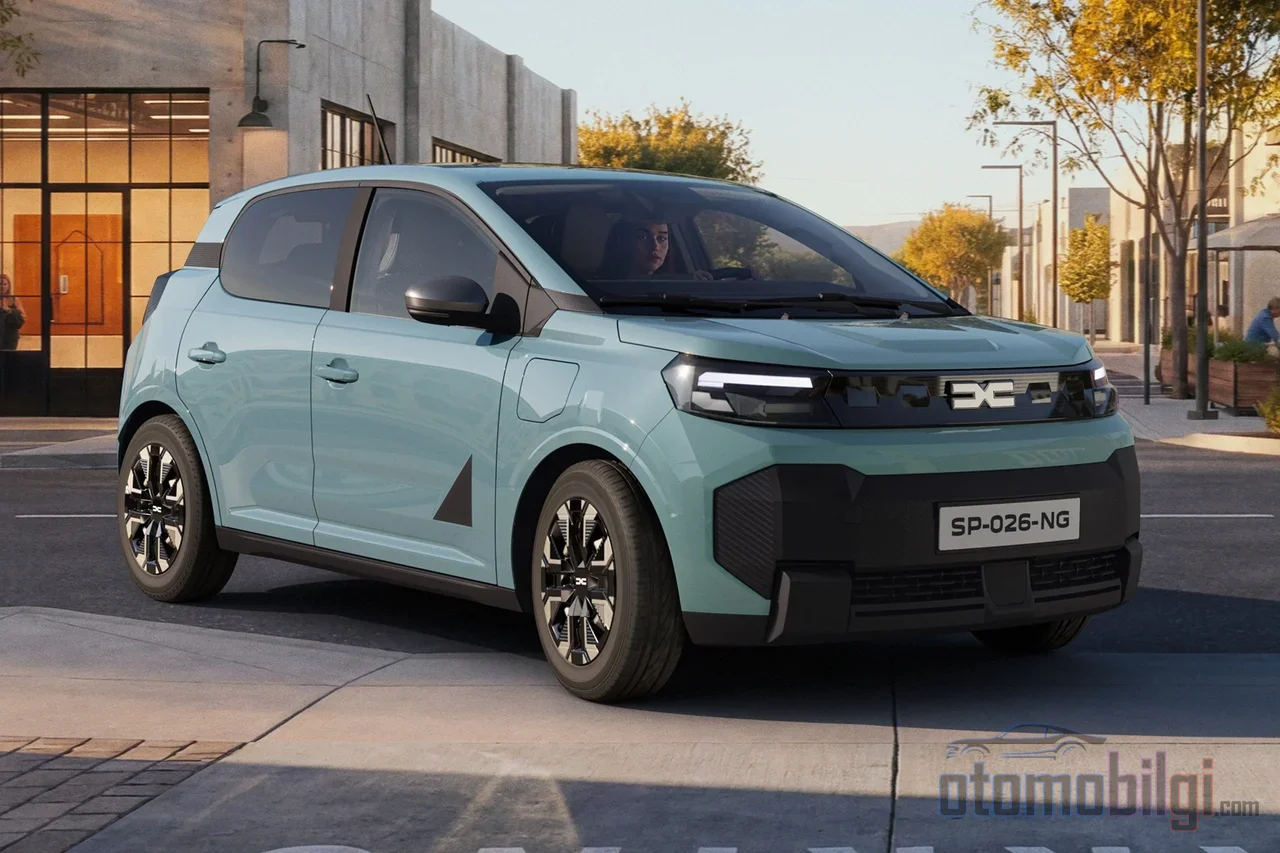
One of the cheapest zero-kilometer electric cars sold in Europe, and with sales exceeding 210,000 units added on top, the Dacia Spring is no longer just a cheap option; it has become measurable proof of how the electric car phenomenon has reached broad audiences. Moreover, the second generation, introduced at the Paris Motor Show in September 2026, changed both the vehicle's cost equation and its production geography at the same time. So is this small A-segment car truly "the most suitable for the city" for urban use, or does it have hidden items in the equation that the price tag promises?
To answer this question, we first need to clearly establish what the Spring is, who it was designed for, and where it stands technically. Because the Spring's story is more a story of cost engineering than of range figures.
What Is the Dacia Spring, and Who Is It For?
Dacia is a brand founded in Romania in 1966 that joined the Groupe Renault family in 1999. Today it has reached more than 8 million customers in 44 countries and stands as Romania's largest exporter. The Spring, meanwhile, is the fully electric A-segment city car the brand has been selling since 2021, available on the market in more than 40 countries. In 2022 and 2023 it managed to become the third best-selling electric car to retail customers; with sales of around 50,000 units, Germany is its largest market, alone producing a volume of 35,034 units in 2025.
The Spring's positioning has been clear from the start: as one of the few electric city cars remaining under 3.90 meters, it defines the entry-price electric segment of the European market. Considering that roughly half of sales are individual rather than corporate - that is, genuine city users - its audience is consistent with this positioning.
Technical Identity of the Second-Generation Spring
Although the new generation introduced at the 2026 Paris Motor Show may at first glance look like a modest facelift, the changes it carries run deep. The most critical one is the platform: the new Spring moved to the same small electric platform called RG-EV as the Renault Twingo E-Tech. Dacia states that it shortened the development cycle of this platform to under two years; for a small and affordable electric car, this means a faster renewal pace than most rivals.
Highlights
- In the new generation, a 60 kW (80 HP) motor, 175 Nm of torque and a 12.1-second 0-100 km/h value
- A 27.5 kWh LFP battery with a 250 km WLTP combined range
- With the fast-charging package, 50 kW DC, from 15 to 80 percent in 28 minutes
- Length grew from 3.70 meters to 3.85 meters, and the trunk increased to 337 liters
- More than 210,000 sales in over 40 countries since 2021
Dimensions and Interior
The new body has grown noticeably compared to the previous generation: length increased from 3.70 meters to 3.85 meters (+15 cm), and width from 1.58 meters to 1.74 meters (+18 cm); height is approximately 1.52 meters. Cargo capacity reaches 337 liters; With 50/50 folding rear seats, this value expands up to 1,283 liters. The optional 18-liter front trunk is also a practical addition. The 4.95-meter turning circle is the numerical counterpart of the vehicle's urban maneuverability.
Equipment and Technology
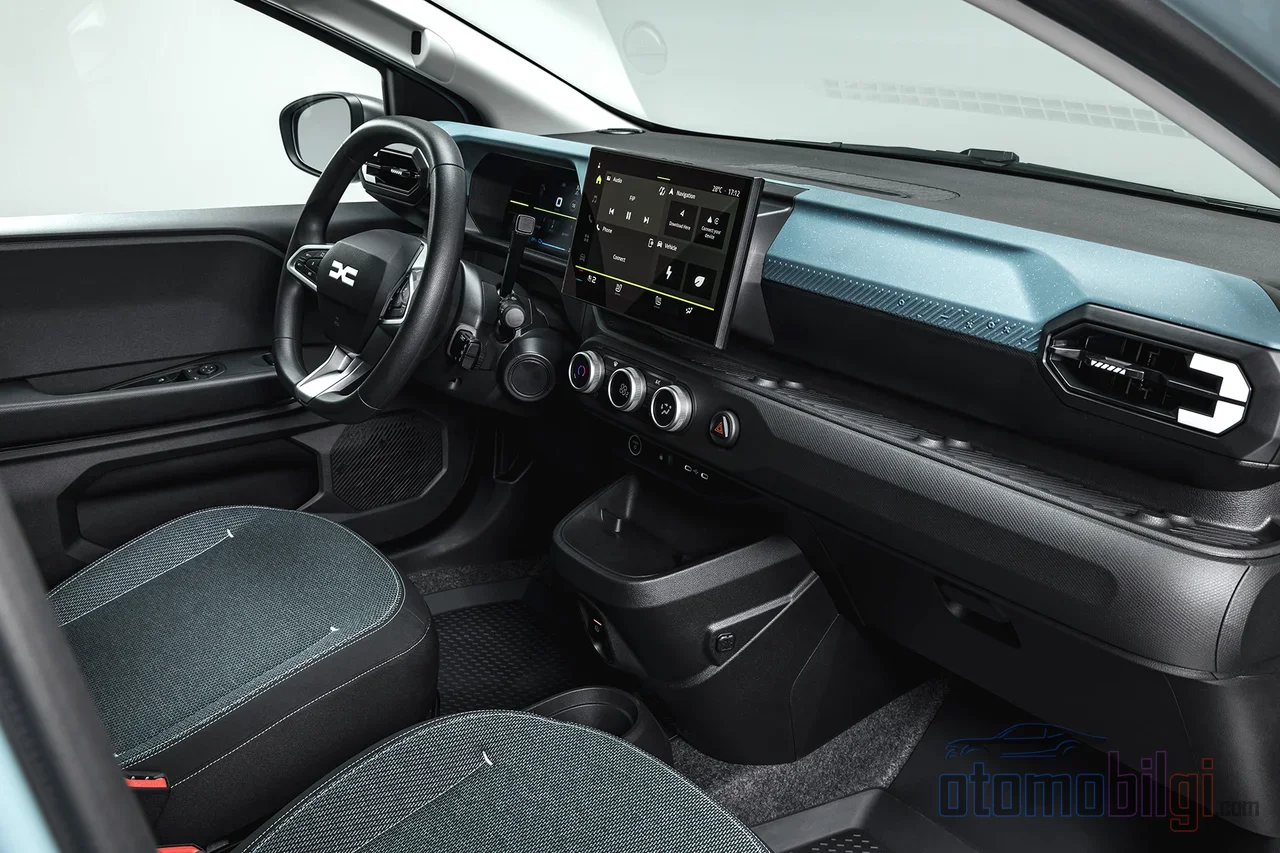
The interior approach also reflects a strict cost discipline. A 7-inch digital instrument panel is standard in all versions. The entry-level Expression trim features the Media Control solution centered on the smartphone; while the top-tier Journey comes with a 10.1-inch Media Nav Live touchscreen, wireless Apple CarPlay and Android Auto with connected navigation. YouClip mounting points, a height-adjustable driver's seat and a steering wheel adjustable for both height and depth are parts of the effort to create a functional living space in the small car.
Range and Charging Character
The technical core of the new Spring is the 27.5 kWh LFP battery. WLTP combined range is 250 km, with consumption at 12.7 kWh/100 km. These figures are on paper; the first generation's real-world experience shows that the WLTP value is largely met in city driving, but falls noticeably below it on the highway. User measurements in the first generation indicated approximately 200 km in the city and around 160 km in winter months.
On the charging side, the new generation makes a serious leap. With the standard 6.6 kW AC charger, charging from 15 to 80 percent takes 2 hours 55 minutes. The fast-charging package raises AC power to 11 kW and adds 50 kW DC support; in this configuration, the 15-80 percent range is completed in 28 minutes. With the Power Pack, V2L is also possible, meaning the vehicle can power external devices.
Cost Engineering: Platform Philosophy and Production Geography
The Spring's price accessibility is not a coincidence, but the result of systematic engineering. Thanks to the Renault-Nissan alliance's CMF architecture and shared parts strategy, entry costs per model decreased by 30-40 percent and part costs by 20-30 percent. The CMF-B EV derivative was also designed with a target of approximately 30 percent lower production costs compared to the Renault Zoe, which used a dedicated platform. Dacia positioned the CMF-B at the center of its industrial strategy as a competitive and flexible platform. The new-generation Spring moved from this architecture to the RG-EV; but the philosophy is the same: keeping costs down with a small battery, lightweight body (curb weight starts at 1,212 kg even in the new generation) and shared components.
The second important heading is the production location. The first-generation Spring was produced in China for low-cost purposes. In the second generation, production was moved to the Novo Mesto facility in Slovenia. This move is not merely a logistical decision: production in Europe ensures that the vehicle is not affected by the European Union's tax policies and support conditions applied to Chinese-origin vehicles; the goal is for the larger new model to qualify for local subsidies. Viewed from a global market perspective, a model born in China "returning" to Europe should be read as the engineering response of the low-cost electric car strategy to geopolitical conditions.
Comparison with Its Rivals: Fiat 500e, Citroën ë-C3 and Leapmotor T03
In the A-segment and entry-price electric class, the Spring's measurable rivals are clear. The table below summarizes the key differences between the new Spring and its two closest rivals:
| Vehicle | Standout Feature | Power / Torque / 0-100 km/h | Noticeable Difference Compared to the Spring |
|---|---|---|---|
| Citroën ë-C3 | 320 km WLTP range, 11 s 0-100 km/h | 113 PS / 125 Nm / 11.0 s | 95 km longer range and better performance; the Spring is more affordable |
| Fiat 500e | Stylish design, strong brand identity | 95 PS (24 kWh) / 150 Nm / 9.0 s | The Spring leads in price accessibility |
| Leapmotor T03 | ~40 km longer WLTP range, more standard equipment | 95 PS / 147 Nm / 12.7 s | Price falling below the Spring with discounts; criticized touchscreen usage |
| New Dacia Spring | 250 km WLTP range, 15-80% fast charge in 28 minutes | 60 kW (80 HP) / 175 Nm / 12.1 s | Comparison reference |
The numbers clarify the Spring's balance: While the ë-C3 offers longer range and better performance, the Spring stands out in price and luggage practicality. The T03, on the other hand, moves ahead with performance and equipment. In other words, the Spring is not the absolute leader in any technical category; its leadership lies in the total cost of ownership column.
Criticism and Real User Experience
An honest profile must also put weaknesses on the table. The first-generation Spring received only 1 star in the 2021 Euro NCAP test; this result has been a widespread and justified criticism. The fact that the vehicle's basis comes from a structure designed for a market with lower safety requirements explains this result. While its sub-tonne weight translates into efficiency, hard plastics, flat seats and body roll in corners reveal the areas of savings on the comfort side. On the other hand, it should be said that the cabin is well assembled and rarely rattles, and that the equipment is shared with larger Dacia models; the perception of quality is more balanced than expected.
The first generation had two engine options, 45 HP and 65 HP, and user opinions are common that the 45 HP fell short in traffic and the 65 HP should be preferred. The new generation's 80 HP engine largely eliminates this criticism.
So What Is the Answer: Is the Spring the City's Most Affordable Electric?
The answer the data gives is this: The Dacia Spring is a vehicle designed not to meet all of a household's needs as its only car, but to solve daily urban mobility at the lowest total cost. With its 250 km WLTP range, 28-minute fast charging option and 337-liter luggage capacity, the new generation performs this task definition noticeably more strongly than its predecessor. Moreover, the efficiency of more than 5 km/kWh proven by the first generation made a Spring charged at home during off-peak hours roughly 20 percent more efficient than its conventional rivals.
The limitations are also clear: long-distance range, dependence on fast-charging infrastructure, and the safety record justify positioning the car as a "second vehicle". In Europe, the Expression trim starts at around 17,900 Euro; two trim levels and four color options are offered. As for the Turkish market, forecasts for the second generation point to the second half of 2027; but this date is not a confirmed one.
In conclusion, the Spring is far more than just the cheapest line on the lists: it is a model that brings the electric car to the masses at the intersection of cost engineering and a global production strategy. The answer to the question of the city's sensible electric car depends on the order of your priorities; but if you write the cost column at the top of the list, this little Dacia is still measurably ahead.
Sources
- The new electric Dacia Spring: everything you need to know
- Spring electric 4-seater city car - Dacia
- Dacia Spring Review 2026 - Performance and Pricing
- Dacia Spring Review 2026, Price and Specs
- Dacia Spring review: 3 Reasons to Buy This Electric Car
- Dacia Spring range, battery and real charging speed