How Is the Leapmotor T03 Shaking Up the Small Car Segment?
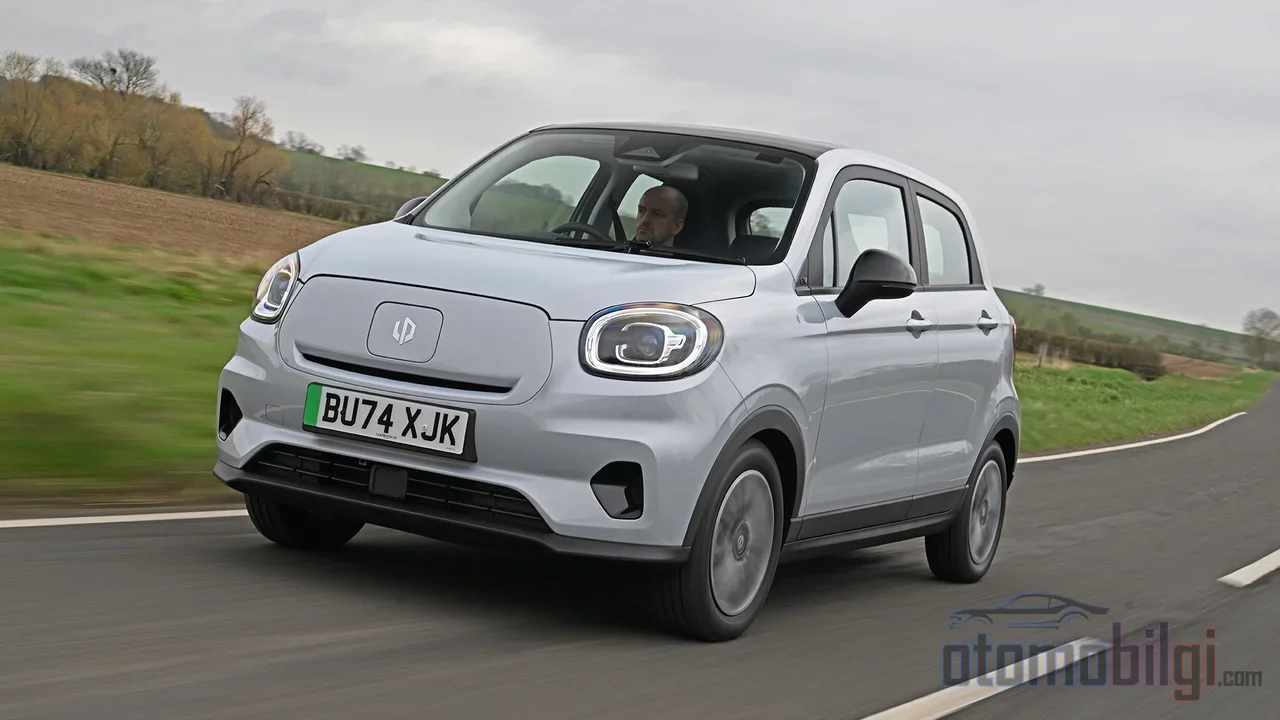
In Europe's small electric segment, the price floor was long held by the Dacia Spring; there was almost no serious rival below it. Then a Chinese brand that settled into Stellantis's distribution network fit a 37.3 kWh LFP battery into its 3.62-meter body and rewrote the scoreboard. Leapmotor T03, with registrations exceeding 6,000 per month in Europe in February 2026, proved that it is now a player in this segment that can no longer be ignored. So which gaps of its rivals does this little hatchback exactly fill, and where does it genuinely fall short?
Dimensions and Identity: What Kind of Vehicle Is the T03 Really?
The T03 is a fully electric city car with five doors and four seats. With figures of 3,620 mm length, 1,652 mm width and 1,577 mm height, it is a typical representative of the A segment; wheelbase is 2.4 meters. In other words, it sits in the smallest class, but its wheelbase points to a body one step larger than the microcar formats we know.
Cargo capacity is 210 liters; with the rear seats folded, this figure rises to 880 liters. There is also a commercial version built with the same folding logic: the T03 Van, offering a load capacity of up to 220 kilograms, is sold in the European market. There is no frunk; under the hood there is only the front motor and power electronics. Production takes place in China as before, and the line in Poland is also active for the European market.
Highlights
- WLTP combined range of 265 km; up to 395 km in the urban cycle
- 37.3 kWh usable LFP battery, 400V architecture, maximum 48 kW DC charging
- Front motor 70 kW (95 HP), 158 Nm of torque, front-wheel drive
- A single, fully equipped version in Europe; starting price of £15,995 in the UK
- 6,058 registrations per month in the extended Europe region in February 2026, a 677% increase
Battery, Range and Charging: The T03's Energy Physics in Numbers
On the battery side, behind the 41.3 kWh gross and 37.3 kWh usable capacity lie LFP chemistry. Although LFP cells lag behind NMC in energy density, they win in cycle life and thermal durability, making them a sensible choice for a city car. On the range front, the official figure is clear: WLTP combined of 265 km, and up to 395 km in almost entirely urban use. The urban cycle figure exceeding the combined figure by so much is a natural result of a drivetrain designed to operate efficiently at low speeds. Real-world range should be expected at around 225 km in mixed use; consumption figures correspond to 16.6 kWh per 100 kilometers, an efficiency of roughly 6 km/kWh.
The market difference is critical here: The 2023 model year version sold in Turkiye declares 403 km WLTP range and 109 HP with the same 41.3 kWh battery. These figures, distinctly different from the European version's 95 HP and 265 km numbers, are based on different equipment packages and test cycles. In model comparisons, it is essential to know which market's version is being considered.
Charging character: Fast or not?
The T03 uses a 400V architecture and comes with Type 2 and CCS2 connectors. On the AC side there is single-phase charging at 6.6 kW; meaning a full charge from a wall-mounted Wallbox takes 5-6 hours. That is more than enough time for overnight charging. On DC fast charging, the ceiling is 48 kW; the 30-80% range takes about 36 minutes. This figure is behind the class average. For an objective comparison: the T03 ranks in the lower tiers among dozens of electric models in DC charging rankings. Since the highway stop scenario is already secondary for a city car, this weakness is barely felt in daily use; but for someone planning occasional long trips, this is the most notable technical limitation to know.
Motor and Performance: Is 95 HP Enough in the City?
In the European version, the front axle motor produces 70 kW (95 HP) of power and 158 Nm of torque; with front-wheel drive. 0-100 km/h in 12.7 seconds. There is a discrepancy among official sources regarding top speed: while the British press cites 81 mph (130 km/h), the manufacturer's own page mentions 99 mph; likely due to different hardware or market variants. In practical terms, a 130 km/h ceiling is sufficient for a city car, but limiting for someone aiming to spend long stretches in the highway lane.
The driver is offered three modes: Eco, Sport and Standard. On the suspension side, there is a MacPherson strut at the front and a torsion beam at the rear; meaning the mechanical layout follows the classic, low-cost solution of the city class. These figures may seem modest at first glance; but for the T03's target audience, the yardstick is agile maneuvering and efficiency, not pit lane lap times.
Interior and Technology Equipment: Generous for Its Price?
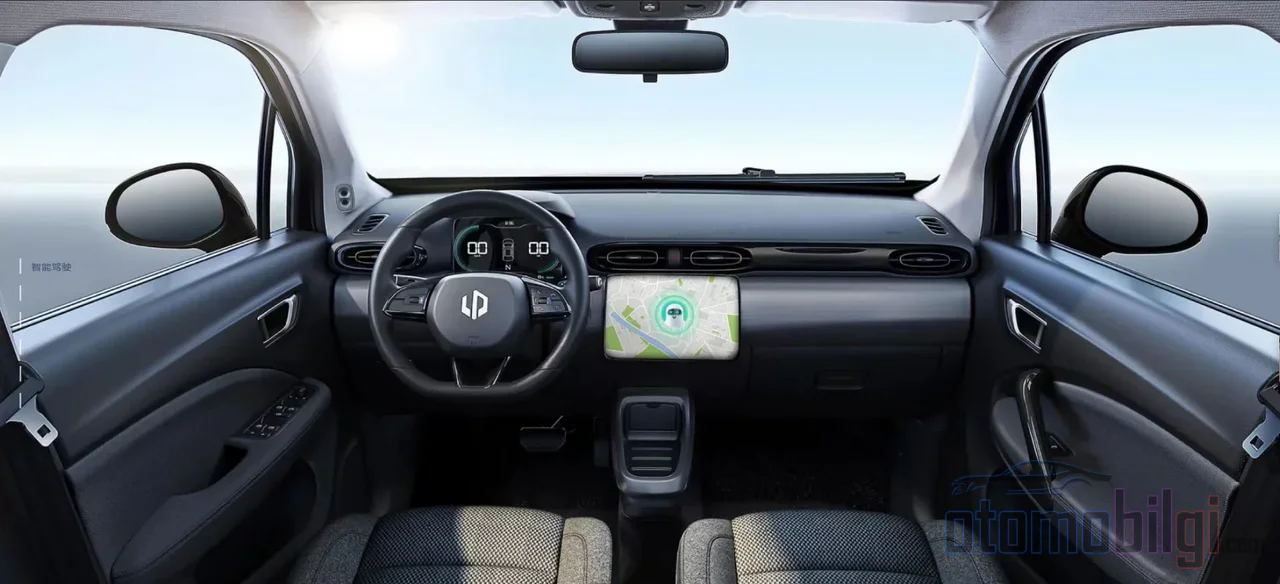
In front of the driver there is an 8-inch LCD display, and in the center an 10.1-inch touchscreen. The equipment list is longer than expected for its price bracket: panoramic glass roof (with electric sunshade), automatic climate control, electric windows, heated and electrically adjustable mirrors, rear parking sensor and camera, electric parking brake, keyless start, in-car WiFi and 4G connectivity are all standard. In Europe, a single, fully equipped version is sold; color options are Light White, Starry Silver and Glacier Blue.
On the safety and driver assistance side, the list is even more striking: lane departure warning (LDW), lane keeping assist (LKA), Adaptive Cruise Control (ACC), forward collision warning (FCW), automatic emergency braking (AEB), intelligent speed assist, blind spot detection (BSD), door opening warning (DOW) and camera-based driver fatigue detection. Offering an ADAS package at this level as standard goes beyond the norm at the cheap end of the class. The only gap to watch: the Euro NCAP crash test results have not been published yet; equipment richness and independent test evidence do not yet corroborate each other.
The critical note must also be honestly flagged: some testers find the cabin, its gray-black palette, and the material quality that tries to look upscale but can be considered eager, falling behind compared to the warmth of the class's best-loved small cars. In other words, the T03 is a car that gains in equipment length but partially loses in atmosphere and feel.
The Stellantis Partnership: How a Small Chinese Brand Settled Into Europe?
It is impossible to tell the T03's story without the Stellantis partnership. Leapmotor International, as a joint venture, started operating in nine European countries in September 2024; distribution was established through Stellantis's existing dealer channels. Sales points rose from 200 at the end of 2024 to 500 in 2026, and the network has now reached more than 850 service points. Moving production to Poland for the European market is an important move both logistically and politically.
The result is measurably visible: In February 2026, the T03 saw 6,058 registrations in one month in the expanded European region; that means an increase of 677% compared to the same month last year. The brand is expected to surpass the 100,000 sales threshold in Europe. The new plan announced in May 2026 takes the partnership one step deeper: production of two models in Spain and a new Opel electric SUV. In other words, the T03 is not an entry ticket but the first link in a larger European strategy.
Competitor Comparison: Its Position Against the Spring, Renault 5 and Others
In the small electric class, the table that best describes the T03's identity emerges when you look at it side by side with its rivals. The price starting at £15,995 in the UK corresponds to about €18,900 in Europe; this means it comes within just £5 of one of the cheapest new electric vehicles on sale.
| Model | Usable battery | Real range | Power / Torque | 0-100 km/h | Approximate price |
|---|---|---|---|---|---|
| Leapmotor T03 | 37.3 kWh | ~225 km | 95 PS / 147 Nm | 12.7 s | ~€18,900 |
| Dacia Spring Electric 65 | 26.8 kWh | ~191 km | 65 PS / 113 Nm | 13.7 s | ~€18,900 |
| Renault 5 E-Tech EV40 | 40 kWh | 255-265 km | 120 PS / 225 Nm | 9.0 s | €24,900-27,900 |
| Fiat 500e 3+1 24 kWh | 24 kWh | ~162 km | 95 PS / 150 Nm | 9.0 s | ~€30,490 |
The comparison with the Dacia Spring is the most meaningful contest in the class: at a similar price, the T03 offers a more powerful motor, a 37.3 kWh versus 26.8 kWh battery, and a higher DC charging speed; the Spring's 30 kW DC limit and 225 km WLTP range fall behind against the T03. In the British automotive press, the picture is so clear that headlines recommending the T03 instead of the Spring have been published. Against the Renault 5 E-Tech, however, the equation is different: the ranges are close to each other (255-265 km real-world value), but the Renault 5 is about €6,000-9,000 more expensive. The Fiat 500e's small-battery version, on the other hand, trails in both range and price. The picture is similar in the Asian market: Compared to the MG Comet in Nepal, the T03 has the edge with 265 km versus 230 km, while in India it is seen as a natural rival to the Comet EV and Tata Tiago EV.
So How Does the T03 Shake Up Its Class? Conclusion
What shakes up the class is not a single miraculous feature; it is several measurable values coming together at the same price. The Leapmotor T03 takes the battery, power and charging advantages held by the similarly priced Dacia Spring, and offers range close to the Renault 5 at a significantly lower price, redefining the price-value axis of the A segment from the ground up. A 37.3 kWh LFP battery, 265 km WLTP range, a 95 HP motor and a standard comprehensive ADAS package had not previously been found at this density in this class at a price above €18,000.
To be fair: The 48 kW DC charging ceiling is below the class standard, performance is modest, there is no frunk, and the independent crash test result is still awaited. For a user who frequently travels out of the city, the Renault 5 or the more mature products of a segment above are still more balanced choices. But for the driver whose goal is daily 30-40 km urban loops, a low purchase cost and equipment richness, the T03 is currently one of the vehicles with the clearest formula in Europe. In addition, the T03 Van variant offers the same math for commercial users with a 220 kg load capacity. Considering Stellantis' production in Spain and the deepening partnership with the new Opel model, the impact of this small hatchback on the class looks set to echo through the coming years.
Sources
- T03 - Leapmotor official model page
- Leapmotor T03 Electric 2026 - Green Cars Compare
- Leapmotor T03 Electric Charging - Green Cars Compare
- Leapmotor T03: pricing, specification and range - Fleet News
- Leapmotor T03 | Specifications & Dimensions - Carwow
- Tested: 2026 Leapmotor T03 - Autocar
- Leapmotor International Begins Operations - Stellantis press release
- Stellantis and Leapmotor deepen ties - Reuters
- 2023 Leapmotor T03 - Voltmeta
- Leapmotor T03 Van specs - Auto-Data