Who Is the Jeep Avenger the Right Electric SUV Choice For?
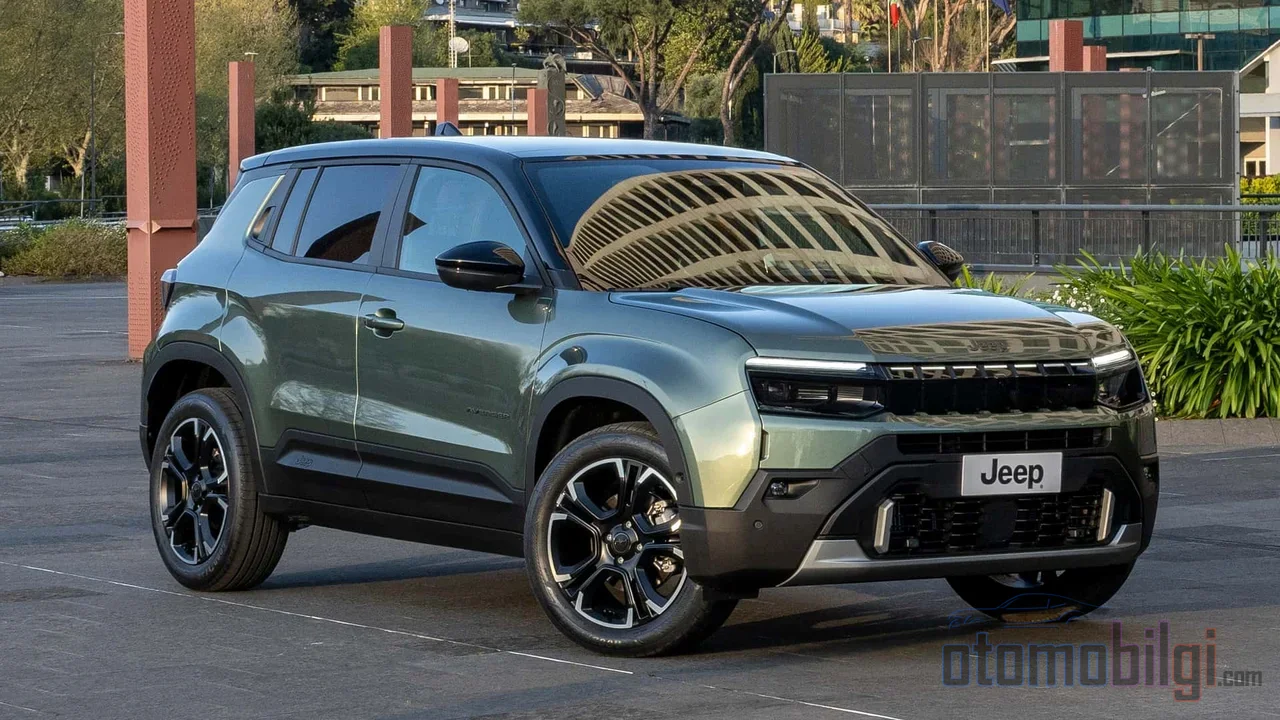
A Jeep designed in Europe, positioned in the B segment, and fitting into a body of just 4.08 meters: The Jeep Avenger represents exactly such a break in the brand's history. Because beyond being Jeep's first fully electric model, the Avenger also holds the title of the first Jeep developed in Europe for the European market. Bringing an electric character to the compact SUV segment, this model also proved its ambition by being named European Car of the Year in 2023. So with its 400 km WLTP range, 156 hp electric motor, and city-focused driving character, what really sets the Avenger apart from its rivals?
An Electric Jeep in the B Segment: Platform and Dimensions
The Avenger is a subcompact crossover SUV positioned in the B segment. Its technical foundation is the STLA Small platform; this platform is based on the second-generation eCMP architecture, the electric evolution of the PSA-origin CMP. The same platform family also underpins models like the Peugeot 2008 and Citroën C4, meaning beneath the Avenger lies Stellantis' proven electric infrastructure in the compact segment.
Its exterior dimensions paint a typical picture for its segment: length 4.08 m, width 1.81 m, and height up to 1.53 m. This compact footprint is one of the main reasons for the vehicle's agility in urban use. With its seven-slot grille, upright front fascia, and sharp lines, the design language clearly carries the Jeep identity despite the small body.
Motor, Battery, and Range: The Avenger in Numbers
The fully electric Avenger offers a single-motor, front-wheel-drive layout. The electric motor produces 115 kW of power, that is 156 hp, and delivers 260 Nm of torque. Acceleration from 0-100 km/h takes 9.0 seconds, with a top speed of 150 km/h. These figures are not sporty for its class but more than sufficient for city traffic; in fact, it feels quite lively in daily use thanks to the torque being available from the first revolution.
Highlights
- Front-wheel-drive electric motor producing 156 hp and 260 Nm of torque
- Gross 54 kWh (net 50.8-51 kWh) NMC811 battery, up to 400 km WLTP range
- 100 kW in DC fast charging: 20-80% in approximately 24-30 minutes
- Dual 10.25-inch screens, wireless Apple CarPlay and Android Auto
- Winner of the 2023 European Car of the Year award
On the battery side, it is 54 kWh gross, with usable capacity of 50.8-51 kWh. The battery, with NMC811 lithium-ion chemistry, operates on a 400 V architecture. The WLTP range is announced at between 385-400 km depending on equipment; consumption is at the level of 15.4-16 kWh/100 km. For the Summit trim in the Türkiye market, 392 km WLTP and 15.8 kWh/100 km consumption values have been announced.
| Feature | Value |
|---|---|
| Motor power | 115 kW (156 hp) |
| Torque | 260 Nm |
| Drive | Front-wheel drive |
| 0-100 km/h | 9.0 seconds |
| Top speed | 150 km/h |
| Battery (gross / usable) | 54 kWh / 50.8-51 kWh |
| WLTP range | 385-400 km |
| WLTP consumption | 15.4-16 kWh/100 km |
| DC charging power | 100 kW |
| Cargo volume | 380 liters |
What does the real-world range look like?
How the catalog figure translates to real life varies significantly depending on usage conditions. Independent tests measure a real range of around 290 km in summer conditions; this corresponds to an efficiency of 3.5 miles/kWh. In winter and at highway speeds, the picture narrows further: at -7 °C in highway use, the range estimate drops to around 232 km. In short, the Avenger draws a character that approaches its WLTP figure in generous city use, but falls noticeably short of it in harsh conditions.
Charging Character: Practical But Limited at 100 kW
DC fast charging supports a maximum of 100 kW; peak values can reach up to 107 kW, but the median power measured in the field is around 66.6 kW. The 20-80% charging time is approximately 24-30 minutes: official communication in Türkiye also emphasizes that the target is reached in under 30 minutes. The 400 V architecture is a technologically older approach on the fast-charging side compared to today's 800 V systems; this is where one of the Avenger's most distinct limitations emerges.
On the AC side, there is an 11 kW onboard charging unit. With 11 kW, a full charge takes about 4.2 hours; with a 7.4 kW wall unit, the time extends to about 6.2 hours. In a profile dominated by city use, these values are more than sufficient, but for long-distance plans, charging stop calculations need to be made accordingly.
Interior and Technology: Useful Solutions in a Small Body
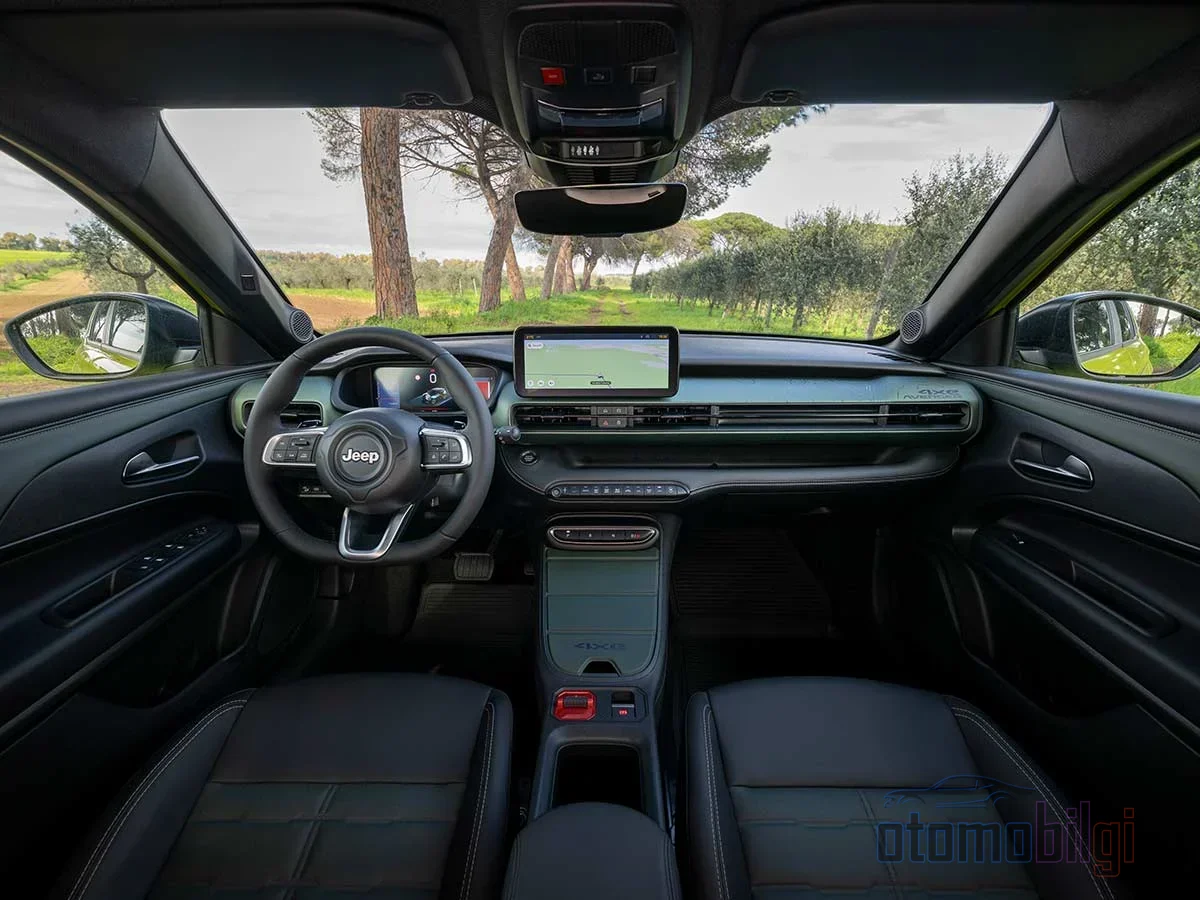
The cockpit features a 10.25-inch Uconnect infotainment screen and a fully digital instrument panel of the same size. Wireless Apple CarPlay and Android Auto are offered as standard; it is an interface that a user familiar with smartphones adapts to immediately. Current equipment adds voice assistant support and advanced in-car connectivity to the picture.
Practical details have been considered: a storage tray extending along the dashboard and a console section with a magnetic cover and wireless charging are among the highlights. The cargo volume is 380 liters; this figure is behind the Peugeot e-2008's 435 liters but noticeably ahead of the Mokka Electric's 310 liters. Cargo use has also been made practical with a square opening and a flat load sill.
The weak point of the interior is the rear seats: legroom is tight, and a large tunnel rises in the middle. Headroom, however, is generous; so there is a balance that is airy for front passengers and compact for those in the back.
Driver assistance systems
The ADAS package includes automatic emergency braking, hill descent control, and rear parking sensors as standard. An automatic parking assistant is offered for parallel and perpendicular parking. Adaptive Cruise Control is standard on higher trims and optional on other equipment levels. In short, the safety equipment matches segment norms, not the features of the luxury segment.
Position Relative to Rivals: Who Against Whom?
The Avenger's direct rivals are the electric crossovers of the B segment: the Peugeot e-2008, Opel Mokka Electric, and Citroën e-C4 stand out. In a similar price bracket, slightly larger-bodied electric SUVs such as the Smart #1 and BYD Atto 3 are also considered alternatives. In this picture, the strongest card the Avenger holds is neither its range nor its charging speed: brand character and design identity.
There is no shortage of criticism either. Its 100 kW DC charging power falls behind the Smart #1's 150 kW. Front-wheel drive, the absence of a spare tire, and the lack of V2L (vehicle-to-grid power transfer) support are among the shortcomings felt in everyday use. Wind noise on the highway and power starting to fade above roughly 65 km/h are also noteworthy points. Another reality is this: one should not expect the off-road capability of classic Jeeps in this model; the Avenger is an urban SUV.
On the other hand, driving evaluations are largely positive: light steering, good visibility, comfortable ride thanks to soft suspension, and agility in the city stand out. Being described as one of the most refined driving experiences Jeep has ever produced and being regarded as one of Stellantis' best electric models summarize the vehicle's balance. Nevertheless, there are also criticisms that it is not as comfortable a vehicle as the Hyundai Kona Electric or Kia Niro EV, and that competitors' strength is the Avenger's biggest problem.
Awards and Global Market Success
The 2023 European Car of the Year award is the brightest moment of the Avenger's career. At the ceremony held for the first time at the Brussels Motor Show, in the vote of a jury of journalists from more than 20 countries, it beat VW ID. Buzz and the Nissan Ariya in the final. In the same year, it was named the best small car by Autocar and also won Autovista Group's small BEV residual value award.
The model is at a significant point in its lifecycle: the facelifted version continues with a 156 hp electric motor, a 54 kWh battery, 11 kW AC / 100 kW DC charging, and a 400 km WLTP range. Although new gasoline and 145 hp 4xe versions have been added alongside it, the subject of this page is only the fully electric Avenger. On the market side, in May 2026 in the United Kingdom it qualified for the government's 1,500 pound electric vehicle grant; after the grant, prices start from 28,499 pounds. In Türkiye, the vehicle is offered with an 8-year / 160,000 km battery warranty.
Why Does the Jeep Avenger Stand Out? Conclusion
The net answer is this: Although the Avenger has no class-leading value in its technical specifications, it stands apart as the only model carrying Jeep's identity into the electric world of the B segment. A 156 hp motor, 260 Nm of torque, a 400 km WLTP range, and a 24-30 minute 20-80% fast charging time may not be above segment averages, but they form a competitive combination; add to that characterful design, a practical cockpit with dual 10.25-inch screens, and the European Car of the Year crown.
Who is it the right choice for? For a driver whose use is mostly urban, who values design and brand character over technical superiority, and who knows that the real range of around 290 km and 100 kW charging speed meet daily needs. If the cramped rear seats, the lack of V2L and the range losses on the highway are acceptable, you are facing one of the most distinctive options in the compact electric SUV world.