How Is the 2026 Opel Mokka Electric in Daily Use?
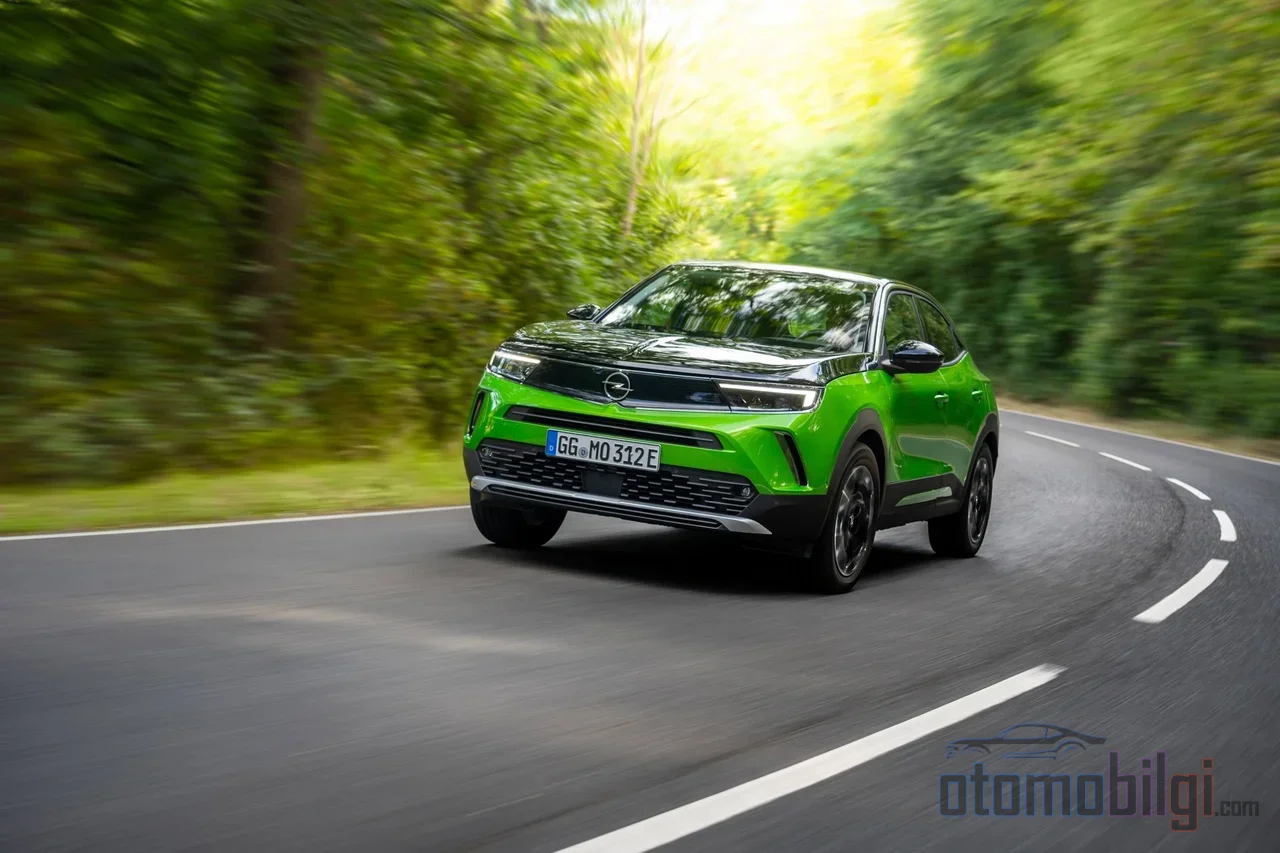
The conversation about the electric Mokka in Turkiye has almost entirely shifted to the performance version: The 280-horsepower Mokka GSE grabs the headlines with a 0-100 km/h time of 5.9 seconds. Yet the model that actually makes up this SUV's main sales volume has a different character. The standard Mokka Electric is a measured B-SUV built around everyday use, with 156 horsepower and 406 km of WLTP range. So is this measured setup truly sufficient in the city and on long journeys, or does the sibling overshadowed by the GSE have weak points?
Technical Identity: The B-SUV Formula with 156 Horsepower and 406 km
The standard Mokka Electric measures 4151 mm in length, 1790 mm in width and 1552 mm in height, classic dimensions for the B-SUV segment. Its 200 mm ground clearance gives it a crossover stance that can be considered reasonable for the segment. The suspension layout, with MacPherson struts at the front and a torsion beam at the rear, works at a fixed height; expensive solutions like air suspension are absent from this package.
The permanent magnet synchronous electric motor delivers 115 kW (156 hp) of power and 260 Nm of torque to the front wheels. The 0-100 km/h time is 9.1 seconds, and top speed is electronically limited to 150 km/h. These figures are weak by sports car standards, but entirely typical in the small electric SUV class: The Hyundai INSTER does the same job in 10.6 seconds, and top speed is 150 km/h in both models. In other words, the Mokka Electric is not behind its rivals in terms of speed; it is simply being drawn into a false point of comparison because it shares the same body with the GSE.
| Specification | Mokka Electric |
|---|---|
| Power / torque | 115 kW (156 hp) / 260 Nm |
| 0-100 km/h | 9.1 seconds |
| Top speed | 150 km/h (electronic limit) |
| Battery | 54 kWh gross / 50.8 kWh usable |
| WLTP range | 406 km |
| DC fast charging | 100 kW, 10-80% in approx. 29-30 min |
| AC charging | 11 kW three-phase, 0-100% in approx. 4 h 37 min |
| Cargo | 310 L / 1060 L |
| Curb weight | 1523 kg |
Highlights
- 406 km of WLTP range with an NMC battery of 54 kWh gross capacity
- 156 hp of power and 9.1-second 0-100 km/h performance
- 10-80% DC charging in approximately 29-30 minutes, with 100 kW maximum power
- Pure Panel cabin with dual 10.3-inch screens and a standard heat pump
- Unlike the GSE, it is focused on everyday use: no one-pedal driving, but there is a B mode
Battery and Charging: The Real-World Counterpart of the Numbers
On the battery side, there is a 400-volt-class pack with NMC chemistry: 54 kWh gross, 50.8 kWh usable capacity. The 3.2 kWh buffer in between is a reserve set aside to protect battery life; this is a standard engineering choice manufacturers apply to slow capacity loss in the long term. The official consumption figure varies between 12.5 and 15.2 kWh/100 km depending on the measurement method; this difference stems from the different measurement cycles, not a technical contradiction.
In the field, the picture becomes even clearer. In an independent range test, the measured usable capacity came to 42.9 kWh, 87% of the official range; in the DC charging test, 101 kW was measured. So the official maximum charging power of 100 kW is not a fake figure - it really can be achieved. The 10-80% range takes about 29-30 minutes, while a full DC charge completes in around 57 minutes. At home with an 11 kW three-phase charger, the 0-100 time is 4 hours and 37 minutes; for a buyer installing a three-phase wall unit in Turkiye, this means a full battery by morning with overnight charging.
The charging port being at the rear left and the use of a CCS Combo 2 connector conform to the standard European layout. In regeneration, a maximum of 50 kW of energy recovery is possible, but there is no one-pedal driving; B mode offers increased regeneration and can be set in two stages. Those who like touching the brake pedal less in city driving will adopt B mode, while those who do not want to break away from traditional driving habits stay in D position - both scenarios are easily manageable.
Cabin and Technology: Pure Panel and Everyday Practical Details
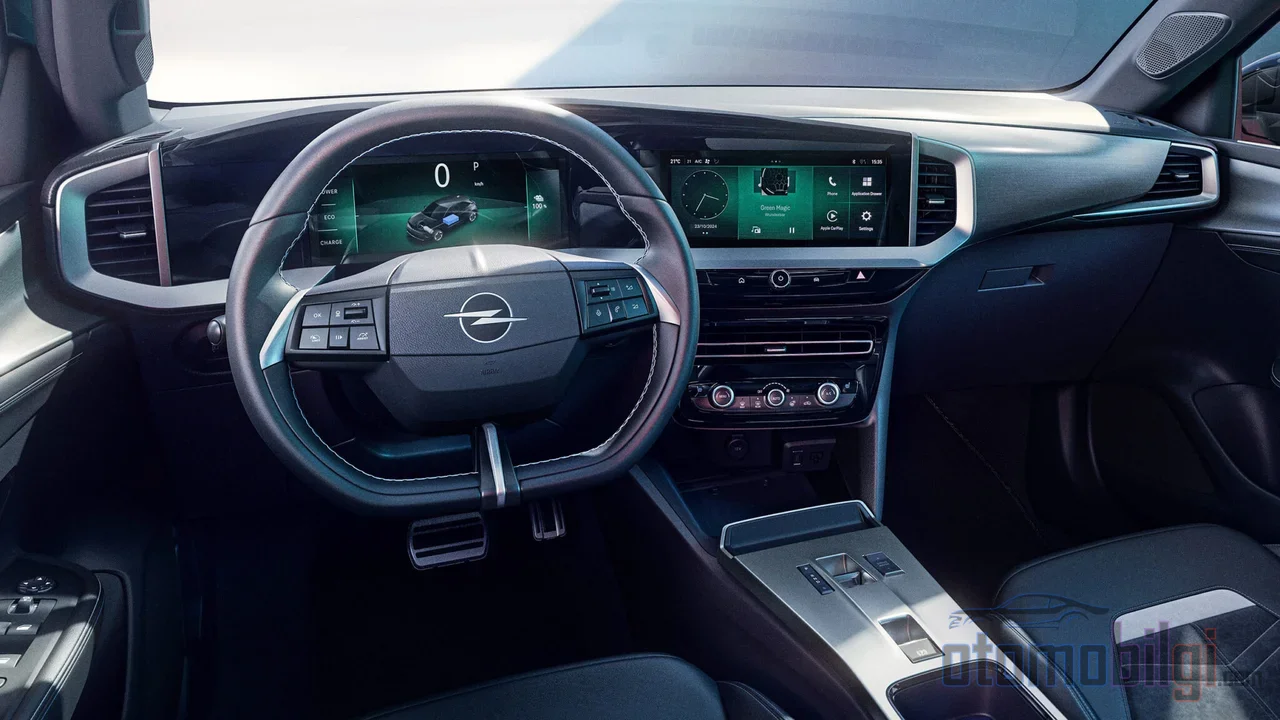
The backbone of the interior is the dual-screen Pure Panel layout: the driver information display and the central touchscreen, measuring about 10.3 inches depending on the hardware level. Apple CarPlay and Android Auto support, built-in navigation, USB-C and USB-A connections, and Opel Connect connected services come as standard; on higher trims, a wireless charging pad also enters the scene. The standard head-up display is a rare detail in this class, offering a practical contribution by reducing how often the driver's eyes leave the road on the highway.
The heat pump, the most critical comfort component of electric use, comes as standard; this equipment, which limits winter range loss, is especially valuable in vehicles with small batteries. With the myOpel app, remote pre-conditioning, charging scheduling, setting a charging target, locking/unlocking, and vehicle location tracking are possible. On the safety side, front collision warning including AEB, lane keeping, and fatigue warning are standard; the blind spot monitor and cross-traffic warnings move to higher trims.
The practicality balance, however, is questionable. The 310-liter trunk is 40 liters smaller than the 350-liter volume of the gasoline and hybrid versions with the rear seats upright - the difference comes from the battery pack mounted under the floor; when folded, the seats open up to 1,060 liters. The 60:40 split rear seats and standard ISOFIX anchors on the two outer seats cater to small families, but rear knee room stays at the class average. On higher trims, comfort details such as heated seats and steering wheel, driver massage function, electric lumbar support, and vegan suede upholstery on the GS trim stand out. Intelli-Lux LED Matrix headlights are offered on the GS and higher trims.
The Difference Between the Mokka Electric and the GSE: Which Is for Which Buyer?
The two versions share the same body and the same platform, but the drivers they target are completely different. The Mokka GSE is a driving machine with 207 kW (280 hp) of power, 345 Nm of torque, a 0-100 km/h time of 5.9 seconds, a Torsen limited-slip differential, and Alcon performance brakes; In the October 2026 Turkiye price list, it is positioned at a campaign level of 2,890,000 TL. The standard Mokka Electric carries none of this performance package; with its 156-horsepower motor, it pursues everyday efficiency and balance. Against the GSE's non-campaign price tag of 3,570,000 TL, in a market where even the standard Mokka's gasoline version starts from 1,990,000 TL, the standard electric version is the natural candidate for buyers seeking a price/usage balance.
There is an important nuance to this distinction in the Turkiye context: publicly available information about Mokka Electric sales mostly points to the GSE, but the Mokka Electric is still listed on Opel Turkiye's official price list page. Buyers should confirm current stock and equipment information with the dealer before making a purchase decision. This uncertainty does not change the model's small but real position in Turkiye: Opel had announced that the Mokka Electric is the best-selling battery-electric vehicle in the B-SUV segment in Germany, and the brand's goal of becoming a fully electric brand in Europe by 2028 defines this model's place in the strategy.
Where Does the Mokka Stand in the Small Electric SUV Class?
The competitor set can be grouped under three headings. The Hyundai Kona Electric pulls ahead in the range game: its current generation comes with a range above 380 km and a larger battery, and although the Mokka's 406 km WLTP figure narrows this gap with the current 54 kWh pack, the Kona is a more comfortable choice for buyers who prioritize long range. The Hyundai INSTER, on the other hand, sits a tier below in both price and size; With a 0-100 km/h time of 10.6 seconds and a weight of 1,410 kg, it is both slower than the Mokka and offers a different format. The upper versions of the Corsa Electric share the same powertrain: the 136 hp, 260 Nm, 150 km/h technical identity is identical to the Corsa Electric, and the note that the Mokka's suspension tuning feels more refined than its hatchback sibling is frequently repeated in long-term reviews.
In this picture, the Mokka Electric's differentiating cards are: standard heat pump, standard head-up display, 11 kW three-phase AC charging, and field-verified 100 kW DC charging performance. Long-term user reviews describe the model as "a straightforward, easy-to-live-with electric car that offers big-car practicality in a small body"; in return for stable road holding at high speeds, one has to tolerate a bit of wind noise. The main criticism always comes back to the same point: interior space and cargo volume are the class's limiting aspects.
Conclusion: A Balanced Answer for Daily Use in Turkiye
The direct answer to the question is this: the standard Mokka Electric, with its 406 km WLTP range, 100 kW DC charging, standard heat pump, and measured 156-horsepower motor, is sufficient for daily and city-focused use in Turkiye - in fact, one of the most balanced packages in its class. The GSE's 5.9-second performance is not a necessity in this profile; for weekday commuting, a weekend 200-300 km intercity route and overnight home charging, the standard version is a car that more than covers the job.
The buyer profile can also be clearly drawn: small families, those looking for an economical EV as a second car, and users who do not want to pay extra for GSE performance but also do not want to feel short on equipment are the target audience. The trunk volume being 40 liters smaller than the gasoline version and the rear knee room remaining borderline is a deliberate compromise; for those who accept this compromise, the Mokka Electric is a daily electric SUV that does not deserve to stay in the GSE's shadow and stands on measurable data.
Sources
- Opel Mokka Electric – Full Specs, Features, Range
- Opel Mokka Electric Now with Even More Range - Stellantis Media
- Opel Adds New Extended Range Mokka Electric to Line-Up - Opel Ireland
- Opel Mokka-e range test and efficiency - Zerofy
- Opel's Fastest Electric, the Mokka GSE, Arrives in Türkiye - Stellantis TR Media
- Opel Price List - Opel Türkiye
- Opel October 2026 Price List - Webtekno
- Hyundai Inster vs Opel Mokka Electric - Mube Energy
- Vauxhall Mokka Electric long term review - RAC
- Vauxhall Mokka Electric Review - Carbuyer