Toyota bZ4X Review: Balance in the D-SUV Segment
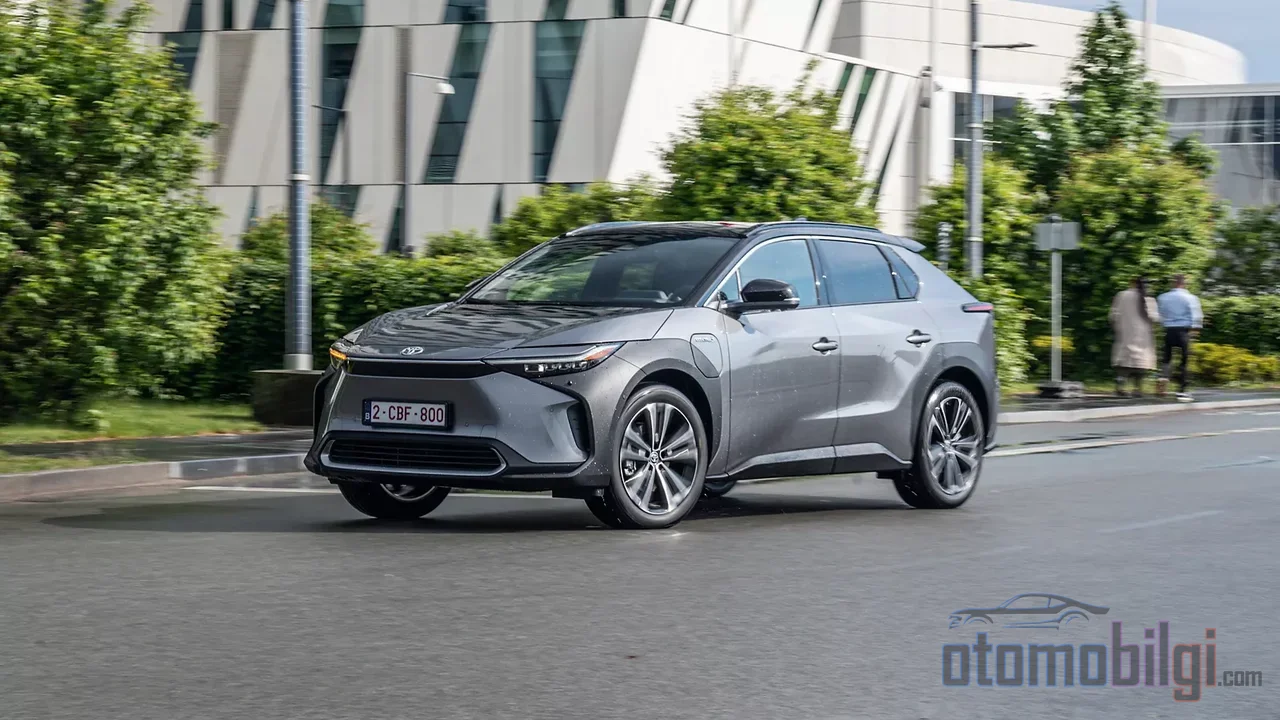
Toyota is known as the world's largest manufacturer of hybrids; it acted cautiously for a long time when it came to transitioning to electric vehicles. That is exactly why the Toyota bZ4X, which the company introduced in 2022 as its first purpose-built fully electric production model, serves as a template for the entire brand. The renewed generation, which went on sale in Europe in December 2025, seriously corrected the criticized aspects of the first model - range, charging speed and cabin materials. So where does this SUV really stand in the increasingly crowded electric D-SUV segment?
The e-TNGA Platform: The Engineering Foundation of the bZ4X
The bZ4X was developed jointly with Subaru; the Subaru version carries the same platform under the name e-Subaru Global Platform (e-SGP). On the Toyota side, its name is e-TNGA: a modular structure designed specifically for BEVs that integrates the battery and motor into the body. The concrete gains of this architecture can be summed up under three headings:
- High body rigidity and a low center of gravity thanks to the battery being placed in the floor
- A flexible structure that allows different drivetrain layouts such as front-wheel drive and all-wheel drive, as well as different battery sizes
- Free of mechanical complexity, with a long wheelbase translated into interior space
The dimensions show the tangible output of this platform: 4,690 mm length, 1,860 mm width, 1,600 mm height and a 2,850 mm wheelbase. The wheelbase is about 80 mm longer than the 2,769-2,771 mm figure of the Volkswagen ID.4 in the same segment; that is a number that makes a noticeable difference especially in rear knee room. On the suspension side, a MacPherson setup is used at the front and a double wishbone setup at the rear. The luggage capacity is stated as 452 liters (VDA).
Highlights
- The renewed bZ4X went on sale in Europe in December 2025
- The WLTP range is between 444-569 km depending on the version
- DC fast charging from 10% to 80% takes about 28 minutes at 150 kW
- The AWD version produces 252 kW (343 DIN hp) of system power
- The battery warranty includes 70% capacity protection for up to 10 years / 1,000,000 km
Range and Charging Character: What Do the Numbers Say?
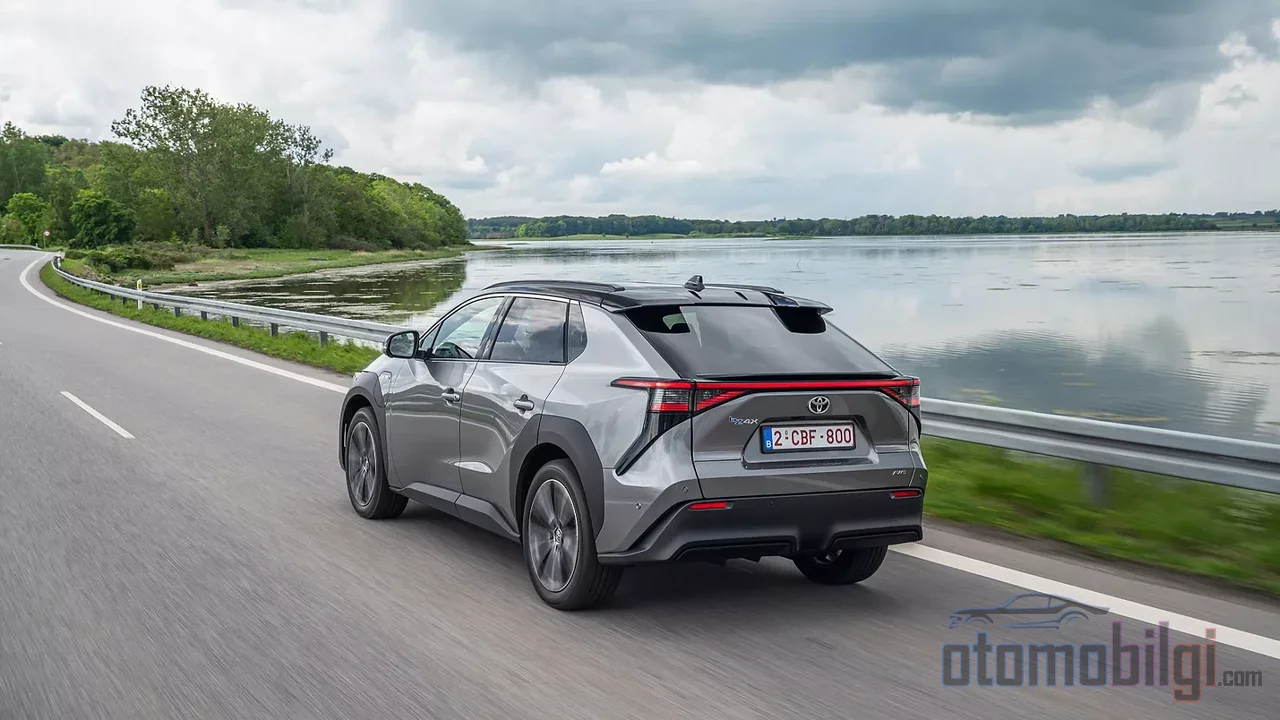
The renewed model offers two battery options: 78-cell 57.7 kWh and 104-cell 73.1 kWh lithium-ion units. Both are produced in the joint venture Toyota founded with Panasonic, with a 51%-49% shareholding. Depending on battery capacity and wheel size, the WLTP range varies between 444 km and 569 km; the most efficient combination is the 73.1 kWh front-wheel drive version with 18-inch wheels.
| Drive | Battery | System power | Consumption (kWh/100 km) | WLTP range |
|---|---|---|---|---|
| Front-wheel drive | 57.7 kWh | 123 kW (167 DIN hp) | 13.9 | 444 km |
| Front-wheel drive | 73.1 kWh | 165 kW (224 DIN hp) | 13.9-15.4 | 511-569 km |
| All-wheel drive | 73.1 kWh | 252 kW (343 DIN hp) | 14.5-15.9 | 468-516 km |
On the torque side, the front-wheel drive version produces around 266-269 Nm, while the all-wheel drive version produces 337 Nm. Acceleration figures vary by market and version: According to the official Australian table, 0-100 km/h takes 7.4 seconds in the front-wheel drive model and 5.1 seconds in the all-wheel drive version. The bZ4X Touring version, introduced in Japan in February 2026, has a 0-100 km/h time of 4.4 seconds and a range of up to 488 km on the WLTP cycle.
Charging speed and cold-weather strategy
DC fast charging goes up to 150 kW; a 10-80% charge takes about 28 minutes. The critical detail is this: thanks to the full pre-heating feature, this time can be consistently maintained at outside temperatures between -10 and +25°C - unlike many rivals whose fast-charging performance drops in winter. On the AC side, a full charge takes about 5.5 hours at 11 kW, or 2.2 hours with the 22 kW charging unit that is standard on higher equipment levels. The battery preconditioning function is the second layer that preserves charging performance in cold weather.
The aerodynamics side was also reworked in the update: the drag coefficient was reduced from 0.29 to 0.27. Towing capacity is 750 kg on the front-wheel-drive version and 1,500 kg with a braked trailer on the all-wheel-drive.
Interior and Technology Equipment
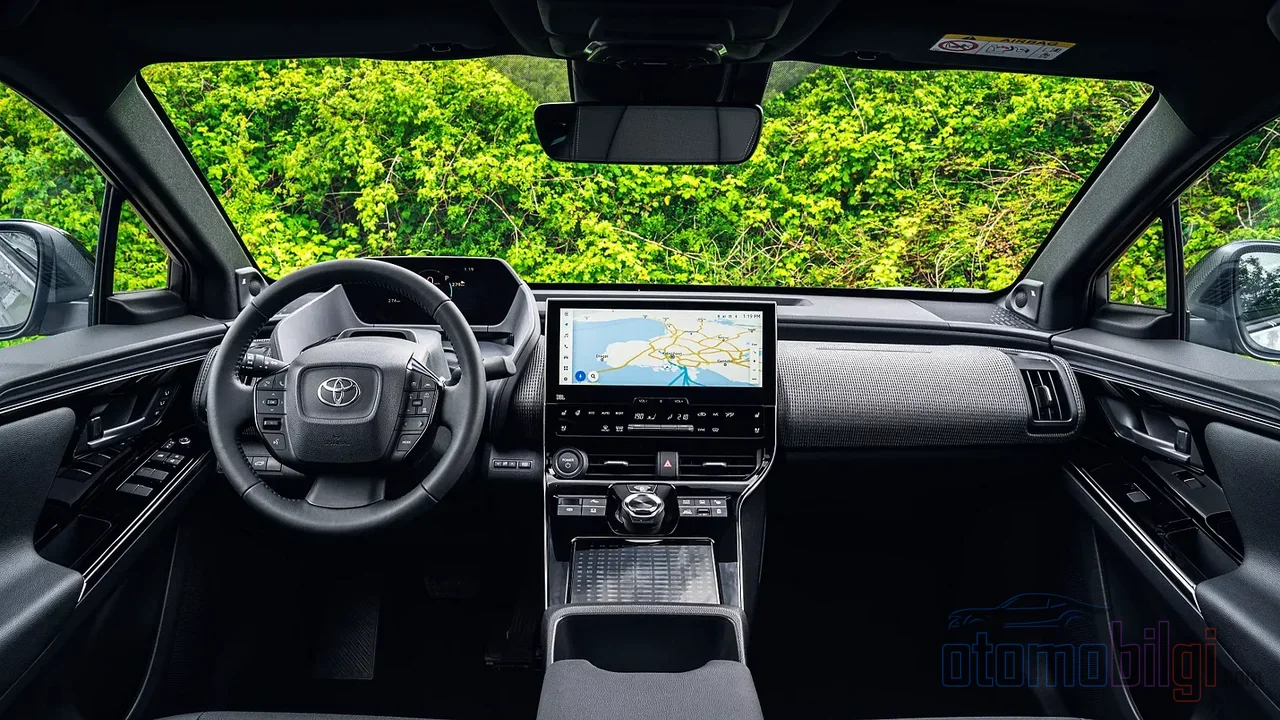
The new cabin responds to the most criticized aspect of the first generation. Piano black plastics have been dialed back, and recycled PET fabric is used in the upholstery. The notable innovations are as follows:
- A 14-inch multimedia screen replacing the previous 12.3-inch display
- A floating center console lowered by 10 cm
- 64-color ambient lighting and standard digital key
- A cabin made quieter with acoustic front glass and sound-absorbing insulation
The safety package is gathered under the Toyota T-Mate and Toyota Safety Sense umbrella: Pre-collision system, emergency steering assist, lane tracing assist, safe exit assist, and proactive driving assist are the main ones. Software updates can be performed over the air (OTA).
An unexpected element is off-road capability: This capacity, offered with X-MODE and Grip Control, is supported by the Multi-terrain Monitor, which shows the area beneath the vehicle, and a panoramic view camera. A 500 mm wading depth is an unusual figure in this segment. The MyToyota app offers wallbox integration, access to charging networks, remote climate control, and EV Routing, which adds charging stations to route planning. The options list includes a solar roof that can generate driving energy for about 1,800 km per year in a test recording 2,200 hours of sunshine annually, a JBL sound system, and a panoramic roof with 20% more glass area.
What Sets It Apart from Rivals: Against the ID.4, Kona Electric, and Niro EV
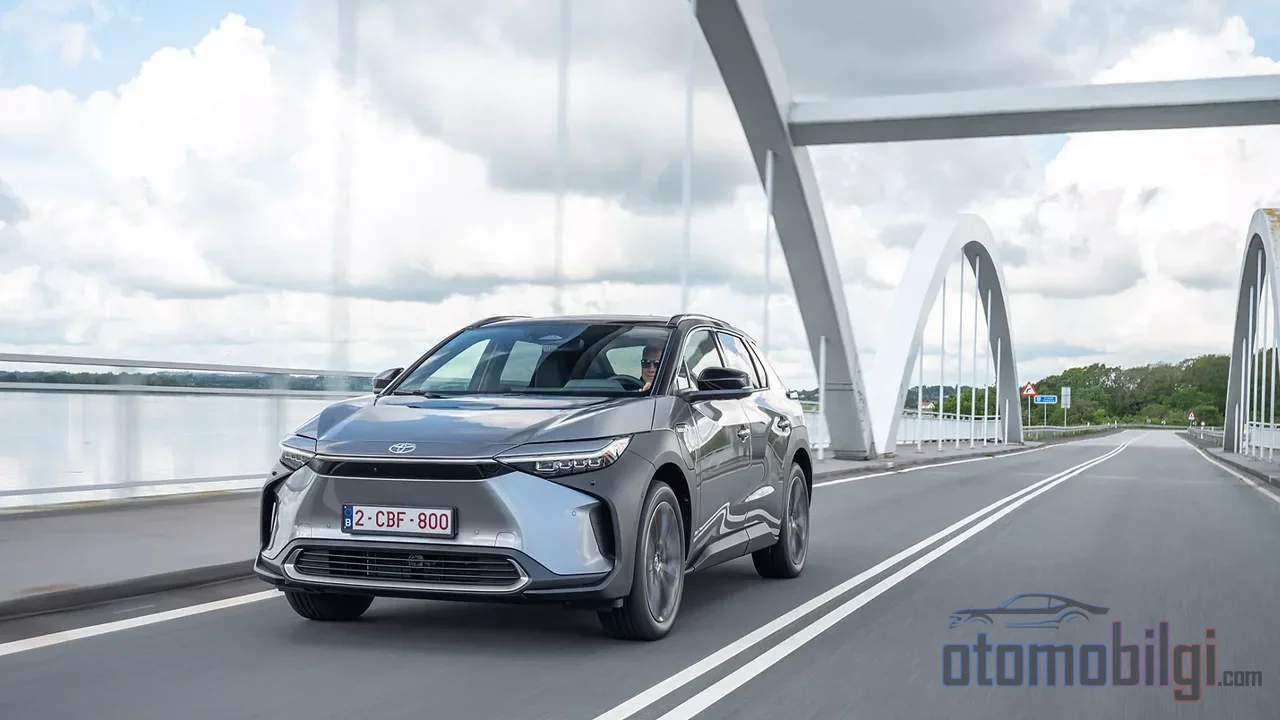
Compared with the Volkswagen ID.4, one of the segment's reference models, the bZ4X's most concrete advantage is its wheelbase and the interior space that comes with it. In return, the ID.4 side stands out with its build quality and personalization options; user reviews criticizing the first-generation bZ4X cabin's materials have been largely resolved in the updated model.
The comparison with the Hyundai Kona Electric is clear on the range and battery axis: the bZ4X, with its 470 km WLTP range and 71.4 kWh battery, surpasses the Kona Electric's 454 km range and 65.4 kWh battery. On the Kia Niro EV side, the power balance is striking: The front-wheel-drive bZ4X's roughly 201 hp of power matches the Niro EV exactly. The difference emerges in the bZ4X's larger body, towing capacity, and all-wheel-drive option; the Niro EV is offered only with front-wheel drive.
Global Market Position and Sales Performance
The numbers show that the bZ4X is no longer on the sidelines. More than 150,000 units have been sold since launch; the model ranks as the third most popular electric car in its segment in Europe. In markets with the highest electrification rates, such as Norway and Denmark, it has reached best-selling vehicle status.
2026 has been the year momentum accelerated: Toyota's BEV sales in Europe rose 79% in the first quarter and 113% in the first half, and the bZ4X alone, with 12,432 units sold in the first quarter, became one of the locomotives of this growth. While the bZ4X Touring was introduced in Japan in February 2026, price reductions of up to 10,000 Australian dollars were made in the Australian market as part of a revision.
Conclusion: Where Does the bZ4X Fit in the Segment?
The Toyota bZ4X is a model positioned in the D-SUV segment not through range leadership, but through balance: 444-569 km of WLTP range, 28-minute 10-80% fast charging, an up-to-10-year 70% battery capacity warranty, and genuinely rare off-road capability in the segment, all in one. The critical point from an engineering perspective is this: the e-TNGA platform and low center of gravity mean that the BEV DNA to be carried by all of the brand's future electric models was defined here. The bZ4X is the clearest indication that Toyota, which long approached the electric topic cautiously, is now a permanent, measurable, and sales-figure-proven player in this field.
Sources
- The new Toyota bZ4X: more power, more efficiency and more comfort
- Toyota bZ4X | The All-Electric SUV | Toyota UK
- Toyota bZ4X Spec Table - Toyota Australia
- Toyota Launches New bZ4X Touring BEV
- Toyota Motor Europe BEV sales double in H1 2026
- Toyota bZ4X Review - Car and Driver
- Toyota bZ4X vs Hyundai Kona Electric comparison