Leapmotor B03X: A New Player in the Small Electric Segment
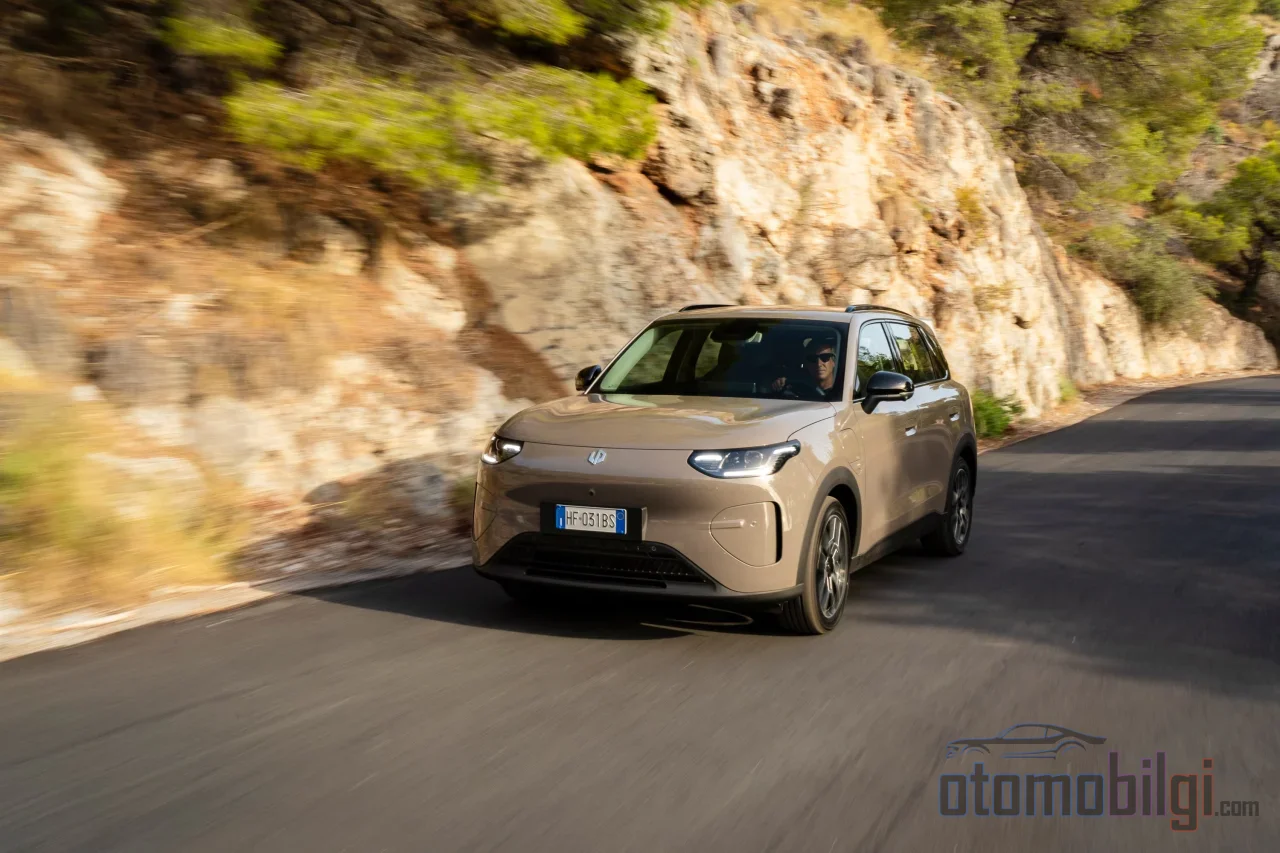
While price tags in the small electric SUV segment are rapidly sliding downward, the B03X, newly added to Leapmotor's global lineup, presents an interesting equation: A mid-tier technical package with a 382-kilometer WLTP range and a 21-minute fast charging time, but with a price below the 30,000 euro band placing it in the lower tier. From an engineering standpoint, this picture raises two questions: Which equipment items have been sacrificed, and which have been kept standard? The answer reveals the vehicle's identity more clearly.
Where Does the Leapmotor B03X Stand in the Brand's Lineup?
Chinese Leapmotor quickly built a global sales network and became a recognized brand in Europe. It is reaping the fruits of the joint venture it established with Stellantis in 2023: The brand, which uses the Stellantis dealer network in Europe, has more than a thousand sales points in 36 countries. In the UK, registrations in 2026 are showing a rapid increase compared to the previous year.
The B03X is the smallest SUV in this lineup. Below it is the city car positioned T03; above it are the B10 and C10 SUVs and the Golf-sized B05 hatchback. Developed on the new global A-platform, the model has stood out in the European market: It opened for pre-orders in July 2026 and made its European premiere at the 2026 Brussels Motor Show.
Price positioning varies from market to market, but the picture is clear: In Europe, the starting price is 25,400 euros, in the UK the single version is £26,995, and in Australia it is targeted at approximately 30,000 AUD drive-away price; that makes it Australia's cheapest electric SUV. It has been introduced in Malaysia, with the launch expected in the first half of 2027. So the model is a global product that has currently gone on sale in world markets.
Highlights
- Two LFP battery options: 39.8 kWh (292 km WLTP) and 53 kWh (382 km WLTP)
- In both versions, 10-80% DC charging is completed in around 21 minutes
- Despite a body length of 4,270 mm, a 10-meter turning circle and a 407-liter trunk
- Heat pump and V2L up to 3.3 kW are standard in every version
- European prices: 25,400 euros / 29,900 euros, £26,995 in the UK
Two Batteries, One Equipment Logic
The B03X's technical structure is simple and easy to follow: a single front-mounted synchronous electric motor, front-wheel drive, a torque value of 200 Nm identical in both versions, and 0-100 km/h acceleration in 8.6 seconds. Top speed is 160 km/h. The difference comes solely from battery capacity and the power and range derived from it.
| Specification | Small Battery | Large Battery |
|---|---|---|
| Capacity | 39.8 kWh (LFP) | 53 kWh (LFP) |
| Power | 130 kW / 177 hp | 145 kW / 197 hp |
| Torque | 200 Nm | 200 Nm |
| 0-100 km/h | 8.6 s | 8.6 s |
| Range (WLTP) | 292 km | 382 km |
| DC charging power | 100 kW | 133 kW |
| 10-80% DC time | ~21 min | ~21 min |
| Average consumption | 15.7 kWh/100 km (WLTP) | |
Both batteries use LFP cells supplied by Gotion and connect to the chassis via cell-to-body integration (CTC 2.0 Plus). The practical translation of LFP chemistry here: longer cycle life and high resistance to repeated fast charging. On the range side, the realistic picture is this: in mixed use, a range of 300-380 km can be achieved with consumption of around 13 kWh/100 km on city and country roads, while highway-heavy use pushes consumption to around 17 kWh/100 km.
How Adequate Is the 21-Minute DC Charging Character?
The fast-charging figures are among the reasonable values for the class: in both versions, the 10-80% range takes about 21 minutes, and the 30-80% range about 16 minutes. For a city-centered usage profile, this is a duration that will spark less debate than the battery size itself. On the long-distance side, the general rule of the class applies: small battery means frequent stops.
A critical detail is hidden in an engineering choice: fast-charging planning and battery preconditioning are not automatic; they require manual intervention from the driver. Preheating can be done through the app; in other words, you need to act via the screen or phone before entering a route into the navigation. For a user accustomed to Tesla's navigation-integrated preconditioning, this is a behavioral difference that needs to be learned.
The AC side, however, is comfortable: thanks to standard three-phase 11 kW charging, the small battery fills in about 2.5 hours and the large battery in about 3 hours 10 minutes. In an overnight home-charging scenario, this poses no limitation in either version.
Cabin: Leap OS and Hardware Generosity
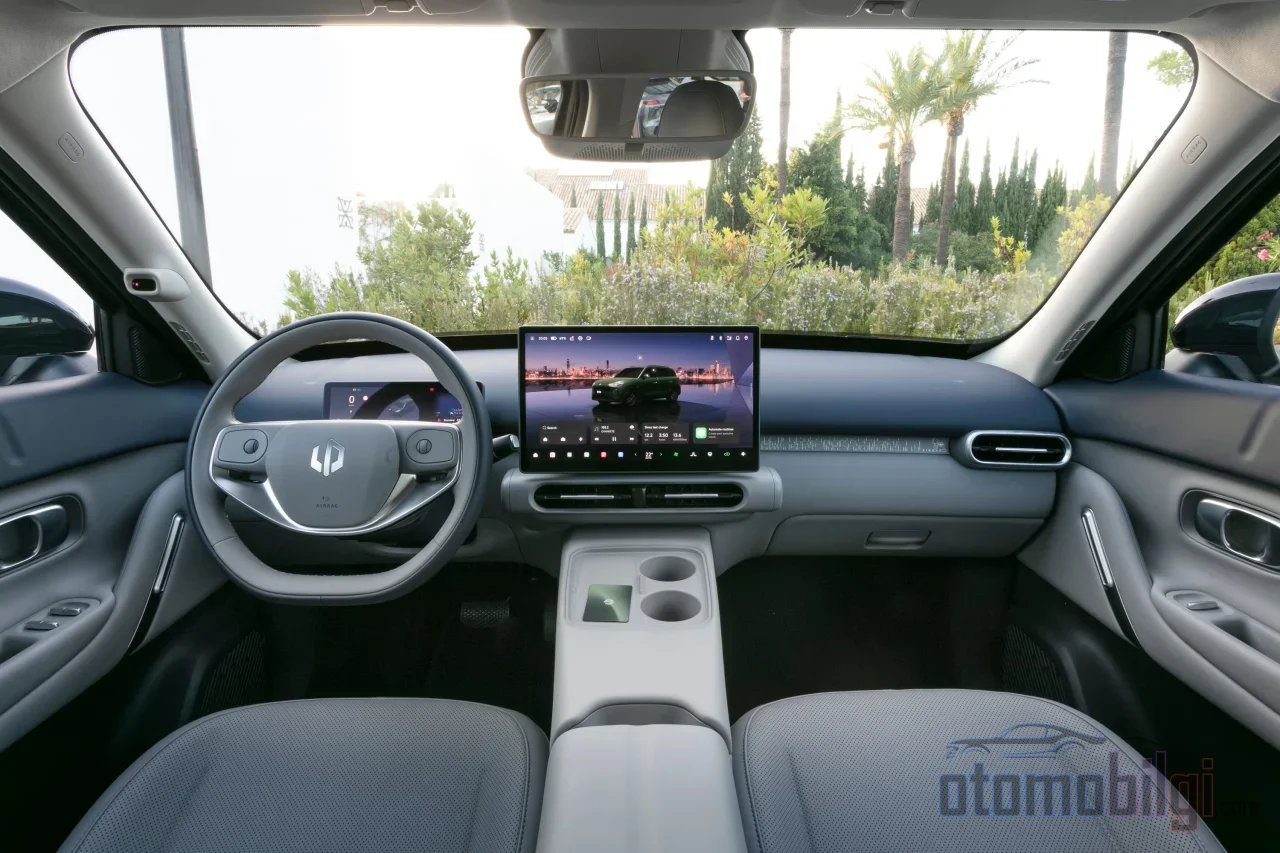
The B03X's interior strategy is built against the class's typical practice of hardware cuts. The cockpit features a 14.6-inch central touchscreen and an 8.8-inch digital instrument cluster; wireless Apple CarPlay and Android Auto are standard. Leapmotor's own Leap OS interface works on smartphone logic, runs on a Snapdragon processor, and continues to evolve with OTA updates. Vehicle control from the phone is also provided through the app.
The rest of the hardware list is broader than expected in this segment: a sound system with 12 speakers, camp mode and pet mode, a digital key that works with an NFC card (there is no traditional key at all), and on the ProMax version a 360-degree camera with a see-through view down to the wheels. The heat pump and the V2L function supplying up to 3.3 kW of power from the vehicle to external devices are standard in every version - for most of its rivals, these two are either paid extras or not offered at all.
Safety Equipment: Raising the Class's Lower Limit
On the driver-assistance side, even the most basic version offers 21 ADAS functions: adaptive cruise control and lane centering, traffic jam assist, fatigue detection and lane-change assist are among the main ones. Seven airbags are standard. The brand has clearly set its target at 5 stars for the Euro NCAP assessment; however, as of the date of writing, an independent crash test has not yet been conducted, so the result is awaited.
The counterpart of electronic saturation, meanwhile, becomes intrusive in some driving scenarios: The lane assist and driver monitoring system can annoy experienced drivers by being overly cautious. Having the regenerative braking setting on the screen in a hard-to-find menu is also not a defensible choice in terms of ergonomics.
Practicality: 33 Storage Areas and a Washable Leap Box
Dimensions are mid-class: 4,270 mm length, 1,810 mm width, 1,635 mm height, 2,605 mm wheelbase. But the key figure is the 10-meter turning circle, because this is the measurement that really makes the car feel small in tight city maneuvers.
On the trunk side, the definitions matter. The volume covered by the tailgate is 407 liters; adding the washable 105-liter Leap Box under the floor, which can be drained with its plug, brings the total to 510 liters. With the rear seatbacks folded, the volume rises to 1,358 liters. There are 33 storage areas in the cabin. The rear seat design (Leap Flex Seats) can fold upward like cinema seats, accompanied by front seatbacks that fold flat and a load floor that locks at two heights - an interior designed with load-lugging logic in mind.
In the class comparison, a weak point also shows up here: While the VW ID. Cross offers 475 liters, the e-2008 offers 434 liters and the Puma Gen-E offers 523 liters of luggage space, the B03X's main compartment volume falls behind. Also, no value is given for towing capacity, and there is no frunk either.
How Does It Differ From Its Rivals?
The direct competition area is clear: Renault 4 E-Tech, Kia EV2, Ford Puma Gen-E, Citroen e-C3 Aircross and Opel Frontera Electric; in a similar price band, the MG 4 Urban, BYD Dolphin and Geely EX2 also stand in the same field. The version sold in China under the A10 name positions itself as a direct rival to the BYD Atto 2.
The price-engineering balance gets interesting here. The Škoda Epiq (25,900 euros) and Kia EV2 (from 26,600 euros) are priced close to the B03X, but on both of these, equipment such as a heat pump and V2L is either an extra cost or not available. The VW ID. Cross (36,525 euros) and Ford Puma Gen-E (from 36,900 euros) are noticeably more expensive. The Geely E2 is cheaper, but with charging power in the 60-80 kW band and a weak motor, it does not match the B03X's technical package.
Cross-reading within the brand is also needed: The B10, about 25 cm longer, with a 56.2 kWh battery, 160 kW of power and 140 kW charging, opens up a band offering two model options at 30,400 euros. So with a budget of around 30,000 euros, you can choose between a small-city-focused and a long-range-focused model at the same dealership.
Assessment: A Pragmatic Package or the Class Average?
There are common findings in independent driving impressions: the steering is light and gives no feedback in Comfort and Standard modes; front tire slip is seen on sudden throttle openings; rural dynamics do not rise above the class. On the range side too, the WLTP figures of the VW ID. Cross (427 km), Škoda Epiq (441 km) and Puma Gen-E (417 km) are above the B03X's 382 km with the large battery.
There is also a corresponding balance: spacious interior, standard heat pump, V2L, 21 ADAS functions and a 12-speaker sound system - all included in the entry price. This table defines the model's identity: a pragmatic EV aimed at fleet and family use, establishing the balance between equipment and price. It is positioned not for those seeking dynamic superiority, but for those who want the entire budget to stay in the car.
This is what B03X means in the global picture. A product pushing the affordable electric SUV segment in Europe from below, backed by a sales network stretching from the UK to Australia, and repeating the same formula in every market: pull the standard equipment up, keep the price down, leave the dynamics on the safe side of the class average. For those wondering who will open the price doors in the next chapter of the small EV class, the answer is currently on this model's logo.
Sources
- Leapmotor B03X | Compact Electric SUV - Leapmotor official
- B03X European Premiere, Brussels Motor Show - Stellantis Media
- Driving the Leapmotor B03X - electrive
- Leapmotor B03X Review 2026 - RAC
- Leapmotor B03X arrives as Australia's cheapest electric SUV - carsales
- Leapmotor B03X will arrive in Malaysia by H1 2027 - Paultan
- Leapmotor B03X 39.8 kWh (MY27) - EV Database