What Gap Does the 2026 Kia EV3 Fill in Türkiye?
Share This Page
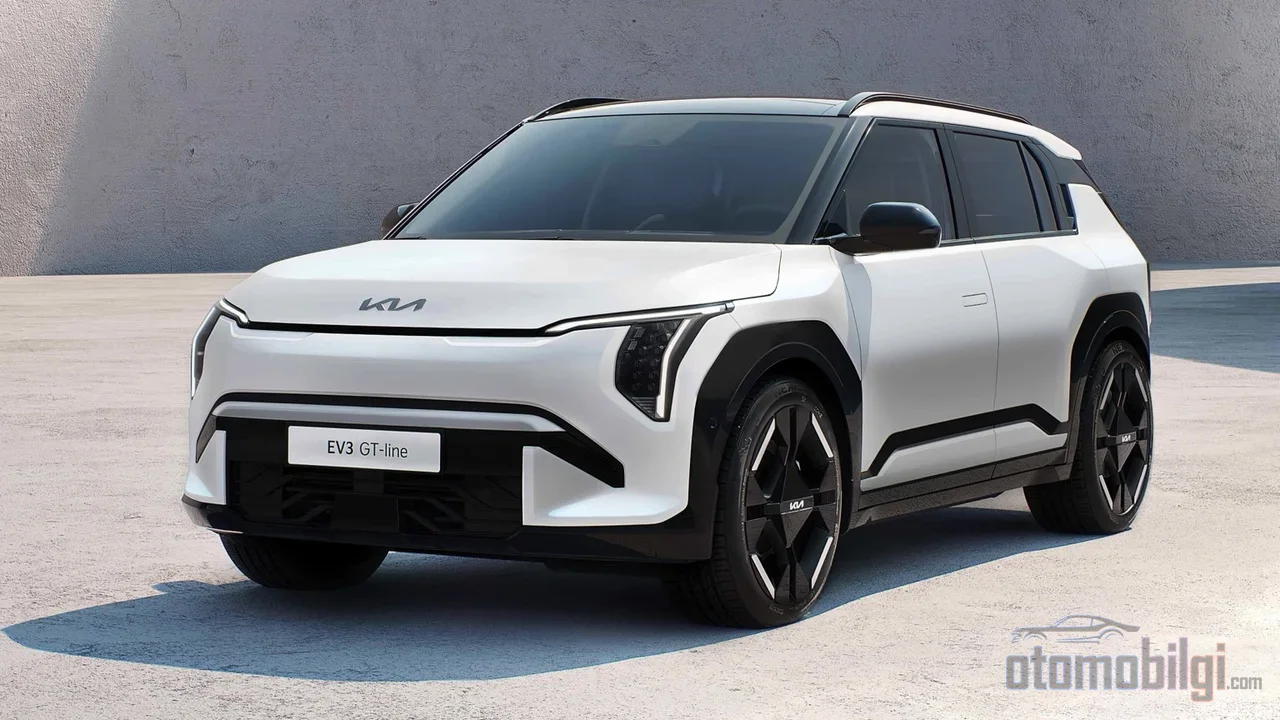
The Kia EV3 is Kia's new representative in the fully electric compact SUV class, filling the gap below the EV6 in the brand's E-GMP-based EV family. The model, sold brand new in Türkiye, offers a 605 km WLTP range with its Long Range battery and completes a 10-80% charge in about 31 minutes on its 400-volt architecture. The EV3 packs a spacious interior, a three-screen digital cockpit, and technologies such as a heat pump and V2L in top-tier trims into its 4.3-meter body, making it one of the few compact electric SUVs that manages to make the shortlist of range-focused buyers.
Highlights
- With the Long Range battery, a 605 km WLTP range; approximately 480-520 km in real-world use.
- 10-80% DC charging in 31 minutes, with a maximum charging power of 128-135 kW.
- Two battery options: 58.3 kWh and 81.4 kWh; 288 hp in the AWD option..
- Connected 12.3-inch dual screen and a 5.3-inch climate control panel.
- On sale in Türkiye with Cool, Elegance, Elegance Comfort, Prestige, and GT-Line trims.
What Segment Is the Kia EV3 In and How Is It Positioned?
The EV3 sits on the lower-middle rung of Kia's electric family hierarchy. At the top is the three-row, large-bodied EV9, and in the middle is the Kia EV6 ; the EV3 slots in below these two, in compact SUV dimensions. In terms of design language, it can comfortably be said to be a small-scale reflection of the EV9's blocky and massive stance. It is also the clearest indicator of the positioning that with this naming, Kia ended production of the Niro EV and passed that gap on to the EV3.
Dimensions are typical for the class: length 4,300-4,310 mm (depending on trim), width 1,850 mm, height 1,560-1,575 mm. Cargo volume is 460 liters, and beneath that there is also a 25-liter front trunk (frunk). The 10.4-meter turning radius provides the expected agility of the compact class in urban maneuvers. As its underlying platform, the EV3 uses the 400-volt version of the E-GMP platform, which is where it differs from the 800-volt architecture of the EV6 and Ioniq 5; we explain its effect on charging character below.
Battery, Range, and Performance: What Do the Numbers Say?
The EV3 comes with two li-ion battery options: 58.3 kWh Standard Range and 81.4 kWh Long Range. In single-motor (FWD) versions, power is 150 kW / 201 hp, torque 283 Nm. In the dual-motor AWD option, the figures rise to 215 kW / 288 hp and 468 Nm. Acceleration figures also paint a consistent picture: the Standard Range completes 0-100 km/h in 7.5 seconds, the Long Range in 7.7 seconds ; the AWD version brings this down to 5.7 seconds . So the EV3's main character is not speed, but range and efficiency.
On the range side, the Long Range carries the real weight. At 605 km in the WLTP cycle, it is at the top values of the class; in the city cycle, this figure can exceed 750 km. In real-world use, a range of 480-520 km is a reasonable expectation. The Standard Range, with 435 km WLTP , is still more than sufficient for daily use. Combined consumption is 14.9-16.2 kWh/100 km varies; in city use it is not uncommon for this figure to drop below 14 kWh.
Weight and traction figures matter for practical decisions: the 58.3 kWh version 1,800 kg, the 81.4 kWh FWD 1,885 kg, and the AWD 2,010 kg. Towing capacity is listed as 500, 1,000 or 1,500 kg depending on the battery and drivetrain.
| Specification | Standard Range | Long Range FWD | Long Range AWD |
|---|---|---|---|
| Battery | 58.3 kWh | 81.4 kWh | 81.4 kWh |
| Power | 201 hp | 201 hp | 288 hp |
| Torque | 283 Nm | 283 Nm | 468 Nm |
| 0-100 km/h | 7.5 s | 7.7 s | 5.7 s |
| WLTP range | ~435 km | ~605 km | lower |
| Kerb weight | 1,800 kg | 1,885 kg | 2,010 kg |
Charging Characteristics: How Fast at 400 Volts?
The EV3's 400-volt architecture does not allow it to approach the theoretical charging ceiling of the EV6 or Ioniq 5 with their 800-volt systems; however, the actual result is satisfying. The 81.4 kWh battery can draw a maximum 128-135 kW of DC charging power and fills the 10-80% range in about 31 minutes . Since the battery is large, this takes a few minutes longer than competitors with smaller packs; in return, you gain more range at every percentage point. To see the high charging speed, you need to connect to a charger at the station that can deliver at least 150 kW.
Other scenarios are practical too: a 10-80% charge on a 50 kW unit in the Long Range takes 79 minutes . With 11 kW AC charging at home or at work, going from 10% to 100% takes 7 hours 15 minutes for the Long Range and 5 hours 20 minutes for the Standard Range. Autocharge support, which starts charging with automatic handshaking, is also available. V2L, meaning the ability to supply power from the vehicle's battery to the outside, varies by trim level in the market; it is found on the top trim, while in some markets it is offered more widely.
How Is the Interior and Technology Equipment?
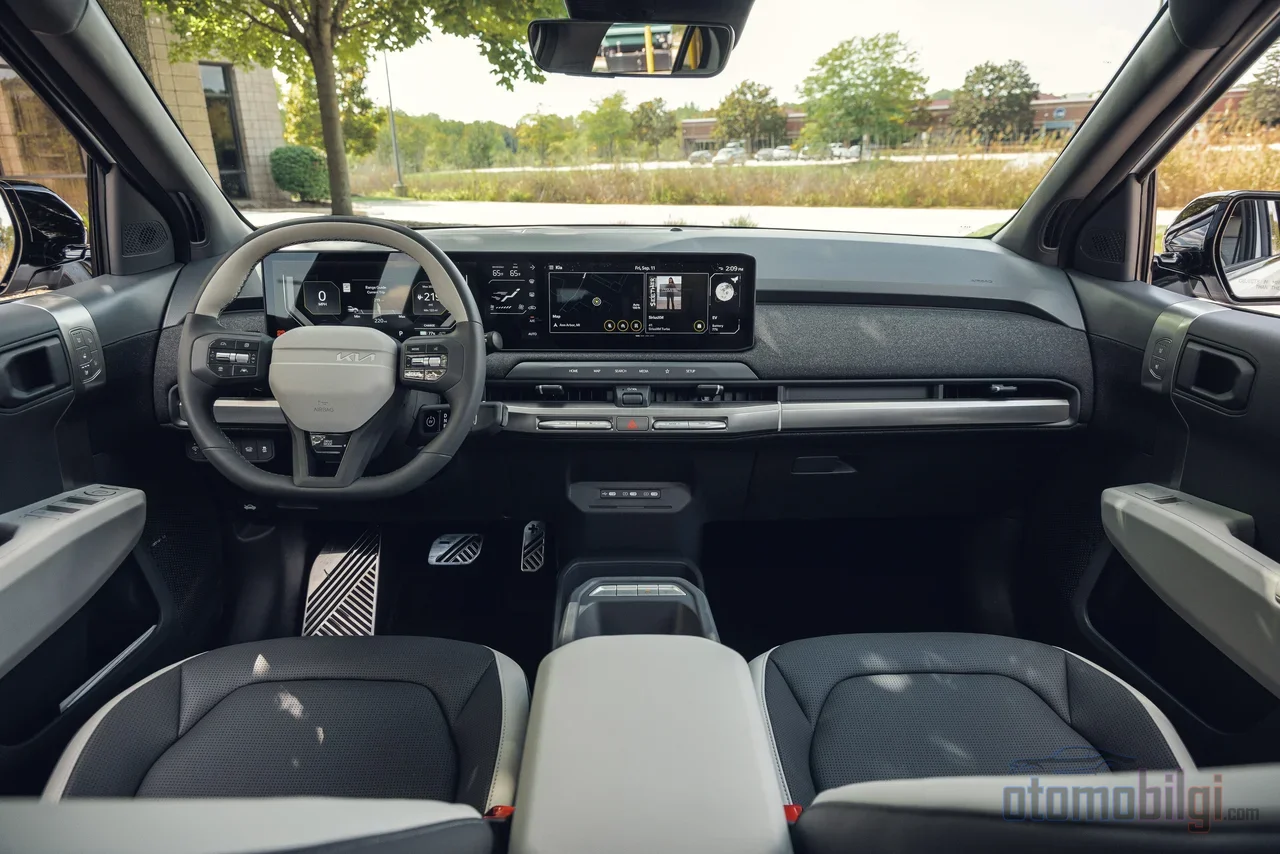
The cabin features a design with horizontal accents inspired by the EV9. Two screens serving as the multimedia and instrument display, 12.3-inch displays, combine with the 5.3-inch climate control screen between them into a single panel, forming a seamless cockpit. A notable point is the balanced use of touch areas alongside physical controls; separate buttons are preserved for frequently used functions such as ventilated and heated seats. Wireless Apple CarPlay and Android Auto, OTA software updates and a 7-year Kia Connect service are standard. On upper trims, a digital key, wireless phone charging, and in place of 6 speakers, a Harman Kardon sound system is featured.
Despite being 4.3 meters long, its interior spaciousness is among the leading ones in its class; some reviews note that it feels roomier than the class's other newcomer, the Volvo EX30. Top trim levels add front and rear heated, ventilated front seats, Premium Relaxation front seats, a 360° camera, a smartly operating power tailgate, a head-up display, and a sunroof to the list. On the driver assistance front, the base package is rich: Adaptive Cruise with lane following, Highway Driving Assist 2.0 that detects driver engagement, blind spot and rear cross-traffic alerts, safe exit warning, and regenerative braking (i-Pedal) adjustable via paddles on the steering wheel are all offered as standard.
There is also a sustainability dimension: the entire list of recycled materials initiated with the EV9 has been applied in the EV3. Recycled PET fabrics are used in the dashboard, seats, headliner, and floor mats. While it may look like a visual marketing detail, the texture and perception of quality combine with comfortable seats and good lateral support even in the base trim.
How Does It Differ from the EV6, Kona Electric, and ID.4?
The comparison people are most curious about within the family: the EV6 is a larger and more performance-focused vehicle than the EV3; with versions that complete 0-100 km/h in 5.2 seconds, it is clearly ahead in acceleration. However, the picture reverses on the range side: the EV6 Long Range 484 km with WLTP trails behind by roughly 120 km. The technical explanation is simple: the EV6 is heavier and has a body with more drag; the EV3 fully benefits from its more compact and aerodynamic profile. The right question is not "which is better" but "for which need"; those seeking performance and size lean toward the EV6, while those seeking range and usage economy turn to the EV3.
The comparison with the Hyundai Kona Electric is more balanced. In standard versions, the two siblings come with almost the same motor (150 kW / 283 Nm, 0-100 km/h in 7.5 seconds). The Kona's 65.4 kWh battery leaves the EV3 Standard Range (58.3 kWh) behind by about 70 km in range; however, the EV3's 81.4 kWh option flips this equation in its favor. In city driving, both can drop below 14 kWh/100 km. While the Kona represents a classic body closer to a CUV, the EV3 offers a true EV platform and a cabin that can be considered noticeably more modern.
The Volkswagen ID.4, on the other hand, is roughly 28 cm longer and taller than the EV3; in other words, it actually belongs to a size class above. While towing capacity on the ID.4 reaches 1,000 kg, the EV3's upper limit can go up to 1,500 kg. The BYD Atto 3 is positioned in a similar power (204 hp) and range zone as the EV3 Standard Range; with its 60.48 kWh battery, it offers 420 km WLTP. So the EV3's distinguishing point is not a single feature, but the meeting of battery options, range, and a technology package in one body.
The EV3's Position in the Türkiye Market
On Kia Türkiye's official price list and technical specification pages, the EV3 is listed as a fully electric compact SUV listed as such; meaning the model is regularly sold new in our country. The Türkiye trim ladder consists of the Cool, Elegance, Elegance Comfort, Prestige and GT-Line steps. The differences between the steps are clear: there are gradual equipment increases, such as 17-inch alloy wheels on the Cool, electrically heated and folding side mirrors on the Elegance, and electric door handles on the Elegance Comfort. Critical features like the heat pump and V2L are reserved for the top trims; this is a detail that effectively determines the trim choice in the purchase decision.
In market discussions, the model is one of the most talked-about electric vehicles in Türkiye. Comparison questions also clearly concentrate on three axes: internal comparison with the EV6, a direct size comparison with the Kona Electric, and a comparison with the upper segment via the ID.4. In terms of the range-equipment balance, the EV3 positions itself among these three as the one offering the most equipment per kilometer with its compact body.
Known Issues: What Should You Pay Attention To?
No new model comes without issues, and for the EV3 there are a few recurring themes among users as well. The most common complaint is related to the ICCU (integrated charging control unit): this fault manifests itself with symptoms such as AC charging refusal, sudden power drops, or complete depletion of the 12V system, and it is a known issue in other Hyundai-Kia group EV models as well. Reports of instrument panel darkening and accelerated wear on the front tires are also among the topics raised. In winter conditions, consumption rising noticeably above summer values, as with every electric vehicle, is reflected in the EV3 as range loss; the effect of cold weather must be taken into account. These are not data showing that the model should not be purchased, but rather checks that enable informed ownership: ensuring the ICCU updates have been applied and periodically monitoring tire wear are the two most practical precautions.
Conclusion: For Which Buyer Is the EV3 the Right Choice?
Looking at the data, the gap the EV3 fills is clear: a package that squeezes a compact body, up to 605 km of WLTP range, the practicality of 31-minute fast charging, and a rich suite of driver assistance features into the same price point. It is a consistent choice for those who want more range than the EV6 but drive a smaller vehicle, for those expecting a bigger battery and a more modern cabin than the Kona Electric, and for those who don't need the size of the ID.4. Considering that reports of ICCU-related failures should be followed and that the top trims include V2L and a heat pump, the EV3 remains one of the top three candidates for range-focused buyers in Türkiye's compact electric SUV market.
Sources
- The Kia EV3 Specifications | Kia UK
- EV3 Electric Car | Kia UK
- Kia EV3 official specifications page for Türkiye
- Kia EV3 equipment page for Türkiye
- Kia EV3 Long Range (MY25-26) - EV Database
- 2027 Kia EV3 Review, Pricing, and Specs - Car and Driver
- Kia EV3 Review 2026 - What Car?
- Hyundai Kona Electric vs Kia EV3 - Highmotor
- Kia EV3 vs VW ID.4 size - TrueCar
- Kia EV6 vs Kia EV3 comparison - Hibrit Elektrik
- Kia EV3 common problems - Autodoc