2026 Opel Frontera Electric: What Kind of Electric Vehicle Is It?
Share This Page
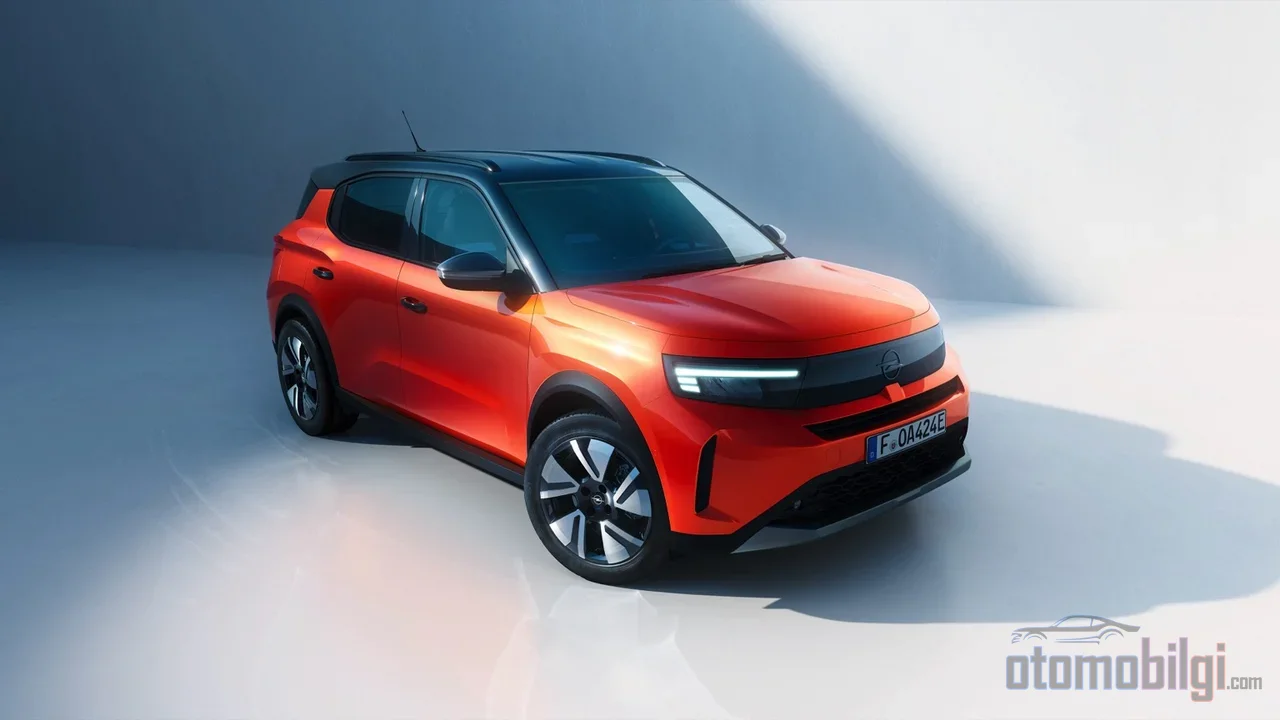
The Opel Frontera Electric is a B-segment family electric SUV sold in Türkiye, offering 305 and 408 km of WLTP range with its 44 and 54 kWh battery options respectively, and standing out with its spacious interior and affordable price. The answer to whether it is sufficient for family use depends largely on which battery you choose: while the 54 kWh long-range version handles long trips, the 44 kWh short-range version paints a problematic picture according to data recorded on Turkish roads.
Highlights
- Two battery options: 44 kWh (305 km WLTP) and 54 kWh (408 km WLTP)
- DC fast charging peak power 100 kW; from 20% to 80% in theory 26-30 minutes
- 113 hp of power, 125 Nm of torque, top speed 143 km/h
- In the electric version 460 liters of cargo space; 7 seats only in the hybrid
- than the Mokka 23.4 cm longer: one of the larger models in the B segment
Who Is the Frontera Electric For?
The model Opel brought to market by reviving the Frontera name is available in the lineup with four variants: two fully electric and two hybrid versions, with two trim levels, Edition and GS. This structure itself summarizes the model's identity: the Frontera is not a single sharp concept, but a vehicle designed to offer a wide range of use catering to family budgets. The electric version, which is currently sold new in Türkiye, sits at the cost-controlled, affordable end of this range.
In terms of dimensions, the Frontera falls outside the classic B-segment pattern. Opel Frontera Electric It is 4.38 meters long; that is, 23.4 cm longer and 10.1 cm taller than the Mokka in the brand's own lineup. These dimensions make it one of the larger representatives of the B-SUV class and explain its main strength: space. Interior volume and practicality are at the center of the model's sales argument, not performance or range competition.
Battery, Range and Consumption: The Real State of the Numbers
The Frontera Electric's technical backbone is based on two battery options. Both use LiFePO4, i.e. lithium iron phosphate chemistry; while this chemistry lags behind nickel-based batteries in energy density, it is a sensible choice for a budget-focused model in terms of lifespan and cost.
| Feature | 44 kWh | 54 kWh Long Range |
|---|---|---|
| Net battery capacity | ~43 kWh | ~52 kWh |
| WLTP range | 305 km | 408 km |
| Consumption (WLTP) | 18.2-18.5 kWh/100 km | 15.8-16.5 kWh/100 km |
| 0-100 km/h | 12.1 s | - |
| Top speed | 143 km/h | 143 km/h |
There is only one option on the motor side: 83 kW / 113 hp front motor producing 125 Nm of torque. These figures are modest on paper; the 12.1-second 0-100 km/h time confirms this. The Frontera Electric is not a vehicle that accelerates, it is a vehicle that goes. There is a remarkable detail in the consumption figures: the 54 kWh battery not only offers more range, it also uses less energy per kilometer. In other words, the large-battery version is a more consistent package in terms of both range and efficiency.
What is the real range on Turkish roads?
There is a notable gap between WLTP figures and real-world performance in the Frontera. Independent range databases report a real-world range of 170-360 km for the 44 kWh version; British evaluation tests also show that even in the large-battery version, the real range did not exceed 200 miles (approximately 320 km). A test drive conducted in Türkiye clarifies the picture even further: in the 44 kWh GS-equipped vehicle, the range shown with a full battery was 266 km, and even with consumer functions such as the air conditioning switched off, the expected range dropped to 185-200 km. In the same test, the vehicle completed a distance that normally takes 3-3.5 hours from Istanbul to Edremit in 7-10 hours with charging stops.
This is why the short-range version's purpose is controversial: although the 44 kWh package looks like a family car on the WLTP paper, it brings a serious planning burden for out-of-city use in Türkiye. The 408 km option with 54 kWh, on the other hand, offers a predictable margin for long trips and appears to be the only sensible choice among them for those considering family use.
Charging Character: Fast in Theory, Variable in Practice
On paper, the charging side is the model's strong point. Peak power in DC fast charging 100 kW and the charging time from 20% to 80% is 26-30 minutes according to manufacturer data; in other words, a fast charging time that coincides with a coffee break is promised. On the AC side, there is 11 kW single-phase charging: with an 11 kW wallbox, the battery fills in about 4 hours 45 minutes, and with 7.4 kW power in about 7 hours. These times are sufficient for a nightly home charging scenario.
The software side is also up to date: the e-Remote feature allows managing charging scheduling, range tracking, and cabin pre-conditioning via phone. The e-ROUTES app offers route planning with charging stops and battery preheating; the second service is included for 10 years.
However, practice diverges from theory. In Türkiye, the charging power of a 44 kWh Frontera measured at dozens of different stations fluctuated between 25-70 kW, and a full charge took 1 hour 25 minutes. It is not clear whether this inconsistency stems from the vehicle or the station infrastructure; but the practical outcome is common: planning real charging times based on the theoretical 26 minutes can be misleading.
Interior: The Model's Main Selling Point
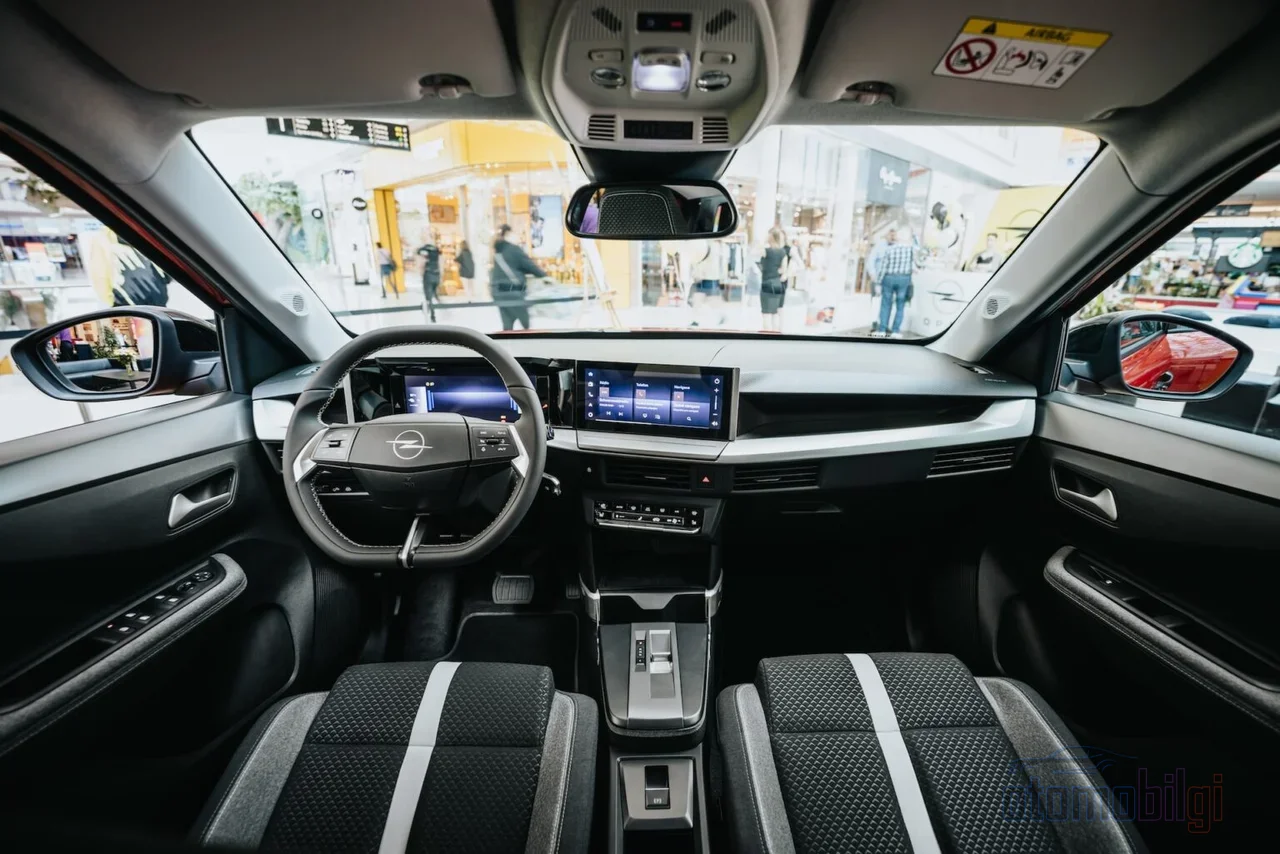
In the Frontera's electric version, the luggage volume with rear seats upright is 460 liters; when the seats are folded, this value rises up to 1,600 liters. For a B-segment electric SUV, this volume is above the class average. The 7-seat configuration is offered only in the hybrid version's GS and Ultimate trims; the electric version has the standard 5-seat layout. So for readers with large families who want an electric car, the answer is clear: the Frontera Electric does not offer 7 seats.
Opel's practical solutions in this segment are concentrated in the cabin:
- Standard smartphone station and optional wireless charging
- Cheap but functional details such as seat back pockets and grab handles
- Patented Intelli-Seats: a sculpted design that contributes to ergonomics in the driver and passenger seats
The technology package features a 10-inch multimedia screen, with Apple CarPlay and Android Auto support depending on the trim. On the safety side, advanced collision warning and lane keeping assistant are standard; park assist is also included as standard on the GS and Ultimate trims. This list reflects the model's "basic but complete" philosophy: a reference-level technology experience that still meets daily safety and connectivity needs.
Its Place Among Rivals
Comparing the Frontera Electric on the same scale as its rivals is the clearest way to show the model's position. The table below puts three accessible alternatives side by side in terms of range, battery, and consumption:
| Model | Range (WLTP) | Battery | Consumption |
|---|---|---|---|
| Opel Frontera (44 kWh) | 305 km | 44 kWh | 18.3 kWh/100 km |
| Opel Mokka Electric | 338 km | 50 kWh | 15.6 kWh/100 km |
| MG ZS EV | 320 km | 51.1 kWh | 15.3 kWh/100 km |
| Hyundai Kona Electric | 454 km | - | - |
The table shows that the Frontera falls below its class average in terms of efficiency: both the Mokka and the ZS EV consume noticeably less energy per kilometer. In the intra-brand comparison, the Mokka stands out in style and agility, while the Frontera takes the lead in space and budget, meaning the two do not appeal to the same buyer. The Kona Electric is clearly above the Frontera in both range and acceleration figures (454 km, 7.8 s), but its price is also likely positioned at a higher level.
As of 2026, the affordable electric lineup in Türkiye places the Frontera in the same pool as the Citroën e-C3, Togg T10X, MG4, and BYD Dolphin. In the January-March period, the C segment accounts for 54.4% of the market and the B segment for 30.5%; the Frontera's dimensions at the B-C boundary fall exactly within this high-volume region.
Is It Enough for a Family in Türkiye? Conclusion
The Frontera Electric's identity has been shaped by a clear engineering choice: sacrificing efficiency and performance to protect the budget, and offering spaciousness and practicality in return. The main question for families becomes: which battery? The 54 kWh, 408 km version handles weekend trips beyond urban use with reasonable margins and stands as the option that serves the model's true purpose. As for the 44 kWh version, given the variability in Türkiye's charging infrastructure and the measured real-world range figures, it makes sense for households whose usage profile is almost exclusively urban.
On the other hand, the Frontera's interior volume, its 460-liter cargo area, standard safety package, and price position within B-segment limits make it a package that directly appeals to the largest buyer group in the Turkish market. The honest answer to families asking whether the range is enough: with the big battery, mostly yes; with the small battery, only in a narrow usage scenario.
Sources
- Opel Frontera Electric: Now with 100 Kilometres More Range
- New Long-Range Option for the Opel Frontera Electric
- Frontera: 100% Electric & Petrol Hybrid Family SUV
- Opel Frontera (Opel Türkiye)
- Test Drive: Opel Frontera Electric 44 kWh Battery Short Range
- Opel Frontera Electric 44 kWh (EV Database)
- Opel Frontera Electric Standard Range Specs
- Opel Frontera (evtest.eu)
- Vauxhall Frontera Electric Review & Prices (carwow)
- Vauxhall Frontera Electric (2026) review (Car Magazine)
- Opel Frontera Electric vs Opel Mokka Electric (mubeenergy)
- MG ZS EV vs Opel Frontera Electric (mubeenergy)
- Opel Frontera vs Opel Mokka dimensions (carsized)
- MG ZS EV vs Hyundai Kona Electric (hibritelektrik)
- Should You Buy the Opel Frontera Electric? 2026 (araclo)
- Electric Vehicles in Türkiye 2026 (ChargeIQ)
- Opel Frontera dimensions (automobiledimension)