2026 Opel Mokka Electric GSE: The New Home of Electric Performance?
Share This Page
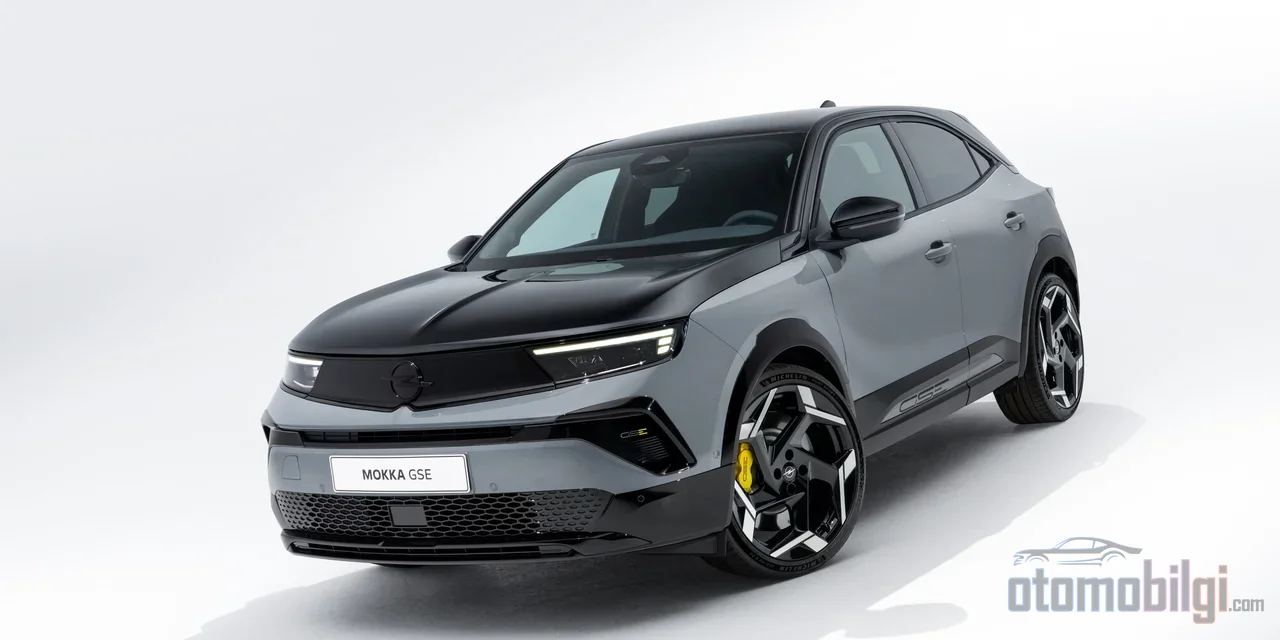
The Opel Mokka Electric GSE is the first series-production model of the brand's GSE (Grand Sport Electric) performance sub-brand and also the most powerful fully electric car Opel has ever built. Producing 281 hp and 345 Nm of torque from a single motor and completing 0-100 km/h in 5.9 seconds, this B-SUV is now on sale brand new in Türkiye, placing a genuine performance option alongside the efficiency-focused models in the electric B-SUV segment. Instead of the standard Mokka Electric's 156 hp motor, the GSE comes with a drivetrain that is 80% more powerful, a limited-slip differential, and racing-derived brakes - an EV designed for someone willing to sacrifice range in exchange for investment in handling.
Highlights
- Single motor, front-wheel drive: 281 hp / 345 Nm, 0-100 km/h in 5.9 seconds
- 54 kWh battery, WLTP range ~323-336 km (depending on tire choice)
- 0-80% charging with 100 kW DC in ~27 minutes, full charge with 11 kW AC in 5 hr 45 min
- Torsen limited-slip differential, Alcon 4-piston brakes, 380 mm front discs
- 189% increased roll stiffness on the rear axle, body 10 mm lower than the standard Mokka
What Is the Mokka Electric GSE and How Does It Differ from the Standard Model?
GSE is the name of the performance sub-brand Opel created in the era of electrification: Grand Sport Electric. The Mokka GSE is the first series-production vehicle of this sub-brand; you can think of it as the road version of the Mokka GSE Rally, which previously existed only as a rally prototype. In fact, the motor, inverter, high-voltage battery, and wiring harness were taken directly from the rally car. This detail is the most concrete technical evidence showing that the car is not merely a facelifted Mokka.
The standard Mokka Electric is an entirely efficiency-focused B-SUV, offering 403 km of WLTP range with a 115 kW (156 hp) motor and a 54 kWh battery. The GSE, although it uses the same battery base, sits at a different balance point with its 281 hp motor, 345 Nm of torque, and a completely revised chassis setup: the range drops to ~336 km, but in return a driving hardware setup rarely seen in a front-wheel-drive electric SUV comes into play.
An important detail: The only electric Mokka version sold in Türkiye right now is this GSE. In other words, when it comes to the electric Mokka in Türkiye, the model that comes to mind is the 281 hp performance version; the standard electric Mokka sits at the other end of the lineup alongside hybrid and gasoline options.
Powertrain: How Does 281 hp Front-Wheel Drive Work?
At the heart of the GSE is a single electric motor producing 207 kW of peak power, and this power goes exclusively to the front wheels. In electric vehicles, 281 hp is most often paired with a dual-motor, all-wheel-drive setup; since the Mokka GSE delivers this power through a single axle, the most critical engineering question became traction. Opel's answer is a Torsen multi-plate limited-slip differential integrated into the front-wheel-drive system: by mechanically preventing the inner wheel from spinning when exiting a corner, it keeps transferring power to the road.
The performance figures are clear: 0-100 km/h in 5.9 seconds, top speed of approximately 200 km/h. The driver can manage this power by playing with the drive modes. In Eco mode, power is limited to 190 hp, and in Normal mode to 231 hp; but when you push past the kickdown point on the accelerator pedal, the full 281 hp opens up regardless of the mode you are in. Sport mode, on the other hand, is the setting that unlocks full power and full top speed from the start.
Let us also add that the same drivetrain is used in its sibling model, the Corsa GSE: the same 281 hp and 345 Nm, this time in a compact hatchback body. Both models of the GSE sub-brand are built on the same technical foundation.
Battery, Range and Charging: What Is the Price of Performance?
The GSE's battery has a total capacity of 54 kWh; of which approximately 51 kWh is usable. The WLTP range is not a single figure: ~336 km with efficiency-focused optional Goodyear Eagle F1 tires, and ~323 km with the standard Michelin Pilot Sport EV tires. The difference comes solely from the tire choice, and it is a fine example summarizing why range in electric performance vehicles is directly related to state-of-the-art soft tires. WLTP consumption has been measured at 18.50 kWh/100 km; the heat pump is not standard equipment, so range-sensitive users need to factor that in.
On the charging side, peak DC power is 100 kW: the 0-80% fast charge takes approximately 27 minutes. On charging units above 300 kW, the time for 10-80% is around 28 minutes, meaning infrastructure above peak power does not shorten the time in practice because the battery already caps out at 100 kW. On a more common 50 kW charger, the same range rises to 56 minutes. On the AC side, the 11 kW onboard charger completes 0-100% in 5 hours 45 minutes; on a 7 kW home wall unit, a full charge takes around 8 hours 15 minutes.
Two noteworthy points: V2L, that is, bidirectional charging support that can transfer energy from the vehicle's battery to external devices at 3.6 kW, comes as standard (the adapter is sold as an accessory); in contrast, battery preconditioning is not available on any electric Mokka. Knowing that there is no way to warm the battery before starting a fast charging session in cold weather, you need to plan accordingly.
Chassis and Brakes: The Hardware That Makes the GSE a True Performance Vehicle
The most debatable aspect of this vehicle is whether its performance identity is truly rooted in engineering. The answer is clear in the component list: on the front axle, 380 mm brake discs and GSE-yellow painted Alcon 4-piston calipers - a supplier choice with rally origins. On the rear axle, a new stabilizer bar increases roll stiffness by 189%; the dampers feature a new design with double hydraulic mounts, and the front axle subframe and bushings are exclusive to the GSE. The steering box has also been recalibrated, with its ratio tightened from 16.2 in the standard Mokka to 14.5; meaning each turn of the steering wheel corresponds to a greater angle and the car responds more sharply.
The suspension sits 10 mm lower than the standard Mokka, with stiffer springs and stabilizers. The standard tire is the Michelin Pilot Sport EV, fitted on 20-inch two-tone GSE wheels with a diamond finish. Kerb weight is kept under 1.6 tonnes - an advantageous figure compared to twin-motor rivals in this class, and a simplicity stemming from the single-motor front-wheel-drive layout.
Dimensions and Practicality: Is Everyday Usability Affected?
The GSE's body dimensions are almost exactly the same as the standard Mokka: 4,150 mm long, 1,787 mm wide, 1,506 mm tall - just 10 mm lower. Cargo volume is also unchanged at 310 liters. That is not a favorable figure compared to class averages: 50 liters smaller than the Abarth 600e, 10 liters larger than the MINI Aceman. There is enough space in the rear seat for six-foot adults, but this is not a class-leading rear cabin. For those considering the GSE both as a weekend car and as their only car, practicality is not as strong as the performance.
| Feature | Mokka Electric GSE | Standard Mokka Electric |
|---|---|---|
| Power | 281 hp | 156 hp |
| Torque | 345 Nm | - |
| 0-100 km/h | 5.9 seconds | - |
| WLTP range | ~323-336 km | 403 km |
| Cargo | 310 lt | 310 lt |
| Chassis equipment | Torsen LSD, Alcon brakes | Standard |
Interior and Technology: Sporty Touches from the Seats to the Screen
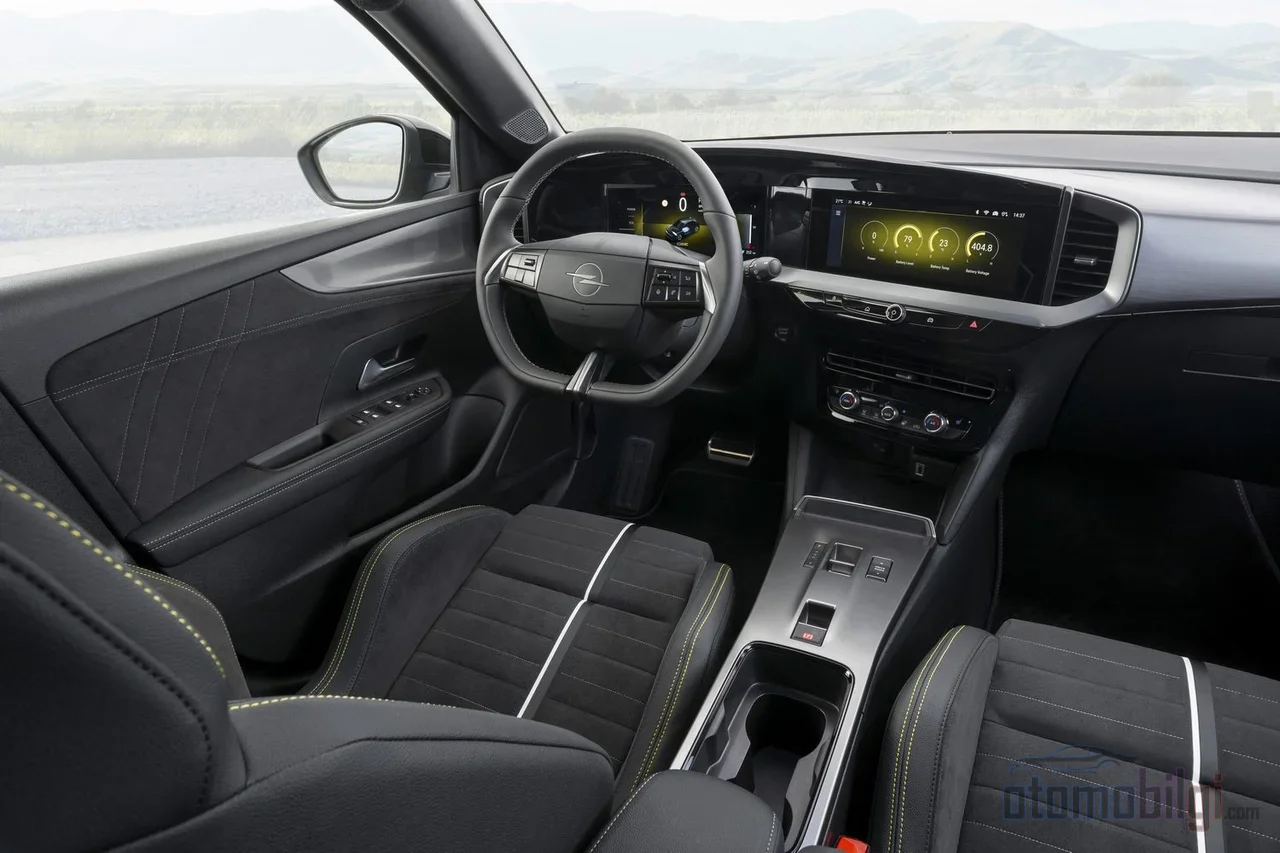
The GSE difference is felt in the interior, but it is not overdone. The heated Alcantara GSE sport seats have integrated headrests and 6-way adjustment; the flat-top-and-bottom heated vegan leather steering wheel, aluminum sport pedals, black roof and steering wheel, Alcantara door panels, and ambient lighting are exclusive to this version. In other words, the performance-focused cabin is built more around grip and driver engagement than on showiness.
On the technology side, the 10-inch multimedia screen (navigation, EV route planning, wireless CarPlay and Android Auto) and the 10-inch digital instrument cluster are standard. The GSE-specific infotainment pages summarize this car's character: a G-force meter, lap timer and acceleration measurements, battery management data, and temperature information. A wireless phone charging pad and a 6-speaker audio system are also part of the equipment.
The safety and driver assistance side is rich: Intelli-Lux Matrix LED headlights, adaptive cruise control, lane keeping, blind spot warning, and a panoramic rear camera are standard. One weak point is worth noting: the Mokka family received 4 out of 5 stars in the 2021 Euro NCAP test (73% adult protection); a figure that lags behind rivals such as the five-star MINI Aceman, Smart #1, and Volvo EX30.
Where Does the Mokka GSE Stand Against Its Rivals?
The electric performance B-SUV segment is small but rapidly crowding: the Abarth 600e Competizione offers the same 281 hp output, while the MINI Aceman JCW, Alpine A290, Alfa Romeo Junior Elettrica Veloce, and Smart #1 Brabus compete in the same niche; Strong Volvo EX30 versions also roam this segment. the limited-slip differential, Alcon brakes, 189% increased rear roll stiffness, and 14.5 steering ratio are not a marketing package but measurable engineering.
In the Türkiye context, the most frequently compared model is the Hyundai Kona Electric: With 218 hp and a 65.4 kWh battery delivering 514 km of WLTP range, the Kona is clearly ahead in range and efficiency priority. However, the Kona does not carry a performance-focused setup; they give different answers to the same question as the GSE. For the buyer who puts range at the center, the Kona makes sense; for the buyer who puts handling and acceleration at the center, the GSE makes sense. This is a different equation from the traditional comparisons made on the standard electric Mokka, and the GSE's very reason for being is to change this equation.
The New Home of Electric Performance? Assessment
The Mokka GSE's strongest card is the hardware behind the promise: limited-slip differential, Alcon brakes, 189% increased rear roll stiffness, and a 14.5:1 steering ratio are not a marketing package, but measurable engineering. But the price to pay is also clear: The 403 km standard range drops to around 323-336 km, and there is no heat pump. it is not unbearable, but it may not satisfy those whose priority is daily comfort. In terms of design, the interior remained restrained, and the absence of artificial engine sound reduces the drama - this may fall short for those who love crowning the driving experience with sound. Sold brand new in Türkiye, this model offers the electric B-SUV buyer a genuine performance option for the first time.
For someone trying to be both a daily car and a passion car at the same time, calculating the range-practicality balance seriously is a must; For someone trying to be both a single car and a passion car at the same time, it is essential to seriously calculate the range-practicality balance; but if you are looking for an electric B-SUV that wants to make a mechanical difference in its segment and invests in grip and brakes, the Mokka GSE is currently one of the most tangible addresses.
Sources
- Brewed for Performance: New Opel Mokka GSE Completes Mokka Family – Stellantis Media
- Pricing and Specification Announced for Mokka GSE – Stellantis Media
- Opel's Fastest Electric, the Mokka GSE, Arrives in Türkiye – Opel.com.tr
- Opel Adds New Extended Range Mokka Electric to Line-up – Opel.ie
- Vauxhall Mokka GSE Review 2026 – RAC
- Opel Mokka Electric GSE – EV Database
- 2026 Opel Mokka Electric GSE Specs – Automobile-Catalog
- Opel Mokka Electric GSE Charging – DEFA
- Press Kit: New Opel Corsa GSE – Stellantis Media
- Opel Mokka Electric Guide – Elektrikli Türkiye
- 2026 Vauxhall Mokka GSE Full Review – Autocar