Why Is the 2026 Hyundai Ioniq 5 Still on the Agenda of EV Buyers?
Share This Page
The Hyundai Ioniq 5, with its 800-volt charging architecture, WLTP range reaching 570 kilometers, and the spacious interior offered by the E-GMP platform, is a model that never drops off the shortlist of those looking for a C-segment electric SUV in Türkiye. What sets it apart from its rivals is not a single feature; it is the fact that fast charging, an airy cabin, and practical V2L capability are combined in one package. In this article, we examine the model through its range, charging character, interior, and competitor comparisons - focusing on its identity without diving into the price list.
Highlights
- 570 km WLTP combined range (84 kWh, Advance version); in city use up to 613 kmup to
- 350 kW charging from 10% to 80% at a DC station 18 minutes; 336 km of range in 15 minutes
- AWD version 325 PS and 605 Nm; 0-100 km/h in 5.3 seconds
- 520 L of cargo volume, expanding to 1,580 L
- with the second row folded
V2L: the vehicle can power electric devices and even another electric vehicle
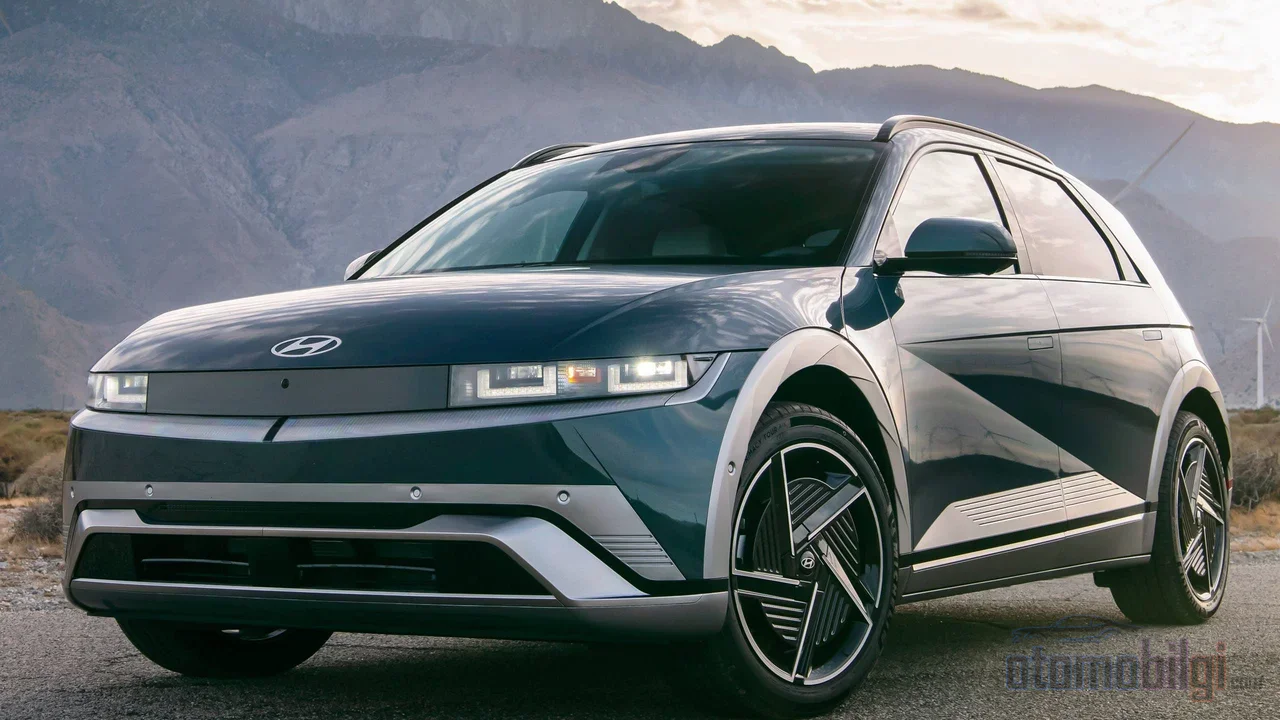
The Ioniq 5 is a mid-size CUV built on Hyundai's E-GMP platform developed specifically for electric vehicles. The platform's defining feature is its long wheelbase: since the motors are placed at the front and rear and the battery is spread across the floor, a longer interior space is achieved compared to a conventional compact SUV. Exterior dimensions are 4,655 mm in length, 1,890 mm in width, and 1,605 mm in height; in other words, sedan-like proportions on the outside, with a living space above its class on the inside.
In Türkiye there are two battery options: the entry-level Dynamic version uses a 63 kWh battery, while the Advance comes with the 84 kWh long-range battery. The facelifted model is about 15% more efficient in combined use than the previous generation; this means squeezing more kilometers from the same battery capacity.
Range: The Gap Between the WLTP Figure and Reality
The WLTP combined range of the 84 kWh version is 570 km; in the city cycle this figure rises to 613 km. The technical data sheet for the 63 kWh version shows a combined 440 km and 15.6 kWh/100 km consumption. The reason for the difference is simple: WLTP is a standard test protocol that combines urban and extra-urban cycles; on real roads, speed, temperature, and load conditions pull this figure down. An example reference for the AWD version: WLTP 495 km, around 400 km in real-world use. The 384 km WLTP figure of the entry battery can feel tight, especially for users who drive mostly long distances; this is also the most frequently criticized point in forums.
800-Volt Architecture: The Physics of Charging Speed
The Ioniq 5's strongest technical trump card is its 800-volt electrical architecture, a rarity among cars. The physics is simple: at the same power, higher voltage means lower current; lower current means less heating in the cables and battery, and therefore higher charging power. The result is measurably concrete: the 84 kWh battery charges from 350 kWDC station from 10% to 80% in 18 minutes, and delivers 18 minutes from 10% to 80% charging, and 336 km in 15 minutes adds range. On the 63 kWh version, the same 15 minutes corresponds to approximately 270 km of range.
The infrastructure side is also flexible: the vehicle with 400V/800V multi-charging support can work at both older and newer generation stations. The weak point is beyond fast charging: When connected to a50 kW DC unit, the 10%→80% time stretches to 1 hour 16 minutes on the84 kWh battery, and to 58 minutes on the 63 kWh version. At home, a full charge on a 7.4 kW wall unit takes about 12 hours, and about 8 hours on an 11 kW three-phase connection. In Türkiye, users are confirming the official 18-minute figure for 10%→80% at stations above 300 kW on networks like Trugo and Eşarj; one user shared that they completed the 20%→70% range in 10 minutes.
Performance: Three-Motor Configuration
On the power side there are three options: standard 2WD with 125 kW (170 PS) and 8.5 seconds for 0-100 km/h; long-range 2WD with 168 kW (229 PS) and 350 Nm at 7.5 seconds; while the AWD does 0- 100 km/h in 5.3 seconds with 325 PS of power and 605 Nm of torque. The AWD's raw acceleration is impressive, but what really makes the difference is the efficiency balance of even the single-motor versions; the long-range 2WD in particular is a satisfying middle ground for daily use.
| Version | Power | Torque | 0-100 km/h | WLTP Range |
|---|---|---|---|---|
| 2WD Standard (63 kWh) | 125 kW / 170 PS | - | 8.5 sec | 440 km |
| 2WD Long Range (84 kWh) | 168 kW / 229 PS | 350 Nm | 7.5 sec | 570 km |
| AWD (84 kWh) | 325 PS | 605 Nm | 5.3 sec | 495 km |
Interior: Minimalist But Not Empty
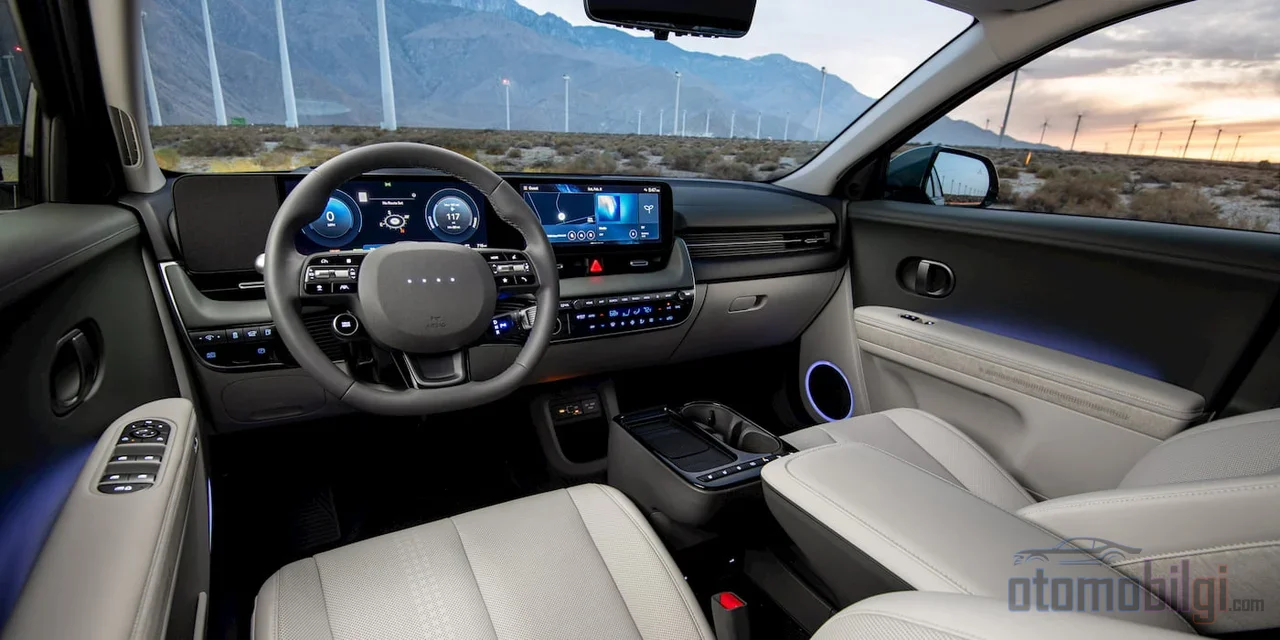
The E-GMP's long wheelbase finds its reward here: a flat floor, a compact console and a spacious cabin. The interior gives a minimalist living-room feel without sacrificing functionality; the console has a deep storage area and a sliding divider, and wireless Apple CarPlay and wireless charging are standard. The presence of a head-up display and physical buttons is a decisive plus for those who criticize Tesla-type fully touchscreen interfaces in practice.
On the cargo side, we're ahead of the competition: 520 L of normal volume, and 1,580 Lwith the second row folded. The 1,600 kg towing capacity is also a feature not to be overlooked for families towing a caravan or boat in Türkiye. Five family members, weekend luggage and long-distance travel are all accounted for in this vehicle.
V2L: When Is a Car a Generator?
The Ioniq 5's V2L feature is the ability to transfer energy from the battery to the outside. In practice, this covers a range of uses from running a water heater at a campsite, to powering home appliances during a power outage, even to giving emergency energy to another electric vehicle with a depleted battery. Considering it together with the 800-volt architecture, the vehicle becomes a portable energy source beyond being a means of transport. This is an option found in almost no rival in its class.
Rival Comparison: Who Is Strong Where?
The Ioniq 5's toughest rivals in Türkiye are the Kia EV6, which shares the same platform, the global sales leader Tesla Model Y, the VW ID.4 which doesn't know 800 volts, and the brand's own little brother, the Kona Electric.
Kia EV6: The technical heartbeat is the same - the same E-GMP platform, the same 800-volt architecture. The difference lies in driving character and pragmatism: while the EV6 offers a sportier suspension setup and sharper efficiency, the Ioniq 5 stands out with more cargo space and a higher driving position. In Türkiye, the Ioniq 5 is priced roughly 1,276,000 TL below the EV6 in entry versions; for those who want the same engineering for less, this difference alone can be decisive.
Tesla Model Y: The leader in range and acceleration on paper. Comparison data shows the Model Y ahead with 568 km of range, 128 km ahead of the Ioniq 5's 440 km standard battery figure, and ahead in acceleration at 4.8 seconds. But user reviews balance the picture: the Ioniq 5 is found better in ride comfort, interior quality, and physical buttons. In terms of charging infrastructure as well, the Ioniq 5 in Türkiye can continue after an 18-minute stop at any 300 kW DC station.
VW ID.4: The biggest technical difference among the trio is battery architecture: unlike the EV6 and Ioniq 5, the ID.4 is not 800 volts. The price is paid on long-distance stops. Some buyers openly say they prefer the ID.4's more conservative lines because they find the Ioniq 5's retro-futuristic design risky - design is truly a divisive topic in this class.
Kona Electric: A sibling from the same brand in the B-SUV segment. The Kona Electric is found more efficient in short distances and winter conditions; however, due to its 400-volt architecture, it falls noticeably behind the Ioniq 5 in ultra-fast charging. On the range side, there is a gap of 454 km versus the Ioniq 5's 507 km. For someone living with short daily distances who does not care about charging speed, the Kona is a rational choice; when it comes to long journeys and charging wait times, the Ioniq 5 defends itself.
| Model | Range / Charging | Standout Aspect |
|---|---|---|
| Hyundai Ioniq 5 | 570 km WLTP; 10% to 80% in 18 min (350 kW) | 800V charging speed, cargo volume, V2L |
| Kia EV6 | Same platform, 800V | Sporty driving; but a higher price |
| Tesla Model Y | 568 km WLTP; 4.8 s 0-100 | Leader in range and acceleration |
| VW ID.4 | 400V architecture | Conservative design preference |
| Hyundai Kona Electric | 454 km; 400V, slower in charging | Efficiency in short distances, lower-segment price |
The Ioniq 5 in the Turkish Market: Position and Target Audience
The facelifted New Ioniq 5 has been launched for sale in Türkiye by Hyundai Assan, and its city range promise extends up to 613 km. In terms of market position, the model counts in the same highly sought-after electric SUV group as the Togg T10X, Tesla Model Y, and Kia EV3. Dealer price lists show 3.35 million TL for the Dynamic version and around 4 million TL for the long-range Progressive; note that these figures come from dealer pages and their currency must be verified before purchase. Price perception is also divided: one group writes that they find the trio of "long range + fast charging + reasonable price" here, while the other group argues that the long-range price is debatable when compared with the Model Y.
To clarify the target audience, three profiles stand out:
- Long-distance-oriented user: A charging profile with an 18-minute stop and over 300 km of range virtually eliminates range anxiety - as long as there is a 350 kW station along the route.
- Family user: Five seats, 520 L trunk, 1,600 kg towing capacity and a roomy rear row make a coherent package for one-car families.
- Intensive urban user: For someone covering 60-80 km a day, even the 63 kWh version means charging once a week; V2L is a small but genuine quality-of-life boost.
A Brief Assessment
The weak points should also be honestly noted: the vehicle weighs about 2 tons, which affects tire and brake economics; the entry battery's range (384 km WLTP for the 58 kWh class) is limited; and the design strikes some as bold retro and others as odd. But on the engineering side the picture is clear: class-leading charging speed, a spacious cabin and V2L - no second model offers this trio at the same price. For someone buying an electric SUV with access to charging infrastructure, the Ioniq 5 will remain a name that stays on the agenda.
Sources
- IONIQ 5 | all-electric CUV | Performance
- Charging overview | Hyundai Motor Europe
- IONIQ 5 | all-electric CUV | Features
- IONIQ 5 | Performance | Hyundai Motor Türkiye
- IONIQ 5 | Features | Hyundai Motor Türkiye
- IONIQ 5 | Highlights | Hyundai Motor Türkiye
- Hyundai IONIQ 5 Platinum AWD | EV Ireland
- Hyundai's New IONIQ 5 with 613 km Range Launched for Sale in Türkiye
- HYUNDAI IONIQ 5 - Technical Specifications
- HYUNDAI IONIQ 5 - Price List
- 2026 Kia EV6 vs Ioniq 5 vs VW ID.4: Irvine EV Guide
- Why did you choose an ID 4 over a Hyundai Ioniq 5 or Kia EV6?
- Hyundai IONIQ 5 vs Hyundai Kona Electric Comparison
- Tesla Model Y vs Hyundai IONIQ 5 Comparison
- Hyundai IONIQ-5 My Experience and Review - DonanımHaber Forum
- hyundai ioniq 5 - Ekşi Sözlük
- Ioniq 5 vs Kona Electric Price-Performance Analysis
- Best Electric Car Brands and Models (2026)