2026 Kia EV6: The Report Card of the Sharply Styled Electric Crossover
Share This Page
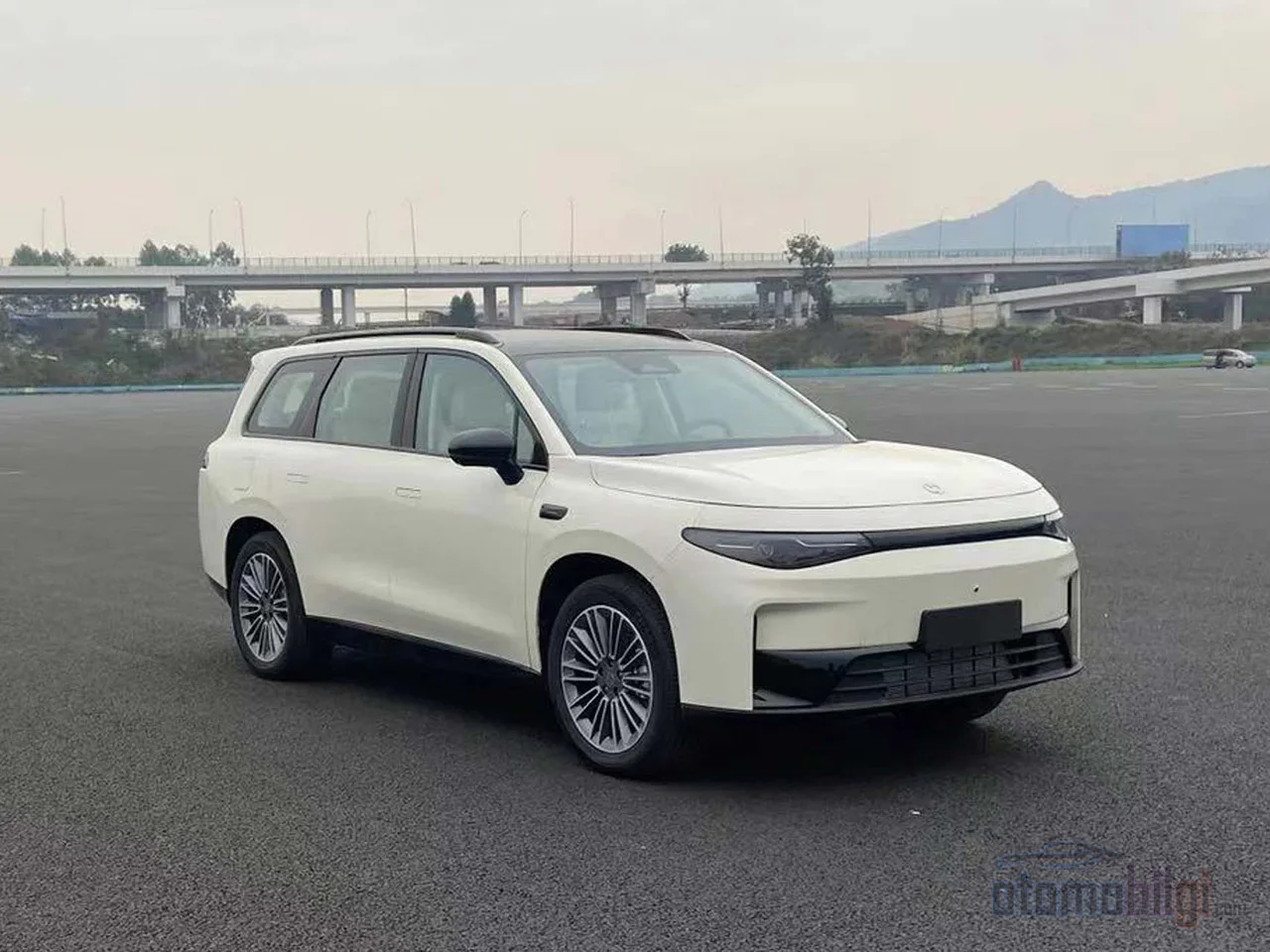
The Kia EV6 is a battery-electric crossover positioned in the C segment, built on Kia's first dedicated electric platform, the E-GMP. With its 84 kWh battery, it offers 450-582 km of range on the WLTP cycle, charges from 10% to 80% thanks to its 800-volt architecture in 18 minutes and, in GT form, reaches 0-100 km/h in 3.5 seconds. This guide covers the EV6's segment identity, charging and range characteristics, interior technology and its place in the Türkiye market within a single framework.
Highlights
- WLTP range range: 450-582 km (84 kWh battery, 2026 model year)
- 800V DC fast charging: 10% → 80% in 18 minutes
- GT version: 641 hp, 770 Nm, 0-100 km/h in 3.5 seconds
- Interior with dual 12-inch curved panorama display, totaling approximately 24 inches of screen
- Segment rivals: Tesla Model Y, Hyundai Ioniq 5, VW ID.4
Which Segment Is the Kia EV6 In and Why Is It a Different Kind of Electric Crossover?
The EV6 is a battery-electric compact crossover SUV produced since 2021 and is Kia's first model developed from scratch as an electric vehicle. This distinction is not an empty marketing phrase: the EV6 is not a gasoline body converted to electric, but a vehicle built on a dedicated electric platform called the E-GMP. The Hyundai Ioniq 5 shares the same platform; the two siblings share the same technical blood, with different bodies.
Kia officially positions the vehicle as a "crossover," and in the Türkiye market it is evaluated in the C-segment electric crossover class. Its dimensions confirm this: approximately 4,694 mm in length, 1,880 mm in width and a 2,900 mm wheelbase - the combination of the exterior dimensions of a classic C-SUV body with the long wheelbase offered by the electric platform. The ratio of wheelbase to overall length gives the interior serious space; this is the concrete practical payoff of dedicated platforms.
On the safety side there is concrete data: the EV6 emerged from the Euro NCAP tests with 5 stars (2022 test). While this is not sufficient on its own when assessing the segment, it shows that the baseline score is solid.
Range and Battery: What Do the WLTP Figures Say?
The current generation comes with an 84 kWh battery, and for the 2026 model year the WLTP range varies between 450-582 km . The power range extends from 239 kW up to 478 kW (GT). The reason for the differences within this range is the drivetrain layout: single-motor RWD versions sit at the top of the list because they transfer the battery's full capacity to the wheels efficiently, while dual-motor AWD and GT versions rank lower due to the extra motor's weight and consumption.
One footnote is important: the EV6's first generation had 58 and 77.4 kWh battery options. The range figures of 340-528 km seen in some international market tables published today belong to these older batteries; the 84 kWh figure should be used as the reference when evaluating the 2026 model year. In Türkiye, the model's Long Range RWD version is listed with 528 km of WLTP range, and a version with 63 kWh capacity is also available in the local sales program.
The Difference Between WLTP and Real-World Range
WLTP is a laboratory cycle; in real road conditions range changes with speed, temperature and load. In independent real-world calculations, the Long Range AWD version falls in the 315-640 km band, while the GT sits at 280-570 km. In other words, with the same battery but a different driver profile, the difference can be nearly twofold. The practical conclusion is this: the 84 kWh battery, thanks to its thermal management, works with a reasonable loss even in winter conditions, but the correct engineering approach is to read the "582 km" figure not as a guarantee but as a reference upper limit.
800-Volt Architecture: The Charging Character That Sets the EV6 Apart from Its Rivals
The EV6's strongest technical differentiator lies not under the hood but in its charging architecture. The vehicle comes with an 800-volt electrical architecture, and this allows it to complete DC fast charging from 10% to 80% in 18 minutes. The GT and Long Range versions support 220 kW peak-power 800V DC ultra-fast charging. AC charging typically takes about 7 hours; the 10.9 kW onboard charger in current US versions delivers a full charge in about 5 hours on a 240V grid.
The practical value of 800V is not just peak power but the shape of the charging curve: the system draws an almost "flat" curve, able to sustain power above 200 kW up to 55% state of charge. In other words, the 18-minute figure rests not on a single instantaneous peak value but on high power sustained across the entire charging duration. To make this difference concrete, let's compare it with segment rivals:
| Model | Charging Architecture | 10% to 80% Approximate Time |
|---|---|---|
| Kia EV6 | 800V | 18 minutes |
| Hyundai Ioniq 5 | 800V | 18 minutes |
| Tesla Model Y | 400V (250 kW) | ~22 minutes |
| Porsche Taycan | 800V (320 kW) | ~17 minutes |
| VW ID.4 | 400V | Significantly longer |
The engineering conclusion from the table is clear: although the Tesla Model Y's raw kW value is high, due to its energy efficiency and charging curve it finishes more slowly than the EV6 during time-constrained stops. Against classic 400V vehicles like the VW ID.4, the difference is even more pronounced. An additional advantage: the EV6 can operate compatibly with both 400V and 800V DC stations without an external converter - in the reality of Türkiye's mixed charging network, this compatibility is a practical necessity.
V2L: The Car as a Mobile Energy Source
The second face of the 800V architecture is bidirectional charging. The EV6 can deliver electricity outward at 3.6 kW of power (V2L): from heating water at a campsite to powering essential appliances during a power outage. The fact that the same output can be used from the outlet inside the cabin makes this feature functional not just on paper but in everyday life.
GT Version: A Performance Identity for the Electric Crossover
At the top of the EV6 lineup sits the GT, and this version is a model "engineered for performance." With its dual-motor AWD layout it produces 641 hp of power and 770 Nm of torque, doing 0-100 km/h in 3.5 seconds completed and reaching a top speed of 260 km/h. It is not just a version with added engine power: an electronic differential lock, Drift mode, GT-specific suspension tuning, large brake discs and four-piston front brake calipers, 21-inch alloy wheels and performance tires are all part of the package. In other words, the GT carries the braking and handling infrastructure of a true performance vehicle in a crossover body.
The GT's strategic function is even greater than its sales figures: the GT sits in a flagship position where the EV6's technical superiority is showcased. In the electric vehicle market, it is always this top-of-the-range model that allows brands to build perception in the segment. The hardware steps below the GT sweep across the rest of the lineup with a power range of 239-478 kW.
Interior and Technology: What Does the Dual-Screen Layout Offer?
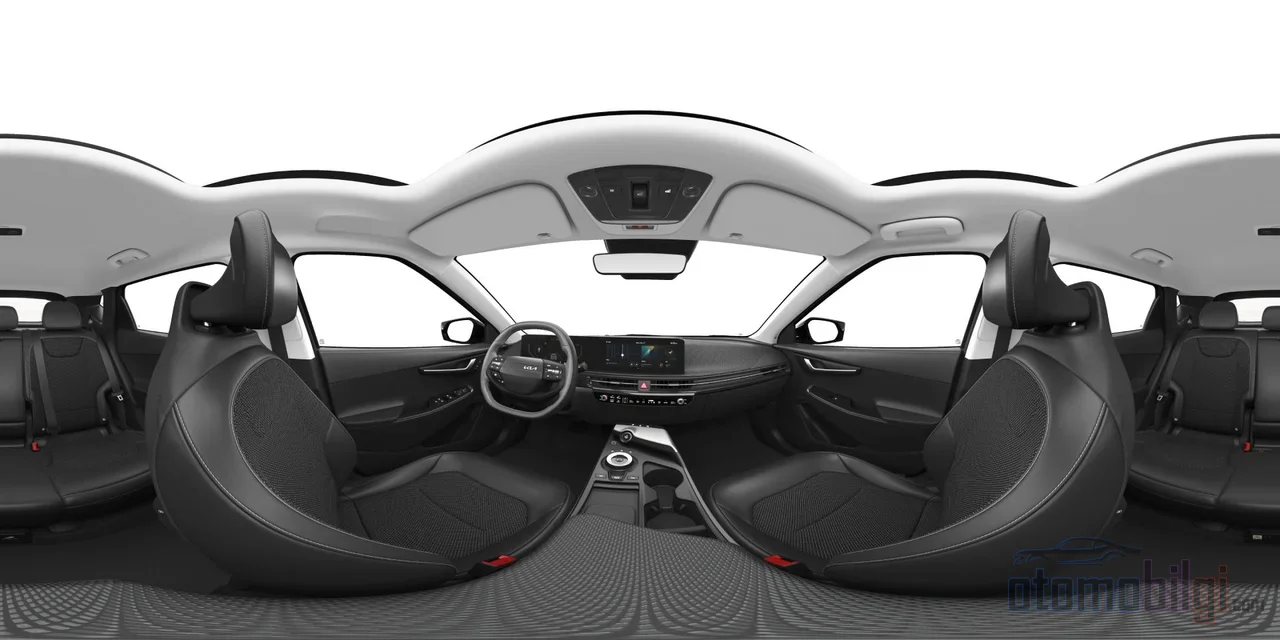
The defining element of the EV6's cockpit is the dual 12-inch display that flows like a single piece and sits within a curved frame: one is the digital instrument cluster, the other the infotainment screen. Offering approximately 24 inches of uninterrupted display in total, this layout aligns the panel with the driver's line of sight, creating a solution that is both ergonomic and visually clean.
On the software side, it meets current expectations: thanks to the Kia Connect ecosystem and wireless (OTA) software updates, the vehicle continues to evolve even after purchase. Wireless CarPlay and Android Auto are available as standard. The list of upper equipment packages is long:
- Augmented reality (AR) head-up display and 12-inch head-up display options
- Meridian premium sound system with 14 speakers
- Nappa leather upholstery, heated and ventilated front seats
- Heat pump, sliding rear seats, wireless phone charging pad
- Power tailgate, 490 L cargo volume and folding capacity expanding to approximately 1,300 L, plus an additional 52 L front trunk (frunk)
The heat pump deserves special emphasis: this component, which directly affects winter range, can be decisive in option selection for users living in the Marmara and Central Anatolia regions under Türkiye's conditions.
The EV6's Position Against the Tesla Model Y, Ioniq 5 and ID.4
In this three-way comparison, the EV6's biggest technical difference is the 800V system we listed above. Since the Hyundai Ioniq 5 shares the same architecture, it is equal in charging speed; in fact, in some comparisons, it can pull ahead with slightly shorter stop times thanks to differences in battery management. The fact that the Ioniq 5's body design feels too futuristic to some buyers positions the EV6 as a natural alternative for those who prefer a more balanced design.
The EV6's trump cards against the Tesla Model Y are the efficiency of its charging curve, build quality and the balance of its road holding; Tesla's trump cards are the maturity of its software ecosystem and the breadth of its charging network. The NACS charging port becoming standard on current EV6 versions gives adapter-free access to the Tesla Supercharger network, which largely closes the gap on the charging side of this balance. The difference against the VW ID.4 is even clearer: a 400V architecture means noticeably less energy for the same dwell time, and this directly translates into travel planning on long journeys.
Edmunds' real-world road test with the EV6 GT-Line also offers a data point about the model's range reliability: the AWD version, with an EPA estimate of 270 miles, achieved 295.7 miles in the test - that is, above the factory figure. Independent tests confirming official values are an important signal of the reliability of a model's range promise.
Kia EV6 in Türkiye: Volume or Positioning?
Türkiye's electric vehicle market is growing: as of June 2026, the electric vehicle fleet has surpassed 447 thousand units and the market share of electric cars has reached 17.7% level. However, the top of the sales chart is dominated by the Togg T10X and T10F along with the Tesla Model Y; the Kia EV6 does not appear in the top ranks of this list. Kia's volume model in Türkiye stands out as the smaller and more affordable EV3 .
This picture is not a weakness of the EV6 but a definition of its role: the EV6 is not a volume tool but a segment positioning tool in Kia's Türkiye lineup. With its 84 kWh battery, 800V charging and GT version, it represents the brand's electric technology peak; the EV3 carries the sales volume. Kia Türkiye has published an up-to-date price list for the EV6, but since the scope of this guide is the model's identity, price evaluation will not be covered.
For Whom Is the EV6 the Right Vehicle?
- A strong candidate for users who drive long distances and want to minimize stop time - an 18-minute 10-80% charge practically changes travel planning.
- For performance-focused buyers, the GT is one of the rare options offering 3.5-second acceleration in crossover form.
- While the charging speed offers an advantage for apartment residents without home charging, the overall cost of EV ownership without home charging should still be carefully calculated.
- The segment's natural limit for families looking for three rows of seats or maximum rear-seat space; the EV6 is not the vehicle for those needs.
On the ownership side, a balanced picture must also be drawn: the low independent reliability score for the 2022 model year has sparked debate, and the most concrete common theme has been ICCU (integrated charging control unit) failures and related 12V battery problems; owners report free unit replacements. On the other hand, trouble-free experiences are also reported in long-term user reviews at 50,000 miles, and independent tests of the 2025 model year still rate the EV6 as one of the standout compact electric SUVs. This tension between the low score and positive long-term experiences can be read as an indication that most of the model's early software and unit issues have been resolved; however, second-hand buyers would be well advised to inquire about the ICCU history.
Conclusion: The EV6's Report Card
From an engineering standpoint, the EV6's report card breaks down into clear categories: charging architecture at the top of its class (800V, 18 minutes, flat curve), strong and honestly promised range (tests confirm the WLTP figures), a unique peak in the performance lineup (GT, 641 hp), and a mature, readable technology package inside. The weak point, however, is the early blemishes in its reliability history. Although the volume model in Türkiye is the EV3, the EV6 is the vehicle where Kia's technical claim stands as a name in the segment - and if a buyer looking for a C-segment electric crossover takes 800V charging speed seriously, this is the model that should be written at the very top of their comparison list.
Sources
- Kia EV6 redefines boundaries of electric mobility - Kia Global Newsroom
- All Features and Details of the Kia EV6 - Kia Türkiye
- 2026 Kia EV6 - Kia US
- Kia EV6 2026 Pricing & Specifications - carsales.com.au
- Kia EV6 (2026) review - Car Magazine
- Kia EV6 - Drive-EV
- Kia EV6 Charging Speed Guide
- Kia EV6 GT - EV Database
- Kia EV6 GT Features - Licarco
- 2025 Kia EV6 GT-Line Tested - Edmunds
- Türkiye Electric Vehicle Market June 2026 - ChargeIQ
- June Sales Figures - Dolubatarya
- 2022 Kia EV6 Reliability - Consumer Reports
- Kia Electric Models - tomotiv.com