2026 Audi Q4 e-tron: Report Card of the Premium Electric SUV
Share This Page
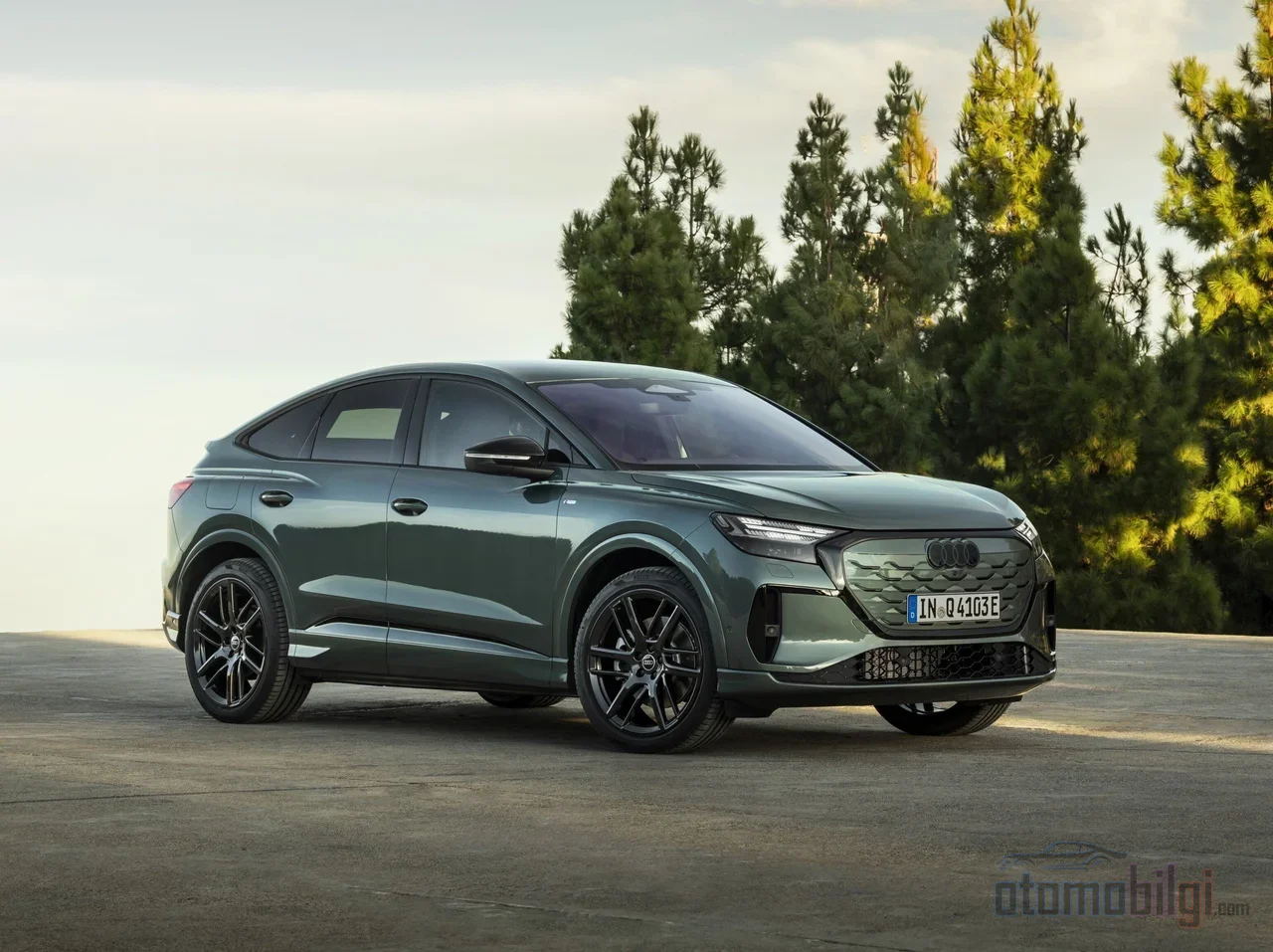
The Audi Q4 e-tron is the brand's representative in the compact premium electric SUV (C-SUV) segment; built on the Volkswagen Group's MEB electric platform, it is a model sold new in Türkiye with a WLTP range of up to 557 km, 175 kW DC charging power that completes a 10% to 80% charge in roughly 28 minutes, and equipment focused on premium comfort. In short: one of the measurably leading names in its class when it comes to range and charging, while its character is much closer to the Mercedes EQA than the Tesla Model Y.
Highlights
- WLTP range of up to 557 km (Q4 Sportback e-tron)
- 10% → 80% DC charging in roughly 28 minutes, with a maximum 175 kW charging power
- MEB platform, 520 litres of boot space (up to 1,490 litres with seats folded)
- In Türkiye, the Q4 e-tron and Q4 Sportback e-tron are on sale with four motor options each
- Rivals: Mercedes EQA/EQB, BMW iX1, Tesla Model Y
Which segment does the Q4 e-tron belong to, and where does it stand in terms of identity?
To understand the Q4 e-tron's identity, two parameters suffice. The first is physical size: the car is in what we call the compact premium class as a C-SUV, at a scale that falls between Audi's Q3 and Q5. The second is its technical underpinnings: not Audi's own premium platform, but the MEB electric platform developed by the Volkswagen Group for series production. This is a critical choice from an engineering standpoint; it lowers costs and increases production volume, and in return positions the Q4 e-tron as the most accessible electric model in the Audi family.
As of the 2026 model year, the car has undergone a comprehensive facelift. Faster charging, increased range, a new interior, bidirectional charging capability and ChatGPT integration are the main headlines of this update. In the Turkish market, both the standard Q4 e-tron and the coupé-roofed Q4 Sportback e-tron body styles are on sale, and each body style offers four motor options.
Among what the facelift brings to the interior, the augmented reality head-up display stands out; this system, which projects driving information directly onto the windscreen, allows the driver to read speed and navigation data without taking their eyes off the road. The cabin, which arrives with the new design language, is described in user reviews as "solid and impressively spacious". The 520-litre boot opens up to 1,490 litres with the rear seats folded - a measurably good figure in the compact SUV class.
How much range is it really: 545, 557 or 592 km?
The most frequent question surrounding the Q4 e-tron is range. Giving a single figure here would be misleading, because the value changes considerably depending on the motor and battery choice. The correct reading is as follows: the rear-wheel-drive Q4 45 e-tron, with 286 HP of power and a battery with 77 kWh net capacity, offers a WLTP range of up to 546 km. Q4 55 e-tron quattro is more powerful but comes with a WLTP figure of 522 km and average consumption at around 16.8 kWh/100 km. With its smoother roofline's aerodynamic contribution, the Sportback body reaches a WLTP range of up to 557 km; this figure theoretically corresponds to 16.1 kWh/100 km consumption - one of the best values in the class.
It should be remembered that WLTP figures are laboratory measurements. In the real world, the range can vary between 285 and 575 km depending on temperature, speed, and load. In winter conditions and at highway speeds, approaching the lower bound, and in mild urban use, approaching the upper bound is a reasonable expectation. Audi's official consumption range also spans a wide band from 12.4 to 22.4 kWh/100 km; this band summarizes just how large the differences between versions and usage patterns are.
Measured as the leader in its class in range tests as well, the Q4 e-tron carries a strong record, especially on the efficiency side. Efficiency is a metric that should not be considered independently of range: getting more kilometers from the same battery reduces both charging station costs and time losses in the long run.
Charging characteristics: what do 28 minutes and 175 kW mean?
Audi's official figure is clear: DC fast charging from 10% to 80% takes about 28 minutes and the maximum charging power is 175 kW. This means recovering roughly 400 km of range in under half an hour. It is stated that this figure has been raised to 185 kW in the facelifted versions in the North American market; how widely the update spreads may vary from market to market, so the determining reference in Türkiye remains 175 kW.
The charging curve also matters in practice. When the vehicle is connected below 10%, power of up to 175 kW can be seen, while as it approaches 80%, the power drops to around 50 kW. This is the nature of lithium-ion batteries: toward the end of charging, power is gradually reduced to protect the cells. The average charging power staying around 120 kW in the 10-80% window is therefore expected behavior.
The situation with home and AC charging
On the AC charging side, which makes up most of daily use, the vehicle comes with an 11 kW onboard charging unit. With a wall unit, charging from 20% to 80% takes about 4.7 hours, while a full charge with a standard household outlet (16A) can take up to 43 hours. Installing a more powerful wall unit does not shorten the time; the limit is set by the vehicle's onboard charger. For a user charging overnight while parked, 4-5 hours of AC time is not a practical problem - a full battery every morning.
What is bidirectional charging for?
One of the most significant technical innovations introduced with the facelift is bidirectional charging: V2L (vehicle-to-load) and V2H (vehicle-to-home) scenarios. Simply put, you can use the energy in the battery to power devices at a campsite or to light part of your home during a power outage. This capability positions the Q4 e-tron as a vehicle that not only consumes but also serves as an energy source when needed.
Where does the Q4 e-tron stand against its rivals?
Its natural rivals in the Türkiye market are the Mercedes EQA and EQB, BMW iX1 and Tesla Model Y. Comparing them across three axes is useful: range-efficiency, performance, and comfort-technology package.
| Model | Range (WLTP) | Standout feature |
|---|---|---|
| Audi Q4 e-tron | Up to 545-557 km | 175 kW DC charging, 28 min 10-80%, AR head-up |
| Mercedes EQA | 528 km | Emphasis on comfort and equipment |
| BMW iX1 xDrive30 | 438 km (compared with the Q4 40) | 313 HP, but a small 64.8 kWh battery |
| Tesla Model Y | Supercharger network advantage | Software and charging infrastructure |
In a direct comparison with the Mercedes EQA, the Q4 e-tron offers about 7 km more range and pulls ahead in acceleration (6.7 s). On the BMW iX1 side the picture is clearer: while the xDrive30 delivers three-cylinder-like performance with 313 HP, its 64.8 kWh battery limits range; the Q4's 82 kWh battery establishes a decisive advantage here, and in user experiences the iX1's limited range is criticized while the Q4 45 is preferred. The Tesla Model Y is a strong rival with its range and charging figures; the Q4 e-tron's trump card against it is premium interior quality, quietness, and the "refined electric driving experience" offered by Audi's driving setup. There is also a question within the group: since the facelifted Q4 shares the same platform as the Volkswagen ID. family, its positioning against its own siblings can be questioned. The engineering answer is simple: the same skeleton, different suspension tuning, different material quality, and a different brand experience - that is precisely the definition of the premium difference.
Long-term ownership: the shaded lines of a strong resume
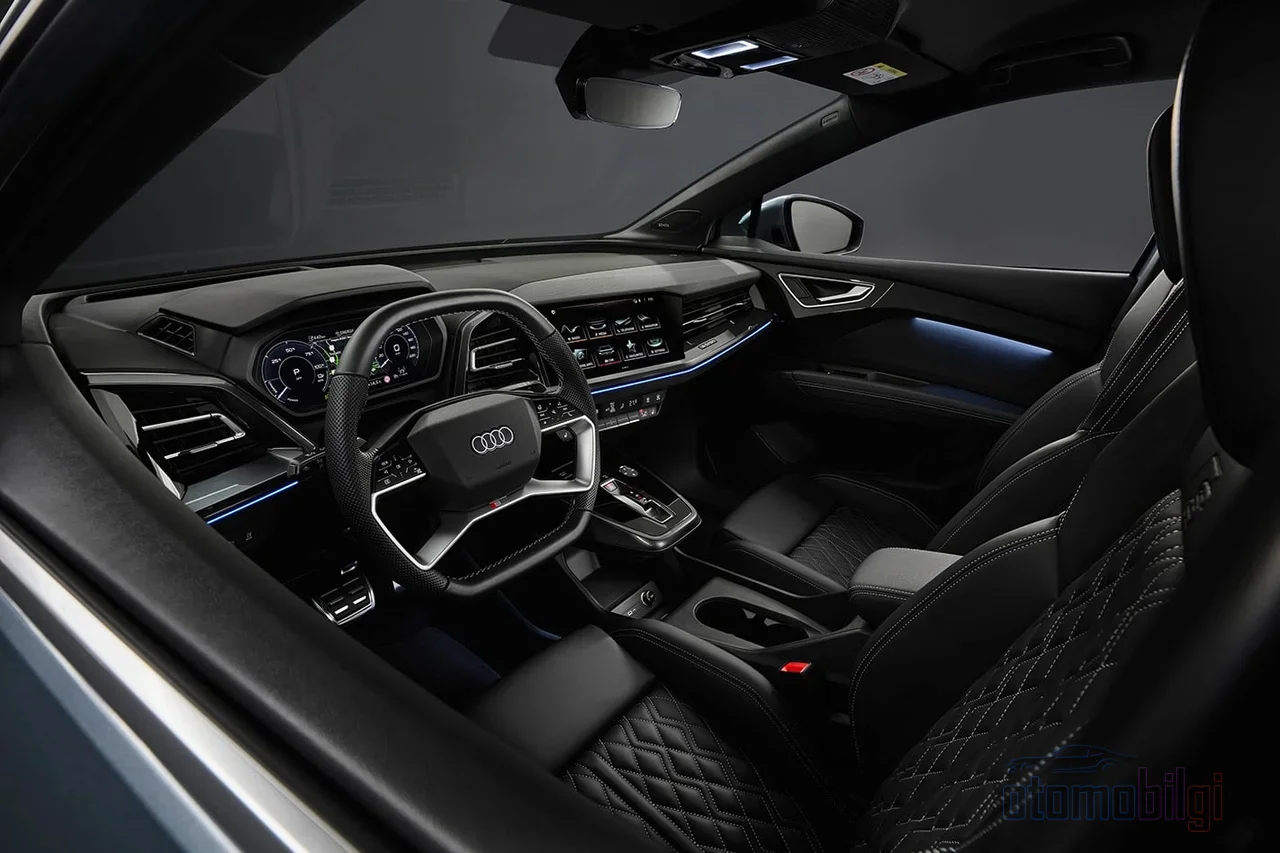
No technical value on its own tells the whole story of a vehicle's long-term behavior. While some Q4 e-tron owners report trouble-free use, there are recurring complaints in two areas in particular. The first is software: infotainment system freezes, connection drops in Android Auto and Apple CarPlay pairing, and problems with the touch/haptic controls on the multifunction steering wheel have been noted in long-term tests. The second is material quality: there is criticism of lower-quality plastics around the lower door panels and the armrest area.
This picture measurably shows the gap between expectation and reality in a premium-badged vehicle: the MEB platform's driving dynamics are sharp and clean, the cabin is spacious and solid; in return, software reliability is Audi's aspect on this platform that has not yet fully matured. For the reader making the purchase decision, these two lines should be as decisive as the range table.
Its position in the Türkiye market: pricing, campaigns, and positioning strategy
The new Q4 e-tron family has been officially brought to Türkiye, and on Audi Türkiye's price list the recommended turnkey price of the Q4 SUV e-tron is listed as 4,832,664 TL (2026). On the second-hand side, examples are trading in the 3.31-3.7 million TL band; this gap gives a first idea about the vehicle's value-retention curve. The announcement of a 0% interest campaign for the Q4 e-tron and Q6 e-tron in August 2026 shows that the brand wants to support volume in this segment.
The strategic position is this: Audi is positioning the Q4 e-tron not as the segment's cheapest option, but as the most balanced premium option. While the Tesla Model Y competes on technology and charging infrastructure and German rivals on comfort identity, the Q4 aims to be the one that combines measurable superiority in range-efficiency metrics with a premium cabin.
Summary of the report card
To sum up the Q4 e-tron's report card in three lines: it sits at the top of its class in range and efficiency, with a WLTP value of up to 557 km and a theoretical consumption of 16.1 kWh/100 km as proof. On the charging side, it is competitive with 175 kW power and a 10-80% time of 28 minutes, while bidirectional charging adds extra practical value. Its weak line is software reliability and perceived quality in some lower panel materials. The facelift's AR head-up display, new cabin, and increased range address some of these weak points. The answer to the identity question is clear: the Q4 e-tron is a vehicle that offers not technological parity with the Tesla Model Y, but a measurable range advantage with German premium comfort - and this definition is the right one for its target audience.
Sources
- Audi Q4 e-tron | Model (Audi Türkiye)
- Charging times of Audi electric models (Audi Türkiye)
- Audi ranks first in range tests with the Q4 e-tron (Audi Türkiye)
- Audi Q4 Sportback e-tron 557 km range video (Audi Türkiye)
- Audi New Q4 e-tron Price List (Audi Türkiye)
- Audi Q4 e-tron (2026): The range that comes with the facelift (Motor1 Türkiye)
- Audi Q4 e-tron (2026) review (Car Magazine)
- First drive in the new Audi Q4 e-tron (Electrive)
- Audi Q4 e-tron 45 (MY24-26) (EV Database)
- Audi Q4 e-tron 55 quattro (Elbilradar)
- Audi Q4 e-tron Technical Specifications (Vidyoto)
- Audi Q4 e-tron quattro performance Charging Time (HİMS Tech)
- Audi Q4 e-tron vs Mercedes-Benz EQA (Hibrit Elektrik)
- BMW iX1 xDrive30 vs Audi Q4 40 e-tron (Licarco)
- The new Audi Q4 e-tron family in Türkiye (DonanımHaber)
- Audi Q4 e-tron New Car Prices (arabam.com)
- Audi Q4 e-tron 40 Prices (sahibinden.com)
- Model versions Audi Q4 e-tron (Automóli)
- Used Audi Q4 e-tron review (What Car?)
- Audi Q4 e-tron Sportback long-term review (BusinessCar)
- Problems with the Audi Q4 (Autodoc)
- 5 month review of my Q4 (E-Tron Forum)
- Audi Q4 e-tron Update Adds Bidirectional Charging (The EV Report)