What Does the 2026 Volvo EX40 Offer in Türkiye?
Share This Page
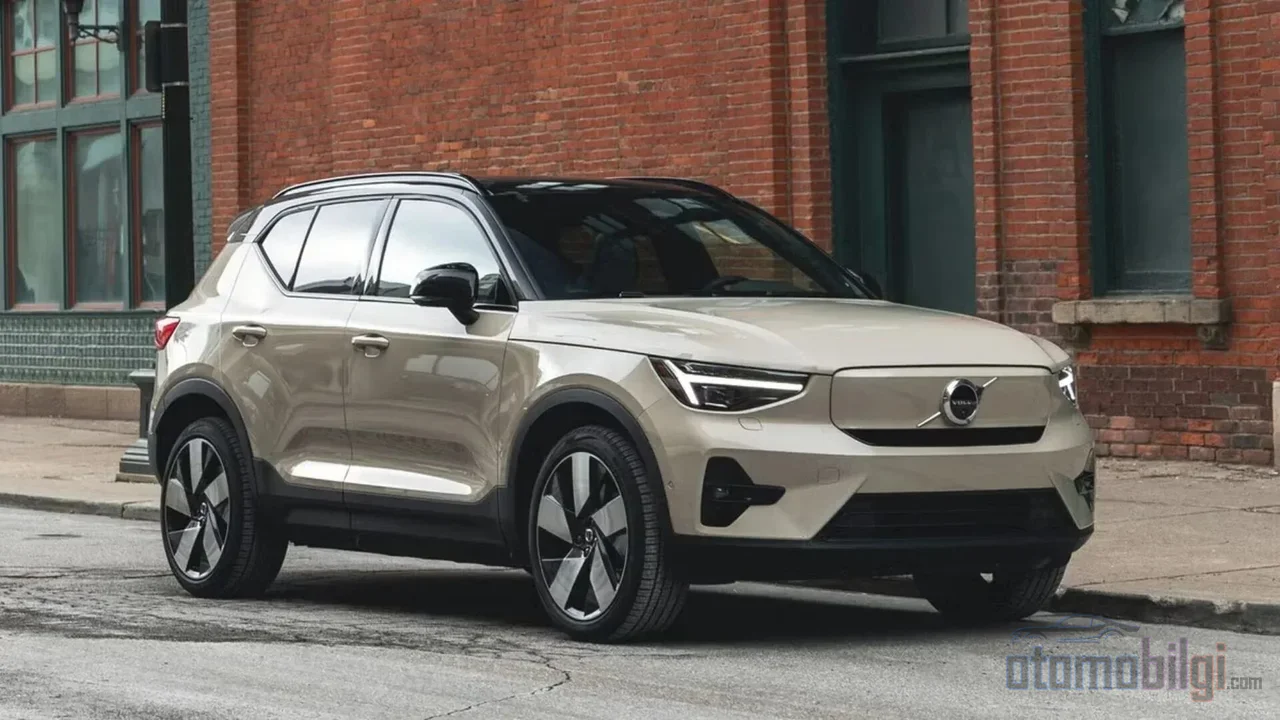
The Volvo EX40 is Volvo's fully electric premium compact SUV; a five-seat model that emerged in 2024 when the XC40 Recharge was renamed and whose brand-new sales continue in Türkiye. With its 82 kWh battery, its 4.8-second dual-motor version and its 28-minute fast charging time, it is one of the technically ambitious names in the segment. In this article, we examine the EX40's segment, its range and charging character, its interior and safety equipment, the aspects that set it apart from its rivals, and its place in Türkiye's premium electric SUV market.
Highlights
- 4,440 mm length and 2,702 mm wheelbase place it in the premium compact SUV segment
- 82 kWh battery; up to 556 km WLTP range in Single Motor trim
- With 200 kW DC, 10-80% charge in 28 minutes
- Twin Motor: 408 hp, 0-100 km/h in 4.8 seconds
- Euro NCAP 5 stars and a comprehensive set of driver assistance systems
From XC40 Recharge to EX40: The Background of the Name Change
To understand the EX40, a short history tour is essential. The model was actually launched in 2020 as the XC40 Recharge and was the electric derivative of Volvo's petrol XC40. In 2024, the Swedish manufacturer carried out a naming reform across its entire lineup: the Recharge designation was removed from the entire range, including plug-in hybrid models, with XC40 Recharge becoming EX40 and C40 Recharge becoming EC40. In other words, the EX40 sold today is not an entirely new vehicle; it is the updated identity of a matured platform.
This origin also explains one of its most important differences from its rivals. While most rivals, such as the Audi Q4 e-tron or Mercedes EQA, are based on dedicated platforms developed from scratch for electric power, the EX40 is the direct descendant of the petrol XC40. This comes with a cost and a benefit: while some architectural limits persist in the interior architecture, production maturity and Volvo's safety know-how accumulated over years come as part of the package. Türkiye is one of the markets that saw one of the first examples of Volvo's new naming policy first-hand.
Dimensions and Technical Identity: Segment Analysis with Data
The EX40 is officially classified in the fully electric premium compact SUV class; it is sold as a five-seat cabin with Euro6e (Single Motor) and Euro6d (Twin Motor) emission standards. Its dimensions are in the typical range for the segment: 4,440 mm length, excluding mirrors 1,873 mm width, 1,647 mm height and 2,702 mm wheelbase. The 11-meter turning circle is a good value in terms of urban maneuverability for an SUV of this size.
From an engineer's perspective, the most interesting figures are the load and towing capacities. The Single Motor version weighs 2,075 kg ready to drive, and the Twin Motor 2,170 kg ; towing capacity is 1,500 and 1,800 kg respectively. The cargo volume under the battery lid varies between 410-536 liters depending on the folding configuration, rising to up to 1,400 liters when the rear seats are folded. Add to that the 31-liter front trunk and the 59-liter closed storage compartment, and the practical advantage of going electric is clearly felt.
| Specification | Single Motor Extended Range | Twin Motor |
|---|---|---|
| Power | 185 kW / 252 hp | 300 kW / 408 hp |
| Torque | 420 Nm | 670 Nm |
| Drive | Rear-wheel drive (RWD) | AWD |
| 0-100 km/h | 7.3 seconds | 4.8 seconds |
| Top speed | 180 km/h | 180 km/h |
| Battery | 82 kWh nominal | 82 kWh nominal |
| Combined range | Up to 556 km (WLTP) | 521 km (WLTP) |
| Kerb weight | 2,075 kg | 2,170 kg |
| Towing capacity | 1,500 kg | 1,800 kg |
A note: In some markets, a smaller 69 kWh battery option is also offered, but looking at the table, it is clear that the main game is built around the 82 kWh pack. The Twin Motor version's 408 hp is a high figure compared to many rivals in its class; we will trace this difference in a future competitor comparison.
Range and Charging: What Do the Realistic Numbers Say?
On paper, the Single Motor Extended Range promises up to 556 km of range in the combined WLTP cycle; in the city cycle this figure extends up to 781 km. In the Twin Motor, combined range shrinks to 521 km. It should be remembered that WLTP is measured under laboratory conditions: independent range calculation platforms estimate 245-510 km for the Single Motor in real-world conditions, and around 350 km in cold weather and city use. The consumption figure also supports this picture: in the combined cycle, 17.2 kWh/100 km (11.7 in the city), and 18.2-19.4 kWh/100 km in the Twin Motor.
Charging characteristics
On the charging side, the EX40's strongest card is DC fast charging. From 10% to 80% at 200 kW in 28 minutes is achievable. At lower-power charging stations, the time naturally increases: with 135-155 kW class units, the 10-80% time rises to approximately 33 minutes. The AC side is sized for home use: with a three-phase 16-amp supply, 0-100% takes about 8 hours, while on a common 7 kW wall unit it takes about 11 hours. A 6-meter 32-amp charging cable comes as standard equipment, and Plug & Charge support eliminates the authentication step at the charging station, saving time in practice.
The range-charging pair must be read together. On long journeys, the 28-minute 10-80% window offers a travel rhythm that overlaps with breaks; however, since competitors' 800-volt architecture models can drop below 20 minutes, the EX40 offers a fast-charging experience that is average for its class, not at the top.
Interior and Technology: The Limits of Scandinavian Simplicity
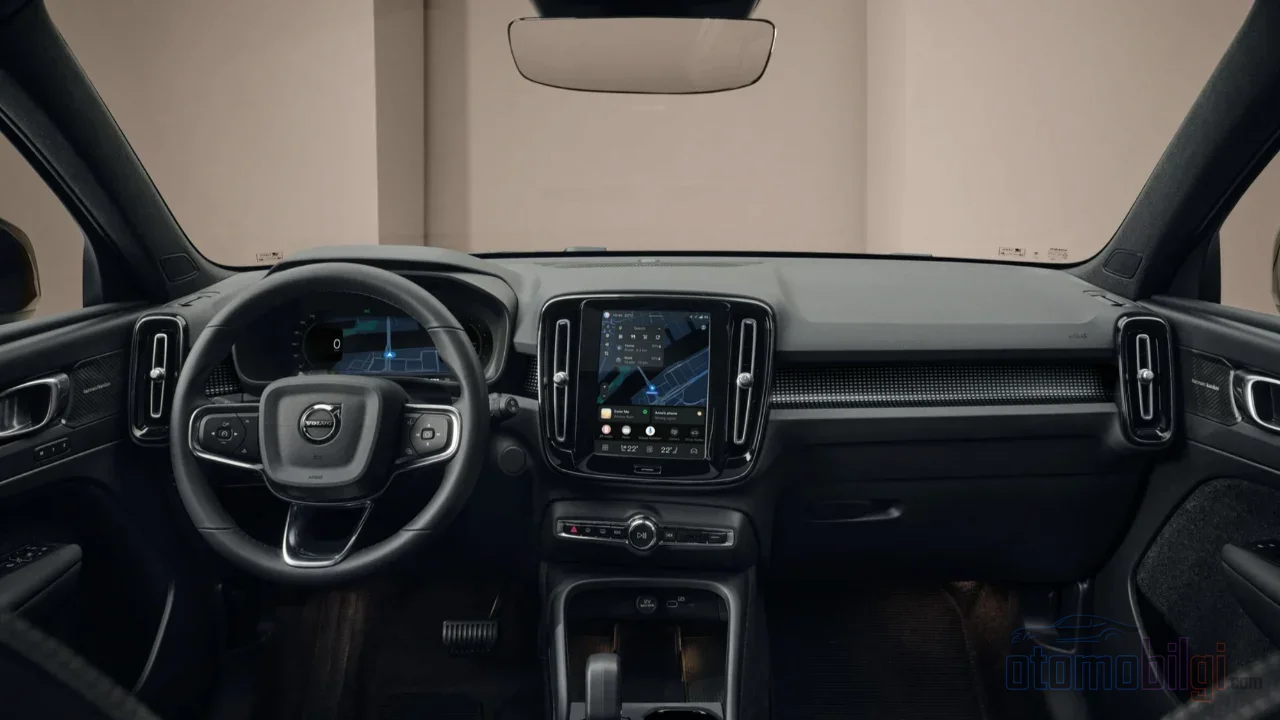
Inside the cabin is Volvo's typical formula: 12.3-inch digital driver display, 9-inch center screen, Google built-in operating system (Google services included for 4 years, paid thereafter), wireless Apple CarPlay and Android Auto support. On the audio side, the Harman Kardon Premium Sound system comes with an air-blown subwoofer; comfort equipment highlights include a heat pump, air purifier, remote cabin pre-cleaning, two-zone climate control, and heated steering wheel and front/rear seats. On the texture side, the brand's signature Orrefors® crystal gear shifter, the Tailored Wool Blend upholstery option, and the panoramic glass roof add character to the cabin.
If a systematic evaluation is to be made, both faces need to be seen. On the one hand, the material quality is excellent for this class, and the backlit decorative trim genuinely elevates the cabin atmosphere. On the other hand, the 9-inch center screen and the architecture around it have started to look dated compared to the full-screen cabins of the new-generation rivals; since almost every main function is controlled from the screen, diving into menus while driving becomes a hassle. The Mercedes EQA's multimedia system is more fluid in this respect. In user feedback, the sound system, automatic rain/high beams, and adaptive speed systems are praised, while the interface being too simple is criticized. This is not a faulty situation; it is simply the natural shelf life of early electric-era design coming to an end.
Safety: Volvo's Core Brand Value Is Still in Effect
The EX40 carries 5 stars from Euro NCAP; adult occupant protection is 97%, child protection 87%. To be transparent, these scores come from the 2018 testing period and, due to protocol updates, are not directly comparable on today's scale. But with the latest update of the 40 series, there is concrete progress on the active safety side: new radars, cameras, and ultrasonic sensors, Door Opening Alert, and an improved Pilot Assist are part of this package.
The driver assistance suite is extensive: BLIS (blind spot information), intersection automatic braking, lane keeping aid, oncoming lane mitigation, rear collision warning, Pixel LED headlights, a 360° camera, distraction and slippery road warnings, and Intelligent Speed Assistance (ISA). In passive safety, dual-stage airbags, a knee airbag, an inflatable curtain, WHIPS neck protection, and ISOFIX/i-Size mounts are standard. Automatic emergency braking with pedestrian and cyclist detection and lane departure warning are also standard equipment. In short, safety is this model's most balanced and deepest area against its rivals.
Rival Comparison: Against the Audi Q4 e-tron and Mercedes EQA
The EX40's most natural rival is the Audi Q4 e-tron. Both vehicles are in the 82 kWh battery class, five-seater, and positioned in a similar price band. The technical balance is interesting: in maximum power, the EX40 408 hp is above the Q4's 335 hp; even in lower trims, the Single Motor's 0-100 time of 7.3 seconds is faster than the base Q4 e-tron and EQA. In the trunk, however, the situation reverses: the Q4 e-tron's 520-liter volume is advantageous over the EX40's 461 liters (reported differently from the official value in the 410-536 l range depending on the measurement method) and the BMW iX3's 510 liters; the Mercedes EQA falls behind with only 340 liters.
A general assessment: in terms of price, the EX40 is on par with the Q4 e-tron and Cupra Tavascan, and at the same level as the Peugeot E-3008. Audi, Cupra and Peugeot pull ahead in interior modernity and driving pleasure; Volvo differentiates itself with its safety equipment, material quality, and sustainable materials story. To be honest about range too: the Tesla Model Y and Ford Mustang Mach-E surpass the EX40 with WLTP figures above 350 miles. So the EX40 is not a champion in any single category; but it is not far behind by a clear margin in any category either.
Driving character
Road feedback paints a clear profile: the EX40 shows its best on the highway; on long journeys the cabin is quiet and the adaptive cruise is effective. However, the steering corrections in adaptive cruise are made with small jumps and are not as smooth as some rival systems. In the city on broken asphalt, especially with 20-inch wheels, the suspension transmits shudders into the cabin; body roll is noticeable on winding roads. This suggests a chassis setup focused on comfort and safety rather than sportiness was chosen.
The EX40 in Türkiye: Its Position in the Premium Electric Market
In Türkiye, the EX40 is listed as a model sold at zero kilometers in Volvo's official lineup and is the face of the brand's new electric naming strategy in this market. The starting reference sits at the level of millions of TL; there are price fluctuations among sources due to version and model year differences, so we do not give a current price in this article - what matters is that the model is positioned in the premium compact electric SUV band, at the same price tier as the Audi Q4 e-tron and Mercedes EQA.
Let's look at the market context. Electric car sales in Türkiye reached 81,331 units in the first six months of 2026, and the model-by-model leadership belonged to the Togg T10X (14,844 units in January-July). While the Togg T10X/T10F, KG Mobility Torres EVX, MINI Countryman and Opel models stand out in the monthly sales lists, premium German models and Volvo do not appear at the top. In an environment where the domestic manufacturer has radically changed market dynamics, the EX40 is not a volume player but a niche premium player. The second-hand channel also appears to be active: low-mileage 2025 EX40 listings and examples offered for sale on the brand's certified pre-owned platform show that the model has a living ecosystem in Türkiye.
To summarize from the buyer's perspective: those who choose the EX40 prioritize the depth of its safety equipment, material quality, the 408 hp Twin Motor performance and the Volvo service network over a range championship. A buyer seeking modernity in the screen architecture and making cargo volume a criterion shifting toward the Q4 e-tron is a reasonable alternative scenario.
Conclusion: Which Buyer Does the EX40 Appeal to Today?
The Volvo EX40 does not come from a sharp ground-up electric platform; it is a model arriving through a name change of matured hardware; it has both weaknesses (aging interior architecture, average fast-charging speed) and strengths (excellent material quality, the most comprehensive safety packages, its 408 hp version and a WLTP range of up to 556 km). New sales continue in Türkiye, and the model, outside the volume market, in the premium compact electric SUV class, continues to be a consistent offering for the safety- and quality-focused buyer. If your decision criteria are range leadership or the most modern cabin, look at the rivals; if your criteria are safety depth and Scandinavian quality, the EX40 should be at the top of your list.
Sources
- Volvo EX40 (Volvo Cars Türkiye)
- Volvo EX40 Technical Specifications (Volvo Cars Türkiye)
- Volvo EX40 Specifications (Volvo Cars Malta)
- Volvo EX40 Specifications (Volvo Cars Australia)
- 2026 Volvo EX40 Review (Carwow)
- Volvo EX40 Single Motor (EV Database)
- 2025 Volvo EX40 and EC40 renamed (Car and Driver)
- Volvo 40 series safety and tech upgrades (Volvo Cars)
- 2025 Volvo EX40 vs 2025 Audi Q4 e-tron (Driving.ca)
- Volvo EX40 long-term review (Autocar)
- ODMD January-July 2026 electric sales data (Araclo)
- Best-Selling Electric Vehicles 2026 (Bridgestone Türkiye)