How Is the Citroën Ami Changing Urban Micromobility?
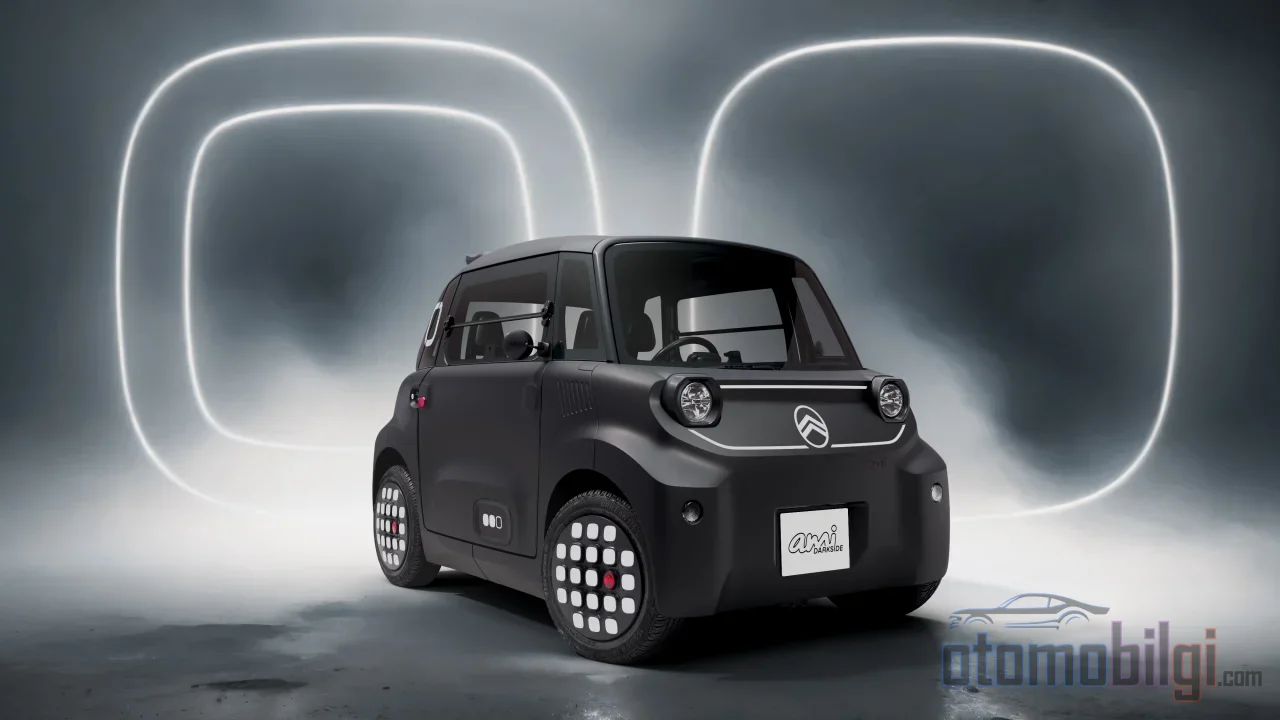
A vehicle 2.41 meters long, with a top speed of 45 km/h and a range of 75 kilometers, has become the daily means of transport for tens of thousands of drivers in European cities since 2020. Citroën Ami presents a technical spec sheet that would not steal any car enthusiast's heart on paper; but that is precisely why it is interesting. Because the Ami should not be evaluated as a car: what we have here is an urban mobility solution positioned in the gap between a car and a motorcycle, legally classified in the light quadricycle category.
On this page, we will examine the Ami's technical identity, its symmetrical body architecture, its charging characteristics, and its position in cities around the world. Our main question is: How is the Citroën Ami changing urban micromobility?
Not a Car, a Quadricycle: The Ami's Segment Identity
The light quadricycle class, coded L6e in European regulations, is defined by speed and weight limits far lower than those of cars. The purpose of this class is to provide enclosed-body, four-wheeled transport with an ease of use close to that of a motorcycle or scooter. The Citroën Ami was designed exactly within this framework: As the production version of the Ami One Concept, unveiled at the 2019 Geneva Motor Show, it entered production at the Kenitra plant in Morocco starting in June 2020, with an exterior design signed by Pierre Leclercq. While PSA Group was the initial manufacturer, production moved under the Stellantis umbrella following the 2021 merger.
What this class offers is not just tax or weight advantages; it is ease of access. In France, a 14-year-old driver can use the Ami with an AM class license, while in many European countries this limit is 16. In Turkiye, a B1 class driving license is sufficient for those aged 16 and over. The fact that a standard car license is not required makes the Ami a genuine stepping stone between a motorcycle and a car in Europe's young driver category.
Highlights
- 6 kW of power, 5.5 kWh battery, 75 km range (WMTC)
- Top speed limited to the class ceiling of 45 km/h; motorway use not permitted
- Full charge from a 230 V household outlet in ~3 hours; no fast charging
- License access from age 14 in France (AM class)
- Total of ~65,000 sales up to the 2024 facelift
Technical Identity: The Logic of Small Numbers
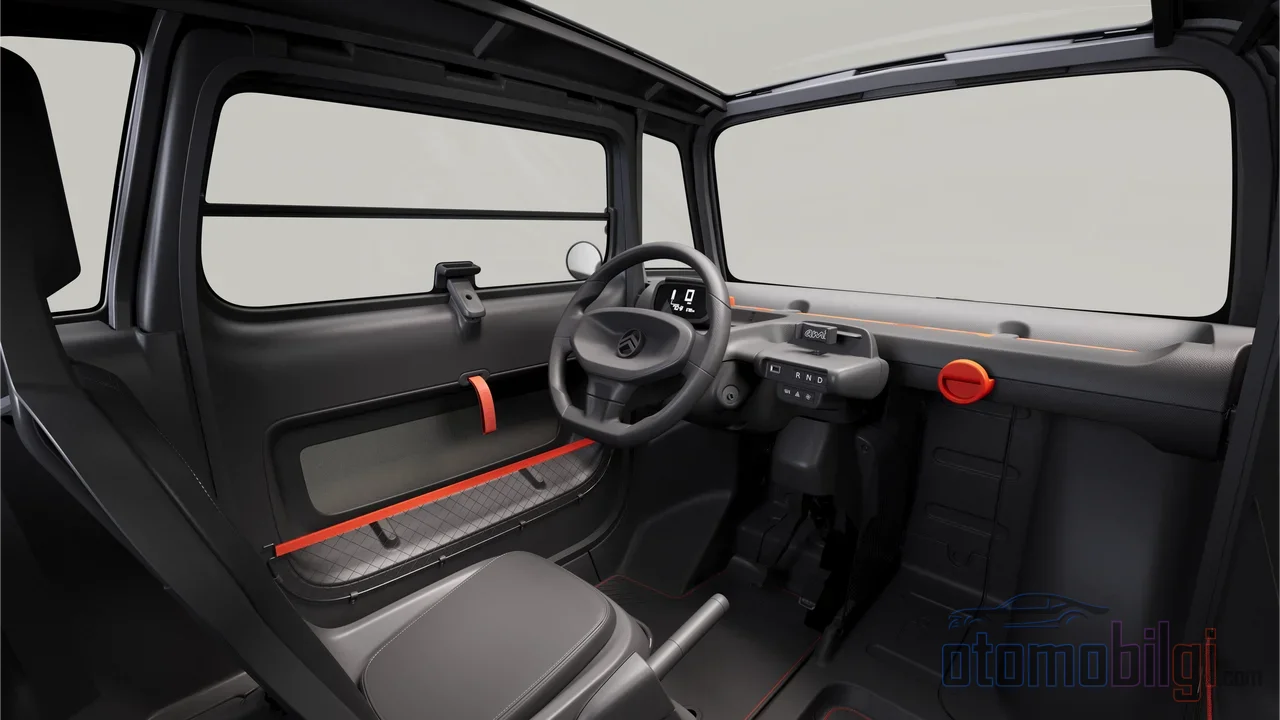
When the Ami's technical data is examined one by one, a consistent chain of engineering priorities emerges. The front motor, running on a 48-volt system, produces only 6 kW (approximately 8 horsepower); in return, the vehicle weight is kept at around 425 kg without the battery and around 485 kg with it. The 5.5 kWh lithium-ion battery provides a 75-kilometer range on the WMTC cycle; in real-world use, it is normal for this figure to drop to around 60 kilometers. Top speed is fixed at 45 km/h, the legal upper limit of the class.
All these figures serve a single purpose: meeting the demands of urban transport with the smallest possible volume of energy and materials. For a vehicle that takes about 10 seconds to accelerate from 0 to 45 km/h, the turning circle is 7.2 meters; in narrow streets and parking maneuvers, this value is more of a practical usage parameter than a performance metric. The 63-liter cargo capacity (260 liters in the Cargo version) is scaled to meet daily short-distance needs along with its two-person cabin.
| Feature | Value |
|---|---|
| Motor power | 6 kW (~8 HP, 48 V, front drive) |
| Battery | 5.5 kWh lithium-ion |
| Range (WMTC) | 75 km |
| Top speed | 45 km/h |
| Charging time | ~3 hours (230 V household outlet) |
| Length / width / height | 2.41 / 1.39 / 1.52 m |
| Turning circle | 7.2 m |
| Cargo | 63 L (Cargo: 260 L) |
Charging Character: A Logic That Does Not Need Fast Charging
The most discussed topic about electric cars is fast charging and range; the Ami stands entirely outside this debate. The vehicle has no DC fast charging support. Charging is done via a standard 230 V household outlet, and the battery fully charges in about 3 hours. The advantage of the small-capacity battery becomes clear here: a vehicle left plugged in overnight or throughout a workday sets off every morning with a full range. The 75-kilometer range is a sufficient buffer against the average distances of daily urban use; the vehicle is designed to be charged once a day, not at every stop.
Radical Minimalism in the Interior
The Ami's interior is a textbook example of how far cost reduction can be pushed. The vehicle has no traditional infotainment system; navigation, music and the information screen have been delegated to the user's smartphone. The sound system comes from a cylindrical Bluetooth speaker placed to the right of the steering column. The interior design team's approach is clear: avoid technological redundancy, entrust every function to the device the user already carries in their pocket.
The most striking engineering decision is hidden in the body. The Ami's body is largely symmetrical both left-right and front-rear; while the driver's door opens in reverse, the passenger door is hinged normally, so both sides are produced with the same panel set. The front and rear bumpers are also made of the same parts. This symmetry is not an aesthetic choice, but a part-reduction strategy that directly lowers production costs. The side windows are not electric, but hinged to open outward. The car's interior gives the feeling of a structure built from large Lego pieces; this description is one of the best expressions summarizing the Ami's character.
The Ami's Position in World Cities
The Ami first went on sale in nine European countries in 2020; it was subsequently opened to the UK and Turkiye markets as well. The first batch of 50 units in Turkiye selling out in 25 minutes demonstrated the scale of demand not for a small car, but for a new way of using one. The vehicle is also featured in car-sharing networks such as Free2Move; flexible usage models between purchase and rental are an integral part of the category. In the facelift introduced at the October 2024 Paris Motor Show, the headlights moved up and the turn signals down, while the technical specifications remained unchanged; by this point, total sales had reached approximately 65,000 units. The facelifted version has been on sale since 2025.
The category is growing simultaneously with three brands: Opel Rocks Electric and Fiat Topolino are rebadged siblings of the Ami. The Topolino stands out within the trio in terms of character with its front and rear designs that reference the 1957-75 Fiat 500. An interesting development also occurred on the US front: While the Fiat Topolino enters the US market in July 2026 at $13,995, the Ami continues to stay out of that market.
Criticism and Limitations
There are also assessments that do not advocate for the category. Some automotive writers note that the Ami is fun and functional within the city but remains limited outside the city; and that compared to a good-condition used small car, it is not always advantageous in terms of cost. On the safety side, the quadricycle body is considered a more protective option compared to bicycles and scooters thanks to its enclosed cabin. An additional note regarding Turkiye: the light quadricycle class is closed to motorway use due to its 45 km/h speed limit; the Ami is consciously designed only for urban and low-speed roads.
Why Should the Ami Be Read as a Micromobility Category?
The synthesis of all this data gives a clear answer. The Citroën Ami is the product of redefining short-distance urban transportation, not the perception of the automobile: as a light quadricycle with a limited low speed, broad license accessibility, charging from a household outlet, and protecting two people from the weather, it fills the gap between a scooter and a car. A driver who evaluates the Ami with classic car expectations will be disappointed; but those who see it as a micromobility vehicle that adds enclosed-cabin safety to the convenience of a motorcycle will find exactly what they need. The category is entirely coherent with its regulatory framework, engineering priorities, and usage model: less energy, less material, less speed - and everything sufficient for the city.