Volvo ES90: Electric Premium with 696 km Range and a Price Advantage
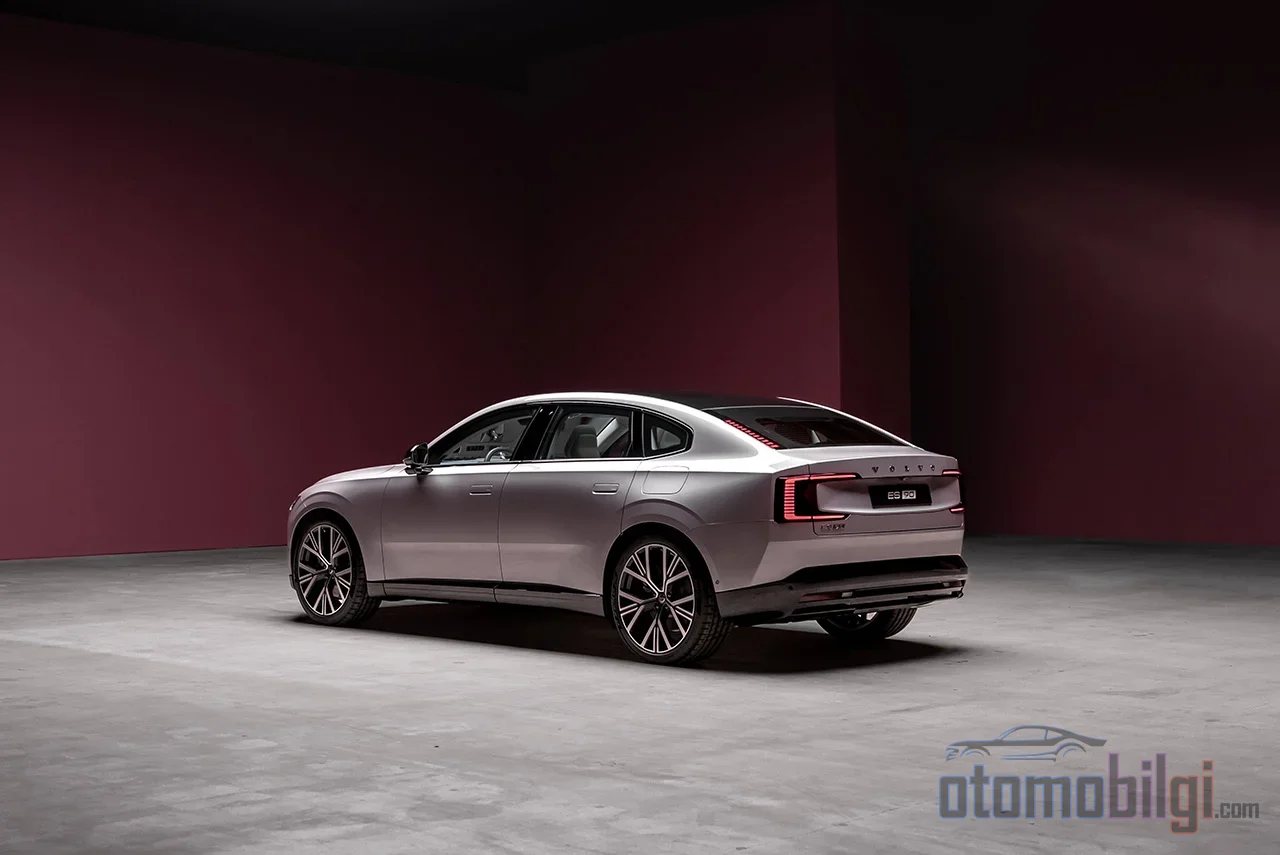
There is one vehicle in Volvo's lineup whose category is a pain to define in a single word: is it a sedan, a fastback, or a low SUV? Volvo ES90 is a pure electric executive car, unveiled on March 5, 2025 and in production since September 2025. Volvo positions this car in its own class, as the sole member of that class, and this claim is not merely marketing rhetoric. The car's body solution, battery architecture, and interior character pull it into a different game on the field where the BMW i5 and Mercedes EQE play. On this page, we will examine exactly which class the ES90 stands in, what the 800V architecture means in practice, and how it differs from its rivals.
Sedan, Fastback, or Low SUV: What Is the Body Type Really?
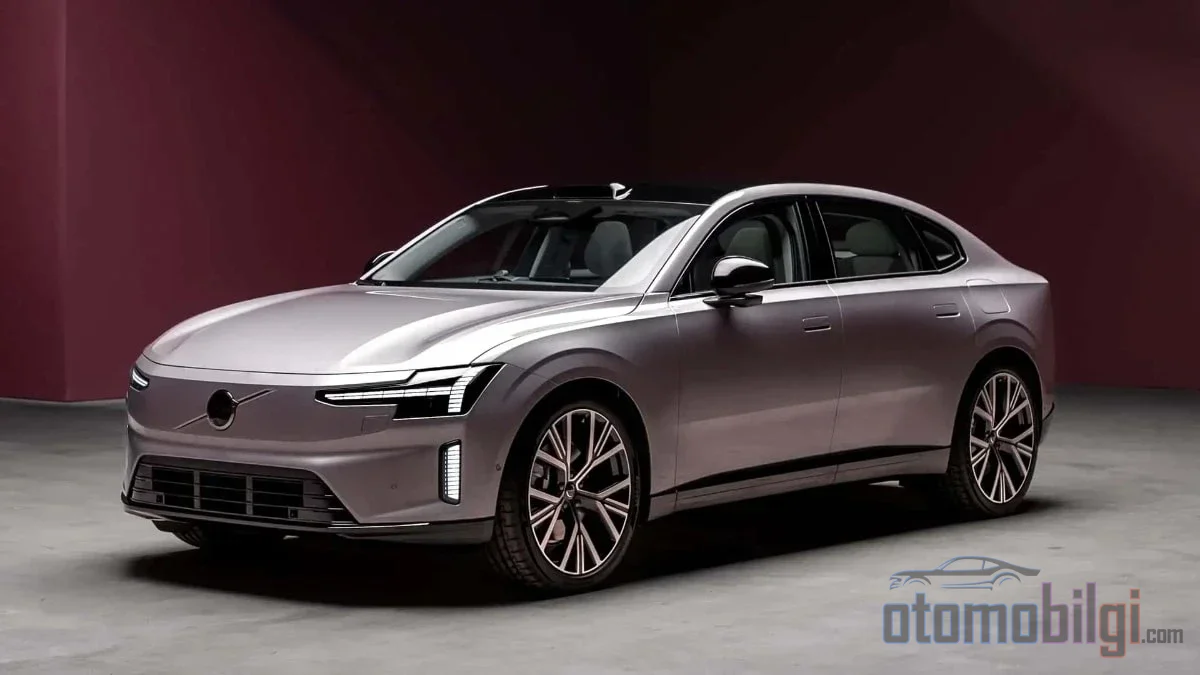
The reason for the ES90's class debate is its body itself. Technically, the car is a 5-door liftback: the tailgate is hinged not below the rear window but at roof level. This solution is an effort to combine the elegant body of a sedan, the loading convenience of a hatchback, and the spacious interior advantage of an SUV in a single body. Volvo's design team describes it as a formula that adds hatchback functionality to a large sedan body and turns the height of the electric platform into an advantage.
The numbers support this description. A length of 5,000 mm, a width of 1,942 mm, and a height of approximately 1,550 mm are consistent with a classic E-segment sedan. In contrast, a wheelbase of 3,102 mm and a curb weight in the 2,500-2,600 kg range reveal that the SPA2 platform underlies the car, the same platform on which the EX90 and Polestar 3 sit. A drag coefficient of 0.25 makes the ES90 the most aerodynamic Volvo ever produced. In short, the car is neither a full sedan nor an SUV; between the two sits an executive electric with a fastback roof.
800V Architecture, Range, and Charging Character
At the heart of the ES90's technical identity is its 800V electrical architecture. The practical benefit of this architecture is the ability to draw more power from high-output DC fast charging stations. The ES90 supports DC charging power of up to 350 kW; under ideal battery temperature conditions, charging from 10 to 80 percent takes about 22 minutes. Another striking figure from Volvo: a 10-minute charge provides roughly 300 km of range.
Highlights
- Liftback body on the SPA2 platform, 5,000 mm long with a 3,102 mm wheelbase
- 350 kW DC support with the 800V architecture; 10-80 percent charging in about 22 minutes
- Twin Motor Performance: 500 kW / 870 Nm, 0-100 km/h in 4.0 seconds
- WLTP range between 650-700 km depending on the version
- Safe Space Technology safety package with lidar and dual Nvidia Drive AGX Orin processors
Battery Options and Versions
There are two options on the battery side: a CATL lithium-ion pack with 92 kWh gross / 88 kWh net capacity in the rear-wheel-drive Single Motor versions, and 106 kWh gross / 102 kWh net capacity in the Twin Motor versions. The version lineup is clear: The Single Motor RWD produces 245 kW (329 hp) and 480 Nm of torque, completing 0-100 km/h in 6.9 seconds while offering 650 km of WLTP range. The Twin Motor AWD drops to 5.5 seconds with 330 kW (443 hp) and 670 Nm; its range rises to 700 km. The range-topping Twin Motor Performance finishes 0-100 km/h in 4.0 seconds with 500 kW (671 hp) and 870 Nm of torque. Range figures can vary depending on market and wheel choice; for example, a lower WLTP value of 554 km is announced for the Single Motor in the Australian market. This difference stems from version and wheel definitions, not from the car's identity.
Real-World Charging Times
The 22-minute 10-80% figure assumes a 350 kW station. Real-world testing according to grid conditions is as follows: over the same span, roughly 30 minutes on a 180 kW unit and about 1 hour 15 minutes on a 60 kW unit. On the AC side, there is an 11 kW three-phase onboard charger; a full charge at home requires around 10 hours, including conversion losses. In other words, the ES90's charging character is architecturally strong, but a fast-charging infrastructure is needed to some extent to get the full promise.
| Version | Power | Torque | 0-100 km/h | WLTP range |
|---|---|---|---|---|
| Single Motor RWD | 245 kW (329 hp) | 480 Nm | 6.9 s | 650 km |
| Twin Motor AWD | 330 kW (443 hp) | 670 Nm | 5.5 s | 700 km |
| Twin Motor Performance | 500 kW (671 hp) | 870 Nm | 4.0 s | 696 km (WLTP) |
Interior and Technology Equipment
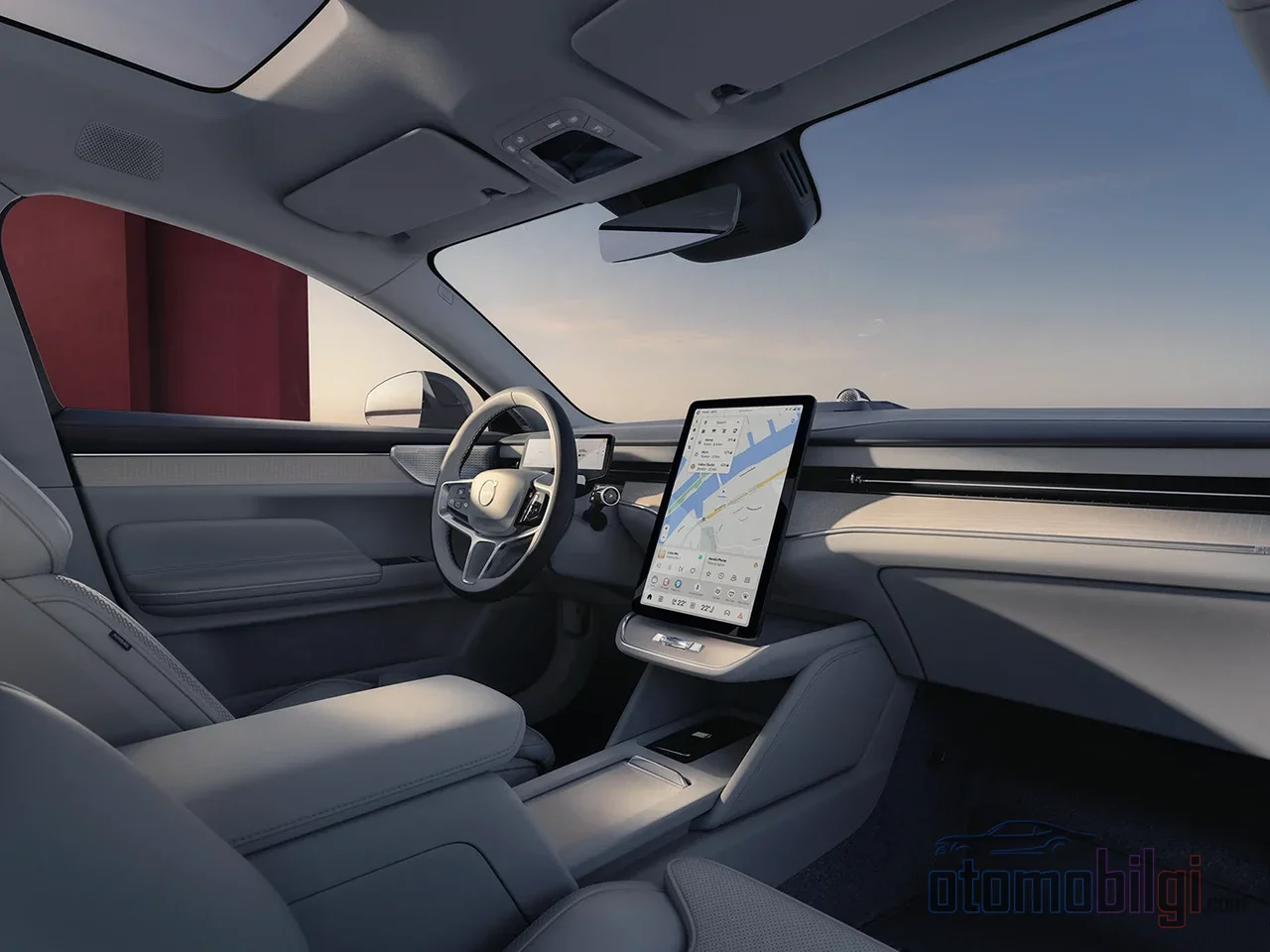
The cockpit features a 14.5-inch center screen and a 9-inch digital instrument cluster; a head-up display is standard. The underlying architecture is Google built-in: Google Assistant, Google Maps and the Play Store come ready in the car, and Google Gemini integration was announced for 2025. On the audio side, the Ultra trim offers a Dolby Atmos-supported Bowers & Wilkins system with 25 speakers, while some markets get a 14-speaker Bose system.
The comfort equipment shows the list doesn't end with technology alone: four-zone climate control, an air purification system filtering up to 95% of PM 2.5 particles, a heat pump, an electrochromic panoramic roof offering 99.9% UV protection, active air suspension and twin-chamber adaptive dampers. With the rear seats upright, the trunk officially offers 442 liters, extending to 1,445 liters when the seats are folded; there is also a small 27-liter frunk at the front. Among sources, figures ranging from 425 to 446 liters circulate for the trunk; these differences are minor deviations depending on measurement method.
On the safety side, the ES90 is one of its most ambitious strongholds. Volvo's Safe Space Technology package is fed by 1 lidar, 5 radars, 7 cameras and 12 ultrasonic sensors. Processing power has been raised to 508 TOPS for the first time with dual Nvidia Drive AGX Orin units. At the hardware level, this is one of the most comprehensive perception sets in the segment.
Its rivals: Its Position Against the BMW i5 and Mercedes EQE
The ES90's natural rivals are the BMW i5 and Mercedes EQE. At launch, Volvo positioned the car at price parity with these two models; In the Australian market, the China-built ES90 is positioned below the prices of the i5 and the EQE. The technical breakdown of the competition is interesting: both the i5 and the EQE use 400V architecture. This means the ES90's 10-80% fast charging time could be roughly 8-10 minutes shorter than its rivals'. On the range side, the ES90 can reach the 700 km band depending on the version; the EQE 350 4MATIC offers approximately 507-597 km of WLTP range, while the i5 M60 xDrive offers 516 km. In the range plus charging speed combination, the ES90 stands at the top of the segment.
On the price front, the picture is more mixed. Taking the Türkiye market as an example, as of October 2026, although the ES90 leads in range and charging speed, it is priced about 2.4 million TL below the Audi A6 Sportback e-tron performance and the BMW i5 M60 xDrive; yet it is about 250 thousand TL more expensive than the Mercedes EQE 350 4MATIC. In other words, Volvo does not reflect its technical superiority as a price premium; on the contrary, it is pursuing an aggressive positioning. This price-strategy interpretation also summarizes the model's global position: a challenger that plays the technical card and dares to compete on price.
The view within the family is also instructive. The ES90 is 16 cm longer than its sibling model, the Polestar 4, and offers a narrower volume in the trunk than it (measurements of 530 liters are available for the Polestar 4). Some commentators liken the ES90 to the Polestar 4 because of its rear window arrangement, and this similarity is not unexpected since both carry the design language of the same group.
Its Place in the Global Market and Production
The ES90, produced from 2025 onward, is the largest sedan-bodied model in Volvo's pure electric lineup. Production takes place in two countries: besides China, the Shah Alam factory in Malaysia also produces the model and exports it to various markets. The Türkiye market can be given as an example of Malaysian production, with the version launched for sale in November 2026 in a single trim: the Ultra Twin Motor Performance trim comes with a 106 kWh battery, 500 kW of power and 696 km of WLTP range. This is a concrete application of the single-trim strategy and Malaysia-based production.
Conclusion: What Class Does the ES90 Belong To?
The short and clear answer: The Volvo ES90 sits in the E-segment executive class; however, it is a model that settles between sedan and SUV in body type with a fastback/liftback solution, and in technical terms distinguishes itself from the BMW i5 and the Mercedes EQE with its 800V architecture and 350 kW DC charging support. It is a vehicle that defines its segment not by its body but by its battery architecture and interior dimensions. In some markets it is more expensive than the EQE and more affordable than the i5 and the A6 e-tron; while in the combination of range and fast charging, it carries the best values of the segment. Volvo's claim of being the sole member of its class is not an exaggeration: its dimensions are sedan, its opening is hatchback, its seating position is slightly elevated, and its architecture is a step ahead of its rivals. The most honest answer to the class question lies precisely in this deliberate ambiguity of the vehicle.
Sources
- Volvo ES90 - sedan, fastback or SUV?
- Volvo ES90: Electric sedan launches as rival to BMW i5 and Mercedes EQE
- BMW i5 eDrive40 vs Mercedes EQS 450+ vs Volvo ES90 comparison
- Volvo ES90 2026 pricing and features
- Volvo ES90 Arrives in Türkiye: 696 km of Range, 800-Volt Architecture
- Volvo ES90 Single Motor (MY26-27) price and specifications