Maserati GranTurismo Folgore: The Electric Grand Tourer
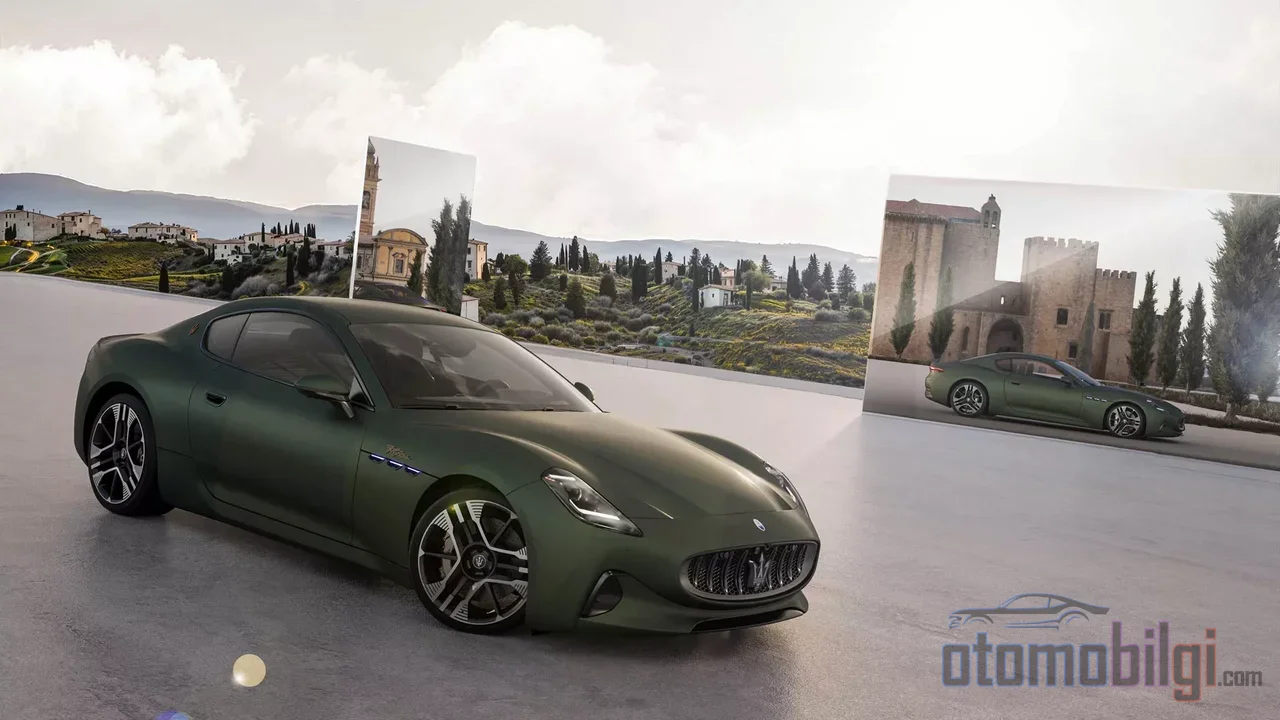
In the grand touring tradition, the car's job is clear: it carries two people and their luggage, covering hundreds of kilometers quickly and in comfort. But something had to change for the electric age to embrace this formula, because a classic battery pack sits under the seats and raises the seating position. Maserati's engineers solved this problem in reverse: they removed the battery from under the seats. The result is the GranTurismo Folgore - a true grand tourer, a rare sight in the electric world, and at the same time the most distinctive example of the narrow but ambitious premium segment today.
What Does Folgore Mean, and Where Does the Model Come From?
Folgore means lightning in Italian, and Maserati positions it as the family name for its fully electric models. The GranTurismo Folgore is the second member of this family; production takes place at the Mirafiori plant in Turin, and the first deliveries began in July 2023. At launch, the US price was announced at around 170,000 dollars; today the starting price sits at 197,195 dollars. Even this figure sums up the model's identity: not volume production, but an ultra-premium, low-volume vehicle.
The car's most direct comparison is not rival brands, but Maserati's own gasoline-powered GranTurismo versions. It shares the same body with its supercharged siblings named Modena and Trofeo; so we have a direct internal comparison of how well electrification preserves the classic GT formula.
Highlights
- Three motors, 800V architecture: total torque of 1,350 Nm, 0-100 km/h in 2.7 seconds
- 92.5 kWh nominal battery with a T-bone layout that leaves the space under the seats empty; overall height of only 1,353 mm
- Range: 494-542 km WLTP; 10-80% DC charging in about 18 minutes
- Current US starting price of $197,195
Three Motors and 800V: The Power Architecture of the Electric GT
The technical backbone of the GranTurismo Folgore is Maserati's 800V architecture, derived from its Formula E experience. It has three 300 kW (402 hp) permanent magnet motors: one at the front, two at the rear. All-wheel drive is standard; the rear axle performs independent torque vectoring. Total installed output exceeds 1,200 hp, but continuously deliverable power is around 560 kW (761 PS). It is important to understand that the difference between these two figures is not decoration: peak power describes an instantaneous burst, while continuous power describes the performance the motor can sustain over a long period - and it is the latter that is decisive on track use.
The performance figures go far beyond the grand tourer classic: 0-100 km/h in 2.7 seconds, 0-200 km/h in 8.8 seconds, top speed of 320-325 km/h. The system's flexibility is also remarkable: the full power the battery can produce can be sent solely to the rear axle, meaning the driver can turn the car into a rear-wheel-drive coupe whenever desired. This is the translation of classic Maserati dynamics into the electric language.
| Feature | Value |
|---|---|
| Motor layout | 3 motors (1 front, 2 rear), AWD |
| Total torque | 1,350 Nm |
| Continuous power | ~560 kW (761 PS) |
| 0–100 km/h | 2.7 s |
| 0–200 km/h | 8.8 s |
| Top speed | 320–325 km/h |
| Battery | 92.5 kWh nominal / 83 kWh usable |
| Kerb weight | 2,260 kg |
| Length | 4,959 mm |
Why Wasn't the Battery Placed Under the Seat?
In electric cars, the battery placed under the floor raises the cabin floor, and the seating position defines the car's sense of class. In a grand tourer, a low seating position is a non-negotiable item. Maserati's solution was to place the battery in the central tunnel and position the pack in a T-bone shape: since the modules do not extend under the seats, the 4-seat cabin stays low, and with a body height of 1,353 mm, the classic GT proportions are preserved. The manufacturer's official data confirms that this layout keeps the car noticeably lower than other EVs in its class.
What is the price? The T-bone layout requires a different volume distribution compared to a classic under-floor battery, and in exchange for the engineering here, a multi-material structure made of aluminum, magnesium, and high-strength steel comes into play. The result is a kerb weight of 2,260 kg; this figure is within the expected range for the two-ton coupe class but carries no real claim to lightness.
Range and Charging: What Does 494–542 km WLTP Mean?
According to official consumption figures, range is between 494–542 km WLTP depending on the version, with consumption in the 19–21 kWh/100 km band. Compared to the roughly 450 km figure announced during the launch period, current models achieve noticeably longer ranges; this gain comes largely from software and improvements. On the US side, the EPA cycle gave 242 miles for the 2024 model year, and in current vehicles the range rises to up to 251 miles. The difference here is not a technological contradiction but a matter of differing measurement cycles: WLTP and EPA test the same car under different assumptions.
The charging character is the natural benefit of the 800V architecture: in DC fast charging, 270 kW peak power means it is possible to add 100 km of range in an approximately 5-minute stop. Charging time from 10% to 80% is approximately 18 minutes. On 400V charging networks, the system operates at 50 kW, and in these cases waiting times lengthen. Bidirectional charging support is also available; the battery can deliver energy to the outside. While there are independent assessments highlighting the gap between real-world range and official figures, when this distance combines with a comfortable charging-break rhythm especially on long-distance sessions, the functional counterpart of the GT character emerges.
Interior and Technology: An Italian Touch in the Digital Cabin
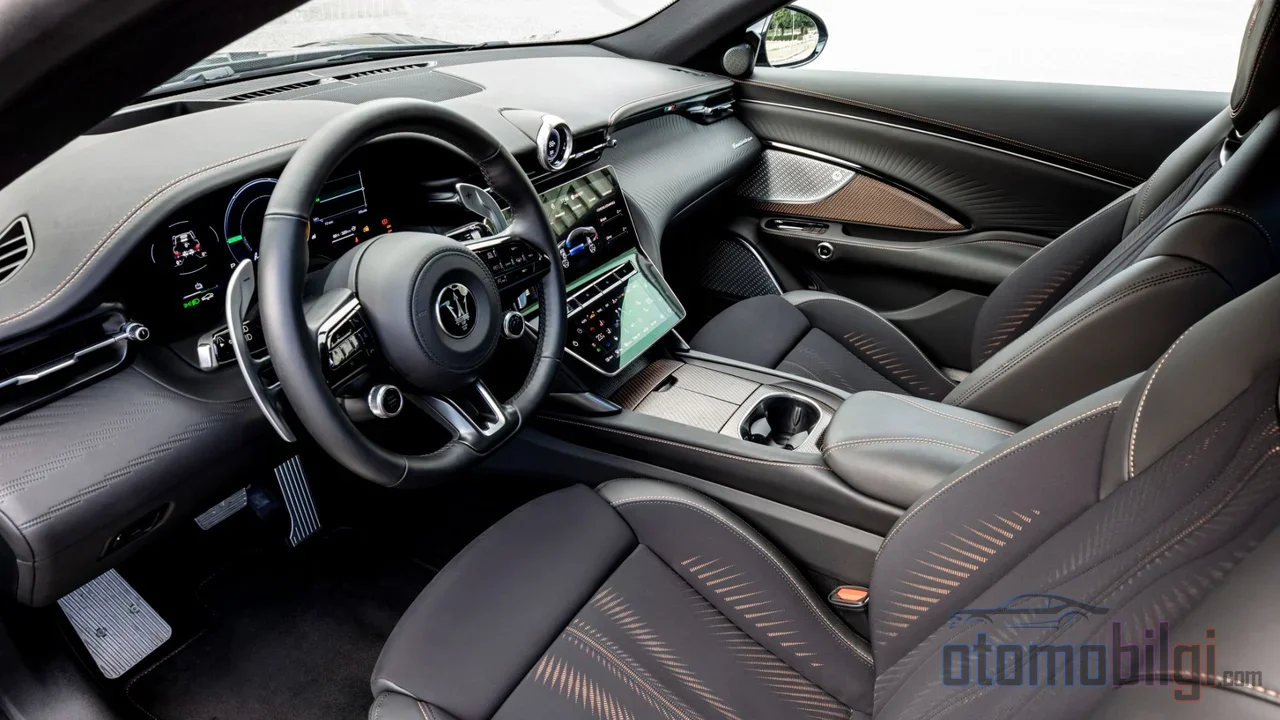
The cabin is dominated by the Maserati Intelligent Assistant (MIA) multimedia system; the main functions are gathered on the 12.3-inch touchscreen display, and wireless Apple CarPlay/Android Auto support is standard. In front of the driver there is a digital instrument cluster and an optional Head-up Display; on the audio side, a 3D sound system signed by Sonus faber and leather seats complete the comfort palette. Daily-use details such as the wireless charging pad and in-car Wi-Fi are also on the list. The screen size being stated differently in some configurations should be read as a result of the variety of hardware packages and versions.
Folgore-specific details also set the body apart: an aerodynamically optimized front bumper, a dedicated aero diffuser, Folgore's own Aura cast aero wheels, and illuminated side air intakes. Inside, illuminated stainless steel sill plates and a 3D carbon fiber trim element with copper thread visualize the electric identity. The copper color is clearly used as the aesthetic signature of electrification across the Folgore range.
Its Position in the Global Market: How Does It Differ from the Togg T10X or the Ioniq 5?
The talked-about models in the EV market - such as the Tesla Model Y, Hyundai Ioniq 5, Kia EV6, and Togg T10X - are bulky, price-sensitive vehicles in the mid or upper-mid segment. The GranTurismo Folgore stands outside this map: there is a narrow but real luxury electric grand tourer segment, and right now there is no rival as clear-cut as it in this segment. The closest comparison comes from the brand's own portfolio; the gasoline GranTurismo versions and the open-top GranCabrio Folgore (463-509 km WLTP) complete the range. On premium comparison pages, it is shown in the same table as far more expensive sports cars like the Ferrari 12Cilindri, which also summarizes its position: in terms of price and character, it is closer to the world of luxury sports cars than to the volume EV market.
The commercial equivalent of this position is not scale, but identity. Low-volume production, luxury pricing, and Formula E-derived technical underpinnings all feed into one another. For a buyer looking for an electric GT on the market, there is almost no direct alternative; on the other hand, someone willing to spend the same money could turn to much more practical electric luxury SUVs. What decides the choice in between is loyalty to the GT formula.
Can an Electric Grand Tourer Work? Conclusion
What the GranTurismo Folgore proves is that electrification does not have to destroy the grand touring formula. With its three-motor 800V architecture, 1,350 Nm of torque, and 0-100 km/h in 2.7 seconds, there is nothing missing on the performance side; and with a 494-542 km WLTP range and an 18-minute 10-80% charge, long-distance use is practical too. The real engineering triumph, however, is on the invisible side: thanks to the T-bone battery layout, the area under the seats remains free, and the seating position preserves the classic GT low stance.
This is what the definition of an electric grand tourer means: a car that takes two people and their luggage over hundreds of kilometers quickly and comfortably, stretches to 320 km/h at top speed, yet sits as low as a coupe. Maserati chose to produce this formula by sharing the same body with its gasoline siblings, and the result stands as the most authentic interpretation of the classic GT tradition in the electric era.
Sources
- New Maserati GranTurismo Folgore - Maserati Global
- Maserati GranTurismo Folgore EV Has 1207 HP - InsideEVs
- Maserati GranTurismo Folgore: EPA Range – InsideEVs
- Maserati GranTurismo Folgore (MY27) – EV-Database
- Maserati GranTurismo Folgore: Prices, Specs & Features – Cars.com
- GranTurismo Folgore Review & Prices – Carwow
- GranTurismo Folgore review – The Intercooler