BYD Seal Review: 570 km Range and Blade Battery
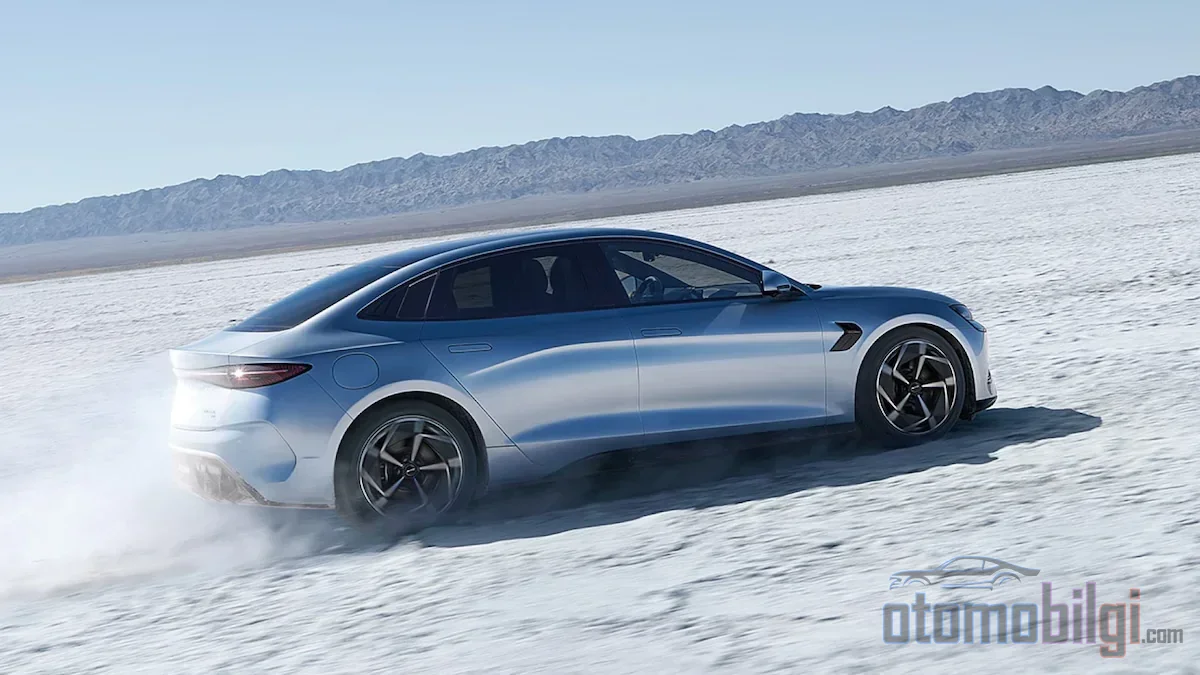
The D-segment electric sedan market was long almost synonymous with a single name: Tesla Model 3. Then the BYD Seal arrived and changed the picture. With its 800-volt architecture, in-house LFP Blade battery and WLTP range of up to 570 km, this Chinese sedan arrived with a technical spec sheet more assertive than most of its rivals on paper. So what really makes the Seal different, or is this just spec-sheet power?
On this page we will take the Seal apart piece by piece: which segment it sits in, what kind of engineering choice its battery and range character reflects, the gap between official fast-charging figures and the real world, its cabin technology, and its global position against the Model 3 and IONIQ 6. The result will not be a simple one-sentence verdict; it will be a balance analysis that takes on different colors in every market.
Which Segment Is the BYD Seal In and Who Is It Designed For?
The BYD Seal is positioned in the fully electric mid-size sedan class; a model that sits on the boundary between C and D segments but, with its wheelbase and battery capacity, exhibits a typical D-segment approach. It is the second model in BYD's Ocean Series family, following the smaller Dolphin hatchback; it was announced in China in May 2022 and entered deliveries in August 2022. The body, bearing the signature of Wolfgang Egger on the design team, is the production interpretation of the Ocean-X Concept previewed in September 2021.
The dimensions clearly define the middle line of the segment: 4,800 mm length, 2,920 mm wheelbase, 1,875 mm width and 1,460 mm height. A drag coefficient of 0.219 Cd shows the aerodynamic discipline of the sedan body; this figure ranks among the best in the class. The vehicle was built on BYD's e-Platform 3.0 and carries an 800-volt electrical architecture. It entered the European market in September 2023, and deliveries began in November 2023. In a short time it became the first Chinese-made vehicle to make the top-ten car of the year list in Japan; it placed in the top three of the 2024 World Car of the Year and won the Japan EV of the Year 2024 award.
Highlights
- 800-volt architecture and 61.4 or 82.5 kWh LFP Blade battery
- WLTP range of 460-570 km; top version 0-100 km/h in 3.8 seconds
- Official DC fast-charging figure of 30 to 80 percent in 26 minutes
- Rotating 15.6-inch screen, 400 L rear + 53 L front trunk
- While sales in China declined, export markets took over; a new-generation Seal 08 is on the way
Blade Battery, Range and Version Matrix
At the center of the Seal's technical identity is BYD's in-house Blade battery. This is a pack integrated into the body structure, using LFP (lithium iron phosphate) cells instead of nickel-cobalt-based chemistries. The practical advantage of LFP chemistry is thermal resilience and lifespan; the downside is volumetric energy density. BYD tries to close this gap with its cell-to-pack architecture and offers two capacities in the Seal: 61.4 kWh and 82.5 kWh.
The version matrix follows a clear hierarchical structure:
| Version | Battery | Drivetrain / Power | Torque | 0-100 km/h | Range |
|---|---|---|---|---|---|
| Standard Range | 61.4 kWh | RWD / 150 kW (201 hp) | 310 Nm | 7.5 s | 460 km WLTP |
| Design (Extended) | 82.5 kWh | RWD / 230 kW (308 hp) | 360 Nm | 5.9 s | 570 km WLTP |
| Performance / Excellence | 82.5 kWh | AWD / 390 kW (523 hp) | 670 Nm | 3.8 s | 520 km WLTP |
The Performance variant claims 670 Nm of torque and a 50:50 weight distribution; top speed is limited to 180 km/h and the AWD consumption figure is stated as 12.7 kWh/100 km. In Türkiye-market versions, the Design package completes 0-100 km/h in 6.9 seconds with 160 kW (218 PS) of power, while the top trim comes with 230 kW of power and 570 km WLTP range.
Why Does the CLTC vs WLTP Difference Matter?
Sources show impressive ranges of 550-700 km; these are figures from the CLTC cycle, which corresponds to a band of 460-570 km under Europe's WLTP standard. The two measurement cycles use different speed and temperature profiles; CLTC generally yields more optimistic results. When evaluating the Seal, the WLTP band should be taken as the basis; in particular, the 700 km figure belongs only to a single variant in the Chinese market.
The Fast Charging Reality: 150 kW on Paper, But How Much in Practice?
According to official data, the Seal goes from 30 percent to 80 percent in 26 minutes on DC fast charging; the DC power ceiling is 110 or 150 kW depending on the model, while on the AC side there is 11 kW home charging. The vehicle also offers V2L, that is, vehicle-to-load capability; it is possible to power camping equipment or electric tools from the battery.
However, there is one detail that needs to be honestly addressed here: real-world measurements show that the median DC power stays around 70.7 kW even on 180-200 kW chargers. This is not an error contradicting the official 150 kW figure; it is a fact describing the behavior of the charging curve. The LFP chemistry and pack design keep the power well below the ceiling for most of the charging session. The 30-80 percent target still holds in terms of time; what happens in practice is being unable to keep the power, not the speed, consistently high. Against Tesla's Supercharger ecosystem and the IONIQ 6's 800-volt E-GMP architecture, this is the Seal's most visible weak point.
Interior and Technology: What Is in the Cabin?
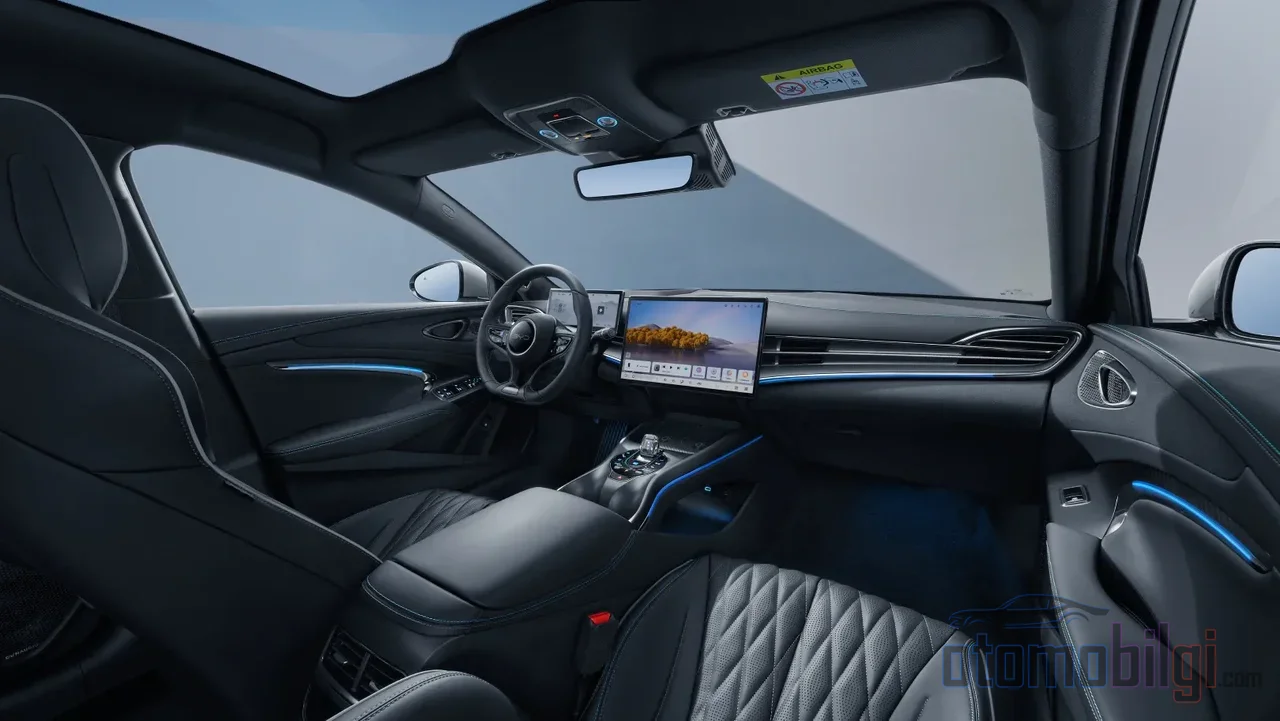
The Seal's cabin signature is the 15.6-inch rotatable infotainment screen. This screen, which can switch between horizontal and vertical orientations, is complemented by a 10.25-inch digital instrument cluster. On the audio side there is a 12-speaker Dynaudio system; the upholstery is vegan leather with cross stitching, and the front seats are heated and ventilated. Dual wireless phone charging, a panoramic glass roof, and front-rear USB ports (Type A and Type C) are part of the standard equipment approach.
Trunk volume is 400 liters at the rear, plus 53 liters under the hood; a frunk is still a rare solution in this class. Some versions offer a smart torque distribution control called iTAC and adaptive dampers. Following the facelift, the UK market gained a driver attention monitoring system and a Bluetooth key; Voice command and cloud-based app connectivity are also included in the current model year hardware. The cabin's aesthetic is defined by a sporty and modern line.
The Seal's Position Against the Model 3 and IONIQ 6
The Seal's story is the part that anyone keeping a rivals' list is most curious about. The comparison with the Tesla Model 3 paints an interesting picture on a per-version basis: With its 82.5 kWh battery, 570 km WLTP range and 308 hp rear motor, the Seal sits above the Model 3 facing it - which has a 62.5 kWh battery, 534 km of range and 279 hp - on the technical file. On the pricing front, however, the picture varies by market: In the UK, under similar financing terms, the Seal is roughly 4,500 pounds more affordable than the Model 3; while in markets such as Malaysia, the Seal sells at a higher price.
The driving side is more complicated. In recent comparison tests, the Seal earns praise for its sense of luxury and abundance of equipment, and in some markets even its fastest version comes at a significantly lower price than its Tesla equivalent; however, as a driving experience it does not reach Tesla's level. Its inability to clearly pull ahead in three-way comparisons (Seal, Model 3, IONIQ 6) is also a combination of these differences: strong on paper, respectable on the road, but not the class leader.
The comparison with the Hyundai IONIQ 6, on the other hand, revolves around a different axis. The IONIQ 6 stands out especially in family use: its cabin is more spacious in every direction, rear knee room is clearly on the plus side, and its ride and efficiency are strong. The Seal responds with a flat floor, interior ergonomics and a sporty cabin character. In short, those who want a spacious cabin and efficiency turn to the IONIQ 6, while those seeking an equipment-performance balance and price/technical value turn to the Seal.
The Story Told by the Global Market and Sales
The Seal's sales curve is a mirror of BYD's global strategy. Having sold 51,200 units in China in 2022 and 62,079 in 2023, the model declined to 17,528 in 2024 and 6,189 in 2025. This decline is more the result of fierce competition in the domestic Chinese market than the model's failure. Over the same period, export markets such as Australia, Thailand, Brazil, Indonesia and Malaysia took over its share. On a global scale, the BYD brand stands as the best-selling EV brand in 2026 with 4.90 million sales; Tesla is second with 1.75 million. While the company's overseas sales rose 70.7 percent in the first half of 2026, monthly sales outside China reached 180,700 units in September 2026, marking growth exceeding 153 percent on an annual basis. BYD's share in Africa rising from 4 percent in 2023 to 35 percent in 2025 sums up the pace of its geographic expansion on its own.
The Blade Battery 2.0 and the Seal's Future
An important clarification: the Seal currently on sale uses the first-generation Blade battery. The Seal 08 and Seal 07 EV introduced in 2026, however, come with second-generation Blade technology: The Seal 08 debuted at the Beijing Auto Show in April 2026, claiming megawatt-level flash charging support, a CLTC range target of over 1,000 km, and adding 400 km of range in five minutes. The Seal 07 EV, meanwhile, offers 705 km of CLTC range with its 69 kWh pack. These new generations are separate vehicles from the current Seal; They chart a future that carries the Seal's legacy but with a far more ambitious charging profile.
The result: What Really Makes the Seal Different?
In short: In the D-segment electric sedan class, the BYD Seal stands out with its battery capacity, equipment density and price-performance balance, while leaving room for its strongest rivals in fast charging capability and driving refinement. Few sedans combine an 800-volt architecture, WLTP range of up to 570 km and AWD performance of 3.8 seconds in this price band. The Model 3 leads in driving and charging practicality, the IONIQ 6 in cabin spaciousness; the Seal, however, is ambitious in the completeness of its technical dossier. Although it has declined in China's domestic market, its strengthening sales trend in export markets and the Blade Battery 2.0 generation following it show that we are only in the middle of this model's story.
Sources
- BYD Europe - Official BYD Seal page
- BYD Seal - Wikipedia
- BYD Seal range, battery and real charging speed - EV World
- BYD Seal 82.5 kWh AWD Excellence - EV Database
- BYD Seal 08 and Blade Battery 2.0 introduction - Electrek
- BYD Seal 07 EV launch - CarNewsChina
- BYD Cars Philippines - BYD Seal technical specifications
- BYD Seal technical specifications - Rever Automotive