7 Practical Ways to Reduce Consumption with a Caravan
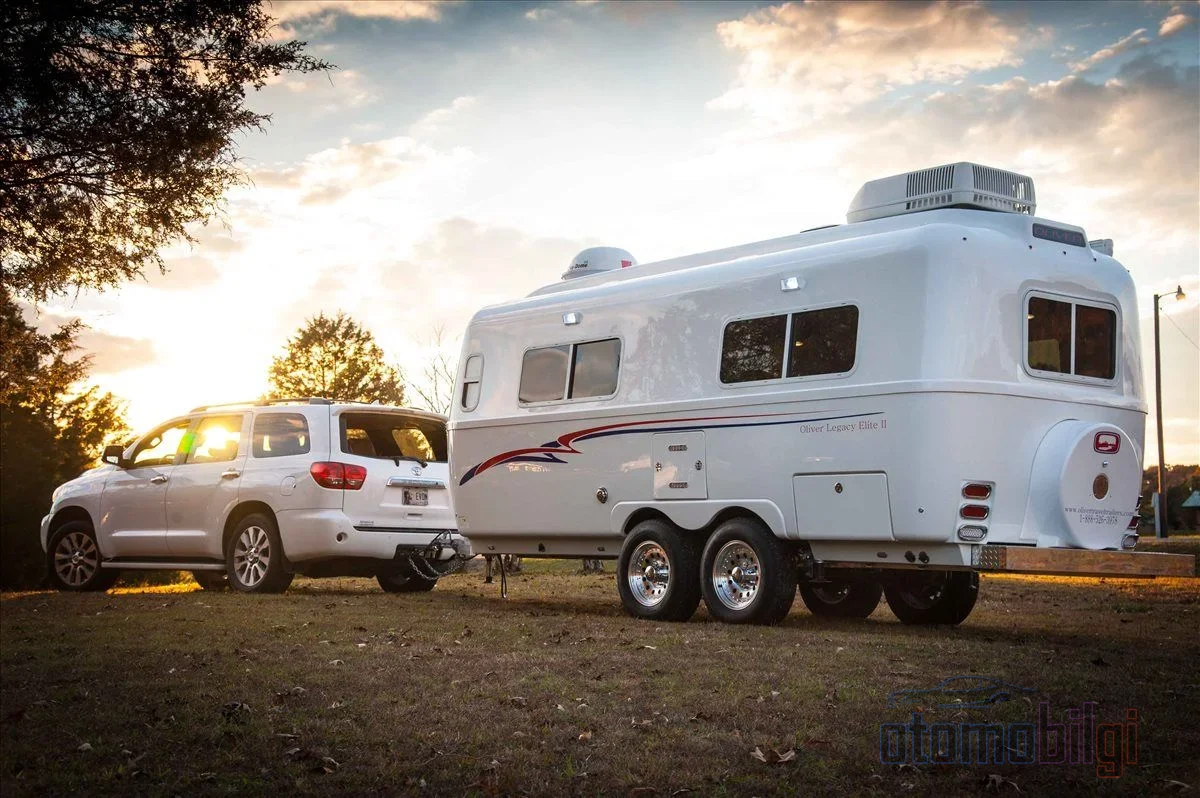
Same vehicle, same road, same tank. The only difference is a 1,400-kilogram caravan hitched behind it. The result? The average consumption value on the gauge nearly doubles. So what is the physics behind this increase? The source of this jump in fuel consumption is not a single factor; weight, air resistance, rev management and the engine's operating point all come into play at once. In this guide, we explain step by step, through the mechanism, why and by how much towing a caravan increases consumption.
How Much Does Towing a Caravan Increase Consumption?
The generally accepted range is quite wide: towing a trailer or caravan causes fuel consumption between 20 and 50 percent higher than normal driving, depending on driving style, trailer size and road conditions. In measurements made at constant speed, it was determined that towing a trailer at 90 km/h increases consumption by about 30 percent; this value is the result of a controlled scenario where the variables were eliminated.
In the real world, three things determine where you will fall within this range: the weight of the load you are towing, the caravan's air resistance, and your cruising speed. Real consumption examples shared by experienced caravanners make this wide range concrete. A 2-liter diesel vehicle consumes 60 mpg (about 4.7 L/100 km) on the highway without a caravan, but this value can drop to the 28-32 mpg range (7.1-8.4 L/100 km) when towing a caravan. A driver towing a 2.8-ton caravan reported a value as high as 22.6 L/100 km. Between two different trips made with the same vehicle on the same route, a difference of 17 L/100 km to 22 L/100 km can be observed; the source of this difference is driving habits and the load carried.
Highlights
- Towing a caravan typically increases consumption by 20-50 percent; the increase measured at a constant 90 km/h is 30 percent.
- Every 100 kg of additional weight raises consumption by about 2 percent.
- At 60-65 mph (97-105 km/h), a vehicle uses about half of the fuel it burns just to overcome air resistance.
- Since air resistance increases with the square of speed, reducing speed by 5-10 km/h lowers consumption noticeably.
- For heavy, long-distance towing, a diesel engine is more efficient than a gasoline one thanks to its low-end torque.
Added Weight Directly Increases the Engine's Workload
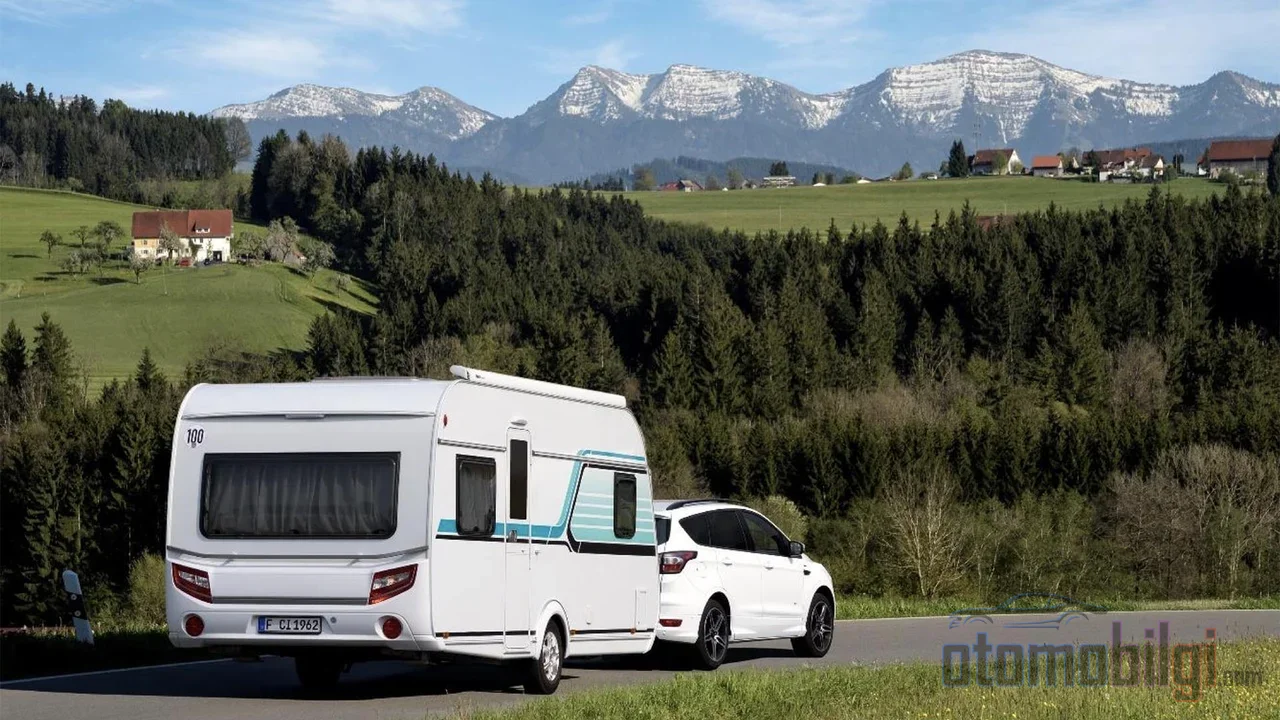
The first intuition about fuel consumption is simple: the more work the engine does, the more fuel it burns. A caravan increases this amount of work in two ways. First, the mass that needs to be accelerated at start-up and on hills grows; second, rolling resistance multiplies with more tires and more weight.
As a rule of thumb, every added 100 kg of weight increases consumption by about 2 percent. When you fill a 1,200 kg caravan up to its maximum laden weight, this rule turns into a serious difference. A 200 kg increase in load can correspond to roughly 2 to 5 liters of extra consumption per 100 kilometers; one example shows the same vehicle rising from 17 L/100 km to 22 L/100 km.
The practical takeaway from this: everything you carry gets written onto the fuel bill. Emptying just a single water tank reduces the load by approximately 90 kg. The buildup of unnecessary tools, spare parts, and rarely used equipment in the caravan acts like a tax you pay on every kilometer.
Aerodynamic Drag: Often More Decisive Than Weight
Although weight seems like a strong intuitive factor, at highway speeds it is usually air resistance that truly weighs heaviest. A caravan is a mass far from being the most aerodynamic design: its upright front face, the gap between it and the tow vehicle, and its height radically disrupt the vehicle's total frontal area and drag coefficient.
Aerodynamic drag; is determined by the combination of frontal area, drag coefficient, the square of speed, and air density. The critical term in this formula is the square of speed: when speed doubles, air resistance quadruples. At 60-65 mph, a vehicle spends roughly half of the fuel it burns just to overcome air resistance. A caravan adds its own frontal area on top of this resistance.
The numerical counterpart of this effect is clear. A vehicle consuming 13-14 mpg in the 62-65 mph band while towing drops to 11 mpg when it goes up to 75 mph. A tow vehicle staying above 65 mph can lose 20 to 40 percent of its fuel economy. Every 1 mph increase above 55 mph reduces efficiency by roughly 0.1 mpg. In another real-world measurement, a tow combination consuming 24 mpg at 60 mph reaches 30 mpg when pulled down to 56 mph. So slowing down by four miles per hour means an improvement of up to 25 percent in consumption.
Other Shifting Variables
Weather conditions also come into the picture. A headwind increases the engine's load even at the same speed; therefore, waiting for a windy day to pass or planning the route according to wind direction is a saving tool in itself. Overheated air is less dense and reduces engine efficiency; cool, humid, dense morning air improves combustion marginally, and morning winds are generally calmer. Season, terrain, and stop-and-go traffic are also among the variables that change the consumption profile.
Low Gears and Constant Loaded Operation: The Engine's Operating Point
When the caravan is hitched, the engine's daily operating regimen changes. The high gears that keep things economical under light loads become inadequate against the increased resistance; the transmission shifts down into lower gears and higher revs. The engine now operates constantly in load zones it normally passes through only temporarily. This means both higher instantaneous consumption and greater thermal load.
In diesel engines, the efficient zone is usually in the 1,800-2,200 rpm band. Staying above this band means unnecessary fuel; dropping below it strains the engine and requires choosing a higher gear, which in turn raises the revs again. In vehicles with automatic transmissions, gear hunting under load (constant shifting between two gears) is costly in terms of both fuel and heat. The solution is staying in the appropriate gear in manual mode or using the vehicle's tow/haul mode; this mode keeps the revs in the efficient zone by changing shift points and controls downhill engine braking.
The rule for experienced towers is simple: whatever gear is needed going up, return to that gear going down. The engine brake takes the load off the brake pads, preventing overheating and making the whole system more predictable.
Diesel or Gasoline: The Engine Difference in Towing
There are two engineering reasons why diesel engines have an advantage in towing. First, the higher energy density of diesel fuel and the engine's operating principle: diesels run more efficiently per unit of volume. Second, the torque character: diesel engines produce high torque at low revs, and torque is the force that carries heavy loads without climbing into high revs. What pulls the caravan is torque; what determines acceleration is peak power. For this reason, when pulling a large caravan at highway speed, a gasoline engine can consume noticeably more fuel than a diesel.
User reports make this difference concrete: while diesel towers report figures in the 10-12 L/100 km range when towing, consumption reaching 17-20 and even 24 L/100 km has been reported for gasoline engines. Since gasoline engines produce their peak power at higher revs, they are forced to run at higher revs under heavy load, and consumption multiplies.
That said, gasoline is not eliminated in every condition: for light trailers, short distances and low-intensity use, a gasoline engine can be a practical choice. Nor is the diesel superior in every respect: in some half-ton pickup models, the diesel version's payload capacity can fall short of the gasoline version, reducing real-world towing capacity. Also, there is no single answer to the manual or automatic question: although manual transmissions are traditionally seen as cheaper and more efficient, modern automatic transmissions can deliver results equal to or better than manual both in towing and fuel economy.
Towing Driving Techniques That Reduce Consumption
Understanding the mechanisms that create the increase also gives the key to reversing it. The following techniques provide noticeable improvement in the consumption of an average towing driver.
- Reduce your speed by 5-10 km/h. The 80-90 km/h range is the most efficient towing zone for most experienced caravanners. Because air resistance increases with the square of speed, this single change brings a dramatic improvement.
- Reduce weight. Fill the water tank partially, remove unnecessary tools and spare parts; it is known that reducing load by 190 kg in one go noticeably lowers consumption.
- Remove equipment that disrupts aerodynamics. Reduce roof racks, keep the caravan's front face clean and flat, and don't fit unnecessary jerry cans and equipment that disrupt airflow. Wind deflectors fitted to the tow vehicle's roof can save 2-3 L/100 km by directing airflow over the caravan.
- Keep the revs in an efficient band. Stay within 1,800-2,200 rpm with diesel; use manual mode or tow mode with an automatic.
- Drive smoothly. Instead of sudden throttle and last-minute braking, try to carry momentum; approach lights and corners by rolling into them.
- Check tire pressures. Low pressure increases rolling resistance; measure pressures when cold and don't forget the caravan tires. A typical starting value for towing setups is around 50 PSI; be careful not to exceed the manufacturer's limits. A tire pressure monitoring system (TPMS) catches slow leaks early.
- Don't neglect periodic maintenance. A clean air filter, fresh oil, a clogged EGR check, repair of a seized brake or faulty wheel bearing, and wheel alignment directly lower consumption. High-quality low-viscosity oils reduce friction.
- Factor in the wind. Not setting out in a strong headwind is the simplest saving you can consider when planning.
About Cruise Control and Air Conditioning
Cruise control saves fuel on flat, long roads; but on undulating roads the system accelerates aggressively to maintain speed and revs keep climbing. On such terrain, manual throttle management can be more economical. When it comes to air conditioning, the picture isn't clear: although it's stated that the A/C can increase consumption by up to 20 percent by putting extra load on the engine, there are also experiences suggesting that towing speed is the dominant factor in towing conditions and the A/C's contribution remains relatively small.
Summary: Why Does a Towing Vehicle Burn So Much Fuel?
The short answer is this: a caravan forces the engine to work under constant high load by increasing the vehicle's mass and frontal area; the increased weight combined with air resistance that grows with the square of speed raises consumption typically by 20-50 percent, and in controlled measurements by about 30 percent at 90 km/h. The magnitude of the increase is determined by weight, the caravan's aerodynamics, speed, and engine type; for heavy, long-distance towing, diesel stands out with its low-end torque and efficiency advantage. On the driver's side, the two most effective levers are speed and load: slowing down by 5-10 km/h and removing hundreds of kilograms of belongings provides a greater saving than any technical modification.
Sources
- How to MAXIMISE your Fuel Economy while Towing
- Improving Fuel Economy when Towing
- How to Save Fuel When Travelling with a Caravan
- How much does towing a caravan effect your MPG?
- Fuel consumption whilst towing
- Rule of thumb for energy consumption
- Factors that affect fuel efficiency - Natural Resources Canada
- A Guide to Tow Car Transmission: Manual or Automatic?
- Petrol vs Diesel: What's Actually Better for Touring?
- How Much Does Towing Lower My Fuel Economy?