How Does Tire Type Affect Fuel Consumption?
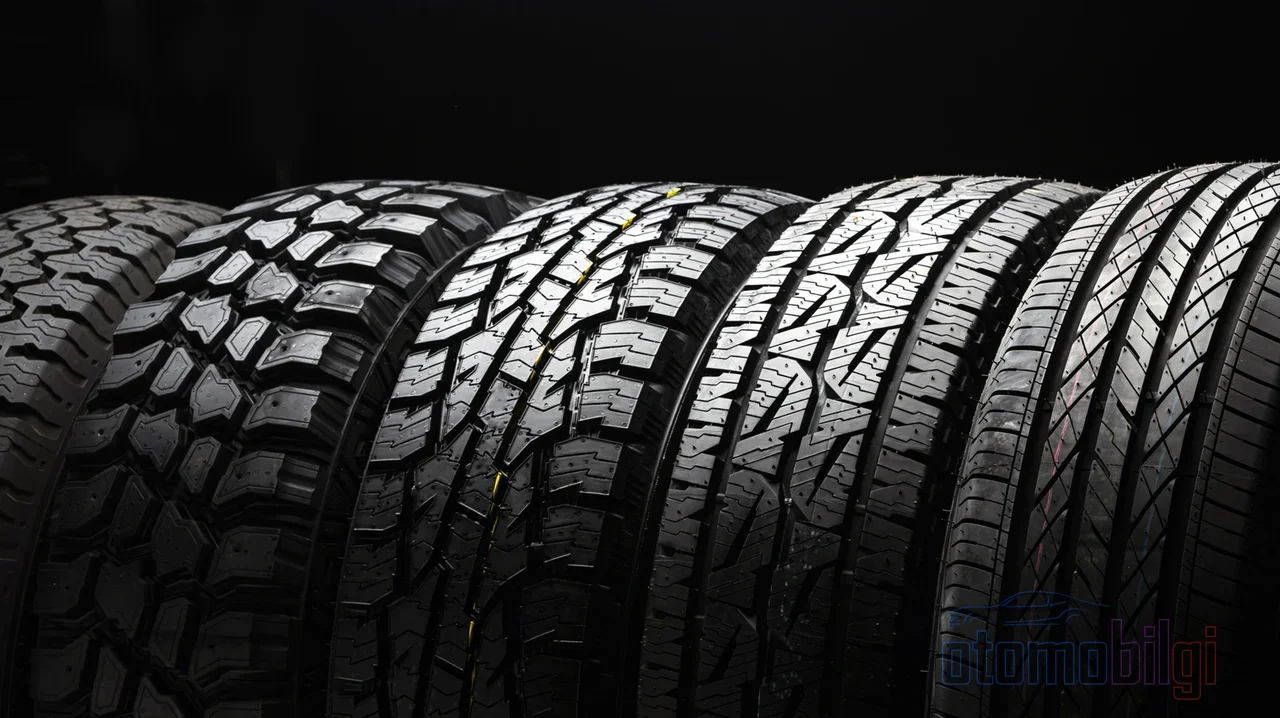
Same model, same engine, same driver; the only difference is the tires. Yet the gap in their fuel tanks can grow large enough not to go unnoticed. Most drivers think of fuel consumption only in terms of tire pressure; yet the tire itself - rolling resistance, season type, tread design and wheel diameter - directly shows up in the measurement at the pump. So which tire type burns how much fuel, and which choice truly makes a difference?
What Is Rolling Resistance, and Why Does the Engine Fight It?
As a tire rolls along the road, it is constantly deformed: the section entering the contact patch is squeezed, and the section leaving it returns to its original shape. In this stretch-and-return cycle, part of the energy is lost as heat; its technical name is hysteresis, and it accounts for roughly 85-90% of rolling resistance. The remaining share comes from friction and aerodynamic losses. Even more striking, in trucks roughly one third of the energy reaching the wheels evaporates as nothing more than this deformation heat.
This loss's share in consumption is not to be underestimated. In passenger cars, rolling resistance accounts for about 20% of total fuel consumption, and in light commercial vehicles up to 30-40%. In other words, one out of every five tanks of fuel is determined by the way the tire rolls. The direction is also clear: a 30% increase in rolling resistance means 3-5% extra consumption; conversely, cutting the resistance in half can translate into energy savings of up to 15%.
Key Takeaways
- In a passenger car, about 20% of consumption comes from rolling resistance.
- On the EU label, a class A tire saves about 0.5 liters per 100 km compared to a class E tire.
- A/T tires typically reduce efficiency by 3-5% compared to highway tires.
- The measured cost of upsizing wheels is a loss of up to 10% in fuel economy.
- A worn tire is more efficient, but never at the price of compromising safety.
EU Label and Efficiency Classes: What Do the Letters Mean?
On the European tire label, fuel efficiency is actually the letter equivalent of rolling resistance, and today it is rated in five classes from A to E. The difference is measurable: A class A tire consumes about 0.5 liters less fuel per 100 kilometers compared to a class E tire. For a vehicle doing 15,000-20,000 km a year, this amounts to 75-100 liters per year - a difference to be taken seriously over the tire's lifetime.
The physical values behind the classes are gram-scale: the unit of measurement is not newton/kilonewton per ton, but kg/t - kilograms of resistance per ton of load - the ratio of resistance to the load carried. In a comparative test on 205/55 R16 tires, a new low-resistance tire measured 5.58 kg/t, while the same brand's standard road tire measured 7.74 kg/t; and a performance-oriented rival came in at 8.93 kg/t. This difference of roughly 2 kg/t translates into 0.21 liters per 100 km, and for a gasoline compact, into a 5 g/km reduction in CO₂.
The other face of the same balance is grip. Friction on the road provides both rolling resistance and braking and grip; it cannot be eliminated entirely. Products that combine low rolling resistance and wet braking performance at the highest level in a single tire make up only a small portion of the market. The fact that the two separate measurements on the label (efficiency and wet grip) pull in opposite directions is why this is one of the most difficult equations in engineering.
Do Winter Tires Burn More Fuel Than Summer Tires?
The short answer: at the same width, yes, by a little. The softer compound of the winter tire and its deeper, blockier tread pattern raise rolling resistance; this is the price it pays for offering safety and traction in harsh conditions. All-weather tires also work slightly less efficiently than summer-type all-season tires for a similar reason.
On the other hand, not everything that affects consumption in winter comes from the tire: cold, dry winter air is approximately 11% denser than warm summer air; this increases aerodynamic drag and pushes highway consumption upward in particular. The drop in tire pressure in the cold and the fuel evaporating and mixing into the engine also widen the difference. That is why attributing the entire consumption increase seen with winter tires to the tire alone is misleading.
The practical compensation, however, is a well-known formula: narrowing the tire in winter. A narrower winter tire of the same diameter offers lower rolling resistance with a smaller contact patch and closes much of the summer-tire gap - and it even positively touches traction in snow and mud.
Off-Road Tires and the Penalty of Tread Design
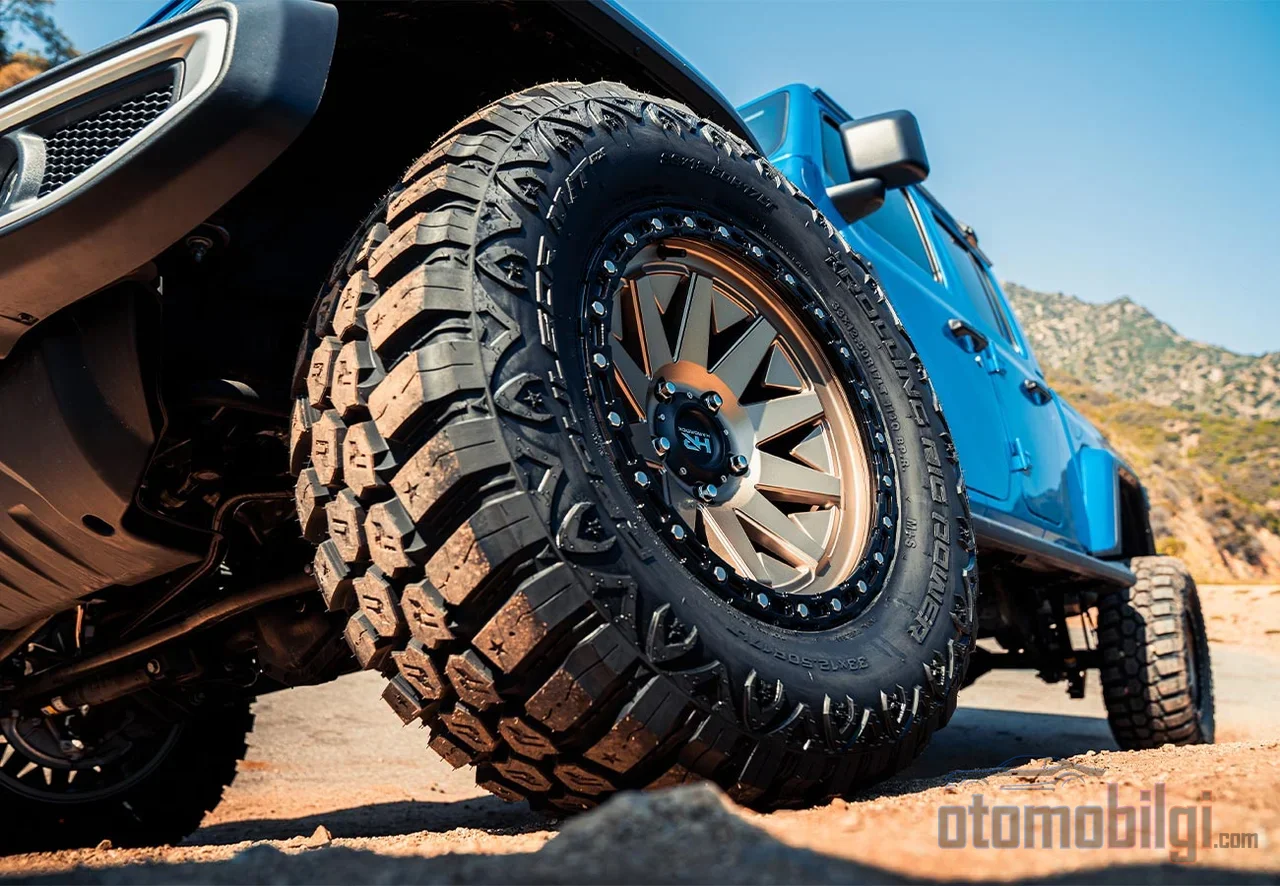
This is where the most expensive misconception of heavy pickup and SUV owners lies. Open-blocked, deep-treaded, and wide all-terrain (A/T) tires typically reduce fuel efficiency by 3-5% compared to highway tires; the difference can grow depending on aggressiveness and load. Tread blocks not needed for grip on asphalt crush and open with every rotation, consuming energy; so the penalty relates not only to weight but also to tread geometry.
The scale can be surprisingly large. In a 182-mile test cycle conducted with the same vehicle, an aggressive-tread off-road tire measured 14.9 mpg while an ordinary road tire delivered 17.2 mpg - the entire difference coming from the tread pattern alone. On the other hand, if the goal is traction, the direction of the trade-off changes; mud-terrain tires designed for mud and rock carry penalties that even exceed A/T. The choice should be defined by where the vehicle actually spends its time: if most of the time is spent on asphalt, the gain on the efficiency side is worth more than the visual appeal of a knobby off-road tire.
The speed range in which the tread works also matters. Tires account for roughly 15-25% of fuel economy loss at low speeds and 20-35% at highway speeds; meaning the penalty of tread design is heard more loudly on long journeys.
Wheel and Tire Size: The Gasoline Price of Style
Big wheels are good for aesthetics, bad for the fuel gauge. Wide tires bring a larger contact patch, higher rolling resistance, more weight, and therefore higher consumption. In one measured example, an upsized wheel and tire set produced a 10% loss in fuel economy and a 4% regression in 0-100 km/h acceleration; the typical range in the literature is a 4-10% efficiency drop with large wheels.
A practical warning: if the total wheel-tire diameter differs from the vehicle's catalog value, the consumption value read on the display is also calculated incorrectly. In other words, fitting larger wheels and seeing no difference on the display does not mean there is no difference. When changing sizes, real consumption must be verified using the fuel station method or a long-distance average.
Do Low Rolling Resistance Tires Really Pay Off?
The rule widely accepted in industry practice is this: a 10% reduction in rolling resistance means roughly a 1% improvement in fuel economy. Accordingly, low rolling resistance (LRR) tires typically deliver 1-4% savings. Setting aside the extreme differences where classes reach 0.5 L/100 km, the everyday difference between two ordinary tires is at a level most drivers would not notice in a single tank.
Herein lies the source of the confusion: the tire's total share in consumption is 20-30%, but the savings achievable through tire choice is 1-5%. When the two figures are confused with each other, either exaggerated promises or unfair dismissals arise. On the electric vehicle side, the picture is more promising; the combination of low resistance tires and low resistance road surfaces can reduce consumption by up to 20%, because range depends directly on rolling energy.
| Tire Choice | Impact on Consumption | Note |
|---|---|---|
| E class instead of A class | +0.5 L/100 km | Difference between label extremes |
| All-terrain (A/T) | 3-5% more | Compared to a highway tire |
| Winter tire (same width) | Slightly more | Can be compensated with a narrower tire |
| Upsized wheel/tire | 4-10% more | 10% in the measured example |
| LRR tire | 1-4% less | Significant at high mileage |
Which Tire Makes Sense for Which Use?
All these figures can be reduced to a single question: where does your vehicle spend its time? In predominantly urban and long-distance use, a tire carrying a high efficiency class on its label returns tangible money over its lifetime; there are measured examples where savings calculated over 35,000 km reach the order of hundreds of units of currency. If the vehicle sits in the garage and covers 5,000 km a year, the same difference remains practically invisible.
For a driver living in a snowy region, the small consumption penalty of winter tires is beyond debate; the safety side is exempt from debate. But if the same driver prefers an aggressive knobby A/T set for asphalt use, they burn 3-5% in vain over thousands of kilometers a year. Performance tires should be evaluated with similar logic: grip-focused compounds and patterns are generally weak on the efficiency side.
One trade-off should also be made consciously: a worn tire consumes 6.5% less than a new one when tread depth falls to the final fifth. However, this efficiency gain is stolen from safety; On wet surfaces, water evacuation and braking distance are directly linked to tread depth. Deliberately keeping a worn tire is not efficiency, it is a risk management mistake.
Conclusion: Choosing Tires by the Numbers
The direct answer to the question is this: tire type changes fuel consumption by between 1% and 10%; the biggest penalty is found in aggressively treaded off-road tires and upsized wheels, and the biggest gain is found in Class A low rolling resistance tires. Reading the rolling resistance class from the label, choosing the right width for a seasonal tire, and avoiding treaded tires that are wider or heavier than the vehicle needs is a permanent savings strategy independent of pressure adjustment. Even when the pressure is set correctly - in fact especially when the pressure is set correctly - the tire itself is the most easily overlooked item in the fuel budget. Since even underinflating by 0.3 bar increases resistance by 6%, when the right tire and the right pressure are considered together, the difference compounds.
Sources
- What impact does tyre rolling resistance have on fuel efficiency - Michelin
- Understanding Fuel Economy and Rolling Resistance | IMI
- The Importance of Rolling Resistance for Fleets - Continental
- What Is Tire Rolling Resistance? Part 2: Defining Rolling Resistance - Tire Rack
- Tyre rolling resistance and its influence on fuel consumption - combustion-engines.eu
- Fuel Consumption Testing to Verify the Effect of Tire Rolling Resistance on Fuel Economy
- Analysis of Fuel Economy Due to Rolling Resistance - MDPI
- Low-Rolling-Resistance Tires Can Save You Money - Consumer Reports
- Effects of Upsized Wheels and Tires Tested - Car and Driver
- Learn the facts: Cold weather effects on fuel efficiency - NRCan