Air Conditioning, Idling, and Loads: The Car's Hidden Fuel Consumers
Share This Page
Your car's fuel isn't consumed only by the engine and your right foot. The A/C compressor, an engine idling away, the aerodynamic penalty of a roof box, low tire pressure, and electrical equipment paid for by the alternator are hidden consumers that never appear on the dashboard but measurably burn fuel. This page puts numbers on how much each one increases consumption and offers practical, measurable measures to reduce it.
Highlights
- The air conditioning can increase consumption by, depending on conditions, %8-%25 making it the largest auxiliary load.
- A compact car idling burns roughly 0.6 liters per hour; 10 minutes of waiting equals about 8 km of driving.
- A roof box can increase highway consumption by up to %15-%18 a tow-bar-mounted carrier imposes a much smaller penalty.
- For every 1 psi of missing tire pressure, consumption increases roughly by %0.2 .
- Every extra 45 kg of load in the vehicle reduces fuel economy by about %1-%2 .
How Much Fuel Does the Air Conditioning Really Burn?
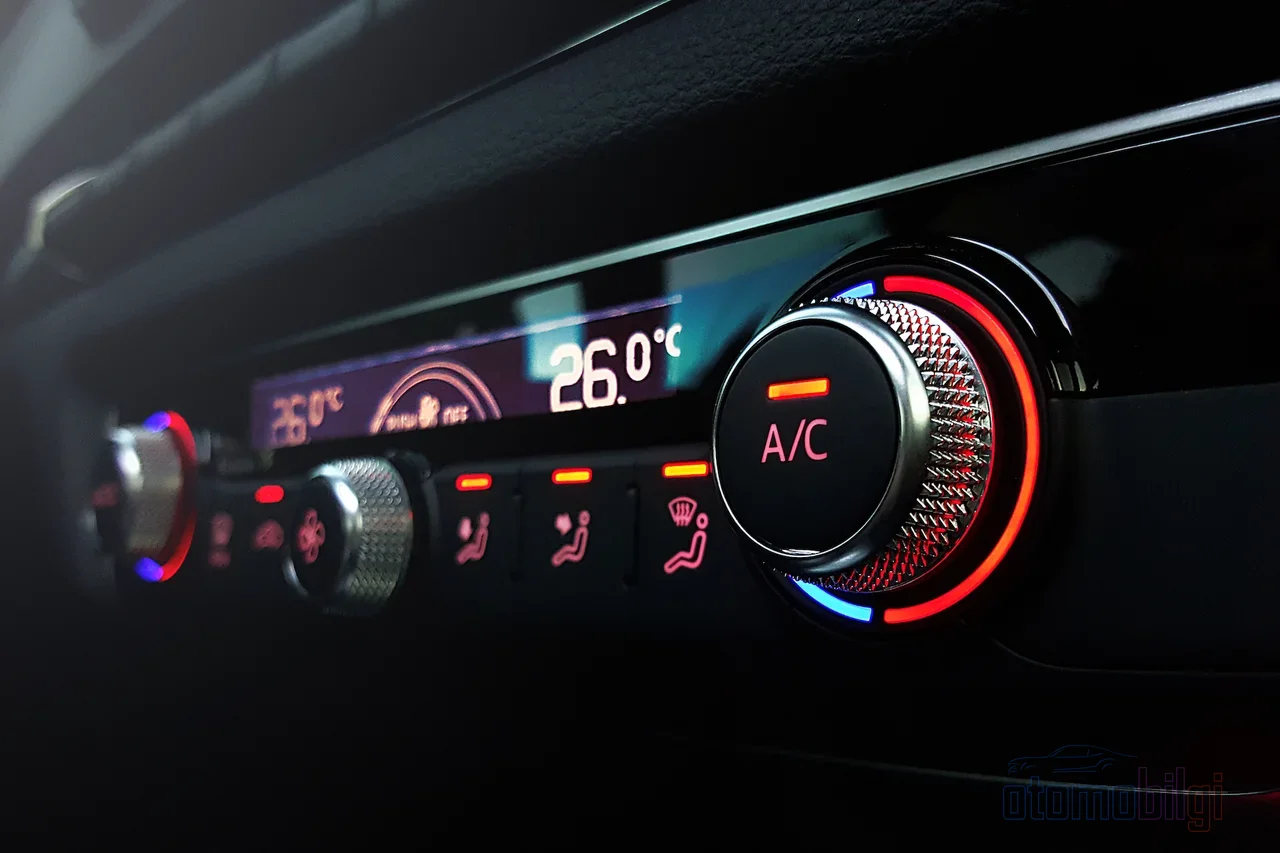
The A/C's impact on consumption comes from the compressor, which is driven directly by engine power. It draws power from the engine to circulate the refrigerant; that power is paid for with fuel that turns into gasoline. The answer isn't a single figure but a range: in mild conditions, the increase in consumption is typically around %8-%10 , which corresponds to 0.2-0.4 liters of fuel per hour. In extremely hot weather, the picture gets harsher; among auxiliary power loads, the A/C's effect is the largest, and consumption can rise up to %20, or even beyond that in extreme heat.
The reason the figures span such a wide range is that the load isn't constant. Cabin volume, outside temperature, sun exposure, and operating conditions determine the power the compressor draws. Once the cabin has cooled, the system throttles back thermostatically and works far less; that's why the effect is most noticeable on short trips while the cabin is still hot and in stop-and-go traffic.
Windows down or A/C on?
The answer to this question changes along the speed axis. At low speeds and in the city, opening the windows is nearly free; it saves fuel compared to turning on the A/C. At highway speeds the situation reverses: open windows increase aerodynamic drag and can raise consumption at high speed by up to %20 . The practical rule: windows down at city speeds, closed windows and A/C on the highway.
Ways to use the air conditioning efficiently
- When picking the car up from a hot parking spot, first open the windows and air it out for a few minutes; if the hot air inside doesn't escape first, the A/C has to work harder.
- After the cabin has cooled, turn the fan setting down; the system will throttle itself and reduce consumption.
- When buying a car, look for smart climate controls offering an economy mode; systems that intelligently manage compressor speed make a difference in the long run.
Idling: A Stationary Car with Moving Fuel Waste
Idling is a special condition that sends the car's per-km consumption to infinity: fuel burns, no distance is covered. It's not something to be dismissed quantitatively either. A compact-class gasoline vehicle idling burns roughly 0.61 liters, a comparable diesel consumes 0.64 liters As a practical rule of thumb, engine displacement (liters) × 0.6 gives the hourly idle consumption in liters; for a 2.0-liter engine this means roughly 1.2 liters/hour . Large-displacement engines and pickups can exceed this value noticeably.
To put it in everyday terms: an average vehicle idles an estimated 5–10 minutes per day, and 10 minutes of idling is equivalent to the fuel consumed by driving about 8 km. In a peer-reviewed study, a vehicle left idling for 10 minutes a day was calculated to burn more than 100 liters of fuel per year. So waiting with the doors open and the engine running is an invisible daily tax.
Does turning the engine off and back on make sense?
Yes - in modern engines the fuel cost of restarting is very low. During long waits (for example, waiting periods exceeding a few minutes), shutting the engine off saves fuel compared with leaving it idling. Start-stop systems are precisely this logic capitalized upon by the automotive industry.
How much do start-stop systems save?
Start-stop technology reduces urban fuel consumption by, depending on conditions, 4%–10% or more . In typical urban use this improvement usually falls in the 5%–7% range; for example, a vehicle getting 20 mpg in the city can approach 22–23 mpg with this system. The figure varies with traffic density and the length of signal waits; in driving that involves frequent idling, the gain is real and measurable.
Roof Boxes and Carriers: The Bill for Aerodynamics

A roof box inflicts one of the harshest penalties on consumption. An instrumented test conducted with a Toyota Grand Highlander showed that the roof box dropped fuel consumption from 25 mpg to 21 mpg -in other words, a loss of roughly one-fifth. In the same test, a hitch-mounted carrier caused only a slight drop-roof mounting is significantly more harmful than hitch mounting because of the extra area it presents at the front of the vehicle. According to manufacturer data, a roof box alone can increase consumption by up to 18% ; the result depends on the shape of the box and driving speed.
The practical takeaway from this picture is clear: mount the box only when needed, and store it during periods of non-use. If a carrier is unavoidable and the vehicle is suitable for a hitch, a hitch-mounted solution significantly preserves highway fuel economy. Although aerodynamic refinement of roof carriers remains an area with great efficiency potential in the technical literature, for now the most effective measure is not using a carrier at all.
Unnecessary Load: The Fuel Cost of Every Extra Kilogram
The second mass penalty, beyond aerodynamics, comes from simpler physics: heavy vehicles have greater inertia and rolling resistance, and moving them requires more energy. The quantitative rule is this: every extra 45 kg (100 pounds) in the vehicle reduces fuel economy by roughly 1%–2% reduces it. Items forgotten in the trunk for months, unused tool boxes, and cargo protectors that never come off are the silent components of this account.
In city driving with heavy stop-and-go traffic, the mass penalty is greater, because with every acceleration you repeatedly speed up those extra kilograms. At constant highway speed, the effect becomes relatively smaller. What needs to be done in practice is simple: empty the trunk once, remove unused accessories, and leave in the vehicle only what genuinely needs to be carried.
Tire Pressure: The Cheapest Savings Lever
Tire pressure is the only item among the factors affecting consumption that requires zero investment cost. According to official data, keeping tires at the recommended pressure improves fuel economy by up to 3%; at average pressure, every 1 psi drop increases consumption by roughly 0.2% In a scenario where all four tires fall to 75% of the recommended value, consumption at various speeds has been measured to increase by 2-3%. was measured to increase.
| Factor | Consumption impact | What to do |
|---|---|---|
| Air conditioning | 8-20% (more in extreme heat) | Ventilate first, then use the A/C; turn down the fan once the cabin cools |
| Idling | ~0.6 L/hour (compact); 10 min ≈ 8 km of driving | Turn off the engine during long waits |
| Roof box | Up to 15-18% | Mount only when needed; prefer a hitch carrier |
| Extra load | 1-2% per 45 kg | Clear the trunk and interior of unnecessary items |
| Tire pressure | ~0.2% per 1 psi; up to 3% in total | Monthly pressure checks, adjusting to the manufacturer's value |
Electric Equipment and the Alternator's Hidden Tax
All of the vehicle's electrical equipment draws its energy from a single source: the alternator spun by the engine. Every electric accessory you use increases the load on the engine through the alternator, and this power is paid for with fuel. Big consumers such as heated seats, the rear window defroster, and high lighting create a measurable addition even in short-term use.
There is no need to go overboard either: in normal use, short cycles such as heating the heated seat once and then turning it off keep the amount small. The real point to watch is large electrical loads that stay on continuously. Improving alternator efficiency can reduce the power drawn from the engine and lower consumption; that is why questioning the efficiency value when replacing spare parts pays off in the long run.
A Step-by-Step Reduction Plan: Where to Start?
The beauty of these factors is that none of them requires investment and each can be applied independently. A ranking by impact magnitude looks like this:
- Remove the roof box - if you do not use it, a gain of up to 15-18% on its own, the biggest item on the list.
- Break the idling habit - 10 minutes of waiting per day means a difference exceeding one hundred liters per year; do not switch off the system in a vehicle with start-stop.
- Check tire pressure monthly - savings of up to 3% at zero cost, the step with the highest efficiency/effort ratio.
- Empty the trunk - 45 kg of unnecessary mass, a direct 1-2% improvement.
- Use the air conditioning wisely - in the city, windows; on the highway, air conditioning; once the cabin cools down, turn the system down.
None of these is a milestone on its own; however, when combined, they close a significant portion of the gap between real consumption and the manufacturer's claim. And this gap shrinks without ever touching the price at the pump, entirely under your control.
Sources
- How Much Fuel Does Air Conditioning Use? - Kwik Fit
- Learn the facts: Air conditioning - Natural Resources Canada
- Does my AC really affect my gas mileage? - Plymouth Rock
- On Average, How Much Fuel is Wasted by Idling? - Radius
- The Facts About Idling - City of Elk Grove
- Impact of idling on fuel consumption and exhaust emissions - Rahman et al., ScienceDirect
- Idling Fuel Consumption Calculator - Omni Calculator
- Rooftop Cargo Box Hurt Our Toyota Grand Highlander's Fuel Economy - Car and Driver
- Roof Box and Fuel Consumption - Menabo
- Fuel consumption impacts of auto roof racks - Chen 2016, ScienceDirect
- Tire Pressure and Fuel Economy - KBB (DOE data)
- Understanding the Impact of Tire Pressure on Your Vehicle's Fuel Efficiency - Jaco Superior Products
- How tire maintenance influences fuel efficiency - Continental
- Does increased load of electronic devices reduce fuel economy? - Mechanics StackExchange
- Does Driver Weight Affect Mileage? - Teletrac Navman
- Learn the facts: Weight affects fuel consumption - Natural Resources Canada
- Idle stop-start technology and its effect on fuel consumption - Natural Resources Canada
- AAA's Tests Reveal Real-World Benefits of Automatic Stop-Start Technology - AAA Newsroom
- Does the Start/Stop Function Really Improve Your Car's Fuel Economy? - Consumer Reports
- Do Stop-Start Systems Really Save Fuel? - Edmunds