Common Fuel Saving Myths

Share This Page
Most of the common beliefs about fuel economy are either leftovers from the old carburetor era or approaches that spread by word of mouth. On this page, we put five common claims on the table one by one: does idling or stop-and-go burn more fuel, do open windows or air conditioning increase consumption, do overinflating tires and using nitrogen help, does premium gasoline make a difference, and does a dirty air filter really raise consumption? The answers become clear with measured data; many of them turn out to be the exact opposite of expectations.
Highlights
- Idling for longer than 10 seconds consumes more fuel than shutting the engine off and restarting it.
- An engine at idle burns an average of 0.279 cc of fuel per second; that corresponds to 0.76-1.9 liters per hour.
- At highway speeds (above approximately 88 km/h), opening the windows creates more consumption than running the air conditioning.
- In engines designed for regular gasoline, premium fuel brings only a 1% improvement in consumption despite a 21% increase in cost.
- Eco-driving training can achieve savings of 7.5-30% in fuel consumption.
Which consumes more fuel: idling or switching the engine off and on?
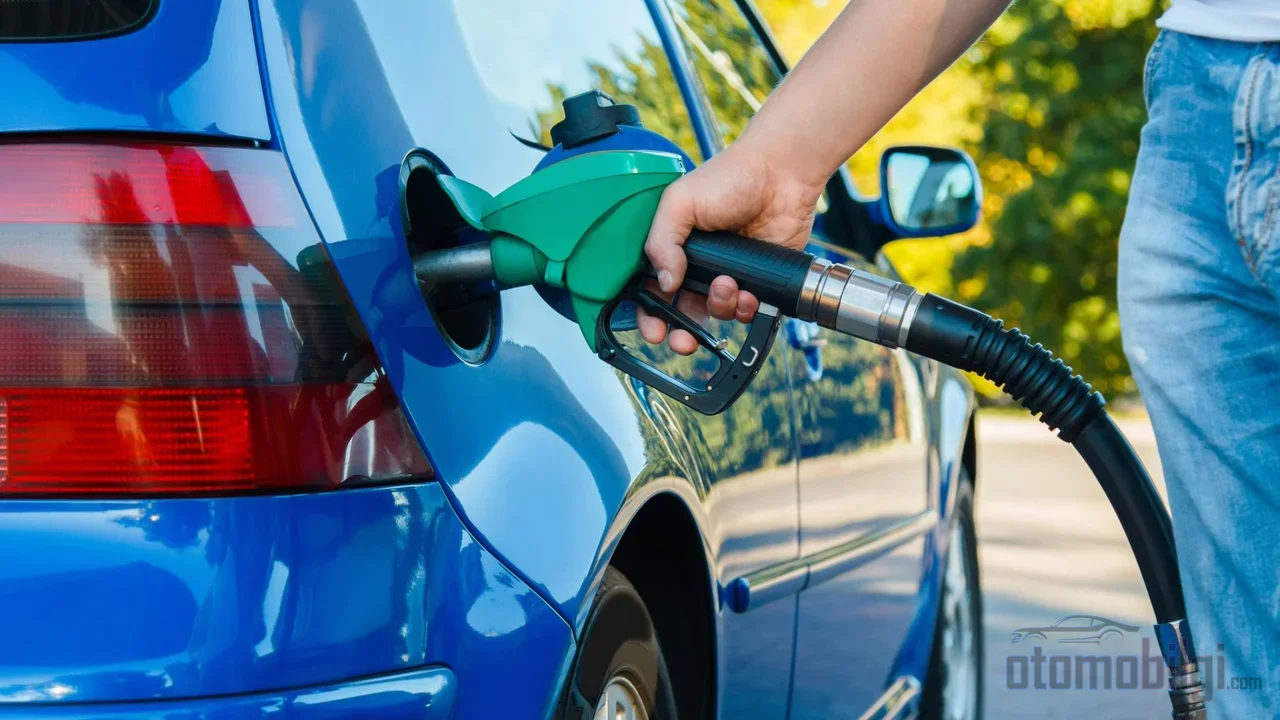
The answer is clear: if the wait will last longer than 10 seconds, turning the engine off is always more economical. In older carbureted cars, every start sprayed a serious amount of fuel, so the belief that "starting was more expensive than waiting" was justified; in modern fuel-injected engines, however, this equation has been reversed. In the measurement lab, a 2.5-liter four-cylinder passenger car idling at 21 °C consumes 0.279 cc of fuel per second. Calculated at this rate, even ten seconds of idling exceeds the fuel spent on restarting.
Measurements carried out on thousands of passenger vehicles show that idle consumption varies between 0.76 and 1.9 liters per hour. Small-displacement engines stay near the lower bound, while large-displacement ones stay near the upper bound. An engineering channel pushes the threshold even lower for a 1.5-liter engine, down to 7 seconds; so no matter how long you wait in a modern vehicle, shutting it off and restarting almost never causes harm under any conditions.
But doesn't the engine need to be oiled?
A frequently raised side concern is that frequent starting will wear out the engine and the starter system. Measurements show this is not a problem on the emissions side either: the amount of carbon monoxide, hydrocarbons, and nitrogen oxides produced by a restart is at least an order of magnitude lower than a cold start. The reason is simple; since the catalytic converter is still hot during short stops, the emission bomb created by a cold start does not occur. Also, the vehicle warms up through driving, not while idling; so letting it run in place in cold weather is an inefficient strategy in terms of heating as well. It has been calculated that drivers who shorten their idling time can reduce their consumption by up to 19% - in usage profiles with many stops and long waits, this figure means serious money. One note: these measurements are based on a single vehicle and a single temperature condition; very old vehicles and some diesels may behave marginally differently, but the threshold is still in the range of seconds.
Should you open the windows or run the air conditioning in summer?
The claim: the AC compressor is a load on the engine, and opening the windows is free cooling. Partly true - but only at low speeds. The established rule of thumb is a threshold of about 55 mph (≈88 km/h): below it windows, above it the AC is more efficient. That's because open windows increase the vehicle's aerodynamic drag, and at highway speeds this friction exceeds the power drawn by the AC compressor.
The numbers are concrete too. Open windows can reduce efficiency by up to 20% at 88 km/h. On the other hand, the AC is not free either: in city traffic, AC use can increase consumption by up to 1 liter per 100 km; which corresponds to an extra load of about 20%. So both sides have a cost; speed determines the winner. As a practical rule, the most efficient cooling strategy can be summarized as follows:
- In the city and at low speeds: open the windows, keep the AC off.
- On the highway and at high speeds: windows closed, AC on - aerodynamic drag costs more than the AC load.
- The transition zone (approximately 70-90 km/h): the difference is small, comfort preference is decisive.
Overinflating tires and nitrogen: what do the numbers say?
Correct tire pressure has a measurable positive effect on fuel economy; there is no dispute here. As rolling resistance decreases, the engine does less work. The myth lies in going above the manufacturer's recommendation. Overinflating a tire stiffens the tread, worsens handling, and causes premature wear in the center of the tread. The marginal consumption advantage gained does not translate into meaningful savings compared to the tire's replacement cost (in the range of a few hundred dollars). The statement "inflating above the recommended pressure preserves optimal consumption" is therefore explicitly classified as a myth in reliable consumer lists.
Does filling with nitrogen make a difference?
Nitrogen is an add-on service frequently offered by tire dealers: marketed with the argument that it "reduces air loss and improves fuel economy." The theory is partly true - nitrogen is chemically inert, and because it is dry, pressure fluctuates less with temperature and leaks out of the cell more slowly. But there is a stubborn detail: atmospheric air already contains 78% nitrogen. In a passenger car, what really matters is keeping the pressure at the correct value and at regular intervals; more how much is inside than what is inside. Claims such as "switching to nitrogen improves fuel economy by up to 10%" are vendor-sourced and unverified. The reasonable summary is this: nitrogen does no harm and has theoretical advantages, but it does not measurably improve fuel consumption.
Does high-octane (premium) gasoline work in a regular-fuel vehicle?
The octane number measures the fuel's resistance to premature ignition (knock); not its energy content. This distinction is the key to the whole debate. In a test conducted on four different types of vehicles designed for regular gasoline (ranging from a compact SUV to a V8 sedan and a pick-up), consumption at a constant speed of 120 km/h improved by only 1%, despite the fuel cost increasing by 21%. In the same vein, dynamometer tests by an independent automotive organization show that switching to premium gasoline in engines built for regular provides no gain in power, torque, or economy whatsoever. If the manufacturer recommends regular, using premium is a waste of money in terms of economy.
The only exception arises if the engine itself is designed to run on high-octane fuel. An MIT study predicts that if premium gasoline use became widespread across a fleet of vehicles designed this way, 3-4.5% less gasoline could be consumed. So the right question is not "is premium good or bad," but "which fuel is this engine optimized for." The octane rating recommended by the manufacturer is a design decision made together with the engine's compression ratio and ignition map; the price of the label at the pump, on the other hand, is a chemistry parameter related to knock stability, not performance.
Does a dirty air filter really increase fuel consumption?
Here, hearsay clashes with the reality of the modern automobile. In the carburetor era, a clogged filter restricted airflow and the mixture became richer; consumption visibly increased. In modern fuel-injected vehicles, however, since the ECU (engine control unit) continuously balances the air-fuel mixture with sensors, a partially clogged filter has very little effect on fuel consumption. Where the effect is felt is elsewhere: power and throttle response drop, because the engine cannot get the air it wants. For a driver who uses light throttle, the difference on economy is almost unmeasurable.
The claim that "a clogged filter forces the engine into a rich mixture and consumption soars" mostly circulates on service blogs; it does not match modern vehicle data. This does not trivialize filter replacement - periodic maintenance is still necessary for performance and engine health. Only its justification is not consumption, but power and a safety margin.
Small myths: heating, filling the tank, and "magic" devices
A few common beliefs need to be quickly sorted out. Warming the engine while stationary before driving does not save fuel - the vehicle warms up faster with driving, and idling time is pure loss. Keeping the tank always full does not provide savings; there is no such mechanism between tank volume and consumption. As for magnetic or chemical "fuel-saving devices," they are purely marketing products: there is no scientific basis for the claim that a magnet "aligns" fuel molecules. The same logic applies to any plug-in or hose-mounted saving device not supported by any test data.
Habits that actually work: where are the savings made?
Once we eliminate the myths, what remains are measurable, proven savings items. Eco-driving programs across Europe show that training can reduce drivers' consumption by up to 20%; the range in independent evaluations averages between 7.5-30%. That is nowhere near the magnitude that any of the "tricks" on this page come close to. In essence, it can be reduced to a few principles:
- Accelerate slowly and gently; instead of replacing braking with gas, read traffic ahead and ease off.
- Keep a steady speed and avoid high speeds if possible - aerodynamic drag increases with the square of speed.
- Coast where appropriate: letting off the gas and moving with momentum is better than even idling.
- Remove unnecessary weight, optimize your route, and turn off the engine at every wait.
- Keep tire pressure at the manufacturer's recommendation; not more, but correct.
The common denominator is simple: fuel savings are determined not by the label on the pump, but by the pedal under your foot and the driver's decisions. If the money spent on myths - premium gasoline, nitrogen filling, magic devices - had been invested in measured driving habits instead, most drivers would already be using less fuel.
Sources
- Which Is Greener: Idle, or Stop and Restart?
- Some Common Myths: Be Idle Free
- Windows down or A/C on - which is more fuel-efficient?
- Higher MPG: Windows Down or Air Conditioning On?
- AC vs open windows: what saves more fuel
- Fact or Myth: Over-Inflating Your Tires Increases Gas Mileage
- 6 myths about saving on gas
- Should You Use Nitrogen in Your Car Tires?
- Is Premium Gas Worth It?
- Study finds wider use of premium gasoline could save fuel, money
- Should You Use Premium Gas?
- Eco-driving initiatives
- Fuel-efficient driving techniques