Petrol, Diesel and LPG: Which Fuel Is Right for You?

When petrol, diesel and LPG versions of the same model sit side by side, the decision is often left to emotions: some want to trust diesel's torque, some the petrol's quietness, and some LPG's running costs. Yet each of these three fuels is the product of a different engineering philosophy, and the right question is not which one is better, but which one suits your usage profile. The right answer is often not the same for an urban driver covering 10,000 kilometres a year and a driver who goes on a long trip twice a month.
The Fundamental Character of the Three Fuels: How Do Petrol, Diesel and LPG Work Differently?
The most fundamental parameter separating petrol and diesel engines is the compression ratio. While this ratio is typically around 9:1 in a petrol engine, it goes up to 17:1 in diesel engines. Thanks to this high compression, the diesel engine uses the fuel's energy more efficiently and produces its power at low revs; the petrol engine, on the other hand, delivers more power as revs rise. For this reason, diesel engines offer 30-35 percent higher fuel economy than their petrol equivalents, but in terms of character they operate in a narrower rev band.
LPG, however, is a different story: LPG cannot be used in the diesel cycle because its cetane number is low and it is not suitable for compression ignition. In practice, LPG is a second fuel system retrofitted to a petrol engine; the engine runs on petrol and switches to LPG when needed. For this reason, an LPG car drives largely like a petrol car on the road.
Compression Ratio, Energy Density and Torque
The energy content of diesel fuel per litre is higher than that of petrol; less fuel is needed for the same power. Moreover, in a diesel, load is controlled not by a throttle restricting the intake air, but by the amount of fuel injected, that is, by the air-fuel ratio (λ). The pumping loss caused by the throttle at partial load does not occur in a diesel. When these three effects combine, the diesel; offers high torque at low revs, long range and low consumption. The petrol's cards, on the other hand, are purchase cost, quietness and low-rev agility.
Highlights
- Diesel offers 30-35 percent higher fuel economy than petrol.
- LPG provides running costs roughly one third cheaper than petrol (excluding conversion).
- The average difference between WLTP and real-world consumption in petrol cars is around 16 percent.
- The LPG tank has a lifespan of about 10 years and requires periodic testing.
- The most efficient speed range is generally between 50-80 km/h.
Pros and Cons: Comparison Table of the Three Fuels

Seeing the strengths and weaknesses of the three fuels in the same frame is half the decision. The table below brings together the axes of engine character, maintenance, consumption and usage scenario in one place.
| Criterion | Petrol | Diesel | LPG (petrol + conversion) |
|---|---|---|---|
| Fuel economy | Medium | High (30-35 percent better) | Consumption close to petrol, low unit cost |
| Torque character | Power at high revs | High torque at low revs | Same as petrol |
| Maintenance cost | Low, long service intervals | Oil and filter changes are more expensive and frequent | LPG filters require regular replacement |
| Purchase cost | Lowest | High sticker price | Conversion cost is added |
| City driving suitability | Good, quiet | Weak; the exhaust system does not warm up on short trips | Good |
| Long-distance suitability | Moderate | Best; range and efficiency | Range is somewhat shorter |
A detail not shown in the table is durability. The block, crankshaft and pistons of diesel engines are built more robustly to withstand high cylinder pressure; since operating at low revs reduces the number of piston and valve movements, mechanical life is extended. Diesel exhaust systems are also longer-lasting than those of gasoline engines because the exhaust gas is less corrosive. On the gasoline side, part prices and availability are an advantage; spark plug, oil and coolant service intervals are also usually longer.
Things to Consider in LPG Conversion
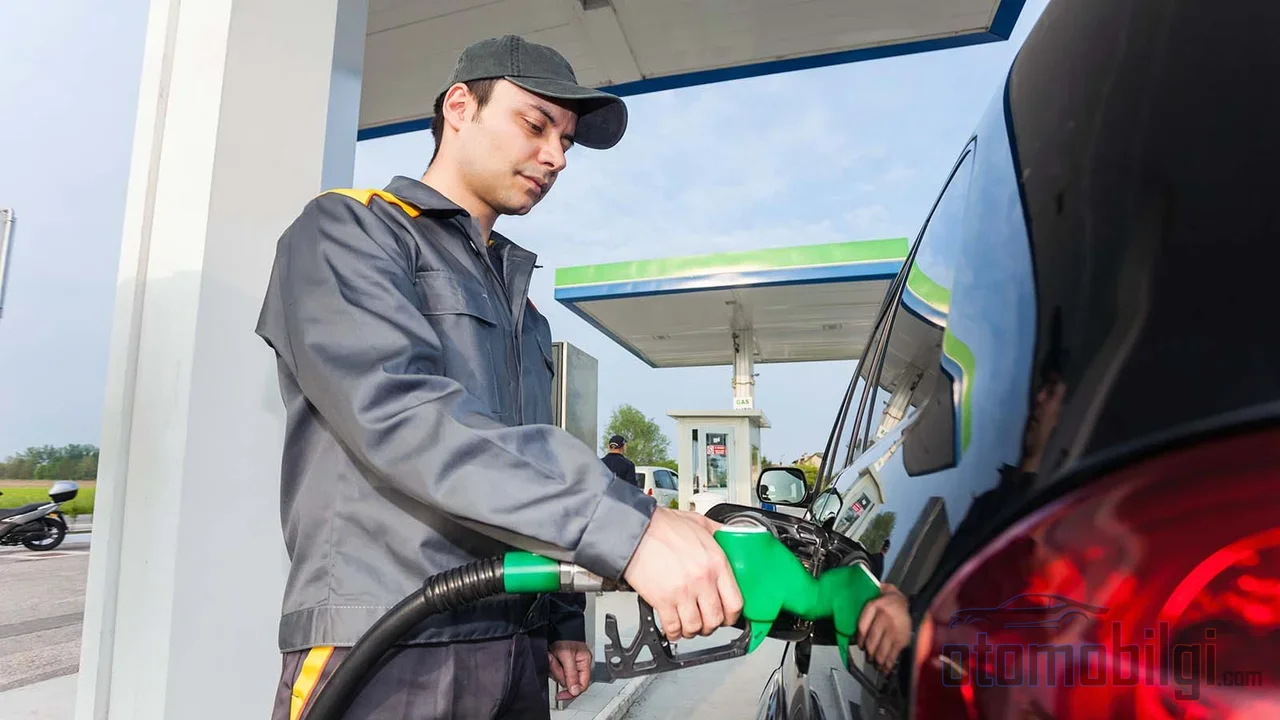
LPG's appeal lies in cost: operating costs are roughly one third lower than a gasoline vehicle, and at high annual mileage the conversion pays for itself in about two years. The emissions side is also clean; LPG produces 14 percent less CO2 than gasoline and 10 percent less than diesel, with NOx emissions at half those of gasoline and a quarter of diesel. Thanks to cleaner combustion, blow-by in the cylinders is reduced, which allows the oil to stay clean for longer.
However, LPG's cost table must be read in full. Since energy density per volume is low, the range is somewhat shorter, and station availability is limited in some regions. The LPG tank has a lifespan of about 10 years; the tank test performed every ten years requires special equipment and a certified operator and carries a serious cost of 500-800 dollars. System filters also require regular replacement; as engine displacement grows, consumption and therefore filter replacement frequency increase. As for oil, you must not deviate from the type recommended by the manufacturer, and especially in old engines with high mileage, you should not switch to synthetic oil suddenly.
Among users, the claim circulates that LPG, due to its high-octane combustion, wears out valve seats faster; this is a claim based more on forum discussions than on verified technical data, and it varies depending on system quality. The only certain thing is that safety concerns are largely unfounded. The main point to watch in practice is this: if the tank runs empty while the vehicle is running on LPG, the gasoline pump, which is lubricated and cooled by gasoline, can be damaged. For this reason, a certain reserve should always be kept in the gasoline tank.
Diesel owners also have dual fuel, that is, the addition of LPG to a diesel engine, on their agenda. In experimental studies, the addition of LPG can increase torque and power; in one test, a system applied to a diesel engine increased power by 25 percent and torque by 27 percent. However, this increase depends on the knock limit, and in other studies average torque and power dropped in dual-fuel mode. The result varies depending on the system and the engine; it is not a mature solution for series production.
WLTP and Real-World Consumption: Why Is the Brochure Value So Low?
Whichever fuel you choose, the official consumption figure at hand does not fully reflect the real world. Under the old NEDC test cycle, the gap between the approved value and actual consumption averaged 39 percent. WLTP nearly halved this gap: in gasoline passenger cars, the average difference is at the level of around 16 percent. The reason lies in the test itself; while NEDC measures with 66 percent urban share and an average speed of 34 km/h, WLTP operates with a 52 percent urban share and an average speed of 46.5 km/h, using a more dynamic and realistic profile.
In practice, this means the following: if you take the WLTP value as your benchmark and set your budget accordingly, real consumption will surprise you by around 10-20 percent. This gap grows especially in heavy stop-and-go traffic and in cold weather; when planning, adding a margin on top of the official value is the safest approach.
City, Long Distance, Mixed Use: Which Fuel Suits Which Profile?
City Use
City driving is the toughest exam for every engine: frequent acceleration increases fuel demand, stop-and-go reduces efficiency, and idling consumes fuel even when the vehicle is stationary. In this profile, gasoline and LPG vehicles stand out; they are both quiet and require no additional system for short trips. For diesel, the situation is the reverse: on short urban trips, exhaust after-treatment systems struggle to reach their optimal operating temperature, which can lead to reliability problems over time. If you are considering buying a diesel, the most critical question is whether your daily route is really suitable for it.
Long Distance
Thanks to constant speed and few stops, fuel economy on long journeys is always better; and this is exactly where diesel's advantage becomes clear. High energy density, low-rev operation, and long range make diesel the natural choice of the long-distance user. For drivers hauling heavy loads or using a trailer, low-rev torque also provides great comfort. In LPG, energy density is lower, so the range is somewhat shorter; station planning should be done accordingly on long routes.
Mixed Use and Payback Calculation
Diesel's logic is measured not by consumption alone, but by its payback period. Diesel's fuel economy advantage must be balanced against its higher purchase price; in the commercial vehicle class, the extra cost of a diesel engine can exceed 5,000-8,000 dollars. The rule of thumb is this: with annual usage above roughly 50,000 kilometers, diesel makes financial sense; below that, gasoline is the lower-cost option. Also, the per-liter price of diesel fuel has historically been higher than gasoline due to taxes; the calculation should include this as well. On the LPG side, the criterion is different: if your vehicle is not already fuel-efficient and your annual mileage is high, LPG conversion can be seriously considered.
Regardless of Fuel Type: What Does Efficient Driving Get You?
Engine and fuel choice sets the floor for consumption, but driving style can move it by 10-40 percent. That is a range no fuel change alone can deliver.
- When slowing down while in gear, ease off the accelerator early: in most cars the fuel cut-off system kicks in and the engine injects no fuel at all; shifting to neutral can both consume more fuel and reduce your control.
- Anticipate stops and brake gently; keep steady speeds and minimize idling.
- The moments right after starting a cold engine are the vehicle's least efficient period; combine short errands into a single trip.
- Even a quarter of missing tire pressure raises consumption by 2 percent; low rolling resistance tires can save up to 0.21 L/100 km on some vehicles.
- The most efficient speed range is usually between 50-80 km/h; at high speeds and aggressive acceleration-braking cycles, fuel economy drops by roughly 15-30 percent on the highway and 10-40 percent in stop-and-go traffic.
Common Misconceptions About Fuel Saving
After making your choice, the fastest savings come from letting go of false beliefs. Buying premium gasoline for a car that requires standard fuel does not improve economy, it just wastes money. On the highway, open windows and air conditioning affect fuel economy at roughly similar levels; there is no decisive gain in choosing one over the other. Overinflating tires beyond the recommended value, gadgets claimed to improve airflow, and fuel additives do not save fuel. Believing small loads don't matter is also a myth; every extra kilogram in the vehicle increases consumption. The biggest difference, however, hides in numbers that look small: the gap between two cars consuming 7.8 liters and 11.8 liters per 100 km adds up to a serious budget difference over five years of use.
Decision Framework: Which Fuel Is Right for You?
All the data can be summed up in one sentence: for use dominated by long journeys and high annual mileage, diesel is the right answer; for low and medium mileage, gasoline for those who want quietness and a low initial cost; and LPG for those who drive a gasoline car with high mileage and want to reduce operating costs.
When making the decision, ask three questions in order. First, your annual mileage and usage profile: usage approaching 50,000 kilometers per year with a high highway share pays back diesel's extra cost; city-oriented short trips favor gasoline or LPG. Second, your maintenance tolerance: diesel demands more expensive and more frequent servicing, LPG means regular filter changes and a tank test every ten years, while gasoline carries the lowest maintenance burden. Third, range and infrastructure: diesel's range advantage on long routes and LPG's station limitation are of no concern to the city user. When you answer these three questions honestly, engine character and the cost picture make the decision clear on its own.
Sources
- Gas vs. Diesel Engines: Which Is Right for You?
- Difference Between Diesel and LPG
- What is WLTP?
- WLTP & Fuel Economy
- 2026 Fuel Economy Guide
- Techniques for Drivers to Conserve Fuel
- Debunking Gas Myths - AAA
- LPG: Tips for good maintenance of a gas car
- Ecodriving guide - Energy Saving Trust
- Eco Driving - Mazda