Does the Start-Stop System Really Save Fuel?
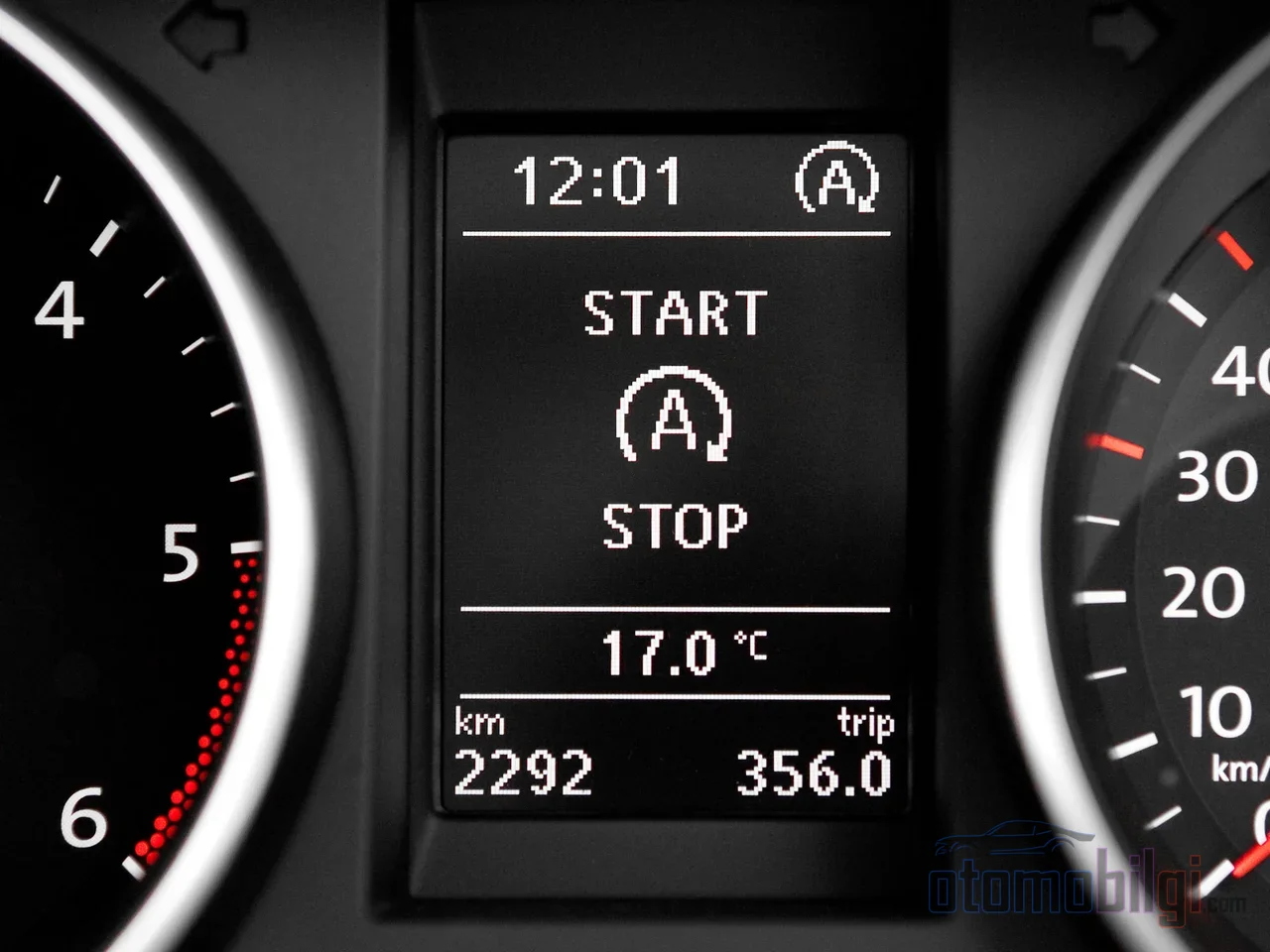
You stopped at a red light, and the engine shut off. Some drivers behind the wheel see this moment as a ritual of fuel saving, while others are convinced the system needlessly wears out the engine. Both camps hold strong convictions; but the real impact of the start-stop system is measured not in convictions, but in seconds and liters. The question actually comes down to a single number: how much fuel does the engine save for every second it stays off, and does restarting it take that saving back?
This article clarifies the debate according to driving profile: under which conditions the system delivers measurable savings, under which conditions it is nearly useless, where battery and starter motor costs fit into the equation, and how the picture changes when loads like air conditioning are active?
How Does the Start-Stop System Work?
The principle is simple: When you press the brake pedal and the vehicle comes to a complete stop, the engine shuts off on its own and a light indicating its status illuminates on the instrument panel. The moment you release the brake, the engine restarts almost instantly, with a delay so short the driver won't notice it. The system's primary goal is actually not fuel, but eliminating idling emissions; the savings are a byproduct of this aim. This distinction matters, because the first criterion to look at when evaluating the system's value is how much of the vehicle's time is spent idling.
The first conclusion follows naturally from this: In predominantly highway use, the system's contribution is negligible because the engine almost never shuts off. The benefit is accumulated in urban conditions where traffic lights and stop-and-go traffic are dense. In other words, start-stop technology is less about the device and more a matter of usage profile.
Savings in Numbers: How Much Fuel Does It Save?
Laboratory and real-world measurements give a wide range, but this is not a contradiction; it is simply that conditions differ. SAE measured improvements ranging from 7.27% to 26.4% depending on conditions; for typical use, the rate drops to roughly 5-7%. AAA's tests found fuel economy improvements of up to 7% in situations where the system engages, while Natural Resources Canada gives a range of 4-10% and above for city driving.
A measurement made with a real vehicle shows where the range translates into reality: A BMW 328i GT consumed 3.1 gallons with the system off and 2.8 gallons with it on over an 80-mile route - meaning a 9.5% saving. At the opposite end, there are less visible pictures: According to a 2012 review by Argonne National Laboratory, affiliated with the DOE, savings remain minimal under the EPA's old two-cycle city test methodology; official test cycles do not fully reflect the system's benefit. The difference between NEDC and WLTP works in the same direction: In NEDC, which has longer idling time, the stop-start effect is noticeably stronger than in WLTP.
Highlights
- In the SAE measurement, savings vary between 7.27% and 26.4% depending on conditions.
- In a real road test, a BMW 328i GT achieved a 9.5% saving over an 80-mile route.
- Idle fuel consumption in passenger cars is roughly 0.2-0.5 gallons per hour; and a restart burns about the same fuel as 6-7 seconds of idling.
- Start-stop vehicles are built with a reinforced starter motor and battery; with proper maintenance, these batteries typically last 3-5 years.
When Does It Pay Off: The Balance Between Idling and Restarting
The math of start-stop rests on a single comparison: Does keeping the engine off while stopped, or continuing to run it at idle, burn less fuel? In passenger cars, idle consumption varies between 0.2 and 0.5 gallons per hour depending on the engine; as a practical example, a vehicle consuming 1/6 gallon per hour burns only about 4 ounces during ten minutes of idling. In other words, idling burns less than you might think.
Against this, each start-stop event has a cost: Restarting the engine consumes roughly the fuel equivalent of 6-7 seconds of idling. The practical threshold that emerges, cross-checked across sources, sits at 7-10 seconds: Stops longer than this make shutting off worthwhile, while shorter stops produce not savings but a small extra consumption. The system makes sense exactly at idle stops longer than this threshold - long red lights, railroad crossings, congested intersections.
The scale of the savings is not as big as one might think either. Over ten years of use, the maximum possible saving for a vehicle with a 2-liter engine is estimated at around 400 US dollars, and that requires a total of 8-9 minutes of accumulated engine-off time. The figure may seem small; but the system's cost in daily use is also zero, because the on-off operation is managed by the vehicle, not the driver.
Why Does the Same System Give Different Results in the City and on the Highway?
The threshold above explains the profile difference. Stops within the city usually last more than 10 seconds: Traffic signals, pedestrian crossings, congested intersections. Under these conditions the system engages constantly and delivers savings in the range of 4-10%, in some conditions much higher. On the highway, the engine almost never shuts off; the system sits in the car as hardware but becomes functionally useless.
| Usage Profile | System Engagement | Expected Impact |
|---|---|---|
| Heavy city traffic | Frequent and long stops | 4-10% or higher savings |
| Mixed use | Occasional short stops | Around 5-7% |
| Highway-oriented | Almost never engages | No measurable benefit |
This table is also part of the difference between the WLTP label and real-world consumption. Official figures include start-stop's effect in favor of city driving; highway-oriented users cannot benefit from this effect, so the gap between label and reality widens.
Battery, Starter Motor and Durability: Is There a Hidden Cost?
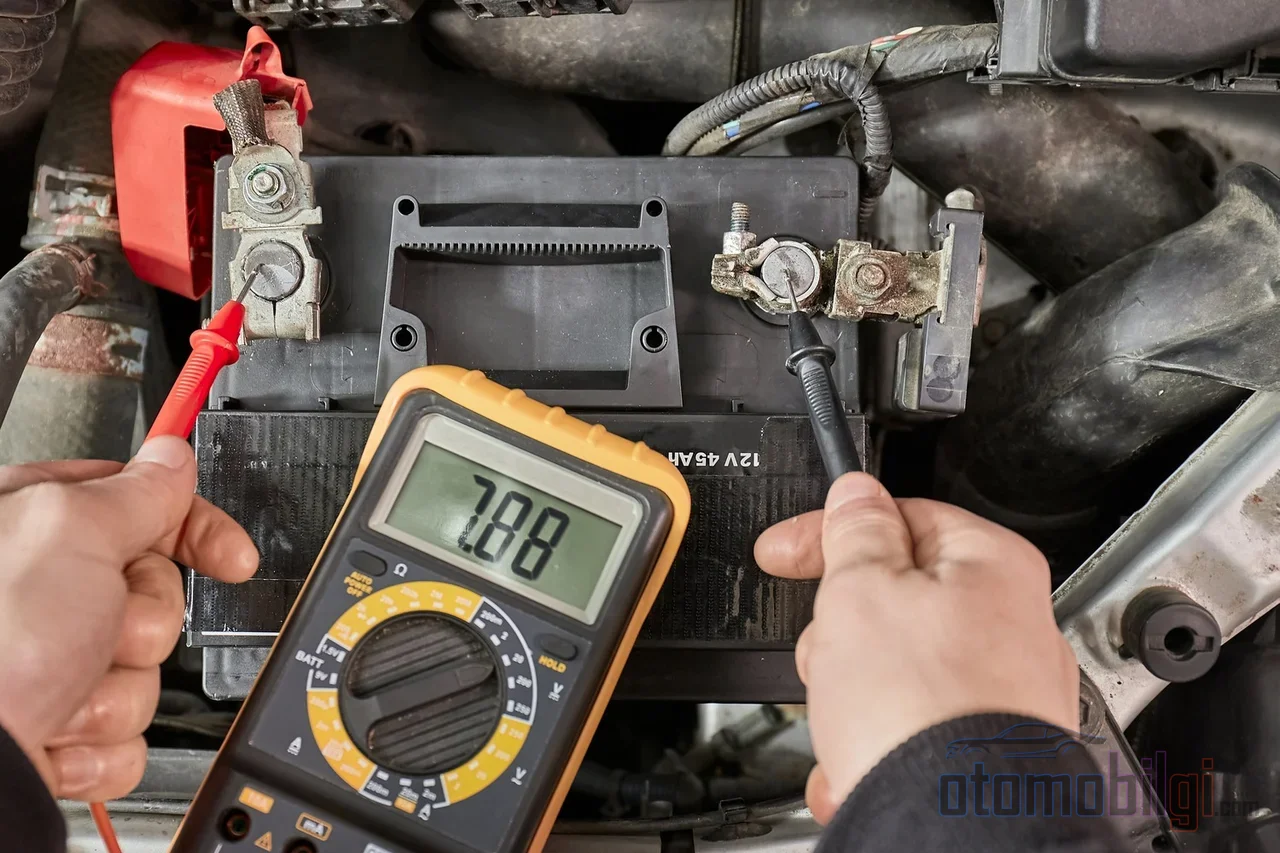
The most common objection to start-stop is the concern that the system will wear out the starter motor and battery. The source of the concern is understandable: While a normal vehicle is started a few times a day, a vehicle with start-stop goes through dozens of off-on cycles in a single city trip. However, the production side is designed for this load - vehicles in this class leave the factory with reinforced starter motors and special batteries. It should also be kept in mind that starter motors are manufactured to last 20-30 years with this type of use.
How does the battery side work?
The battery is the fragile link in the equation. With the right battery type and maintenance, the typical lifespan of start-stop batteries is 3-5 years; but frequent short trips shorten this lifespan, because the battery cannot find enough time to recharge. Considering that a new starter motor can start from 500 dollars depending on the vehicle, maintenance discipline here becomes a matter of cost. In battery replacement, not straying from the type compatible with the system is the most practical rule that preserves both the system's comfort and component lifespan.
but frequent off-on cycles can wear out the compressor clutch.
The conventional AC compressor is connected to the engine shaft by a belt. When the engine stops with idle-stop, the compressor stops too; in some systems, the fan continues running at a low setting. So this is where the system's ruthless side reveals itself: While the engine is off, the cabin starts to heat up instead of cooling down, and in hot weather the driver more readily accepts the system shutting down or the engine restarting.
On the consumption side, the air conditioner's own impact is already significant: Air conditioner use generally increases consumption by 5-10%; the combination of hot weather and short trips can reduce fuel economy by more than 25%. In cases where the air conditioner draws from the battery reserve while the engine is off, the compressor engages only when needed, without imposing a constant load; but frequent on-off cycles can wear out the compressor clutch. Practical result: During short stops, air conditioner comfort and savings are not possible at the same time, and the driver has to choose one.
Is It Sensible to Turn Off the System on Every Trip?
In most vehicles, as with most brands that include it, the system can be disabled with a button. The decision depends on three factors. First, the profile: In highway-oriented driving, there is no practical value in turning off a system that rarely engages anyway; in intensive city use, turning it off means giving up measurable savings. Second, comfort: In hot weather, the air conditioner stopping can be disturbing enough to overshadow the savings. Third, component lifespan: It is possible to reduce the cycle load on the battery and starter motor by keeping the system off; on the other hand, the components of these vehicles are already selected according to the system, and the loss of savings is generally a more visible price compared to the lifespan advantage gained.
Another variable related to the system's future lies on the regulatory side: The announcement that federal credits granted to manufacturers using this technology in the USA have been terminated has brought the technology's economic justifications back into the debate. Without a savings account changing, the question of how much manufacturers will retain this feature in their vehicles remains for the coming years.
Conclusion: Who Is This Worth It For?
The measurable answer is this: The start-stop system provides real and measurable savings in city driving with frequent and long stops - typically in the range of 5-10%, considerably higher under favorable conditions. Since the restart cost is equivalent to roughly 6-7 seconds of idling, every stop longer than 10 seconds works in the system's favor. In highway-oriented use, however, the system is effectively inactive and promises no savings at all. Battery and starter motor concerns have largely been addressed with reinforced components and proper battery maintenance; what truly decides the matter is not the technology, but where the vehicle spends its day.
Sources
- Does the Start/Stop Function Really Improve Your Car's Fuel Economy? - Consumer Reports
- Quantifying the Effects of Idle-Stop Systems on Fuel Economy - DOE/Argonne
- Which Is Greener: Idle, or Stop and Restart? - Argonne
- AAA's Tests Reveal Real-World Benefits of Automatic Stop-Start Technology
- Idle stop-start technology and its effect on fuel consumption - Natural Resources Canada
- Do Stop-Start Systems Really Save Fuel? - Edmunds
- Comparative Evaluation of the Effect of Vehicle Parameters (NEDC vs WLTP) - MDPI
- Do stop-start systems wear out your car's starter? - Green Car Reports
- Maximizing the Lifespan of Start-Stop System Batteries - Midtronics
- Engine stop-start vs idling in traffic - AutoExpert