City or Highway: Which Car Burns More Fuel? Understanding Your Consumption Profile
Share This Page
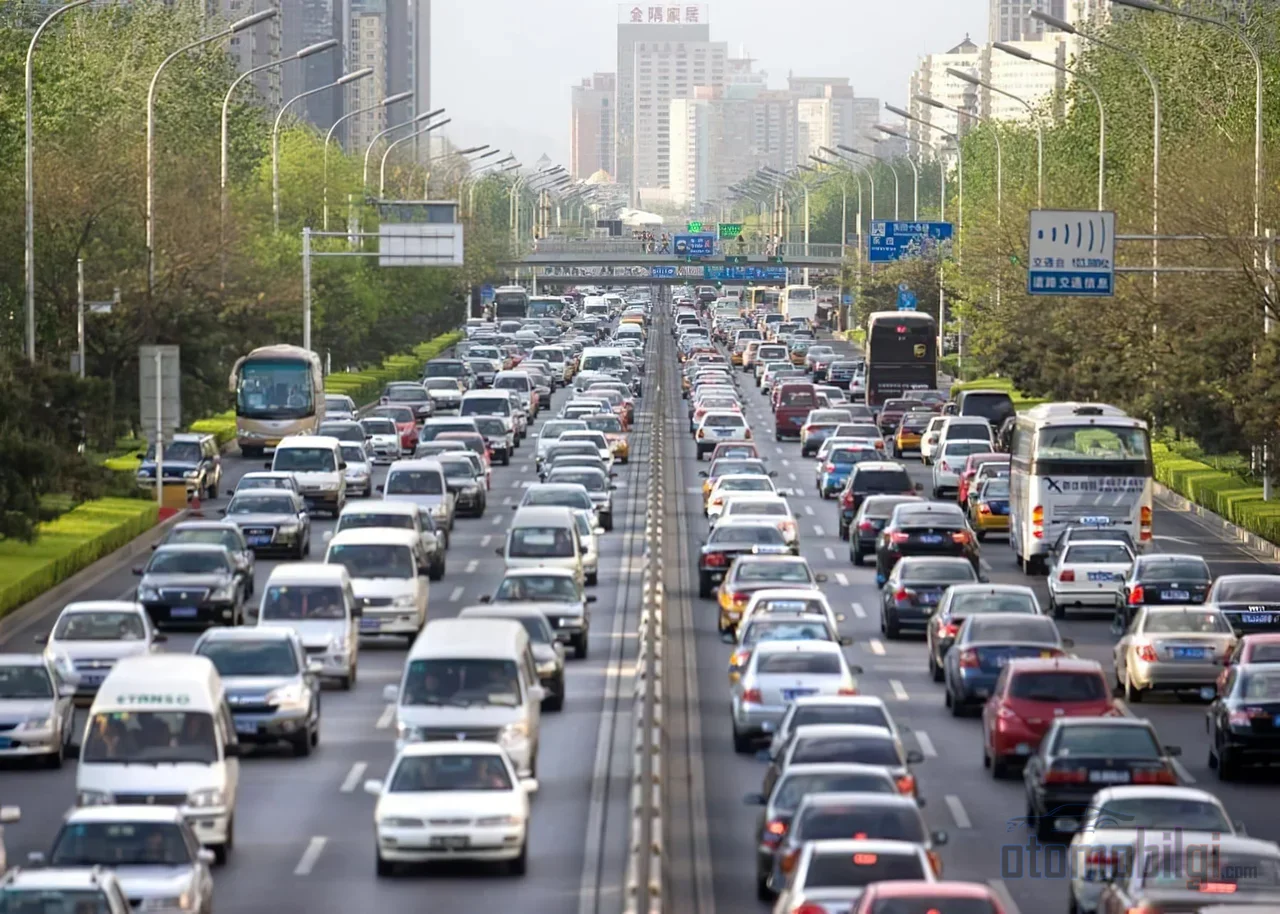
Does the same car burn more fuel in the city or on the highway? Short answer: stop-and-go traffic typically consumes 30-50% more fuel compared to free-flowing highway driving. In other words, most internal combustion vehicles can never meet their advertised city consumption figure in real life; on the other hand, steady-speed highway driving is the scenario where the figure closest to the catalog value is seen. However, this gap is not the same size in every engine: engine character - whether it is naturally aspirated gasoline, turbo gasoline, diesel, or LPG - determines how much you will lose in which scenario.
Highlights
- City driving uses 30-50% more fuel than the highway; aggressive driving amplifies this gap in stop-and-go traffic by 10-40% even more.
- Turbo gasoline engines are efficient on the highway but can be unexpectedly greedy in traffic involving frequent acceleration and braking.
- Short trips made from a cold start can consume up to twice as much fuel as covering the same distance in a single trip.
- While LPG is sold per liter at anywhere from more expensive to cheaper than gasoline, it consumes approximately 15% more per unit volume; net savings range from 35-45% per mile.
- The catalog consumption figure is not an exact match of the real-world value; the gap grows depending on your usage profile.
Where Does the Gap Between the Catalog Value and Real Consumption Come From?
Advertised and catalog values are measured in a standardized laboratory cycle. The WLTP procedure used in Europe aims to produce results closer to the real world than the older NEDC cycle and does in fact produce higher consumption values; in one comparison study, the same vehicle showed approximately 11% higher consumption in the WLTP cycle compared to NEDC. But even WLTP does not fully reflect real traffic conditions: the cycle has a specific speed and acceleration pattern, and the rhythm of your morning traffic does not mimic that pattern.
The three-way distinction on official consumption labels is therefore meaningful. The city value represents driving that starts with a cold start and includes stop-and-go; the highway value is measured with a warmed-up engine in uninterrupted flow; and the combined value is calculated with a weighting of 55% city and 45% highway. How much your own annual usage deviates from these ratios is the first and largest component of the gap between the catalog and the pump.
How Does City Traffic Ruin Fuel Consumption?
City driving has three fundamental mechanisms that are enemies of efficiency. The first is idling: a stationary vehicle consumes 0 MPG per second, meaning it burns fuel for distance you never travel. The second is the continuous sacrifice of kinetic energy: with every brake, speed energy turns into heat, and with every acceleration that energy is bought back with fuel. The third is cold operation: a cold start in the morning leaves the engine running in an inefficient combustion zone until it reaches its ideal temperature.
To make it concrete: a vehicle that achieves 30 MPG on the highway can drop to the 20-22 MPG range in the city under the same conditions - this is a reality even recognized by official test methodologies. The picture gets even worse in cold weather; in near-freezing temperatures, short trips reduce efficiency by 10-20% reduce, because oils thicken, tire pressure drops, aerodynamic drag increases, and the engine's warm-up time lengthens.
Idling to Warm Up Is Pointless in a Modern Engine
Idling to warm up, once a habit, is pure fuel waste today: thanks to injection control, modern engines warm up much faster while driving. Prolonged idling consumes more fuel than restarting the engine. In scenarios with long stops in traffic, stop-start systems that kick in deliver up to 5% savings in the city - which means the system is more valuable than it appears.
Why Do Turbo Gasoline Engines Burn More Than Expected in the City?
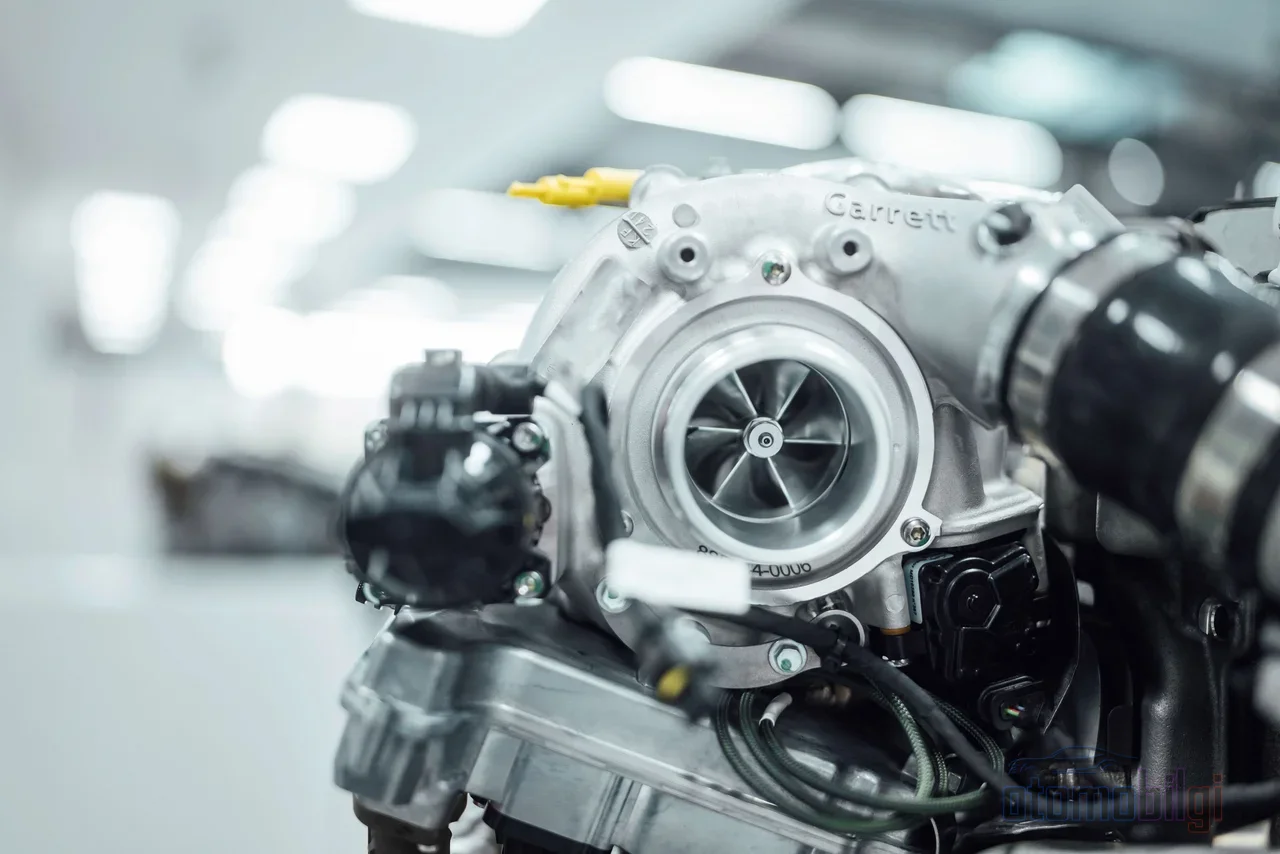
The sales argument for small-displacement turbo gasoline engines is clear: a small engine burns little fuel in normal driving; when power is needed, the turbo kicks in and provides big-engine power. Official consumption guides also list turbocharging as a fuel-saving technology. However, the fact that this claim does not always hold true in real life has long been debated in independent tests, and city driving is the scenario where this gap widens the most.
The chain of logic is simple. The turbo compresses intake air; in return for the compressed air, the injection system can put more fuel into the mixture. In traffic's frequent accelerate-and-brake rhythm, the turbo constantly enters the positive pressure zone, meaning that "extra fuel" door opens at every traffic launch. At the highway's steady speed, on the other hand, the turbo mostly produces no boost, and the small engine operates in its own efficient band - which is why turbo gasoline engines give figures closest to catalog values on long journeys, and fall furthest from them in stop-and-go traffic.
There is also a fuel quality dimension: turbo engines usually demand higher-octane, and therefore more expensive, fuel. The increased combustion temperatures also do not work in favor of the efficiency calculation. The clear picture is this: A turbo gasoline engine is a sensible choice if most of your annual kilometers are driven on free-flowing roads; if you live in traffic, the catalog promise will most likely not materialize in reality.
Why Do Diesels Become Inefficient Over Short Distances?
The diesel engine's efficiency, with its high compression ratio and combustion efficiency, is tailor-made for the highway: a diesel cruising at a steady speed, warmed up, at low rpm sits at the very bottom of the consumption chart. The problem is that the engine never reaches this characteristic operating point. Combustion depends on cylinder temperature; in cold starts, "cold combustion" occurs and efficiency drops. Short trips end before the engine reaches its proper operating temperature - meaning the diesel is condemned to operate in the inefficient zone every single time.
It is worth recalling a striking figure stated in the energy department's consumption guide: many short trips made from a cold start can consume up to twice as much fuel as covering the same distance in a single trip. For a diesel, this is not just a matter of pump costs but also of engine health; an engine constantly running cold and inefficiently is a known cost of short-distance use.
The Efficient RPM Band Varies by Engine Type
The ideal usage band commonly given for gasoline engines is approximately 2000–4000 RPM, while for diesels it is 1500–3000 RPM or thereabouts; for a diesel traveling at constant speed, around 1500 RPM , and in some engines the 1200–1500 RPM range is marked as the efficient band. It should be noted: these values are not universal constants; they vary according to gear ratios, the engine's character, and load conditions. The principle to read correctly is cruising at high gear, steady throttle, in the rev range where the engine has high torque.
How Does LPG Change Engine Character?
LPG's appeal lies in the price: per liter, it is generally 40–50% cheaper than gasoline and diesel. However, since it contains less energy per unit volume, it consumes about 15% more than gasoline over the same distance; nevertheless, the net saving still stays within the 35–45% band per mile, meaning the math clearly works in your favor. In direct-injection conversions, the system produces ~35% lower CO2 than gasoline. The conversion itself requires an investment of roughly 1,500–2,500 dollars and with average use it can pay for itself within about 15,000–25,000 miles - which is why LPG is considered one of the most economical options for high-mileage drivers.
The engine character side is more controversial. The fact that LPG's combustion temperature is higher than gasoline's raises the issue of valve and valve seat wear and head gasket damage; on the other hand, there is also a strong opposing view arguing that this fear is exaggerated and that no problems occur when the system is properly installed and used economically. The fair summary to apply is this: LPG does not destroy the engine by itself, but it genuinely makes the risk variable depending on the quality of the installation, tuning, and maintenance discipline. The condition of components sensitive to high combustion temperature is a manageable cost with regular inspection; when neglected, it can turn into an expensive failure.
Which Fuel Type Suits Which Usage Profile?
| Usage profile | Most suitable power/fuel type | Why |
|---|---|---|
| Predominantly stop-and-go city traffic | Hybrid | Regenerative braking is the biggest winner in the city; the pattern reverses with internal combustion |
| Free-flowing highway predominant | Diesel or efficient gasoline | Diesel is most advantageous at constant speed; gasoline also runs closest to its catalog value here |
| Mixed usage | Efficient gasoline (naturally aspirated or turbo) | The combined value weighting of 55% city / 45% highway is calibrated according to this profile |
| Very high mileage | LPG | Net 35–45% saving per mile amortizes the conversion cost in a short time |
| Short, cold, frequent-start distances | Avoid diesel; hybrid or gasoline | Cold combustion and an engine that cannot warm up completely erases diesel's efficiency advantage |
The per-mile cost comparison reads in the same direction: with typical 2026 price assumptions, electric is approximately $0.04, diesel approximately $0.11, gasoline approximately $0.12 range. LPG's place in this picture pushes the gasoline car clearly below it thanks to its price advantage per liter; however, enough kilometers are needed to recover the conversion cost.
Driving Techniques That Genuinely Reduce Consumption
Regardless of engine type, driving technique has an effect on consumption that even engine choice cannot undermine. The items proven by official data are as follows:
- Aggressive acceleration and hard braking: on the highway it means 15–30% extra consumption, and in stop-and-go traffic 10–40% .
- Speed: every 60 mph increase of 5 mph above 7% brings roughly a loss in efficiency; driving in the 55–65 mph band is 75 mph more efficient than going above 15–25%
- . Idling: 0 MPG per second, about $0.02 per minute; on a modern engine, prolonged idling is more expensive than restarting. Excess load:
- 45 kg of unnecessary luggage increases consumption by about 1% ; a roof box causes 2–8% loss in the city, 6–17% on the highway, and, 65–75 mph at speeds of 10–25% .
- Simple maintenance: correct tire pressure provides about 0.6% savings, and engine oil of the correct viscosity 1–2% .
The essence of the technique can be summed up in three verbs: accelerate gently, keep a steady speed, anticipate traffic. When approaching a red light ahead, coasting and spending kinetic energy on the road rather than on the brakes, and combining short trips into one longer trip in cold weather - a warmed-up engine is always more efficient than a cold one - are the daily applications of these principles.
Common Misconceptions About Fuel Savings
It is worth clarifying a few persistent myths. Warming up the engine at idle is not fuel saving; it is waste and a source of pollutants. High-octane fuel not recommended by the manufacturer does not increase efficiency under normal conditions - this is an expectation explicitly refuted in the official manual. Shifting the gearbox into neutral in modern engines is not a saving, but on the contrary means more fuel and reduced vehicle control. Trying to buy fuel in the early morning hours also does not create a measurable difference due to the temperature at the pump.
Conclusion: Read Your Own Profile, Not the Specification Value
Consumption is the product of vehicle characteristics and the usage scenario. A diesel or turbo petrol car cruising freely on the highway can almost chase its catalog value; when the same vehicle enters morning traffic, with cold starts and turbo-boost cycles added, the gap widens to as much as 30-50%. The question is not "which engine burns less," but "in what pattern do my kilometers flow." If you are in traffic, the hybrid's architecture that recovers braking energy is your answer; if you are a long-distance driver, the diesel's low-rev steady-speed efficiency; if your mileage is very high, LPG's price advantage. The remaining part - gentle throttle, steady speed, correct pressure, avoiding idling - belongs to you, whichever fuel you burn.
Sources
- 2025 Fuel Economy Guide
- Worldwide Harmonised Light Vehicle Test Procedure
- Comparison of fuel consumption and exhaust emissions in WLTP and NEDC
- Fuel consumption and CO2 emissions of passenger cars
- Internal combustion engine cold-start efficiency: A review
- Fuel-efficient driving techniques
- Highway Vs City Gas Mileage: Real Cost Difference (2026)
- Why Turbo Petrol Cars Sometimes Feel Less Fuel Efficient in City Traffic
- Turbocharged Engines: Fuel-Economy Boost or Bust?
- The Effect of Short Trips on Diesel Engine Wear
- How to Improve Fuel Efficiency in Cold Weather
- Is converting your car to LPG worth it?
- Pros And Cons Of An LPG System For Cars
- Free Fuel Cost Calculator 2026 - Gas, Diesel, LPG, EV