LPG or Diesel? Choosing Your Fuel Based on Your Usage Profile
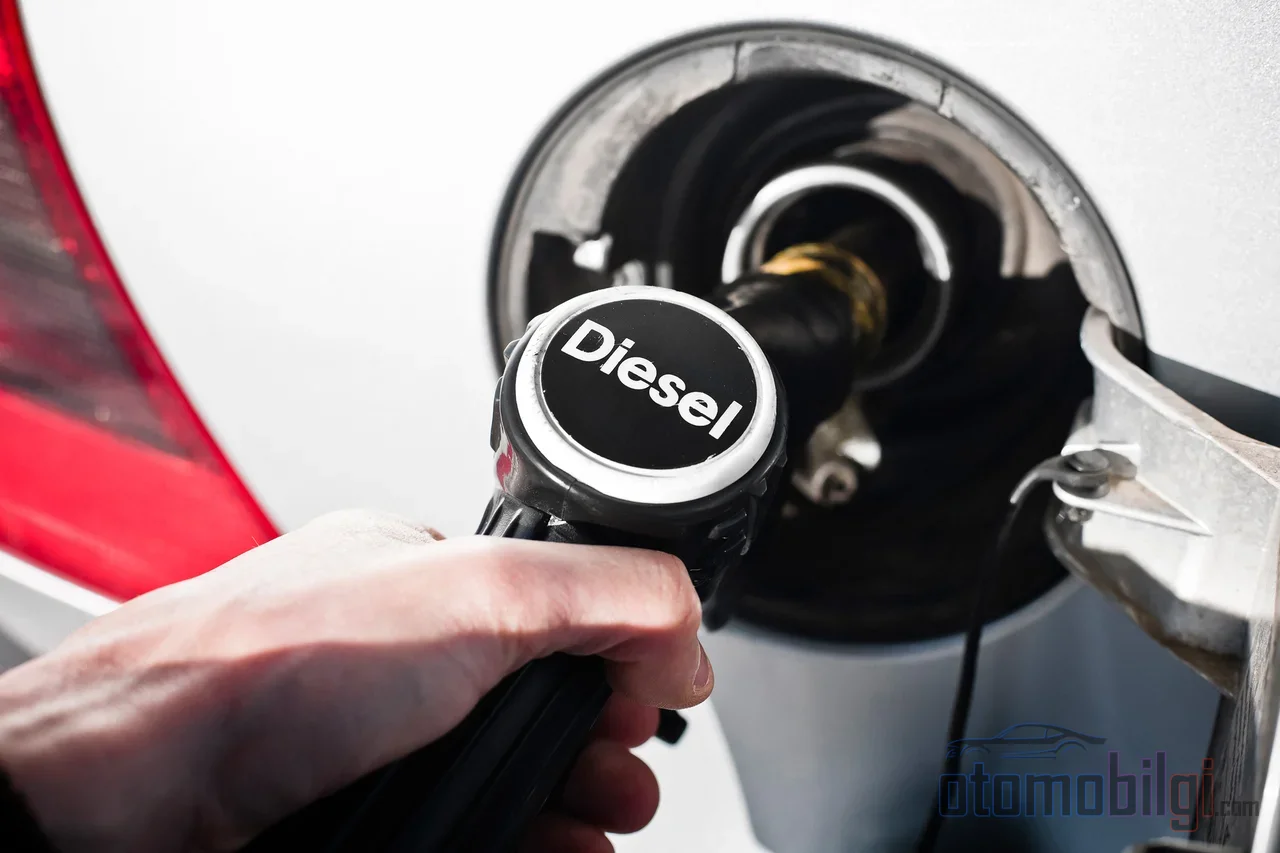
Everyone browsing the hybrid market has the same question in mind: LPG or diesel? Both sides come with strong arguments; one promises cheap fuel, the other high efficiency. But this choice is not really a fuel preference, it is a usage profile analysis. With the same vehicle, the same budget, and two different route scenarios, the answer can change completely. In this article, we weigh the cost math of both fuels, the maintenance realities, and their effects on the engine on the same scale.
The Diesel Efficiency Myth: Does Every Diesel Really Save Fuel?

It is an accurate technical fact that diesel engines are, by design, 30-35% more efficient than gasoline engines. The high compression ratio and a fuel that carries more energy per liter create a big theoretical advantage. Diesel fuel contains about 13% more energy than gasoline; therefore, a longer distance per liter is expected.
However, the real world does not always confirm this theoretical picture. In commercial fleet data, the diesel advantage is often seen dropping to just 1-2 MPG. The reason is simple: at low load and in stop-and-go traffic, the diesel engine moves away from its design point. In urban conditions, diesel engines run 24% more efficiently, and 29% on the highway; in other words, the efficiency gap widens on long distances and narrows in the city.
Another critical detail is operating speed. While diesel engines rev in the 1,300-1,600 RPM band during cruising, gasoline engines operate at 2,500-3,500 RPM; this half the revs means, in theory, half the wear. Idling, on the other hand, reverses the picture: long idling periods erase most of diesel's fuel advantage. In modern diesels, short trips also prevent the regeneration of the diesel particulate filter (DPF) and lead to clogging over time. A diesel running at low load struggles to show its on-paper efficiency in the field.
The Math of LPG Conversion: When Does the Payback Begin?
On the LPG side, the calculation is more direct. LPG, at the pump, is usually close to 50% cheaper than gasoline; on the other hand, LPG consumption is on average 15% higher than gasoline. When the two numbers combine, the net saving per liter remains clearly positive. The payback period is based on a simple formula: dividing the conversion cost by the expected monthly fuel savings. This ratio directly tells you how many months or years it takes for the investment to pay for itself.
Real calculations confirm this formula. A system that saves an average of 500 dollars per year can pay for itself for a driver covering 15,000 miles (about 24,000 km) / year. Another calculation shows that with a 1,200-euro installation and an annual saving of about 1,390 euros (39%), the payback is completed within 10-11 months. It is accepted that with moderate mileage and weight in urban use, the payback occurs within one to one and a half years, and much faster at high mileage.
Highlights
- Diesel engines are 30-35% more efficient than gasoline ones, but in stop-and-go use this advantage is largely erased.
- LPG conversion pays for itself in 1-1.5 years under moderate use, and faster at high mileage.
- The classic threshold for choosing diesel: 30,000 miles or more per year, regular heavy loads, and ownership longer than 200,000 miles.
- Diesel maintenance is 50-100% more expensive over its lifetime due to emission systems.
- A diesel vehicle cannot be directly converted to LPG; LPG burns like gasoline.
Maintenance Costs: Diesel's Hidden Bill
Fuel savings are only half the story; the other half shows up at the workshop. Diesel engines generate an average annual maintenance cost of $1,200-2,000, while gasoline vehicles cost $600-1,000. From 150,000 miles onward, the overall picture becomes even clearer: a range of $8,100-21,900 for diesel versus $2,300-5,500 for gasoline. Over the engine's lifetime, diesel maintenance runs 50-100% more expensive.
The main source of this difference is modern emission systems. DPF cleaning can cost $1,000-3,000, and filter replacement $3,000-8,000; DEF (diesel exhaust fluid) consumption adds roughly $20 in extra cost every 1,000 miles. At 150,000 miles, DPF- and SCR-related repairs impose an additional burden of $1,500-2,500 per vehicle. Also, diesels experience an average of 2.5-4.5 more breakdown downtime days per year; parts supply and the difficulty of finding expert technicians are factors that extend this period.
LPG also has a maintenance item, but of a different nature. The conversion itself requires an upfront investment, and having the system correctly installed and tuned is the most critical factor determining long-term engine health. A poor installation turns into a risk factor that accelerates engine wear.
Does LPG Damage the Engine? Where the Sources Split
There is no single answer to this question; there are two different schools. Industry sources argue that LPG burns cleaner than gasoline and diesel, and can therefore extend engine life and reduce maintenance needs. The finding that LPG emits significantly fewer regulated emissions in exhaust than gasoline is also supported by academic studies.
The mechanical side is more cautious. Among the most commonly reported problems are piston ring wear and pistons overheating and cracking. As a dry fuel, LPG can cause more wear on cylinder walls; gasoline's natural lubricating additive is absent in LPG. Rising exhaust gas temperature (EGT) can lead to cracked exhaust manifold cases. In a well-known user case, cold-start roughness, rough idle, and loss of compression were experienced after 30,000 km. Power loss with LPG and the need to recalibrate the ignition curve are also frequently raised issues.
The realistic summary from this picture is: with proper installation, a quality system, and regular tuning, the risk of LPG damaging the engine is low; a poor installation, however, invites problems ranging up to ring and valve wear. Engine health depends directly on the quality of the system and the seriousness of the installation.
Second-Hand Value: How Does Fuel Type Affect the Sale Price?
In the second-hand market, the experience with LPG vehicles is mixed. Converted vehicles do not sell noticeably more expensive or cheaper than non-converted gasoline ones; however, the conversion raises questions in the buyer's mind about who sold the vehicle. Fuel type can increase second-hand value, but it can also lead to faster-than-expected depreciation; what is decisive is the system's documentation and quality.
A practical rule can be suggested for buying a used LPG vehicle: if the vehicle will cover high mileage, is only slightly more expensive than its gasoline version, and the system is in good order, it is a sensible choice. On the diesel side, it is still uncertain whether the second-hand premium (15-25%) can maintain its historical pattern under the pressure of emissions regulations and electrification; for a buyer planning long-term ownership, this uncertainty is a risk factor that must be taken into account.
Also, an important technical note: every gasoline vehicle can be converted to LPG, but not every diesel. Since LPG burns like gasoline, a diesel vehicle cannot be converted directly; diesel conversion is a different and far more expensive engineering problem. Therefore, in practice, the LPG-diesel comparison means choosing between converting a gasoline vehicle to LPG and buying a factory diesel.
Mileage Thresholds: When Does Diesel Make Sense, and When Does LPG?
Fleet data clearly reveals the classic thresholds for choosing diesel. Scenarios where diesel makes sense: usage of 30,000 miles (approximately 48,000 km) per year or more, regular heavy load towing, and cases where the vehicle will be kept for more than 7 years or over 200,000 miles. Scenarios where gasoline makes sense: annual mileage below 25,000 miles, stop-and-go city driving, and a 5-7 year vehicle replacement cycle.
| Annual Mileage | Diesel's Situation | Result |
|---|---|---|
| Under 15,000 miles | Never reaches break-even | Gasoline saves $3,000-$8,000 |
| 15,000-25,000 miles | Break-even in the 6th-7th year | Weak return |
| 25,000-35,000 miles | Break-even in the 4th-5th year | Diesel saves $2,000-$5,000 |
| 35,000 miles and above | Break-even in the 2nd-3rd year | Diesel saves $5,000-$12,000 |
Full break-even occurs at 150,000-200,000 miles in most real-world applications; the $5,000-$11,000 extra upfront cost of buying a diesel can only be offset by $3,000-$5,000 in fuel savings at 100,000 miles. In a five-year total cost of ownership calculation (15,000 miles/year scenario), when the resale value is included, diesel comes to almost an even point and breaks in favor of gasoline by a margin of about $2,000. The advantage only grows with high mileage and long-term ownership.
On the LPG side, the threshold is lower and the payback is faster. A driver traveling more than 20,000 km per year sees the return on the conversion investment in a short time; even with moderate use, this period stays within one to one and a half years. Although the principles are the same, LPG's initial cost is noticeably smaller than the diesel difference, so the risk is also lower.
Which One for Which Usage Profile? Decision Guide
We can now clarify the answer. If your annual mileage is low and your driving is mostly city-based, stop-and-go in nature, neither diesel's efficiency advantage nor a high fuel bill justifies a conversion; in this scenario LPG conversion's payback stretches out, while diesel's break-even never arrives. Here the most rational choice is to stay with a standard gasoline vehicle.
In the mid-segment, with mixed use of 15,000-25,000 km per year (city + regular long-distance driving), LPG conversion is a strong candidate. The low setup cost, fast payback, and diesel's inefficiency in city use make LPG this profile's most natural answer. For the high-mileage long-distance driver, however, the picture changes: a profile with over 30,000 miles per year, regular heavy loads, and a holding plan longer than 200,000 miles earns diesel's torque advantage and a break-even completed in the 2nd-3rd break-even completed within a year. In this scenario diesel is clearly ahead, with a net gain of 5,000-12,000 dollars.
On LPG's effect on the engine, the summary is this: with a quality system, correct installation, and regular tuning, the risk is low; dry-fuel-induced cylinder wear and EGT-related manifold problems only become noticeable in neglected or poorly installed systems. On the diesel side, it is essential to account for the 50-100% premium in maintenance costs from DPF, SCR, and DEF.
Summary: Cheap Fuel or Long Life?
There is no single universal winner in this choice; three variables determine the winning scenario: annual mileage, usage profile (city or long-distance), and how long you will keep the vehicle. With low, city-heavy use, gasoline makes sense; in mid-segment mixed use, LPG conversion; with high mileage, long-held, heavy-load use, diesel is the logical choice. In the engine life comparison, diesel engines typically last beyond 300,000-500,000 miles while gasoline engines stay in the 150,000-250,000 mile range; heavy commercial diesels can exceed 1,000,000 miles. However, this longevity advantage only turns into a financial gain when combined with high mileage and the right usage scenario. When you adapt the numbers to your own scenario, the answer emerges on its own.
Sources
- Diesel vs Gas Engines for Fleet Vehicles: Cost & Maintenance Comparison - FleetRabbit
- The Diesel Dilemma: How Efficient Are They Really? - Diesel Services of America
- Pros And Cons Of An LPG System For Cars - carVertical
- How fast does LPG pay for itself: a real calculation - GBO Eesti
- Is LPG Worth It? How to Decide - Auto Gas Gaga
- Does car LPG gas auto conversion damage your engine? - Elgas
- Busting the usual myths about switching your vehicle from petrol to LPG - TotalEnergies
- Comparison of high mileage LPG cars in different technical conditions - ScienceDirect
- LPG causes more engine wear, true? - PistonHeads
- How fuel type affects a car's resale value - Swansway Blog