How Much AdBlue Does a Car Use? Diesel's Hidden Cost
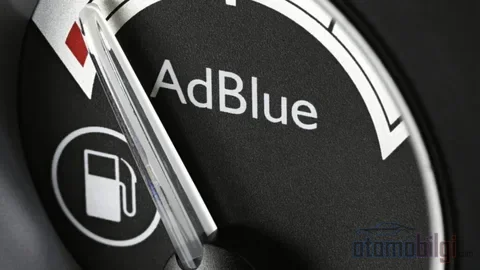
Most drivers calculating the running cost of a diesel vehicle settle for the pump price, per-liter consumption and maintenance intervals. Yet modern diesels with SCR systems have a second, often overlooked consumption item: AdBlue. It is not a liquid fuel, it is not mixed with diesel, and it is carried in a separate tank; but it appears on your per-km cost as a real item. So how much of this fluid is actually consumed, how often does the tank run out, and what happens when it does? The answer spans a wider range than you might think and is directly related to your driving profile.
What Is AdBlue and What Does It Do?
AdBlue, technically known as AUS 32, is a solution consisting of 32.5% high-purity urea and 67.5% demineralized water. In some markets it is sold under the name DEF (Diesel Exhaust Fluid); as long as it complies with the ISO 22241 standard, it is technically the same product. In Europe, it is an indispensable consumption item for diesel engines using SCR, i.e. selective catalytic reduction systems, to comply with emissions legislation.
The system consists of four main components: the SCR catalyst, the AdBlue injection unit, a separate tank and the dosing control unit. The fluid is injected into the exhaust line independently; the urea decomposing in the hot exhaust gas converts harmful nitrogen oxides (NOx) into nitrogen and water vapor. In other words, AdBlue does not go into the combustion chamber; it goes into the exhaust system. For this reason, no direct contribution to fuel consumption can be claimed; in fact, thanks to SCR, since the engine can clean NOx in the exhaust, it can be tuned at a more efficient point and diesel consumption can drop by up to 6%.
Highlights
- AdBlue consumption is typically equal to 2-6% of diesel consumption
- Passenger vehicles are expected to consume an average of 1.5-2 L / 1,000 km
- The tank usually requires refilling every 5,000-10,000 km
- If the tank runs empty, a legally mandated no-start restriction kicks in
- Only ISO 22241 certified fluid must be used
How Much Is AdBlue Consumption: In Numbers
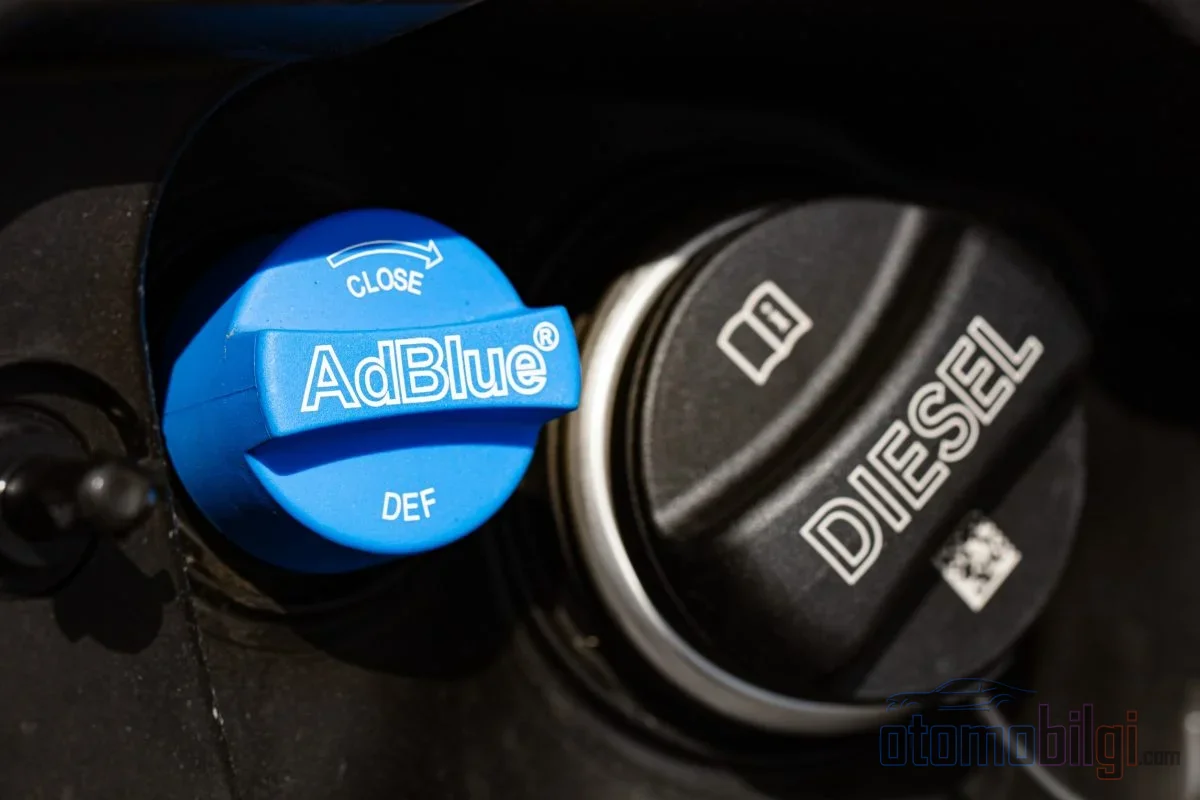
There is no single figure on the market for the consumption rate; and there is a good engineering reason for that. Consumption varies according to vehicle class, model year, emissions standard and engine load. The most reliable industry range is 2-6% of diesel consumption; manufacturer-sourced data typically falls in the 3-5% band, while in trucks this rate can rise to 4-6%.
Passenger Vehicles
For a mid-size diesel passenger car, the typical value is about 1-1.5 liters per 1,000 km; the general average hovers around the 1.5-2 L / 1,000 km band. Model year is also a determining factor: while pre-2018 vehicles consume around 0.07-0.2 liters per 100 km, this figure rises to the 0.14-0.4 L/100 km range in post-2018 models compliant with newer emissions standards. In other words, stricter emissions regulation means higher AdBlue dosing.
Commercial Vehicles and Trucks
The rate increases in heavy vehicles operating under load. Under the Euro IV standard, consumption is roughly 4% by volume, and around 6% under Euro V; in highway use it can reach 1.6-1.7 liters per 100 km. A concrete example: A truck burning 30 liters of diesel per 100 km consumes roughly 0.9-1.5 liters of AdBlue. In buses, consumption is also around 5% of the fuel.
What Increases Consumption? Driving Profile and Engine Load
AdBlue dosing works in sync with the amount of NOx the engine produces. When NOx production increases, the system sprays more fluid. That is why the main variable determining consumption is engine load.
- Aggressive acceleration and high-rev driving
- Continuous hill climbing and carrying heavy loads
- Stop-and-go heavy city traffic
- Cold trips where the engine covers short distances without warming up
What these four factors have in common is that they raise combustion temperatures and therefore NOx formation. This is also why trucks consume noticeably more than passenger cars: the engine runs longer under higher load. Another practical point is the difference between official measurement and the real world. According to 2022-2024 data, real-world fuel consumption comes out about 20% above official figures. Since AdBlue dosing rises along with diesel consumption, the per-km cost of the fluid ends up somewhat higher than the calculation on paper.
Tank Size and Refilling Frequency
In passenger cars, the AdBlue tank is typically 15-20 liters. Calculated with an average of 1.5 liters per 1,000 km, a full tank gives most drivers a range of 5,000-10,000 km; depending on the vehicle and usage profile, this range can extend to 3,000-12,000 km. A 10-liter canister means roughly 6,000 km of extra range.
| Vehicle class | Typical AdBlue consumption | Measurement |
|---|---|---|
| Pre-2018 passenger cars | 0.07-0.2 L | 100 km |
| Post-2018 passenger cars | 0.14-0.4 L | 100 km |
| Mid-range diesel (general) | ~1-1.5 L | 1,000 km |
| Truck, highway | 1.6-1.7 L | 100 km |
| Bus | ~5% of the diesel | Volumetric ratio |
From a refilling standpoint there are two practical options: pump filling is generally more economical per liter than small canisters; for commercial fleets, bulk purchase with a 1,000-liter IBC tank pushes the per-liter cost down even further. Common packaging options are the 10-liter HDPE canister, the 210-liter barrel and the 1,000-liter IBC.
What Happens If AdBlue Runs Out? Warnings and Power Lockout
This is where the most critical risk of diesel ownership comes into play. Modern vehicles first show the remaining range when tank level drops; for example, it starts with a warning such as 2,400 km. If the message is ignored, the displayed range keeps decreasing, and once the tank is completely empty, the vehicle will not start again after the engine is switched off. The no-restart lockout is legally mandatory and is not a manufacturer's choice; it is a direct consequence of emissions legislation.
Warning messages have two different meanings, and knowing this distinction protects you from costly surprises. A low-level message simply says that refilling is needed. By contrast, a fault message indicates that the SCR system is not working and must be diagnosed before the countdown expires. The countdown is not always caused by an empty tank; Faults in the NOx sensor, pump, dosing injector, or wiring can also trigger the same warning. There is an important engineering subtlety here: A NOx fault does not always mean the sensor itself has failed; wiring problems, an exhaust leak, or low fluid quality can also produce similar symptoms. Simple reset attempts like disconnecting the battery will not fix a genuine sensor or pump fault; the warning will return within a short time.
Replacing a NOx sensor can be seriously expensive; dealer prices can reach four figures. That is why the first step with a warning light is not guessing, but accurate diagnosis.
Choosing Quality Fluid and Correct Filling Practices
Although there are price differences among AdBlue products on the market, this is not an item to save on. Because only ISO 22241 certified products should be used. Non-standard fluids can cause crystallization, injector clogging, and irreversible damage to the SCR catalyst; the savings gained from cheap fluid lose their meaning next to the replacement cost of damaged exhaust components. Even a small contamination like a drop of diesel can destroy the catalyst.
Filling hygiene is just as important as fluid quality: clean filling equipment should be used, the filling gun should be cleaned regularly to prevent crystal formation, and AdBlue should never be poured into the diesel tank (or vice versa, diesel into the AdBlue tank). The physical properties of the solution also offer practical clues: its freezing point is -11.5 °C, its density at 20 °C is 1.09 g/cm³, and its pH value is in the range of 9.8-10. It is not in the toxic class and is transported in the minimum risk category; meaning it is a safe product in normal use.
Short Answer: How Much AdBlue Does My Car Use?
The one-sentence summary of the question is this: AdBlue consumption is roughly 2-6% of diesel consumption; in a passenger car, this corresponds to roughly 1.5-2 liters per 1,000 km, or a refill every 5,000-10,000 km for a 15-20 liter tank. If you want to personalize the number, simply multiply your own diesel consumption by 3-5%; heavy loads, ramps, and stop-and-go traffic push this value up, while calm highway driving brings it down.
When we speak of the hidden cost of diesel ownership, the issue is not just the price per liter, but the logic of how the system works. Not letting the tank run empty, reading the type of warning message correctly, and using certified fluid; these three habits make the second consumption item of a diesel with an SCR system both predictable and trouble-free.