Does a Small Engine Burn Less Fuel? The Truth About Low Displacement and Turbo
Share This Page
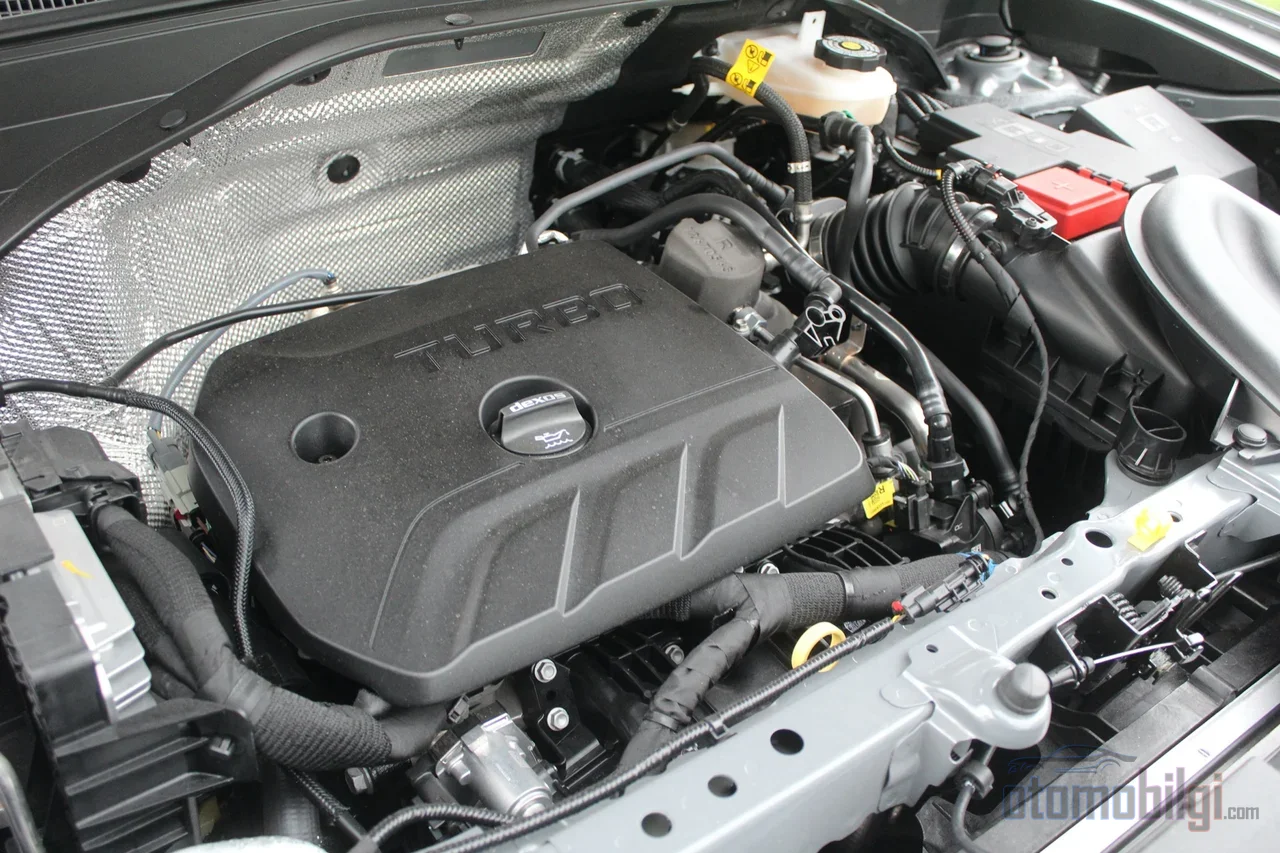
A small engine doesn't always burn less fuel. Downsized engines are based on the logic of reducing the energy the engine expends while doing its own work: less displacement means a smaller air-fuel mixture per cycle. This gain only materializes when the engine is never strained. In city traffic, with a full load, or at high altitude, a turbocharged small engine can consume more than expected; it may even burn more fuel than a large naturally aspirated engine of the same power.
Highlights
- When engine displacement is reduced by 60%, a consumption gain of up to 35% is predicted in theory.
- In series production, turbocharged downsizing improves fuel economy by an average of around 20%; at equal performance, the gain shrinks to a band of 2-6%.
- In Europe, the gap between official figures and real consumption has reached 16-24% for gasoline cars and up to 40% on average.
- Turbocharged models miss their advertised fuel economy values more often and by larger margins than naturally aspirated models.
- At an altitude of 15,000 feet, a naturally aspirated engine loses about 45% of its power; a turbocharger compensates for this loss.
Does a small engine burn less fuel, and under which conditions is that advantage real?
The math behind the downsizing idea is clear: shrink the displacement, bring back the same torque with turbocharging, and thus run the engine most of the time at lower load and in its efficient region. Engineering studies show that with a 60% reduction in displacement, a consumption drop of up to 35% and similar torque values seem possible. In series production vehicles, the improvement provided by downsizing and turbocharging is measured at around 20%. When reduced to equal vehicle performance, the gain drops to a modest band of 2-6%.
The difference here is critical: the laboratory gain and the number the driver sees at the pump are not the same thing. If a small engine has to produce high specific power to achieve a given target (for example, acceleration), a significant portion of its efficiency advantage evaporates. The reality of the gain depends entirely on your load profile.
The gap between the catalog figure and the reality at the pump
Official consumption figures are measured in standard test cycles; real traffic is far more varied and often far more demanding. In Europe, the gap between official fuel economy and the real world in new cars has widened to as much as 40%. In gasoline and diesel vehicles, the difference between WLTP and real consumption is on average around 20%; for gasoline models, this difference reaches 23.7%. Considering that the consumption figures commonly used in Türkiye are also based on WLTP, it becomes clear why trusting the catalog number absolutely is misleading.
Moreover, the measurement methodology also plays a role in explaining the gap. Compared to the previous NEDC cycle, WLTP has narrowed the gap between official and real values by 22-24%; in other words, the tests are improving, but real traffic is still more unforgiving than the test chamber. The impact of the driving cycle on consumption varies from car to car: in the same cycle, consumption can drop in one car while rising in another. That's why you need to look not at a single official figure, but at what these figures fail to represent.
Why does the turbo advantage reverse in stop-and-go traffic?
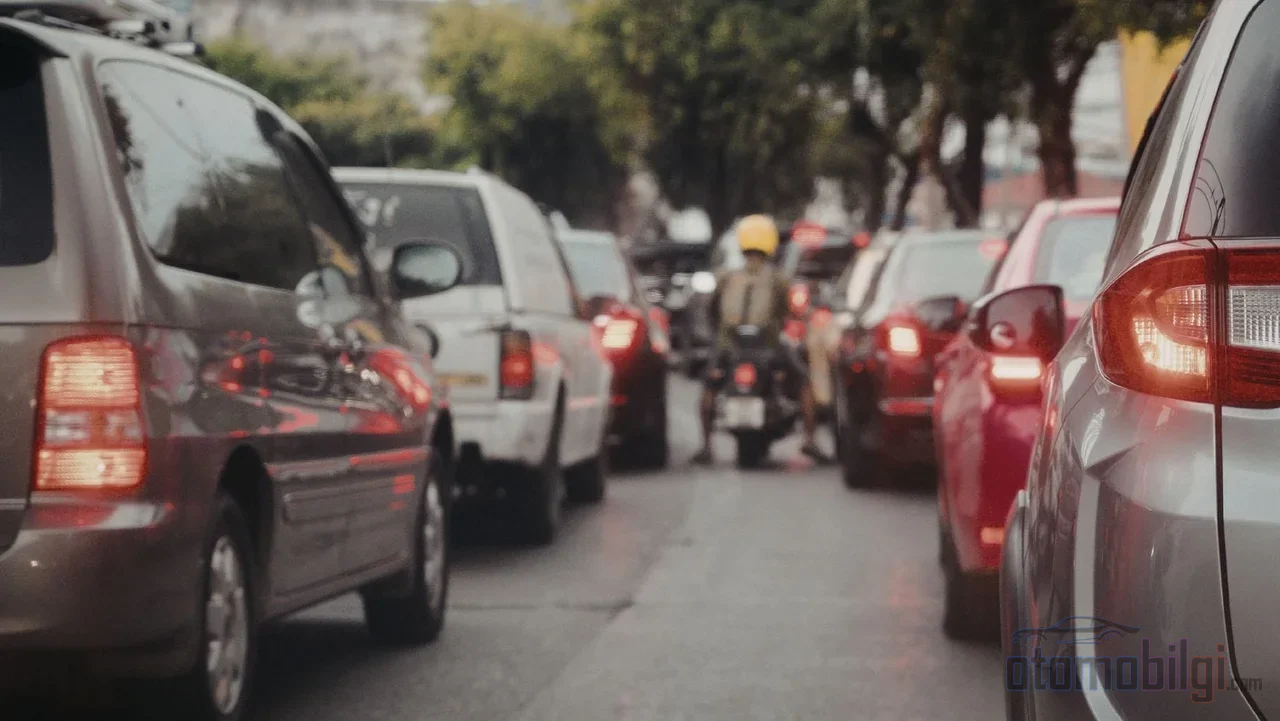
The turbo engine's efficiency claim rests on the engine working more efficiently at low load than a naturally aspirated equivalent. In urban stop-and-go traffic, this assumption breaks down. Frequent acceleration and braking cycles force the entire small displacement to continuously produce high specific power; the throttle opens, boost pressure rises, in-cylinder temperature increases, and instead of piston rings, cooling kicks in along with an enriched mixture. The result: a 1.0 turbo engine burns more fuel than you'd expect.
Independent test data confirms this picture. In comparative tests by a major automotive magazine, turbocharged vehicles missed their advertised fuel economy figures more often and by wider margins than naturally aspirated vehicles. In the same tests, only 65% of turbo models managed to meet EPA highway figures. What's interesting is this: stop-and-go traffic also affects naturally aspirated engines negatively, but the loss in a turbo engine is usually felt more sharply; because while a naturally aspirated engine's consumption increases in a more predictable way under load, in a turbo engine the increase is masked by the small displacement and appears suddenly.
In short, the turbo brings gasoline closer to the catalog figure during steady highway cruising; but in a taxi, in rush-hour traffic, or in short-distance use, it deviates in the opposite direction. If you chose a turbo engine for fuel savings, you must drive it like a hybrid - gentle throttle, early shifts - otherwise you'll end up with a loss, not a gain.
Full load and altitude: the disproportionate strain on the small naturally aspirated engine
The scenario where the small engine is most vulnerable is a long climb with a fully loaded car, or altitude. Altitude itself reduces the air a naturally aspirated engine takes in: at an altitude of 15,000 feet, a naturally aspirated engine loses about 45% of its power - a 100 hp engine effectively drops to 55 hp. At 10,000 feet, about 70% of the air molecule density at sea level remains; and the engine can produce roughly 70% of its power. As power decreases, the engine works under higher load to maintain the same speed, and consumption inevitably increases.
Turbocharging is a decisive advantage here: a turbo fed by exhaust energy compresses the thin air, compensating for altitude-related power loss and reducing it to up to about 1% per 1,000 feet. In mountainous regions, a small turbo engine delivers more consistent performance than its naturally aspirated equivalent, which scales with the air.
The issue of load is more nuanced. An excessively small engine working at its design limit to carry a certain constant load can consume more fuel than a larger engine doing the same job at a more comfortable load; because the small engine operates in an inefficient high-load region, while the big engine still operates in an efficient mid-load region. Although the smaller engine's lower air-fuel exchange per cycle is a general advantage, it is not a universal rule. If most of the route is uphill and fully loaded, this is why we say the decision should be based on engine character, not engine displacement.
The relationship between firing order, low-end torque, and consumption
In the consumption equation, engine character - that is, where the torque curve fills out and how the ignition/timing is configured - is as influential as displacement. Two engines with the same horsepower can differ in fuel consumption; because an engine producing the same power at low rpm with high torque burns less fuel than one forced to strain at high rpm for long periods. If the power required to overcome a constant load is the same, what matters is at which rpm and efficiency point you produce that power. Since both engines can run the theoretical stoichiometric mixture ( 14.7:1 for gasoline), the surplus of extra power increases consumption proportionally - the turbo does not change this, it merely makes it available in a small displacement earlier and across a wider rev band.
In practice, this translates into driving style: a small turbo engine with a wide torque plateau stays efficient when kept at low rpm; but when revved hard, both boost pressure and cylinder temperature rapidly increase consumption. The firing order and timing set the stage in this picture; at high load approaching the knock limit, the engine enriches the mixture or retards ignition for a safety margin, and both reduce efficiency.
Does hybrid assistance close the real-world weakness of the small turbo engine?
Manufacturers found the root solution in electrification. The e-machine in 48V mild-hybrid systems provides extra torque during launch and acceleration (torque-boost), freeing the internal combustion engine from high, inefficient loads and improving consumption. This is precisely the technology that targets the downsized turbo engine's weak point in stop-and-go traffic: the sudden power demands of stop-and-go traffic are met by electricity, and the turbo rarely engages.
Hybrid turbocharger solutions that go a step further make turboboost faster and more controllable with elevated voltage, improving both fuel economy and driving quality under heavy load. The general logic as hybrids approach is the same: less displacement and less fuel for the same power. Viewed from this angle, full hybrid systems - structures combining an electric motor with an internal combustion engine that often deliver above 50 MPG - partly render the displacement debate meaningless; a large naturally aspirated engine with hybrid assistance can be more efficient in the real world than a small turbo engine without one. Indeed, the fact that most hybrid models come with naturally aspirated engines rather than turbos is a result of this balancing logic.
The decision for the buyer: how decisive is displacement, and should it be gasoline or diesel?
Engine displacement alone is a misleading indicator in a purchase decision. The correct evaluation set consists of the following questions:
- Usage profile: If short distances and stop-and-go dominate, the turbo advantage weakens; if there is steady highway cruising or high-altitude terrain, a small turbo engine makes sense.
- Load condition: If you regularly drive fully loaded, tow a caravan or trailer, evaluate the engine's power reserve not by displacement but by its torque band and hybrid support.
- Hybrid contribution: If a 48V mild-hybrid or full-hybrid version is available, the consumption estimate should be based on this system's contribution, not the catalog figures.
- Fuel type: Diesel provides an advantage over long distances and high mileage regardless of displacement; a small gasoline turbo is a balanced choice for out-of-town use. The WLTP gap has been measured at 16% for gasoline and 10% for diesel; meaning diesel figures remain closer to reality.
| Usage profile | Preferred configuration | Rationale |
|---|---|---|
| Stop-and-go city traffic | Naturally aspirated or full hybrid | The turbo is not strained, the e-machine handles launches |
| Steady highway cruising | Small turbo | Efficiency at low load, consumption close to catalog values |
| High altitude / mountain roads | Turbo | Naturally aspirated power drops with altitude, the turbo compensates |
| Full load / trailer | Large naturally aspirated or hybrid turbo | An overly small engine operates in an inefficient zone under high load |
| High annual mileage | Diesel | The real-world vs. official gap is smaller for gasoline |
The concluding sentence is simple: a small engine, used correctly, consumes little; in the wrong profile it consumes significantly more than the catalog promises. Read not just the displacement, but the engine's character, hybrid support, and your daily route profile together.
Sources
- Engine Downsizing - an overview | ScienceDirect Topics
- Parametric Studies of the Impact of Turbocharging on Fuel Economy - SAE/JSTOR, Shahed 2009
- Turbocharged Engines: Fuel-Economy Boost or Bust? - Car and Driver
- Real-world vehicle fuel economy gap continues to widen in Europe - theicct.org
- European Commission Report Finds Big Gap Between WLTP and real world - InsideEVs
- Comparison of fuel consumption and exhaust emissions in WLTP and NEDC procedures - Combustion Engines (Koszałka 2019)
- Impact of altitude on fuel consumption of a gasoline passenger car - ScienceDirect/Fuel
- Turbocharging At Elevation - Garrett Motion
- Non-Turbo vs Turbo at Altitude and loss of power - Mechanics StackExchange
- Does a more powerful engine use less fuel for a specific load? - Mechanics StackExchange
- The effect of 48V mild hybrid technology on fuel consumption - ScienceDirect (Abidin 2021)
- How Hybrid Turbochargers Are Changing Performance - Goldfarb
- Mythbusted: Is a smaller engine always more fuel efficient? - Sgcarmart
- Do Smaller Engines Always Provide Better Gas Mileage? - Blauto
- Hybrid Electric Cars - driveclean.ca.gov