At What RPM Should You Shift Gears? The Relationship Between RPM and Fuel Consumption
Share This Page
In a manual transmission vehicle, for economical driving you generally need to shift up within the 2,000-3,000 rpm range; for diesel engines the lower end of this range is used (1,500-2,000 rpm), while for petrol and especially turbocharged engines the upper end is used (2,000-3,000 rpm and sometimes up to 3,500). However, there is no single universal figure: The correct shift point changes according to the engine's torque character, the current load, and the condition of the terrain. Shifting up too early, although it may seem to comply with the low-rev rule, strains the engine and does not save fuel; on the contrary, it can increase consumption and, in the long run, damage the drivetrain.
Key Takeaways
- In economical driving, the upper limit for shifting gears is kept around 3,000 rpm in most cases.
- For diesel, 1,500-2,000 rpm, and for petrol, 2,000-2,500 rpm are typical shift-up ranges.
- The sweet spot of efficiency: the high load + low rpm combination.
- Shifting up too early, i.e. lugging the engine, does not reduce consumption; it increases wear.
- On the highway, revs just below the middle of the tachometer are usually the most efficient cruising zone.
At how many rpm should you shift gears: Why is there no single figure?
On the engineering side, the answer to this question is based on the concept of brake-specific fuel consumption - BSFC for short. BSFC is a measure of how much fuel an engine consumes per unit of power at different combinations of revs and load. Every engine has a sweet spot where it converts the fuel it consumes most efficiently, and this point is usually where high load intersects with low rpm.
Let's unpack why these two variables work together. Low revs are advantageous because dynamic friction is directly proportional to speed: An engine running at 6,000 rpm has to overcome piston-cylinder wall friction, crankshaft bearings, the valvetrain, and the drag of accessories such as the water pump. An engine cruising at 2,000 rpm does not carry this load. On the load side, throttle opening is the determining factor: At light throttle (around 5%), the engine does extra work to draw air through an almost closed throttle; near full throttle, intake restriction decreases and the engine breathes easily.
The conclusion is not surprising: It is not revs alone but the combination of revs and load together that determines consumption. In test bench measurements, the lowest consumption point appears in a region on the vehicle at around 2,500 rpm and slightly to its left. That is why the generalization "always drive at the lowest possible revs" is an incomplete rule; what is correct is to choose the gear that keeps the engine at its own sweet spot.
Diesel, petrol, and turbo: The ideal rev range according to engine type
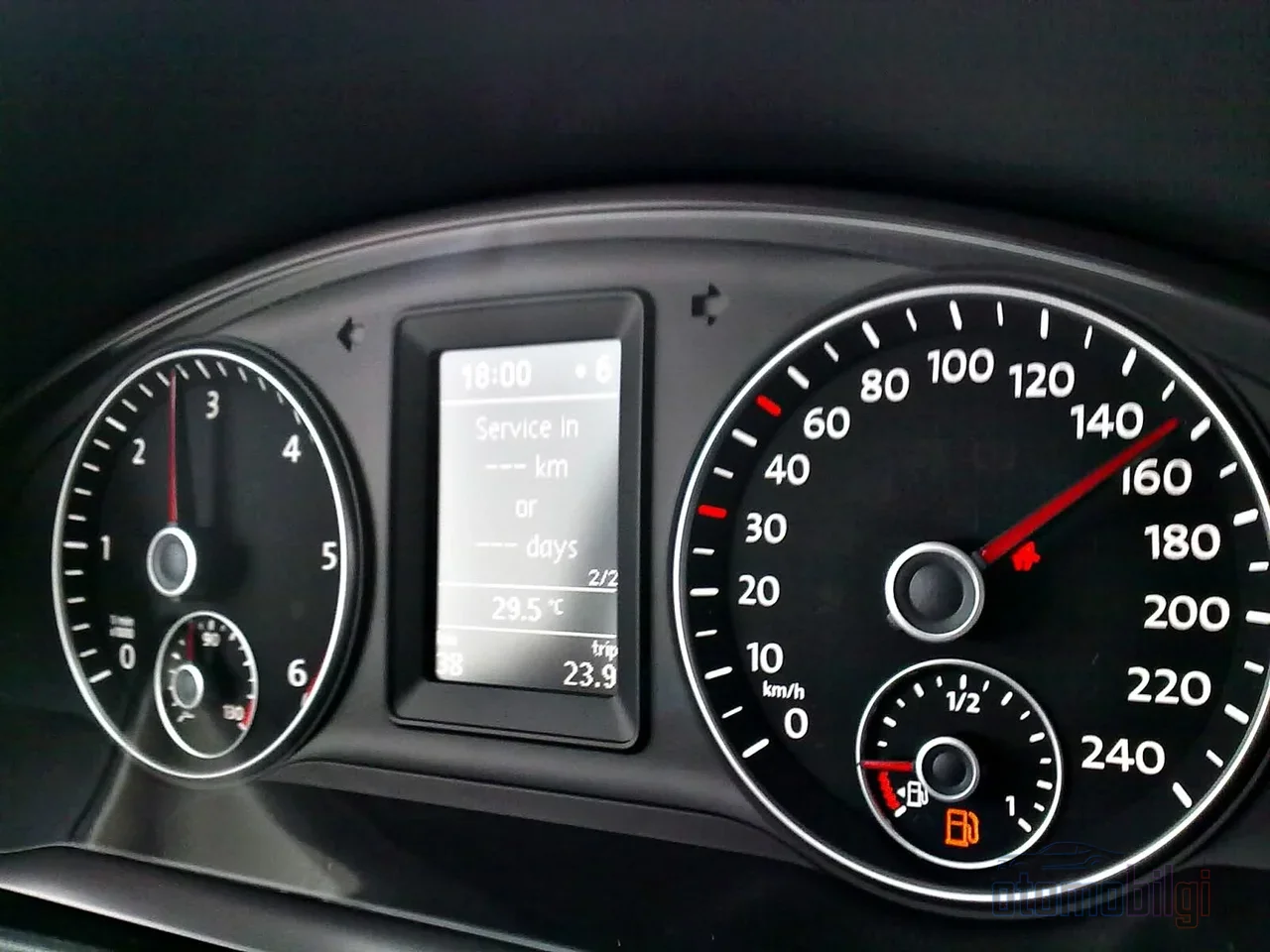
Since engines have different torque characteristics, their shift points also differ. A diesel engine produces high torque from low revs, and with its long-stroke design it favors low revs; a naturally aspirated petrol engine, on the other hand, develops its power at higher revs and struggles under load at very low revs.
| Engine type | Typical upshift RPM | Recommendation for cruising |
|---|---|---|
| Diesel | 1,500-2,000 rpm | Not dropping below 1,500, cruising above 3,000 is pointless |
| Petrol | 2,000-2,500 rpm | Shifting around 2,500-3,000 in normal driving |
| Turbocharged | Can go up to 3,000-3,500 | Cruising at 1,750-2,000 rpm, not lugging the engine |
| General ceiling | Not exceeding 3,000 rpm | Just below the middle of the tachometer on the highway |
The reason for the differences in the table is torque character. In a turbocharged engine, boost pressure only fully kicks in above a certain rpm; when the revs are below this band, the engine cannot produce the expected torque and strains under load with shaking. That is why shifting a bit later in turbocharged vehicles - in some cases up to 3,500 rpm - is the right approach; in return, these engines can be driven with fewer gear changes in manual use thanks to their wider torque band. With diesels, the table is reversed: The power band opens early and closes early, so driving above 3,000 rpm has no practical meaning.
The price of shifting far too early: Lugging
"Lugging" means driving the engine at a significantly lower rpm than it can handle, under heavy load. In this state, where the engine runs at an rpm too low to properly use the fuel it injects, the vehicle jerks along and vibration increases. The source of this vibration is that every engine has its own minimum resonance rpm: At that rpm, vibration, wear and friction drop to a minimum, and parts last longer.
The sneakiest aspect of lugging is that the driver believes they are saving fuel. Forced to draw air through a constantly nearly-closed throttle, the engine works inefficiently and consumption does not fall - it rises. Over time, the pressure the friction and wear place on the drivetrain eats into the engine's life. It should not be forgotten that low-rpm "over-eco driving" is risky for the vehicle, and the choice between early upshifting and staying in a lower gear has long-term mechanical consequences.
Gear changes on hills and under load: Why does the rule change?
A gear choice that works on flat ground can backfire on a hill. Driving a loaded vehicle in a high gear at low rpm can in theory slightly reduce consumption; but this is a general rule and depends on whether the engine can produce the torque to carry the load at that rpm. Uphill, with a fully loaded trunk or on a long gradient, an engine struggling in gear at half throttle is actually operating in its least efficient zone.
The practical solution is simple: Do not place real strain on the engine. On a small hill, dropping to a lower gear - for example going from 5th down to 4th - moves the engine to a more suitable power zone; the vehicle feels more comfortable and climbs without straining the engine. At light throttle in 4th. or 5th gear with light throttle, the criterion is the same: If the engine climbs smoothly and fluidly, the gear is right; if it shudders, shift down one gear.
There is another technique on hilly terrain if traffic allows: Let the car slow down naturally uphill, and use the speed gained before the crest on the next descent. Working with momentum instead of constantly pressing the pedal lowers total consumption.
Shifting gears alone is not enough: The full picture of efficient driving
Shifting at the right rpm is only one component of fuel savings. The full set of fuel-efficient driving techniques can reduce consumption and CO2 emissions by up to 25%. On the other hand, the habit of sudden acceleration and hard braking can increase consumption by up to 40% - meaning a bad right foot can single-handedly wipe out even the best gear-shifting habits.
- Press the accelerator gently; speed fluctuations and sudden acceleration increase consumption.
- In the city, rev the engine to its sweet spot before shifting up, then cruise at mid-range rpm without aggressive throttle.
- On the highway, using cruise control means constant speed and low consumption; high speeds increase air resistance and fuel use exponentially.
- On long descents, staying in gear instead of shifting to neutral is both safer and - because fuel cut-off kicks in on modern fuel-injected engines - usually more efficient; "fuel savings in neutral" is merely a common myth.
The subject of idling is similarly misunderstood: An idling engine burns more fuel than restarting it. Warming up the car by letting it run for a long time before setting off is also an unnecessary habit for modern engines.
Finding your own car's correct rpm range: A practical test
Every engine in your fleet has its own sweet spot, and no complicated equipment is needed to find it. The goal is to identify the rpm at which the engine runs most smoothly with the least vibration - that is, its lowest resonance point. At this rpm, friction is minimal and the engine is closest to its most efficient region.
- Park the car on level ground and engage the handbrake.
- 2. or shift into 3rd gear and hold the clutch down.
- Raise the engine speed gradually in steps of approximately 250 rpm; at each step, listen to the engine's tone and smoothness.
- The rpm at which the car runs smoothest and with the least vibration is your engine's lowest resonance point - aim your gear shifts slightly above this value.
Three practical criteria are enough to turn this into daily use: When accelerating with light throttle, revving up to 3,000 rpm is normal; when hard acceleration is needed, shift later - that is, keep the engine in its power band; while cruising, keeping the tachometer just below the middle is the targeted lowest-consumption zone.
Finally, two warnings: On a turbo engine, cruising rpm may stay in the 1,750-2,000 band, but on these engines, if you drop the rpm too low and apply throttle and the engine lugs, shift down immediately. In diesels, the most reliable rule of thumb, both for fuel consumption and engine longevity, is to drop below 1,500 rpm and avoid loading the engine at that speed.
In short, here is the summary: The shift point is not an instruction manual, it is a matter of balance. Low revs are the basic principle, but load, terrain and engine character take priority over this rule. The gear where the engine runs smoothly, pulls without shuddering and requires only a light touch on the pedal - in most cars a point somewhere between 2,000 and 3,000 rpm - is the right answer for your vehicle.
Sources
- Here's When You Should Shift a Manual Transmission for the Best Fuel Economy - Road & Track
- Optimal RPM range for manual transmission - Mechanics StackExchange
- Fuel-Efficient Driving - How to Drive Economically - Money
- Dangers Of Low RPM extreme ECO Driving - TorqueCars
- Engine Lugging vs High Revving: Which Habit Causes More Long-Term Engine Damage - CarAndBike
- When to Shift Low or High RPMs - TDIClub Forum
- Manual Transmission optimal shifting for fuel economy - Bronco6G Forum
- A Beginner's Guide to Driving Stick Shift - VFAuto
- Here's When To Shift Gears For Better Fuel Economy - SlashGear
- Fuel-efficient driving techniques - Natural Resources Canada
- Fuel-Efficient Driving Techniques for City Commuters - Auffenberg Hyundai
- Driving Tips to Save Gas - Toyota
- Top Fuel-Efficient Driving Techniques - Hoffman Ford
- 7 Fuel Efficiency Myths - CBAC
- 10 common gas-saving myths debunked - Click2Houston
- Shifting gears: power vs fuel efficiency - Cartalk Community
- Fuel Efficient Driving - Eartheasy