Are Pilots the Only Ones Moving Up from F2 and F3 to F1?
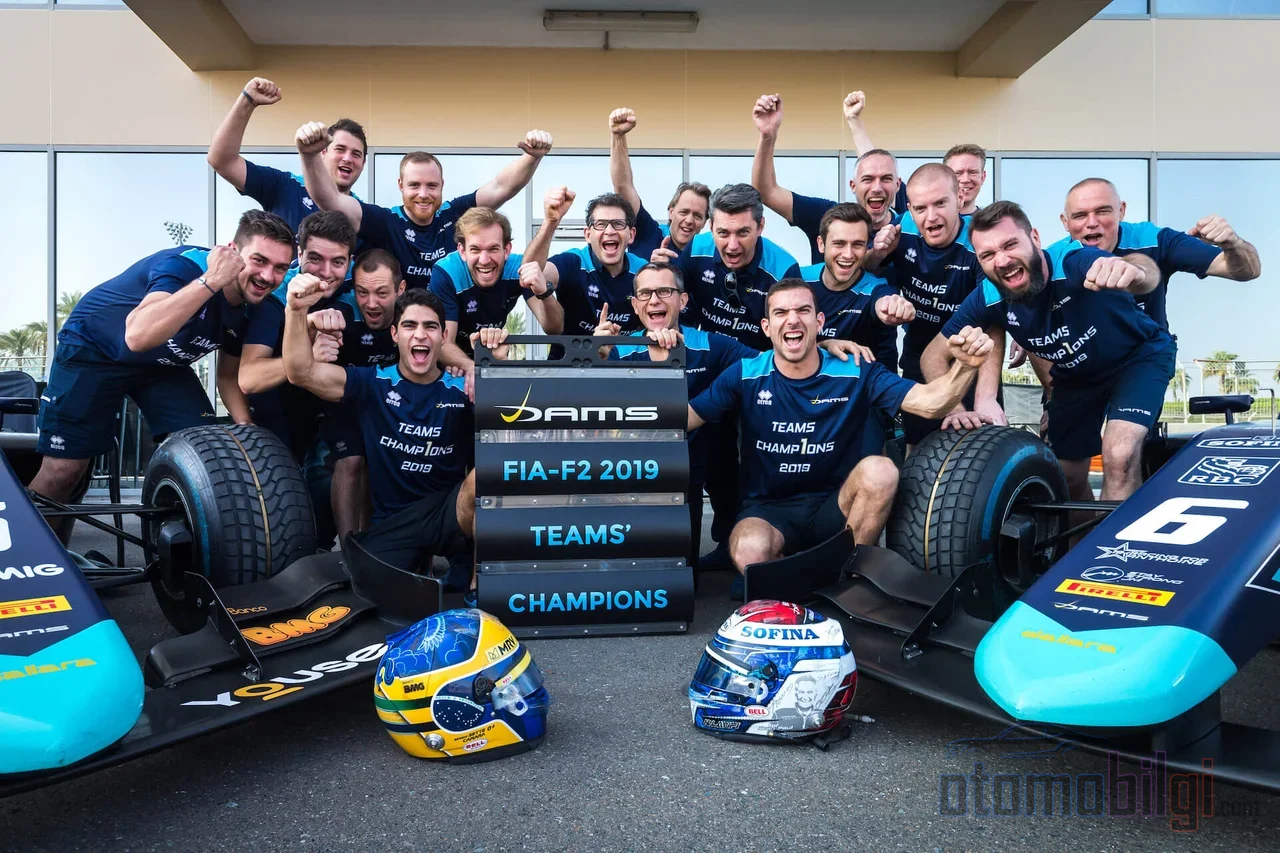
On Sunday morning you sit down in front of the screen and watch an F1 team finish a pit stop in 1.9 seconds, right? Behind that screen there are dozens of people: the mechanic who handles the tire down to the millimeter, the engineer who calculates the strategy, the performance analyst who reads the telemetry. So how do all of them get into F1 at once? The answer is often surprisingly the same: F2 and F3. But this isn't the driver pipeline everyone knows about - what I want to tell you about today is that other career ladder that never makes it on camera.
Are F2 and F3 Just a Driver Factory? Actually, F1's Human Resources
We all know F2 and F3 as "the road to F1." A young driver comes out of karting, enters F3, then collects podiums in F2 and one day appears before us on the F1 grid. That story is true but incomplete. Because these two series also work as a training camp for technical staff, just as much as for drivers.
The reason lies hidden in the technical structure. All 22 cars in F2 are built by the same manufacturer, Dallara, to the same specification, and they all use the same Mecachrome V6 engine. F3 is similarly built on standard parts. So the difference between teams comes not from the car, but from the human work: setup, strategy, pit stop, data analysis. That means every engineer and mechanic working in these series carries exactly the skill set F1 is looking for when they move up - the art of extracting performance to the last drop under maximum constraints.
Looking at the numbers, the picture becomes even clearer: The motorsport and high-performance engineering sector in the UK comprises roughly 4,500 companies, with annual revenue of 9 billion pounds and 40,000 employees; seven of the current F1 teams are part of this network. The personnel pipeline stretching from the junior series to F1 is built precisely on this industrial foundation.
Highlights
- F2 cars race with 620 hp while F1 engines produce about 1,000 hp
- Making the podium in F2 means 40 super license points - the license door opens without even guaranteeing the championship
- More than 90% of F1 pit crews are actually the team's mechanics or engineers
- All 22 cars in F2 are Dallara -built and use the same engine
- At the 2027 Turkish GP, F2 and F3 will also race at Istanbul Park
Super License: Why Is the Drivers' Door Wider in F2?
Let's deal with the driver side in one sentence, because the super license system is the best example of how the ladder works. The FIA Super License is the document a driver needs to race in F1, and you must collect 40 points within the last 3 years. Here F2 has a huge advantage: each of the top three positions awards 40 points. So even a single podium finish in F2 practically guarantees the license. The F3 champion, however, receives only 30 points - which is why almost every F3 champion moves up to F2 as their next step.
This system was introduced in 2015 and has since become the mechanism that effectively controls F2/F3's gateway to F1. In recent years, the system was tightened so that only champions of a certain number of series can directly reach 40 points; which narrows the path for champions in other series. The debate continues: Does F1 really need this points system? For those looking from Turkiye, the question is more concrete - Cem Bolukbasi had decided not to continue in the international series because his chances of accumulating superlicense points were weak. So these points are not just on paper - they shape real career decisions.
It is possible to see names from this pipeline on the 2026 grid: Along with Gabriel Bortoleto, who reportedly moved up from F2 to F1 in 2025, new-generation drivers like Kimi Antonelli also came through the same ladder. For F3 graduates, reaching F1 is no longer an exception but the standard route - the list of Formula 1's F3 graduates from the first ones to today is the best proof of this.
Race Engineering Career: How to Get from F2/F3 to the Pit Wall?
Now let's get to the main topic. For someone who wants to become a race engineer in F1, the route is usually as follows: graduating from a mechanical, automotive, aerospace, electrical-electronics, or motorsport engineering program. Motorsport engineering programs in the UK - such as Oxford Brookes' Motorsport Engineering department - open a direct door into this field; schools such as Southampton, Imperial College, and Cranfield are also frequently recommended.
University is not the only path. All F1 teams have internships, placement years, and graduate programs, and these are serious entry points. It is known that teams like Aston Martin build staff with placement students, and candidates who gain experience in Formula Student teams and local motorsport volunteering get ahead. The competition is brutal but the doors are real. As for tools, CATIA, Siemens NX, SolidWorks, and MATLAB certifications are widely accepted in F1 engineering teams; a master's or doctorate in aerodynamics, data science, or advanced vehicle dynamics can also open doors.
This is where the role of F2 and F3 comes into play. The teams in these series operate like miniature versions of F1 teams: the same race format, similar data systems, similar pit wall discipline. Someone doing race engineering or performance analysis in F2 emerges as a strong candidate in an F1 team's hiring process, saying "I worked with a standard car with Dallara and made a difference with limited resources." The 2026 regulation wave has also accelerated things - F1 teams have already sped up hiring for technical roles, from composite technician to design engineer. The new cars are both opening up more technical roles and making people who have gained experience for these roles in the lower series more valuable.
Pit Crew: Not Specialists, the Team's Best Mechanics
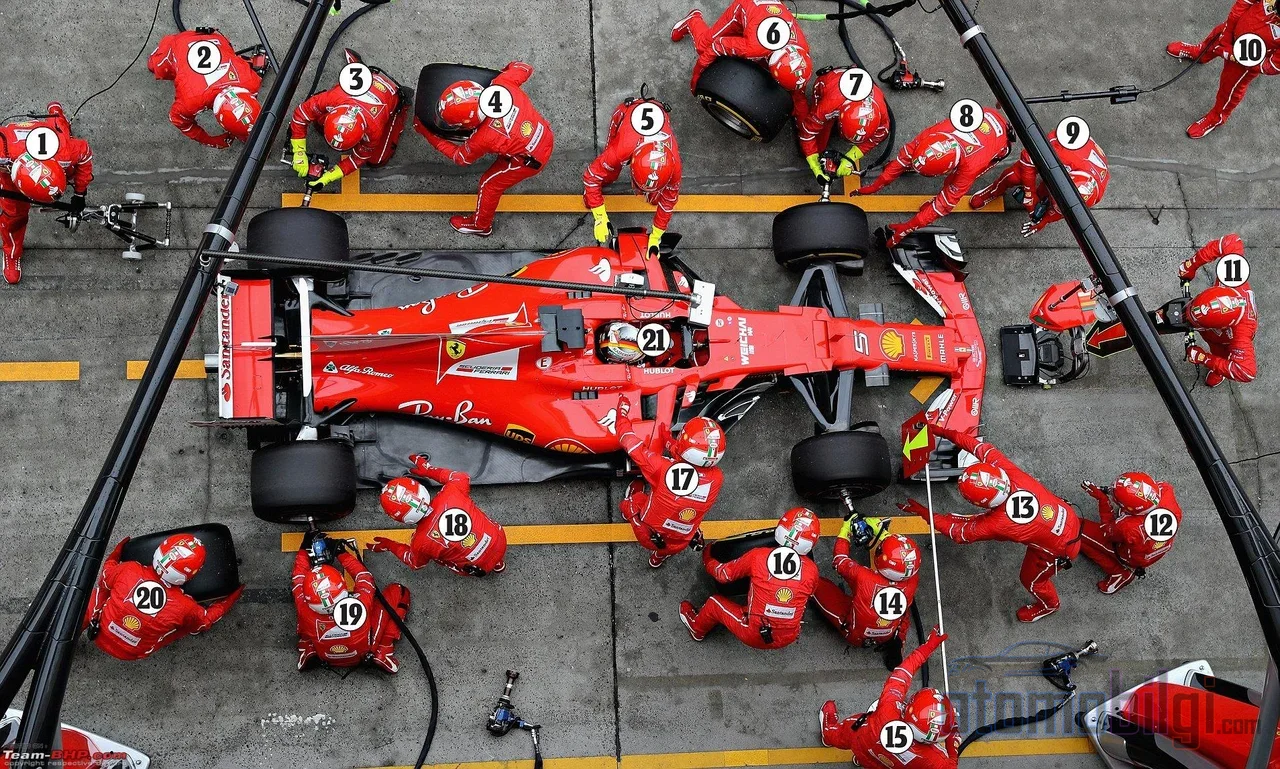
The most surprising thing about the pit crew job is this: In F1, the pit stop crew is not a group of specialists. Almost always made up of the team's mechanics and engineers - according to Formula 1, more than 90% of pit crew members have a primary job. So the person who changes a tire in 1.9 seconds may be the team's mechanic who also repairs the car's front wing over the same weekend. Pit crew is a second job; the career runs through being a mechanic or an engineer.
The structure Williams laid out is a good example: the pit crew consists of more than 20 people and there is no single entry path. You join the team as a mechanic or technician, then the best performers are selected for the pit stop crew. The junior series are a natural training ground for this selection - staff practicing pit stops in F2 and F3 have already learned this rhythm by living it when they move up to F1. Much like raising a game's difficulty level from easy to hard: those who climb step by step are not left gasping for breath at the summit.
F1 or F2? Are the Cars Getting Closer to Each Other?
The technical gap also explains why the staff in the junior series are so prepared. While F1 engines produce around 1,000 hp, F2 cars race with 620 hp; this gap gives F1 an average speed advantage of 10-15 mph. On track, F2 cars are about 18% and F3 cars about 24% slower than F1 - but these figures vary significantly from track to track.
| Category | Power | Speed difference vs F1 |
|---|---|---|
| F1 | ~1,000 hp | - |
| F2 | 620 hp | ~18% slower |
| F3 | Standard engine | ~24% slower |
The really interesting part began in 2026. The new F1 regulations removed DRS and introduced movable aerodynamics, hybrid power units and active aero, and an interesting debate emerged during the Barcelona tests: how close, in terms of speed, will the 2026 F1 cars get to F2 cars? The track-to-track performance impact remains uncertain, but the direction is clear - the gap between F1 and F2 could narrow. In such a scenario, staff who have worked in the junior series become more valuable than ever for F1 teams, because the technical translation between the two categories becomes easier, not harder.
Where Does Turkiye Stand in This Ecosystem?
This is my favorite part. For the 2027 Turkish GP, not only F1 but also F2 and F3 will come to Istanbul Park. So Turkish motorsport fans will have the chance to watch F1's stars and engineers of tomorrow from the grandstands, over the same weekend. The meeting of these three championships on the same circuit will make the whole narrative about the junior series' place in the F1 ecosystem concrete in a single weekend.
On the driver side, we also want to see Turkish names on the ladder: Among the star prospects on the road to F1, names like Arvid Lindblad, Pepe Martí, Oliver Goethe, Tim Tramnitz and Nikola Tsolov are frequently mentioned, and the superlicense mechanism directly shapes these candidates' careers. For someone from Turkiye to find a place on this path, the picture is clear: either a series performance that accumulates super license points or - for those who won't be drivers - entry into this ecosystem through engineering education and placement programs. The second path may be less glamorous, but its door is much wider.
Summary: Two Paths to the F1 Ecosystem, One Ladder
So the answer to the real question: Is it only drivers who move from F2 and F3 to F1? No - drivers are the most visible layer, but engineers, mechanics, performance analysts and future pit crew members also climb the same ladder. While F2, with its 620-horsepower standard cars, forces people to produce maximum results with limited resources, it cultivates exactly the type of person F1 is looking for. If super licence points open the driver's door, the technical experience gained in the junior series opens the door for everyone. The next time you watch that 1.9-second dance at the pit wall, remember: everyone there once got their start in a junior series garage. So who would you like to follow in this story - the one at the wheel, or the one at the pit wall?
Sources
- F2 car and engine - FIA Formula 2 (official)
- F1 EXPLAINED: How does the Super Licence system work - Formula1.com
- How F2 and F3 provide a pathway for the Formula 1 drivers of tomorrow - Formula1.com
- Anatomy of a pit stop - Formula1.com
- F1 vs F2 vs F3: Key Differences Explained - Red Bull
- F1 vs F2 vs F3 comparison - Raceteq
- Ten years since its introduction, does F1 need its superlicence points system? - RaceFans
- Essential Qualifications for F1 Roles - Arden White
- What it takes to get a job in an F1 pit crew - Williams F1 Careers
- F2 and F3 Are Coming to the Türkiye GP - Otomobilgi