From Dallara Chassis to Halo: Formula 3 Car Technology
Share This Page
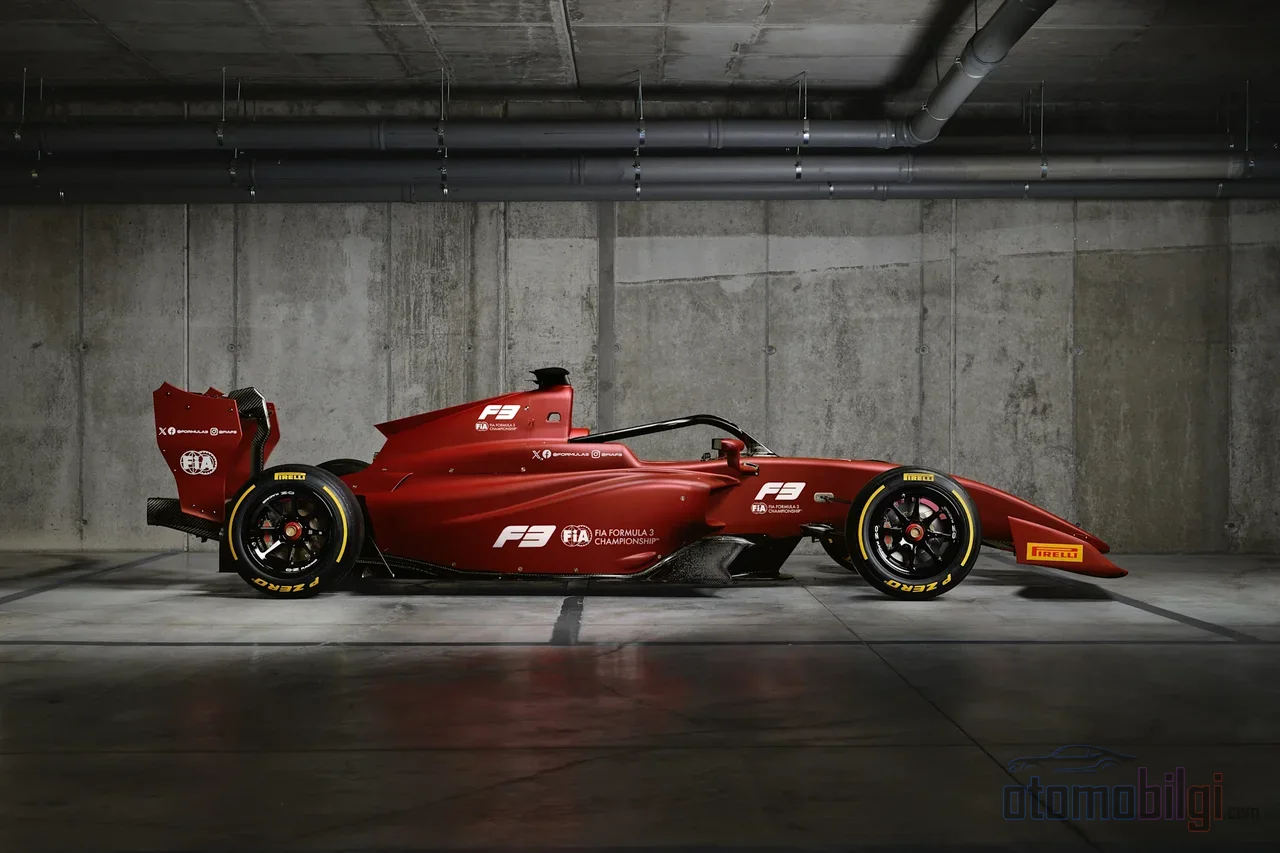
A Formula 3 car is a single-make racing car in which all 30 cars in the FIA Formula 3 Championship are built to the same specification, featuring carbon fiber monocoque chassis and powered by a 3.4-liter Mecachrome V6 engine. The current generation, Dallara F3 2025, reaches a top speed of 300 km/h, completes 0-100 km/h in 3 seconds, and is equipped with the Halo safety system.
Highlights
- All 30 cars are built with the same Dallara chassis ; only the driver makes the difference.
- Engine: Mecachrome 3.4-liter V6, 380 HP @ 8,000 rpm, 420 Nm of torque.
- Top speed 300 km/h, 0-100 km/h 3.0 seconds.
- Weight including driver 673 kg; lateral acceleration +/- 2.6 G.
- The Halo must bear approximately 12 tons of load on top of it.
Hello, friends who listen to cars with passion! On our pages explaining the F1 ladder, we've mentioned the F2 car and F3's place on the ladder many times, but we've never asked the real question: What are the drivers actually sitting in? Today we'll answer that question. Buckle up, because we're diving into the technical world of the Formula 3 car.
Everyone Rides the Same Car: What Does a Spec Series Mean?
Think of an exam; but all students are using the same pen, the same notebook, and the same question booklet. The only difference is the hand holding the pen. Formula 3 is a championship that works exactly like this: all 30 cars are built by Italian manufacturer Dallara to the same specification and powered by the same Mecachrome engine. Even the tires are identical. Since all teams use the same chassis, engine, and other components, the focus shifts to talent and execution.
This format has two big advantages. First, competitive balance: The richest team cannot have the most highly developed car because there is no car to develop. Second, cost control: As series manager Bruno Michel emphasized, costs have been the hottest topic of the design process, and the new car is designed to be run by 11 operational personnel. Moreover, the transportation of all cars in F2 and F3 has been centralized; for taking the 52 cars around the world, the organization also covers items such as accommodation and media. So instead of wrestling with non-racing expenses, teams focus on the driver.
Dallara F3 2025: How Was the New Generation on the Ladder Born?
The car we're covering is the series' second generation, the Dallara F3 2025. This machine, built under Technical Director Pierre-Alain Michot, took the place of its predecessor, the Dallara F3 2019, and was designed to race in the 2025, 2026, and 2027 seasons. Its debut to the world was as elegant as its announcement: the car was presented to the press at Monza during the final weekend of the 2024 season.
The business was serious even before the launch. In June 2024, at Varano, the car completed a successful shakedown test with former F2 driver Tatiana Calderon at the wheel, having already covered over 2,000 kilometers in development testing up to that point. The first cars reached their teams by the end of December 2024, and the remaining two were delivered in mid-January 2025. It also faced its first exam right away: in the 2025 championship, Rafael Câmara became the drivers' champion and Campos Racing the teams' champion. Currently, in the second year of the three-year cycle, that is, the 2026 season, racing is being done with this car; 10 rounds, nine countries, 10 teams, and 30 drivers.
Technical Data: Engine, Chassis, and Performance
Let's take a look behind the heat: The chassis is a monocoque with a carbon fiber and Kevlar honeycomb structure. The engine is a familiar name: the Mecachrome V634. This 95-degree V6 with 3.4 liters of displacement is naturally aspirated and runs with rear-wheel drive; 380 HP at 8,000 rpm and 420 Nm of torque it produces. It also uses a fly-by-wire throttle system; that is, there are electronic signals instead of cables between the throttle pedal and the engine. The elder members of this engine's family are also interesting: the same engine was used in the GP3/16 and F3 2019.
| Feature | Value |
|---|---|
| Engine | Mecachrome 3.4 L V6, naturally aspirated |
| Power / Torque | 380 HP @ 8,000 rpm / 420 Nm |
| Weight | 673 kg (including driver) |
| Top speed | 300 km/h |
| 0-100 km/h | 3.0 seconds |
| 0-200 km/h | 7.7 seconds |
| Lateral acceleration | +/- 2.6 G |
| Maximum braking deceleration | -1.9 G |
The dimensions are as follows: 4,965 mm length, 1,885 mm width, 1,043 mm height. The gearbox is a 3Mo-designed 6-speed sequential unit; gears are shifted electro-hydraulically via paddles on the steering wheel under Marelli control. The suspension uses a double steel wishbone, pushrod, and twin damper layout both at the front and rear. On the tire front, there are 16-inch Pirellis; P Zero for dry, Cinturato for wet, with three separate compounds developed specifically for F3. There is modernity even in the fuel tank: Aramco's advanced fuel that meets the FIA's 100% sustainable fuel standard and Aramco Orizon lubricant. In fact, recycled carbon is used in the front wing endplate, the driver's seat shell, and the engine cover.
DRS and Electronics: What's in the Cockpit?
Yes, F3 has DRS and it serves exactly the same function as in F1: gaining extra speed on the straights by opening the rear wing. The only difference is the activation method; here the system works hydraulically. In practice and qualifying sessions it is free in the designated zones, while in races it is rule-dependent. On the electronics side, Marelli's all-in-one ECU-GCU-data logger unit collects high-speed data but there is no telemetry; that is, teams cannot receive a live data stream from the car during the race. Additionally, an F1-style virtual safety car (VSC) and marshalling system are also integrated into the car.
There's also a detail I like: The new car is closer to F2 than ever before. The F3 cockpit is the same size as the F2 car, from the pedals to the steering wheel. This significantly reduces the adaptation problem for young drivers moving up to the next category. In other words, the rungs of the ladder are getting closer together.
Halo Safety System: The 12-Ton Guardian Above Your Head
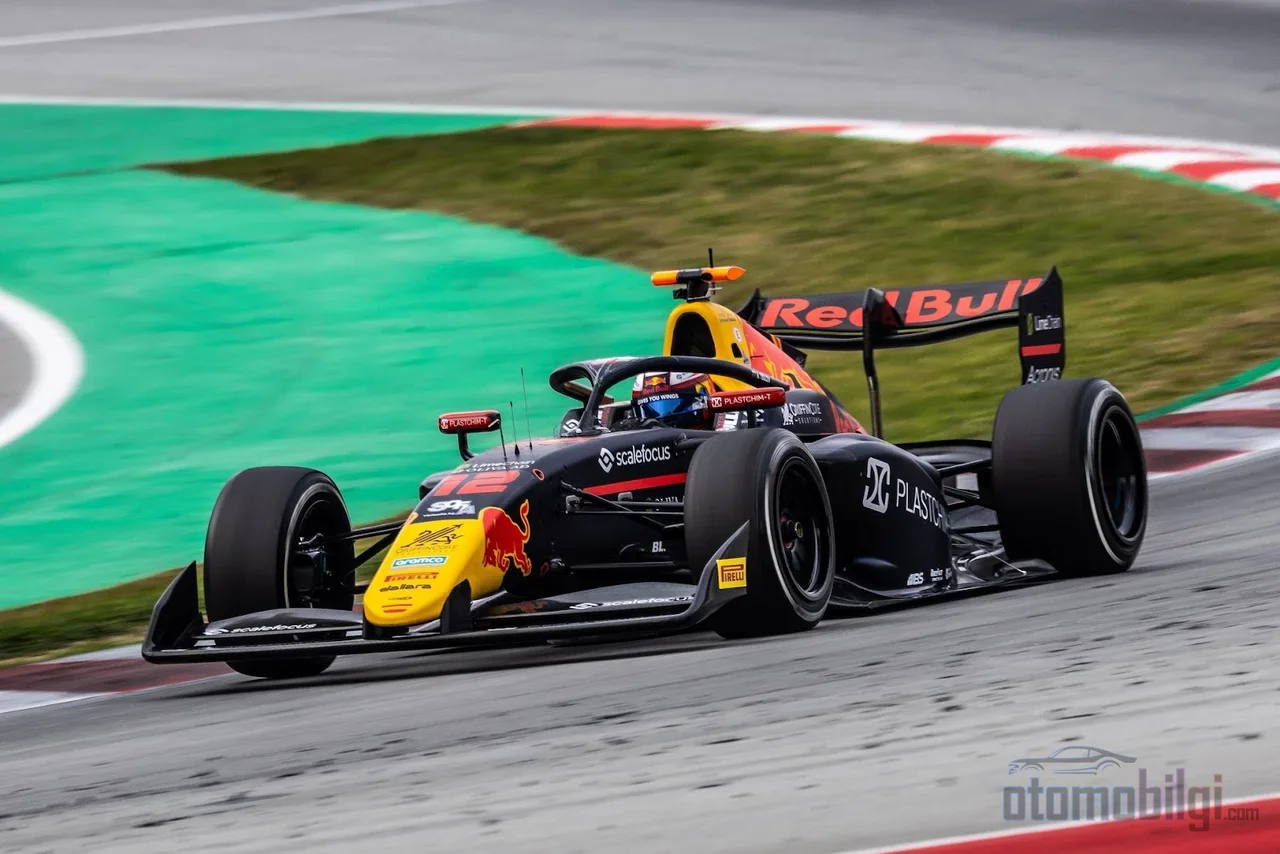
It may surprise you at first, but that curved bar above the cockpit is Halo, the crash protection system that protects the driver's head in open-wheel racing. In F1, it appears as a three-pronged titanium structure that surrounds the cockpit, deflecting or absorbing the energy of falling or debris-entering parts. Introduced in 2018, the F1 version is made of grade 5 titanium and weighs only about 9 kg.
Its durability is mind-boggling: According to FIA testing, the Halo must withstand a load of 125 kilonewtons on top of it, about 12 tons, for 5 seconds. Twelve tons - imagine literally a bus parked on top of your head. On the F3 side, the Dallara F3 2025 is fully compliant with the FIA's 2025 safety standards: static tests, crash tests, anti-intrusion panels, a steel Halo, and wheel tether cables. The previous F3 2019 car also met the 2019 safety standards with the same logic, including anti-intrusion panels and a steel Halo.
The Halo is undeniably a life-saver, but it is also on engineers' agenda: Its impact on aerodynamic performance has been the subject of academic studies, and redesigned Halo concepts that continue to deflect flying debris while offering the driver easy access with a hinged locking mechanism are among the ideas being worked on.
How Fast Is the F3 Car and How Does It Differ from F1 and F2?
Let's talk numbers: The F3 car reaches a maximum speed of 300 km/h, completing 0-100 km/h in 3.0 seconds and 0-200 km/h in 7.7 seconds. Lateral acceleration in corners reaches +/- 2.6 G, and braking -1.9 G. So where does this fit on the ladder? F1 is much higher up in both power and aerodynamic grip; F2 is faster and more powerful than F3; and F3 is the development category. A concrete example: In qualifying sessions at Spa, while F2's best lap was 1:24.766, in F3 it was 1:28.463; meaning F2 cars are about 18% slower than F1, and F3 is a step further behind. In the Eau Rouge section, F1 cars reach 360 km/h while F3 cruises at around 300 km/h.
But the ladder should be measured by purpose, not speed: A super license is required to race in F1; the 40-point threshold and minimum age of 18 are overcome with points accumulated in other series, and F3 is one of the most critical rungs of this points system. The fact that the cockpit dimensions are the same as F2 also supports this design: What is learned in F3 carries over directly to F2.
How Does Standardization Shape Young Drivers?
In my view the most interesting question on this page is this: when everyone is driving the same car, what are you racing for? The answer is clear: yourself. Once the battle of technical development disappears, the driver's braking points, race pace, defensive reflexes and weekend management come to the fore. That's why F3 holds such an important position on the talent-scouting radar of F1 teams; the difference between two drivers in the same car points directly to driving quality.
It should also be added: while the spec format creates competitive balance, it's also said that the resource gap between teams isn't completely erased. For example, it's debated that some established teams have delivered strong results year after year, and that team preparation and data quality still play a role. In other words, even with the same pen and notebook, study discipline continues to matter.
And a note from us: we're done with excuses for Turkish names to appear on this ladder. It was announced that Cem Bölükbaşı would race in Formula 3; it was stated he would race in the same team as Lorenzo Fluxa, Zdenek Chovanec and Rafael Villagomez. Considering that young F4 drivers from Türkiye also aim to climb the F1 steps, it's not hard to imagine that one day the technical details on this page will come to life in our own drivers' cockpits.
Frequently Asked Questions
Is the F3 car really completely identical?
Yes. All 30 cars are produced by Dallara to the same specification; the chassis, engine, tires and components are standard.
Which engine is used?
Mecachrome's 3.4-litre 6-cylinder naturally aspirated engine; it produces 380 HP at 8,000 rpm. This engine was also used in the GP3/16 and F3 2019.
Is there DRS in F3?
Yes. It serves the same function as in F1, works with hydraulic activation; free in practice and qualifying, rule-dependent in the race.
In short, the F3 car is a laboratory built to measure pure talent: the same chassis, the same engine, the same tires and a 12-ton guardian overhead. Which cockpit do you think tomorrow's F3 champion is learning in today? I think the answer will soon be written on the track.
Sources
- F3 car and engine
- Dallara F3 2025
- FIA Formula 3 next generation car unveiled in Monza
- 2024 FIA F3 Technical Regulations
- Halo (safety device)
- How to Make an F1 Halo
- Testing the Halo - The science of saving lives
- Tech Explained: Formula 1 Halo
- Effect of Halo Protection Device on the Aerodynamic Performance of Formula Racecar
- The beginner's guide to Formula 3
- F1 vs F2 vs F3: Key Differences Explained
- How do the FIA single-seater championships compare?
- F3 Explained: How the new car is closer to F2 than ever before
- How are all 52 Formula 2 and Formula 3 cars shipped around the world
- A Beginner's Guide to The Formula 1 Ladder
- Formula 3: 2026 season guide
- FIA F3 2026 standings
- Turkish Driver Cem Bölükbaşı to Race in Formula 3