Why Does Everyone Use the Same Engine in F2?
Share This Page
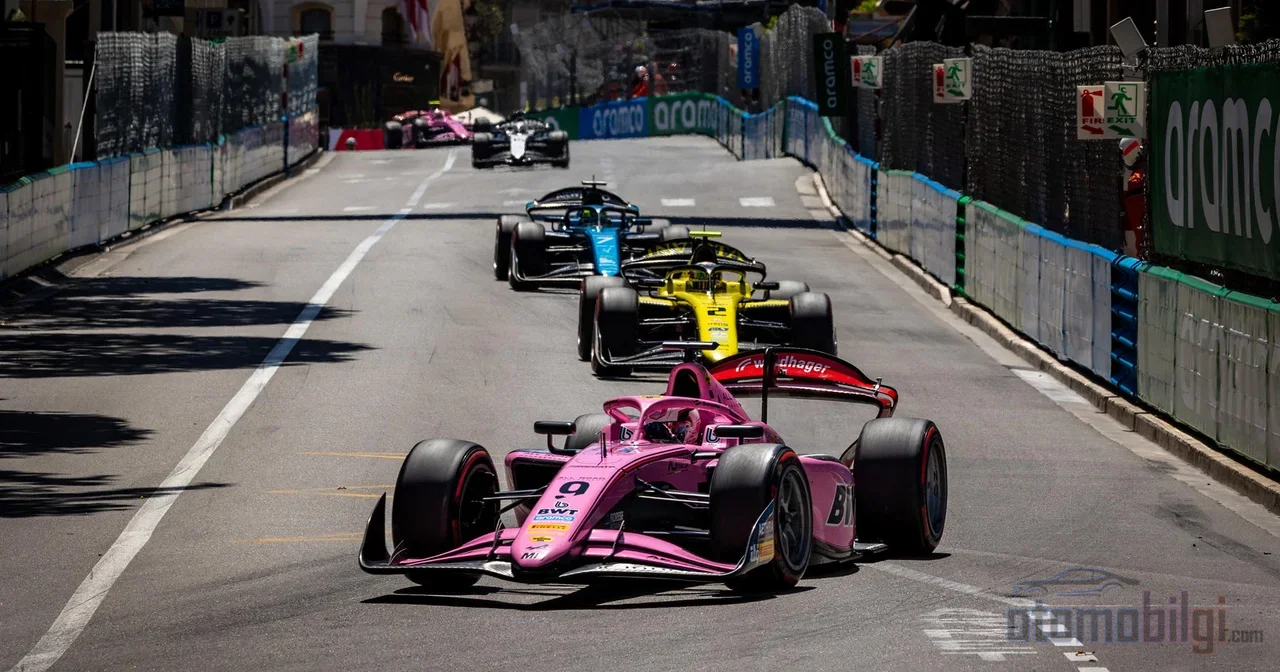
Everyone in Formula 2 uses the same engine because the series operates on a single-supplier philosophy: all 22 cars race with the same Mecachrome-built 3.4-liter V6 turbo engine, the same Dallara chassis, and the same Pirelli tires. The goal is to keep budgets under control by completely eliminating the engine development race, so that the champion is decided by the driver's talent. In other words, there is no room on the grid for the "richest team gets the fastest engine" narrative; the man or woman behind the wheel does the talking.
Highlights
- F2 engine: Mecachrome V634, 3.4-liter V6 turbo, 620 HP and 570 Nm of torque
- Engine life: 8,000 km, after which a rebuild is required
- Mid-season engine changes are forbidden - a violation can lead to a grid penalty
- Unit cost: roughly around 67,000 EUR
- with the rental and rebuild model 380 HP The same engine block is used naturally aspirated in F3, with
Mecachrome V634: What's Under the Cover?
The engine's official name in F2 is the Mecachrome V634 and it actually has a story: this unit is an evolution of GP3's engine. It has been used in F2 since the 2018 season as the successor to the thunderous V8s of the GP2 era; it was introduced in 2017 alongside the new Dallara chassis. Power was initially 612 HP and was later raised to 620 HP.
For those curious about the technical side, the picture is quite clear. A 95-degree V6 with 3,396 cc displacement, aluminum block and cylinder head, a 24-valve DOHC system, direct fuel injection, and dry-sump lubrication. A Magneti Marelli-built ECU serves as the brain. The turbocharging side comes from the Netherlands: although the turbo could physically spin up to 130,000 rpm, it is software-limited to 125,000 rpm and blows at 1.5 bar of pressure. The engine weighs 132 kg including the turbo - don't imagine anything else, it's a bulky unit.
| Specification | Value |
|---|---|
| Engine | Mecachrome V634, 3.4L single-turbo V6 |
| Power | 620 HP (8750 rpm) |
| Torque | 570 Nm (6000 rpm) |
| 0-100 km/h | 2.90 seconds |
| Top speed | 335 km/h |
| Car weight | 795 kg (including driver) |
| Engine weight | 132 kg (including turbo) |
| Fuel | 102 RON unleaded gasoline |
The performance figures are impressive too: 0-100 km/h in just 2.90 seconds, 0-200 km/h in 6.60 seconds, and with the low-downforce setup at Monza and DRS open, a top speed of 335 km/h. There's also an interesting detail about fuel: the engine has been running on Elf's 102 RON unleaded gasoline for a long time, and the series is moving toward sustainable fuel; F2 and F3 are targeted to meet the 100% sustainable fuel standard. So don't dismiss it as a "simple spec-series engine" - this unit is serious engineering.
So Why a Single Supplier?
Now let's get to the real question. In F1, engine manufacturers compete against each other with cosmic budgets; so why doesn't F2 play the same game? The answer is three words: cost, balance, development.
Keeping Budgets Under Control
In a series that is open to engine development, the money spent on the engine translates directly into results, and teams with small budgets lose from the start. F2 cuts this spiral off at the source: engine development is banned, everyone uses the same unit, and the cost structure is almost a flat line. Engines are supplied on a lease and rebuild model at roughly €67,000 per unit - almost a joke of a figure compared to F1's engine spending.
Let's think about it with an everyday analogy: you are having a math competition in class, but everyone uses the same calculator. No one can say "my calculator is more expensive, so I win." The winner is whoever solves the problems best. In F2 too, what determines the winner is the talent behind the wheel and the team's strategic intelligence.
Competitive Balance and Driver Development
F2's very reason for existence is to train drivers for F1. Looking at the series' first decade, names who moved from F2 to F1 won a total of 33 Grand Prix victories and 150 podiums. This is the most concrete proof that the ladder works. But for the ladder to work, young drivers need to stand out through their driving power, not their financial power. The same chassis-engine-tire combination eliminates the development race and puts driver skill and racing intelligence front and center.
Engine allocation is also subject to strict rules: every driver starts the season with one engine, the unit is rebuilt after 8,000 km, and changing engines mid-season is forbidden. If you violate the rule, you may receive a grid penalty. In other words, you cannot use the engine as a strategic trump card; everyone races under the same conditions.
A Miracle of Durability: 8,000 km and Beyond
If an F2 car completes a season, it travels more than 4,060 km, and the engines are designed to last more than twice that distance. In other words, these engines are not built on a "survive three races, then throw it away" logic. A unit that reaches 8,000 km is rebuilt and used again - a sensible cycle in terms of both budget and sustainability.
The finest test of durability was carried out on high-speed tracks. The low-downforce package was used for the first time at the 2024 Monza race, and it was clearly seen how solid a foundation the Mecachrome V6 is at high-speed circuits. Although integrating the engine into the new chassis was challenging at first, the process was successfully completed thanks to the collaboration between the manufacturer and the chassis company. The maintenance operation is also entrusted to a professional team: the maintenance of the engines under race conditions is handled by an expert engineering team.
Comparison with F3: Same Block, Different Character
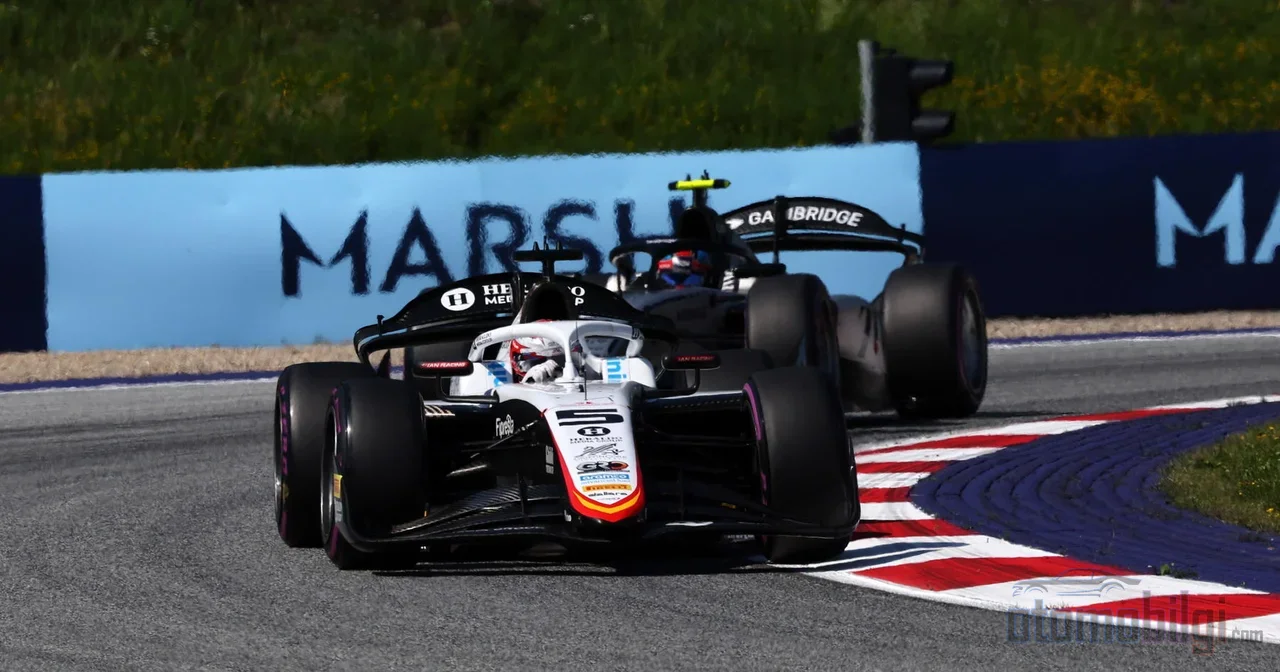
Here is my favorite detail: F2 and F3 actually come from the same engine family. F3 also uses the same 3.4-liter Mecachrome V6 block, but in naturally aspirated form - no turbo. The result? 380 HP at 8,000 rpm in F3. In other words, the roughly 240 HP difference between the two series comes fundamentally from a single part: the turbocharger. Just like the same cake batter rising in one oven but not in another; the ingredients are the same, the method is different.
The power ladder from F2 to F1 also reflects the difficulty tiers of the series exactly:
- Formula 2: 620 HP (3.4L V6 turbo)
- Formula 3: 380 HP (3.4L V6 naturally aspirated)
- Formula Regional Europe: 270 HP (1.8L turbo)
- Formula 4: 165 HP (1.4L turbo)
A driver moving from one lower category to the next learns to manage more power at each step. F3's naturally aspirated engine was chosen with the same logic: it offers young drivers a pure throttle-and-race experience without variables like turbo lag. And let's not forget, even in F3, engines are distributed to teams on a serial number basis for fairness.
Why Does F1 Choose Differently, and Why F2?
Since 2021, F1 has moved to a familiar discipline with the budget cap; spending in the development race is now controlled by an upper limit. But at its core, F1 is still a race of innovation and technology. F2, on the contrary, puts cost control, safety, and driver development at the center instead of innovation. Both approaches serve their own purpose: one protects the technology race at the top, the other protects the developing drivers.
So why doesn't F2 switch to hybrid engines like F1? Because hybrid systems bring teams extra spare parts burden and serious costs. F2's approach is to bring the car visually and technically closer to F1 without opening up a new spending area for teams. With the engine already held at around €67,000 per unit, adding a hybrid system on top would have rendered the single-supplier philosophy meaningless. We should also honestly mention a debate: some circles argue that since F2's sole purpose is to develop drivers for F1, the teams' championship remains secondary, while others debate whether limited car development should be allowed to better prepare drivers for F1. While these debates continue, the series' fundamental philosophy has not changed: equal cars, a fair chance.
What About Engine Sound?
Let's get a bit emotional too. There's a topic frequently debated on social media: does F2 sound better than F1? The high-pitched, raw sound of the turbocharged V6 is considered more authentic by many fans compared to modern F1 units, where hybrid systems restrict exhaust flow. This is of course a debatable opinion, but if you've put on headphones and listened to an F2 start, you'll understand what I mean.
The Engine's Other Life: Beyond the Racing Track
This engine family doesn't just live on the F2 grid. Mecachrome is a name with over 40 years of industry experience and more than 7,500 race engines produced; its portfolio includes contributions to 12 F1 world championships. The engine family it produces also appears in endurance races: the LMDh version of the same family revs up to 9,000 rpm with 675 HP in the Hypercar category. In other words, that unit you see in F2 races alongside its relatives in Le Mans-style endurance scenes. While major changes are expected in 2026, such as the arrival of a second-generation Formula Regional car for F1 feeder series, it will come as no surprise that the single-supplier logic on the engine side remains in place.
Let me take the closing question: if it were up to you, would you give F2 engine development freedom, or is this format where everyone races with the same engine more exciting? In my opinion, watch an entire F2 weekend from start to finish and then give your answer - in this chess game where 22 identical cars compete, the one who reasons best wins.
Sources
- F2 car and engine
- Mecachrome V634 engine
- Automotive Premium & Motorsport
- Putting the focus on F2's Mecachrome engines in Italy
- F1 vs F2 vs F3 comparison
- Everything you need to know about Formula 2 in 2025
- F1 vs F2 vs F3: Key Differences Explained
- Red Bull: Cost cap has changed the discipline
- Why doesn't F2 switch to hybrid engines like F1?
- The biggest changes coming to F1's feeder series in 2026