Does Engineering or the Driver Win Races in F2?
Share This Page
Two cars side by side on the track. Same chassis, same engine, same tires. One is on pole position today, while the other is struggling in mid-field. So how is it that from two identical cars, one leaves the other behind? This is exactly Formula 2's most intricate question: if everything is the same, who creates the difference? Is it the driver sitting in the seat, or the engineer behind the pit wall?
Most people put the driver at the center when thinking about F2. Which is actually logical, because this series is exactly the ladder to F1. But when I started digging into this a bit, a far more interesting picture emerged: in F2, what wins is often the setup strategy drawn in chalk and data analysis. Come on, let's break this down together.
Highlights
- In F2, all teams use the same Dallara chassis, the same 3.4-liter Mecachrome V6 engine (~620 hp), and the same Pirelli tires.
- Engines are distributed randomly to teams from the factory; power differences are eliminated by rule.
- There are no tire warmers; using two different tire compounds in the feature race is mandatory.
- F2 teams are subject to a personnel limit; fewer engineers carry broader responsibilities.
What Does the Single Chassis Format Really Mean?
Let's start from the basics. Formula 2 is a "spec series", meaning everyone uses the same equipment. The chassis is produced by Italy-based Dallara, the engine is supplied by Mecachrome, and the tires are provided by Pirelli. From Red Bull to Williams, a technically identical car sits in every team's garage. In F1, it's the opposite: each team designs its own car, burying millions of dollars into aerodynamics.
The F2 car's technical sheet is actually quite exciting. The 3.4-liter single-turbo Mecachrome V6 engine produces around 620 horsepower, there are no hybrid components, and top speed reaches ~335 km/h. 0-100 km/h acceleration takes 2.90 seconds. Slower than F1, but faster than F3 (3.1 seconds). So it's a middle category that truly lives up to its name.
My favorite detail on the engine side is this: F2 engines are designed for 14 rounds, meaning 28 races per year and are randomly distributed to teams from the Mecachrome factory in France. Randomly! So some get lucky with a good engine, while others get one that never rises above average. They go in for maintenance every 8,000 kilometers, but the door to creating power differences is closed by rule. Just imagine: even in the world's most competitive driver development series, you pray to your engine. I like this analogy, but that's really how it is.
| Feature | Formula 2 | Formula 1 | Formula 3 |
|---|---|---|---|
| Chassis | Single-spec (Dallara) | Team-based design | Single-spec (Dallara) |
| Engine power | ~620 hp | Unspecified (much higher) | Lower |
| 0-100 km/h | 2.90 sec | 2.4-2.6 sec | 3.1 sec |
| 0-200 km/h | 6.60 sec | Shorter | Longer |
| Tire warmers | No | Yes | No |
So Where Does the Difference Come From? The Invisible Art of Setup Engineering
The single-spec format creates a level playing field, yes. But a level playing field doesn't mean equal results. Teams try to extract the maximum from this tightly controlled package in every session, and this is exactly where the performance difference emerges. We call this the setup: optimizing hundreds of adjustments - suspension stiffness, wing angles, brake balance, ride height - for every single track.
Let me explain with an analogy from daily life: Imagine two friends using the exact same recipe. One makes the cake exactly as written; the other knows their oven's character, places it on the lower rack, shortens the baking time by two minutes, and produces a better cake. The recipe was the same, but the knowledge and experience were different. The difference between teams in F2 is exactly this difference.
What makes it even more interesting is this: In F2, there is no luxury of development either. One of the technical facts Bearman described shows that the F2 car's rear wing is much smaller than in F1 and produces far less downforce. Moreover, a single wing version is used throughout the entire season. So engineers cannot say "let's design a new part"; they have to optimize the single package they have for every track and every condition. It is not development, but setup optimization that is essential.
Tires: The Setup's Most Brutal Exam
I need to dedicate a separate section to tire management in F2, because this series is a masterclass for anyone who takes tires seriously. There are four dry compounds; two of them are brought to each event ("Prime" and "Option"), and you are required to use both in the feature race. What's more, tire warmers are not used - the tires come out of the pit cold. For wet conditions there is a single compound, no intermediate tire.
Imagine what this means: you go out on track with cold tires and no warmers, grip is low in the first laps, and your engineer must have set up the car to work within this low-grip window. If the setup is slightly off, the tires are both slow and wear out quickly. Here, engineering and driving intertwine: the engineer proposes the setup, it takes shape with the driver's feedback, and managing the tire throughout its life is the driver's job. Which one do you think is more important? And that is exactly why this question is debated so much.
Few Staff, Great Responsibility: The F2 Engineer's Extraordinary Day
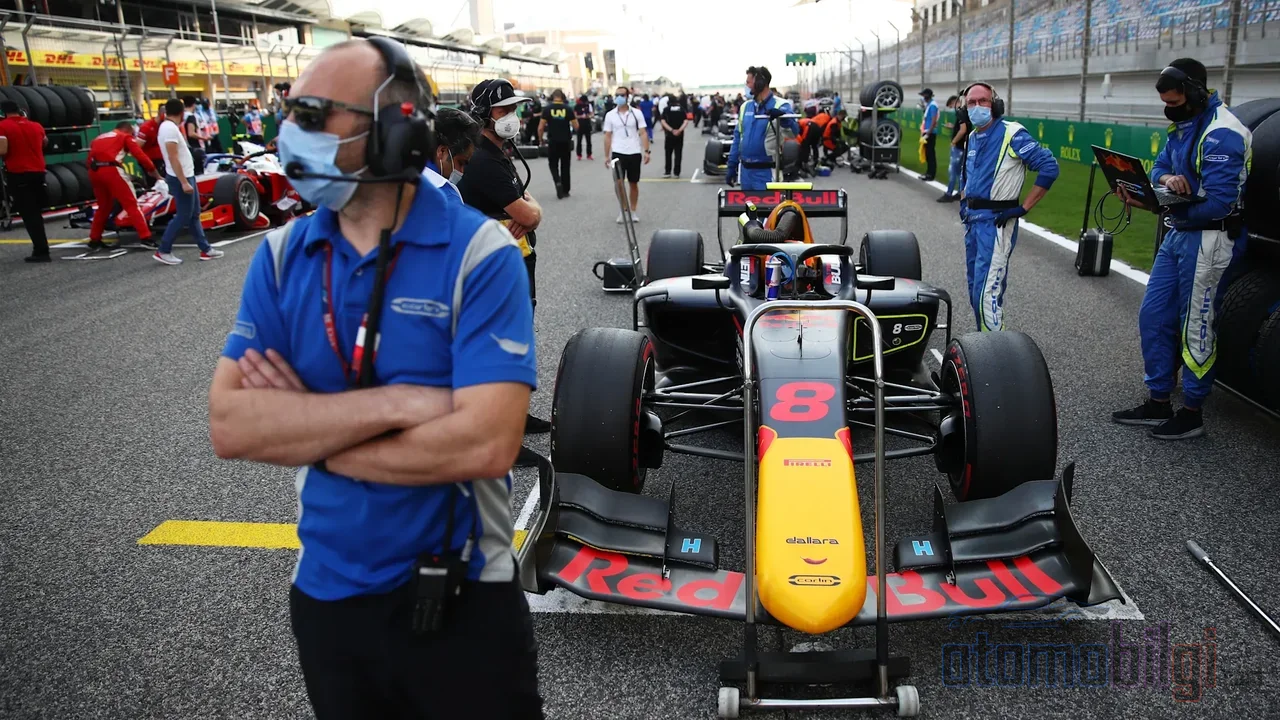
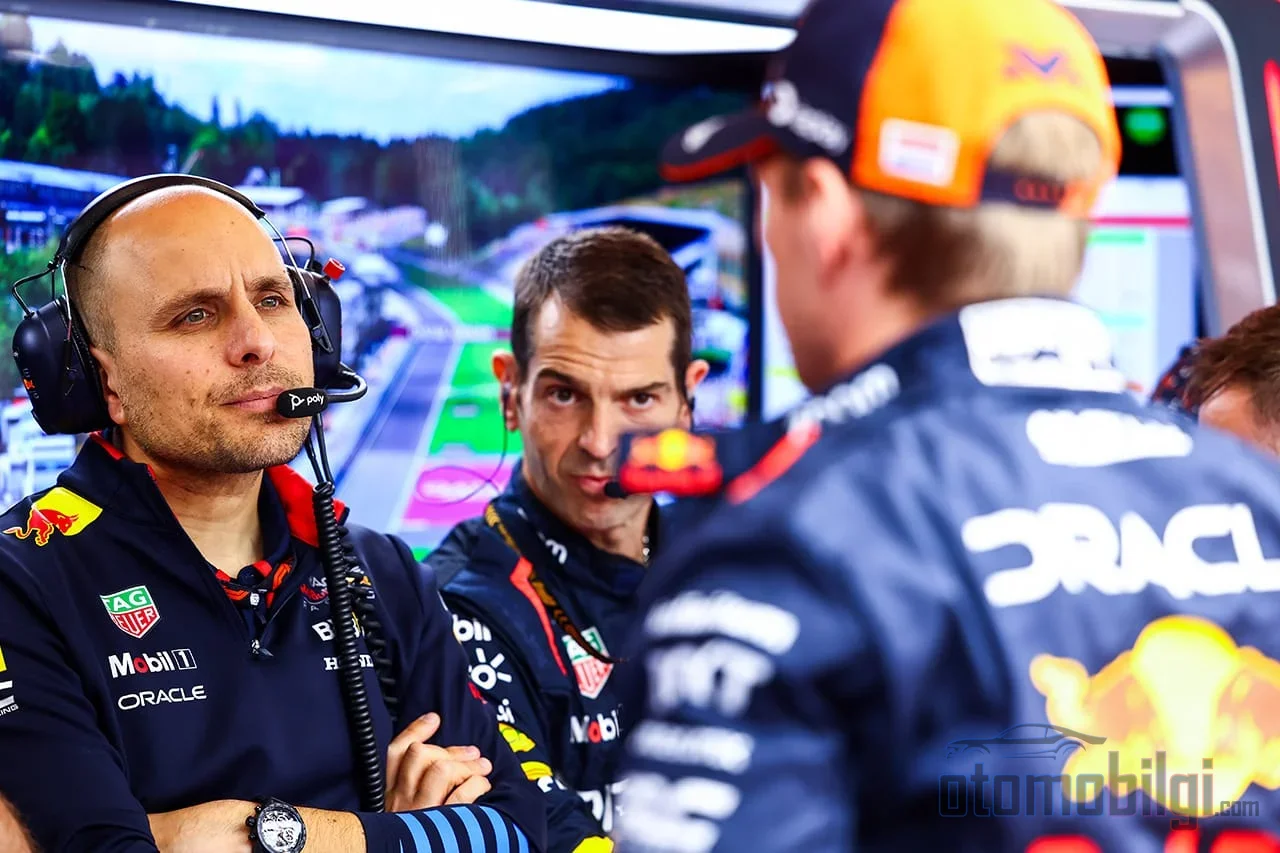
In F1, a driver has dozens of specialists around them: race engineer, performance engineer, strategy engineer, data engineer... In F2, these roles are combined in a single person, or far fewer people. The critical point emphasized by FIA Formula 2 in its own broadcast is this: F2 teams are subject to a personnel limit, which means a small number of engineers carry a much broader scope of responsibility. Setup, strategy, and performance all pass through the same engineer's desk.
You can think of the race engineer as the critical bridge between the driver and the car. The radio is constantly on throughout the sessions: the driver gives feedback on grip level, tire condition, and brake balance; The engineer takes this complex data flow and turns it into meaningful decisions. It's like your teacher telling you before an exam "focus on this topic" - picking the single right move that will speed you up from among thousands of pieces of information.
The Prema Example: Why Is One Team Always Ahead With the Same Car?
Now let's move on to a concrete example. As one of the most successful teams in F2 and F3, Prema has long stood at the top of the grid hierarchy. In 2019, the top three of the F3 standings were all Prema drivers - among dozens of teams racing with identical cars. By 2023, the team was fighting to reclaim the team championship; moreover, that year, for the first time since 2020, their cars did not carry the numbers 1 and 2 on their noses, because they had finished the previous two years as champions. Same car, same engine - different results. This consistency cannot be a coincidence.
Prema's chief race engineer Pedro Matos is one of the invisible heroes of this ecosystem. He built his career with the identity of an engineer who stands behind successful drivers and turns complex data into something meaningful. If you consider that names emerging from similar setups have also moved on to F1, you clearly see how valuable a good F2 engineering department is. The small but steady advantage in setup and strategy between teams turns into a huge gap on the points table over the course of a season. The team is continuing its partnership with Idra Group for the 2026 F2 and F3 European rounds - meaning this story continues today as well.
Engineer or Driver? Here's the Honest Answer
Now is exactly the time: let's give a clear answer to our question. In F2, neither engine power nor technological advantage wins the race; what wins is the right blend of the driver's talent and the team's setup and strategy engineering. The single-spec format makes the driver's skill more visible than in F1 - drivers who gain places at the braking point and talk about cornering mastery rather than the engine stand out. But the same driver can achieve very different results in two different teams, because the quality of the engineering team behind them narrows or widens the setup window.
The driver-focused perspective is of course also valid: when everyone is in the same car, the focus shifts more to driver ability than to engineering advantage. But that doesn't mean the engineer is insignificant. The best analogy might be this: in an orchestra, the soloist is in everyone's sight, but the harmony collapses without a conductor. In F2, the driver is the soloist, and the engineer is the invisible conductor.
A Name Who Climbed This Ladder from Türkiye
I cannot skip the Türkiye connection while telling about this ecosystem. Cem Bölükbaşı, as the first Turkish driver to reach F2, stood right in the middle of this ladder and made concrete for us what it means to enter F1. To enter F1, you need to collect at least 40 super license points within a three-year period, and only five series award full points for a championship - F2 is the main rung of this points system. In other words, competing with a good engineering team in F2 shapes not just that season, but a driver's entire F1 dream. Cem's story still gives me goosebumps every time I remember it.
And for those who are curious, here's a funny recent detail: When F1 cars slowed down with the new 2026 rule set, the lap gap between F1 and F2 dropped to 4 seconds according to first weekend data. The distance through the glass looking at F2 has never been this small. F2/F3 teams, meanwhile, are moving forward not with big technological leaps but with rules on cost control, safety and driver development - meaning the engineers' job is again to make smart setups, not to build parts.
Frequently Asked Questions: Things People Wonder About Single-Chassis Series
Are all the cars in F2 really the same?
Yes. Racing is done with the same Dallara chassis, the same Mecachrome engine and the same Pirelli tires. It's not even possible to create a power difference, since the engines are distributed randomly from the factory.
So why is there a difference between teams?
From the combination of setup and strategy engineering and driver talent. Every track demands a different setup; the team that finds the right window accumulates an advantage over dozens of races.
How big is the speed gap between F1 and F2?
The average speed gap is roughly 16-24 km/h. If you look at the example laps at Monza: F1 1:11.383, F2 1:24.766, F3 1:28.463. With F1's new 2026 rules, this gap narrowed to around 4 seconds.
My final word is this: next time you watch F2, also look at the pit wall. Those people with headsets on, buried in their screens, are actually half the race. The driver shines in the seat, but the difference on track is often written quietly by the engineers. Which do you think is more critical? Let's talk in the comments!
Sources
- Engineers are a vital cog in the Formula 2 machine
- F1 vs F2 vs F3 comparison
- F1 vs F2 vs F3: Key Differences Explained
- The beginner's guide to Formula 2
- PREMA Racing: Fighting to win back the Championship in 2023
- PREMA Racing and Idra Group Team Up for 2026
- Bearman explained the key differences between F1 and F2 cars
- The gap between 2026 Formula 1 cars and F2 cars shrank by 4 seconds
- FIA super licence points system
- Cem Bölükbaşı is now in Formula 2
- Single Chassis, High Speed: How Do Formula 2 Cars Work?