How Does a Race Weekend Work in Formula 2?
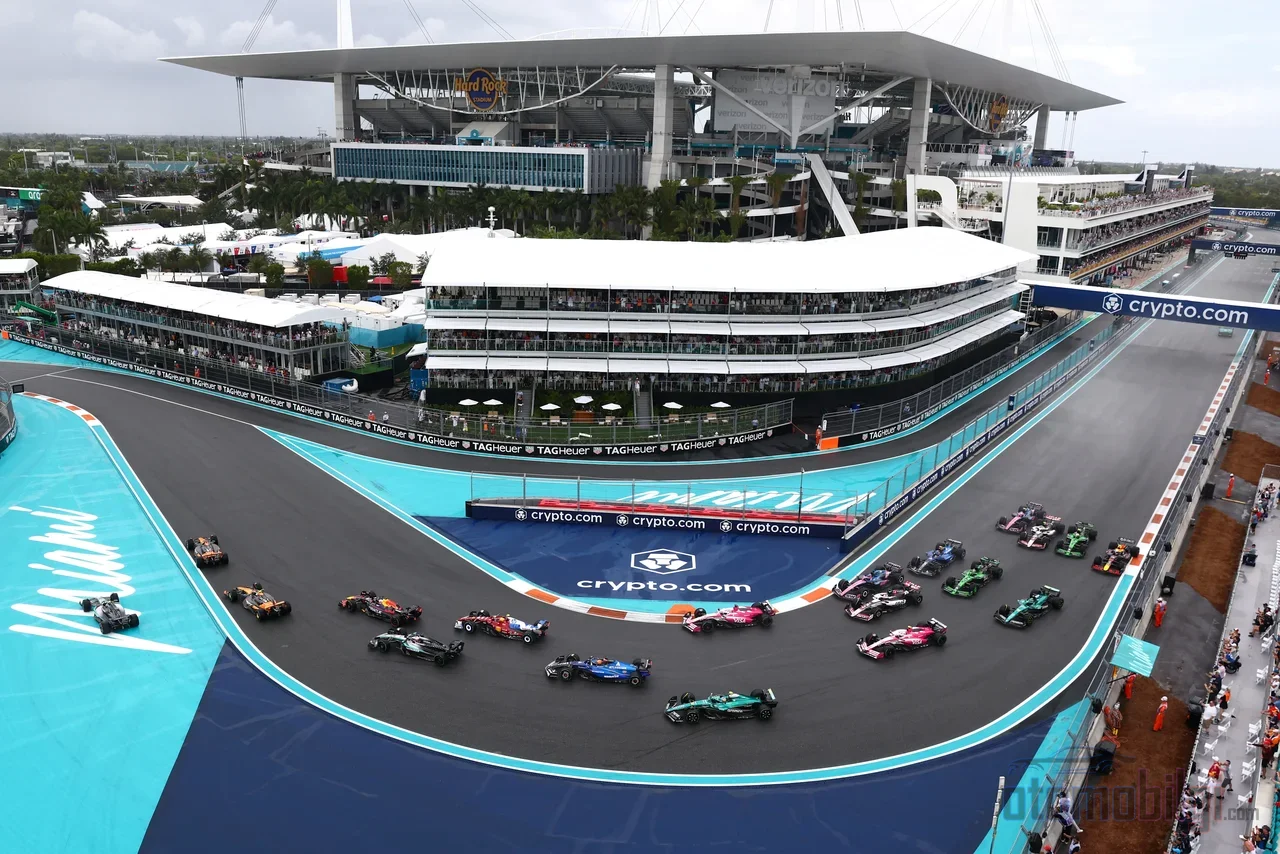
Share This Page
A Formula 2 race weekend begins on Friday with practice and qualifying sessions, continues on Saturday with the reversed-grid Sprint Race and on Sunday with the longer Feature Race featuring a mandatory pit stop; the two races together determine the points system and the path to the F1 super licence. In short, F2 is a series that is the direct stepping stone to Formula 1, offering two separate races, two separate strategies and two separate points tables in a single weekend. If you're ready, let's go behind the scenes, because this format is truly interesting!
Highlights
- On Friday, a 45-minute free practice session and a 30-minute qualifying session are held.
- Sprint Race: the top 10 positions of qualifying are reversed, 45 minutes or 120 km, no pit stops.
- Feature Race: starts in qualifying order, lasts about 60 minutes and includes a mandatory pit stop where all four tires are changed.
- Points: the top 8 in the Sprint score 10 to 1 points, and the top 10 in the Feature score 25 to 1 points; pole position earns 2 extra points .
- F2 is one of the few series that can cover on its own the 40 points required for an F1 super licence.
How Friday Goes: Practice and Qualifying
An F2 weekend consists of a total of four sessions: free practice, qualifying, the Sprint Race and the Feature Race. On Friday, the drivers first take to the track in a 45-minute free practice session; this is golden time for setting up the car on the track, memorizing braking points and getting to know the tires. Then comes the big moment: the 30-minute qualifying session.
Qualifying, as the name suggests, is the session that determines the entire order of the weekend. Simply lapping is not enough here; you have to make a single lap perfect. Because the result you achieve in qualifying will be useful to you twice: it directly determines the grid for the Feature Race and indirectly affects that of the Sprint Race. A single mistake can make both races harder. Working under this pressure is actually the very essence of the drivers' training; you can think of the F2 car like a school designed for drivers to develop their skills in limited track time and under high pressure.
How Does the Reverse Grid System Work?
Here is where F2's most controversial but, in my opinion, cleverest rule comes into play. In the Sprint Race, the grid is formed by reversing the top 10 positions from Friday's qualifying. So the driver who qualified 10th starts from pole position, while the driver who set the fastest lap starts the race from 10th place. Those who did not make the top 10 keep their own qualifying positions. It sounds strange, doesn't it? But once you understand its logic, you might change your mind.
Think about it: sitting in the front rows in qualifying throws you to the back in the sprint. This means that fast drivers have to make overtakes, carve their way through traffic, and catch and pass the rivals ahead of them on Saturday. Raw speed is not enough; tire management, knowing where to attack and where to defend, and reading the rhythm of the race are essential. In short, the reverse grid is a mechanism that tests the driver. Overtaking in traffic is a skill you will need every week in F1, and F2 teaches it to you the hard way.
Of course, not everyone loves this idea. According to critics of the format, a driver who is good in qualifying can end up at a disadvantage, and a fast pilot may score fewer points; the system seems "a bit random." This criticism is not to be dismissed. But the argument on the other side is also strong: fast pilots are already forced to use their wheel-to-wheel racing skills in the championship, and ultimately better-equipped drivers are developed. Moreover, this format is not unique to F2; F1 Academy also announced that it is bringing back reverse-grid races from 2025 onwards. So this approach is becoming widespread in junior series.
Sprint Race: Short, Fast and No Pit Stops
The Sprint Race, as the name suggests, is the short and intense part of the weekend. The distance is 45 minutes or 120 km, whichever comes first. And an important detail: there is no mandatory pit stop here. In other words, drivers race almost like a sprint run, without tire changes and without strategy chaos. Thanks to the reversed grid, the cars at the front end up very close to each other; this means repeated overtaking attempts, defensive maneuvers, and tension-filled attacks.
Points are limited to the top 8 drivers: 10, 8, 6, 5, 4, 3, 2 and 1 points respectively. Since it is a short race, the points scale is short too. If you make a mistake, there is little distance to recover; every lap matters. The Sprint can be seen as a prelude to the Feature race in terms of both motivation and championship dynamics for tomorrow's big race.
Feature Race: Long Distance, Mandatory Pit Stop and Big Points
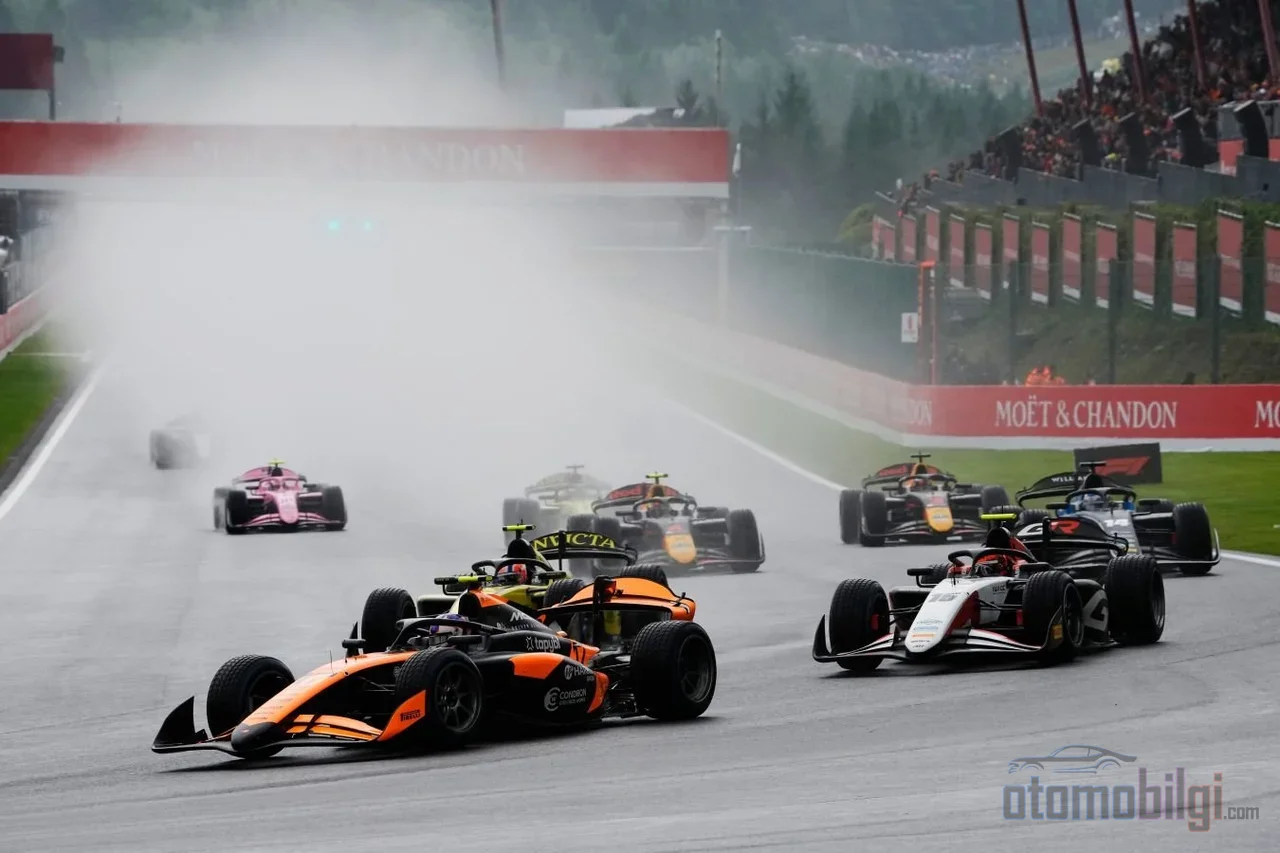
Sunday is reserved for the main show. The Feature Race, with a distance of approximately 60 minutes, is the main event of the weekend, and the grid is formed in normal order based on Friday's qualifying results. In other words, the driver who takes pole in qualifying really starts at the front here. The driver starting the race from pole position also earns 2 extra points; that is the reward for that single perfect lap in qualifying.
The biggest thing that separates the Feature from the sprint is strategy: there is a mandatory pit stop here and the rule is clear. During the race, the driver must enter the pits and change all four tires. The only exception is if the driver has used wet-weather tires; in that case, the rule is relaxed. When to make the pit stop is entirely a tactical decision: pit early and make progress in clean air, or wait until the end and preserve the tires? This is somewhat like playing chess; the right move can make a difference of several positions, even a podium.
The points are generous accordingly: the top 10 classified drivers receive 25, 18, 15, 12, 10, 8, 6, 4, 2 and 1 points respectively. The championship usually takes shape here on Sundays. Also, there is a fastest lap award in both races; a fast and clean lap is always valuable.
Two Races Side by Side: Format Table
| Feature | Sprint Race | Feature Race |
|---|---|---|
| Grid | Reversal of the top 10 from qualifying | Normal order based on qualifying results |
| Distance | 45 minutes or 120 km | Approximately 60 minutes |
| Mandatory pit stop | No | Yes, with a four-tire change |
| Scoring | Top 8: 10, 8, 6, 5, 4, 3, 2, 1 | Top 10: 25, 18, 15, 12, 10, 8, 6, 4, 2, 1 |
| Extra points | - | 2 points for pole position |
Here's a small but important warning: don't confuse it with the Sprint format in F1! In F1, the grid isn't reversed, points are distributed from 8 to 1, and the distance is 100 km. F2's sprint is a completely different thing; just keeping this difference in mind is enough to avoid confusion.
Super License Connection: What Are These Points For?
Collecting points in F2 isn't just about the championship. To race in F1, an FIA Super License is required, and for that, 40 super license points must be accumulated within a rolling window covering the last 3 seasons. There's also an age requirement: at least 18 years old, passing the FIA theory exam, and holding a valid driver's license. Yes, you need a driver's license to become an F1 driver - surprise!
This is where F2's power comes to light: F2 is one of the few series that can award a driver the required 40 points on its own. Drivers finishing in the top three of the championship receive the maximum points. Also, completing at least 6 races in F2 is one of the license criteria; 100 km of free practice earns 1 point, and drivers who impress during practice sessions can collect 1 extra point per successful completion at every F1 event. So every race in an F2 weekend, every pit stop, every overtaking attempt is actually a brick laid toward the F1 dream.
One small note: the rules can be updated from time to time, so it's a good habit to always check the most current format details from the official source.
Why Does This Format Make Drivers Better?
Let's take a look at the whole format. Within a single weekend, a driver has to tune the car in limited practice time, be the fastest in a single lap, overtake in traffic on a reversed grid, preserve the tires in a long race, choose the right time for a pit stop, and know when to defend and when to attack. This is a truly comprehensive exam. The fact that F2 is roughly 18% slower than F1 (F3 is about 24% slower) doesn't make it slow; on the contrary, this balance produces close racing and brings skills to the forefront. F1 being on average 16-24 km/h faster also shows that F2 is positioned as a "school": its aim isn't extreme speed, but producing complete drivers.
The path is also easing for those coming from F3: the new F3 car's steering ergonomics have been matched with F2's, and its electronics have been changed to prepare drivers for F2. In other words, the steps of the ladder are deliberately placed close together. There's also a trace of this ladder on the Türkiye side: Cem Bölükbaşı became the first Turkish F2 driver; moreover, he went down in history as the first driver in the world to reach Formula 2 from the world of esports. To me, this is the finest proof that the doors of this format and this ladder are open to everyone.
In conclusion, F2's race weekend format, though unusual at first glance, serves a single purpose: training drivers who are ready for F1 and able to race in any conditions. Next time you watch an F2 race, smile when you see that reversed sprint grid; you now know the logic behind it. So what about you - do you see the reversed order as the hero of the format, or as unnecessary confusion? In my opinion, it is precisely this debate that makes these races so watchable!
Sources
- FAQ - FIA Formula 2
- The Rules and Regulations - FIA Formula 2
- Recapping F2's new-points system and overhauled weekend format - FIA Formula 2
- The FIA Formula 2 Championship celebrates a decade of success - FIA Formula 2
- Formula 2 points system: how sprint and feature race scoring works - Grid & Formula
- The beginner's guide to Formula 2 - Formula1.com
- The beginner's guide to the F1 Sprint - Formula1.com
- The beginner's guide to the F1 Super Licence - Formula1.com
- Formula 2 - Turkish Wikipedia
- FIA Super Licence - Wikipedia
- Is the reverse grid ruining Formula 2? - The Slipstream Effect
- How Reverse Grid Races Work and Why They Make Better Drivers - Eurocup-3
- F1 Academy announces the return of reverse grids from 2025 - F1 Academy
- F1 vs F2: what's the difference? - Red Bull
- How do the FIA single-seater championships compare? - Raceteq
- F3 Explained: How the new car is closer to F2 than ever - FIA Formula 3
- The First Turkish F2 Driver: Cem Bolukbasi - GQ Türkiye
- Drivers on their way to becoming F1 stars - Red Bull Türkiye