Why Is It So Hard to See a Turkish Driver in F2 and F3?
Share This Page
The answer is actually quite short: there are currently no Turkish drivers on the F2 and F3 grids, and there is not a single reason for it; annual costs reaching millions of euros, a career requiring a move to Europe as early as age 8-10, and Türkiye's karting infrastructure failing to keep pace with this pyramid are all links of the same chain. So where exactly does this chain break? Let's take a look step by step.
Highlights
- The cost of an F2 season is approximately 3 million dollars; some estimates go as high as 4-5 million.
- The full cost of the road to F1 can exceed 14 million euros.
- For the Super Licence, in the last 3 seasons 40 points are required; one of the two series that alone grant this is F2.
- None of the 22 drivers on the 2026 F2 grid are Turkish.
- Formula 1 is returning to Istanbul Park between 2027-2031 .
Let's Clarify One Thing First: What Exactly Are F2 and F3?
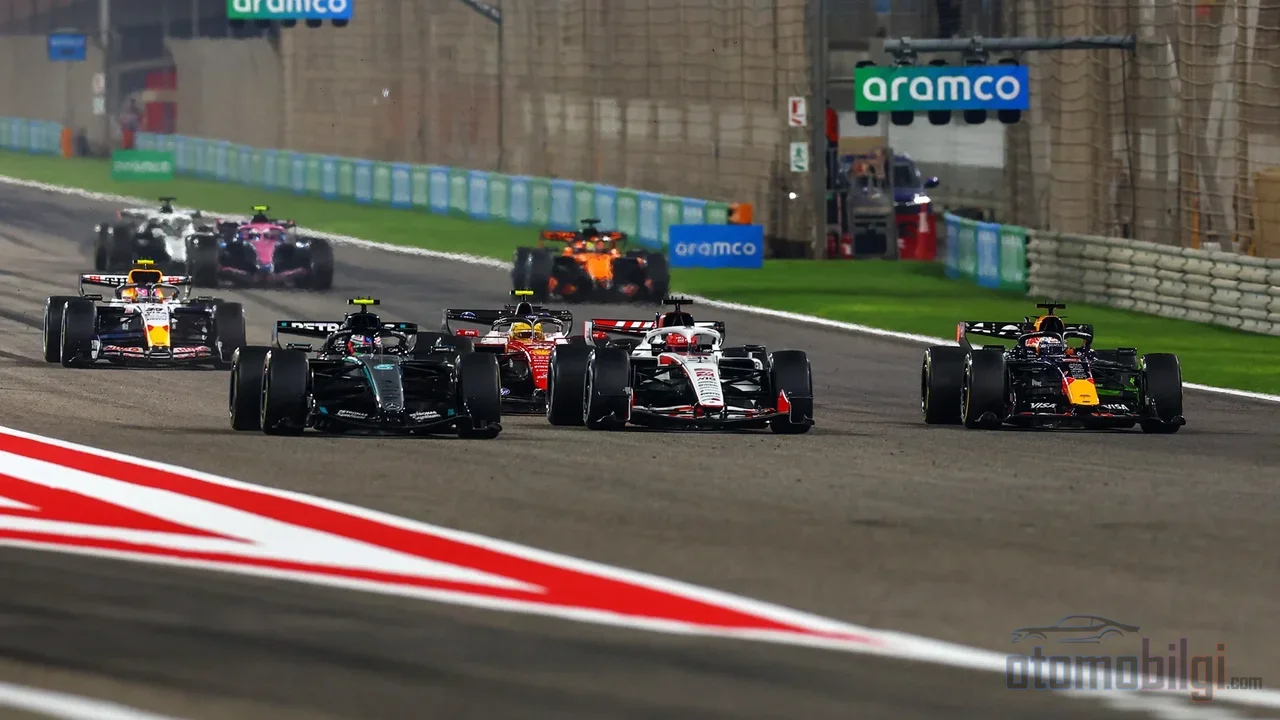
Think of the ladder to Formula 1 as an apartment building. The ground floor is karting, the middle floors are F4 and regional formula series; F3 is a floor below, and F2 is the floor directly beneath F1. FIA Formula 2 is an open-wheel category within the FIA Global Pathway, considered the second step in the transition to F1. It is run as a support series at selected F1 races; that is, during F1 weekends, on the same circuits, in front of that huge camera audience. Don't think you get a second chance when it comes to visibility.
The interesting thing is that F2 is truly an "equal opportunity" series. All teams use the identical Dallara F2 2024 chassis with the Mecachrome V6 turbo engine and Pirelli tires. In other words, there is no car difference; what makes the difference is the driver, the team's craftsmanship, and the budget. The 2026 season is the 60th season of Formula 2 races and the 10th season under the FIA Formula 2 name. The calendar opened in Melbourne and closes at Yas Marina; when the Bahrain and Jeddah races were cancelled and replaced with Miami and Montreal, F2 set foot in North America for the first time in its history.
The numbers also show how well this ladder works: in F2's last decade, drivers who advanced to F1 have won a total of 33 Grand Prix victories, 150 podiums, and one world championship. Hamilton, Leclerc, Piasthi, Russell... Pardon, let's say Piastri; they all passed through this pipeline. So the door really does work. The question is: why can't Turkish drivers reach this door?
How Much Does a Season in F2 Cost?
Now for the painful part. The cost of running a Formula 2 car for a season is approximately 3 million US dollars and in most cases the driver himself has to cover this bill. Some 2026 budget estimates push this figure up to 4-5 million dollars per season; the difference varies depending on calendar length, the team package, and which services are included. In short, the "2-3 million dollars" figure is a baseline; the ceiling is much higher.
What about the lower rungs of the ladder? While community data is not official, the picture is roughly as follows: in F4, around 150,000 euros per year, and in F3, between 650,000 and 1,000,000 euros per year. The total cost of a competitive career path from karting to F2 is approximately 14.84 million euros and it lasts 14 years. It's unfortunately no surprise that the percentage of drivers who manage to climb out of this pyramid is below 99%.
For comparison: even in F1, the technical spending cap started at $145 million in 2021 and came down to $135 million; in 2026, the power unit cost cap is rising from $95 million to $130 million. So while even in F1 spending is limited by a cap, in the feeder series the only thing limiting spending is the family's wallet. This is exactly where Türkiye's biggest obstacle begins.
Money Isn't Enough: Karting and the Obligation to Move to Europe
Let's say the family budget can cover the first few years. For the rest of the career, geography comes into play: nearly all professional racers start their careers as children, and living in Europe is practically mandatory for a serious formula career. School, family, language, cost of living... All of these are the hidden costs of motorsport for a 10-year-old child and their family.
There is also a high-level reference for just how prohibitive the karting stage is: Max Verstappen explained that karting costs drive talented young people away from the sport, and that his own project aims to address this. If one of the world's best drivers says this, you do the math on how high this barrier is in a country where the organized karting ecosystem in Türkiye is still in its development stage.
This question has long been debated in the Turkish media; experts cite funding as the primary reason, and the lack of education and culture is frequently mentioned. Forums and dictionaries talk about the same things, but the comments there should be read as opinions. The common ground is clear: the talent exists in Türkiye, but the money and infrastructure often do not.
The Super Licence: The Official Rules of the F1 Gate
Let's say everything went well and the money is in place; there is one final checkpoint at the door of F1: the FIA Super Licence. The rules are as follows:
- Collect at least 40 points (points are based on finishing positions in approved junior series, accumulated over a rolling 3-season window).
- Be at least 18 years old.
- Pass the FIA theory exam and hold a valid driving licence.
- Have completed at least 80% of two separate seasons in at least one FIA-approved single-seater championship.
The critical detail here is this: of the two series that alone can grant 40 points, one is F2 (formerly GP2), and the other is IndyCar. In F2, the top three positions, including the championship, grant maximum points. So reaching F2 is not a luxury; it is practically the only gate to the F1 dream. When the gate is this narrow, even a single missing rung at the bottom of the ladder can bring down an entire career.
The system is not without controversy either; the points system in place since 2015 has been questioned for about a decade, and the fact that F2 has no points limit is still a topic of discussion. But for now, the rules are the rules: you must finish in the top three in F2 or accumulate points from an alternative series.
So Where Is Türkiye Stuck? The Closest Examples
No Turkish driver has ever raced in F1; let's say that right away. One of the closest examples is Jason Tahincioglu testing a Jordan F1 car. But the distance between testing and racing, to use our apartment analogy, is like climbing all the floors at once.
A more concrete and current name is Cem Bolukbasi. In October 2019, he made his formula racing debut with M2 Competition in Formula Renault Eurocup; he finished 9th overall in F3 Asia. In Euroformula, which he entered part-time, he took two wins and a pole, and in January 2022 it was announced that he would race in Formula 2 for 2022. He even has a remarkable journey story of moving from sim racing (F1 Esports) to real single-seaters. So a Turkish driver reaching F2 is not impossible; Bolukbasi achieved it. But be careful: this is an exception story, not the product of a systematic pipeline.
There are bright spots outside the formulas too: Ayhancan Guven became the first Turkish driver to win the DTM championship in 2025. This is a very valuable victory on the GT side, but it does not intersect directly with the formula ladder; his path is progressing through a different corridor. No Turkish name appears on the 2026 F2 entry list.
The Steps Required for a Turkish Driver to Reach F2
If we pour this whole picture into a roadmap, the next steps are roughly as follows:
- An early and serious start in karting: European-standard karting between the ages of 8 and 12; this stage alone is already a serious investment.
- Moving up to F4: The first single-seater step at around 150,000 euros per year; collecting points and visibility from here is a must.
- Rising to F3: A tier costing between 650,000 and 1 million euros per year; at this level, F1 academy support becomes almost mandatory.
- Knocking on the academy door: The Red Bull junior program carried Vettel, Ricciardo and Vergne to F1; Mercedes-AMG is also searching for young talent. Entering an academy is the most realistic way to share the cost burden.
- A season in F2 aiming for superlicense points: The 40-point target and a season of proving oneself in the eyes of F1 teams. Remember, in 2025, 10 drivers were promoted from F3 to F2; the pipeline is constantly working - the problem is reaching the door.
Istanbul Park Opportunity: Will the Door Reopen?
Here is the part that gives you hope: Formula 1 is returning to Istanbul Park for five seasons between 2027 and 2031, and this announcement was confirmed both by F1 CEO Stefano Domenicali and through F1's official channels. The most successful driver of the Turkish GP is already Felipe Massa; he took three consecutive wins between 2006 and 2008. Now the ball is with F2 and F3: if the support series also come to Türkiye, Turkish young drivers and sponsors seeing this ecosystem up close could be the spark of the first serious wave of local investment.
A single race, of course, does not change everything. But F1 returning to a country brings attention and investment to every link of the chain extending from karting to single-seaters. For a name from Türkiye to appear in the feeder series by 2027 is no longer just a dream - it is a matter of a well-designed plan.
The Bottom Line: Not a Money Problem, a System Problem
The reason we cannot see a Turkish driver in F2 and F3 cannot be reduced to a single figure in one sentence. A roughly 3 million dollar F2 season, a career path that can reach 14 million euros, the obligation to move to Europe at a young age, and a picture where karting costs are criticized even globally... When all of these stack up, exceptions like Bölükbaşı become legends while the grids stay empty. The solution is not funding a single driver; it is building a permanent system in Türkiye that extends from karting to F4 and is connected to academies. The return of Istanbul Park is precisely an opportunity window for this. Let's see who will slip through this window?
Sources
- The 2026 Formula 2 season
- FIA Formula 2 Championship
- The Real Cost of Reaching Formula 2
- What Junior Formula Racing Costs in 2026
- What is a super licence in Formula 1?
- F1 EXPLAINED: How does the Super Licence system work
- Ten years since its introduction, does F1 need its superlicence points system?
- Turkish Racing Driver Cem Bölükbaşı To Race at Formula 3
- Türkiye's Cem Bölükbaşı to fight for the Formula 2 championship in 2022
- Ayhancan Güven: Motor Racing
- Verstappen: Karting costs are driving talent away from the sport
- Why don't we have drivers?
- Formula 1 is returning to Türkiye
- The FIA Formula 2 Championship celebrates a decade of success
- 10 drivers to graduate to F2
- A Beginner's Guide to The Formula 1 Ladder
- F1's young drivers - who is signed to which team?
- Every Turkish Grand Prix F1 Winner
- F1 budget cap and spending limit