Are Supercapacitors Useful in Electric Cars?
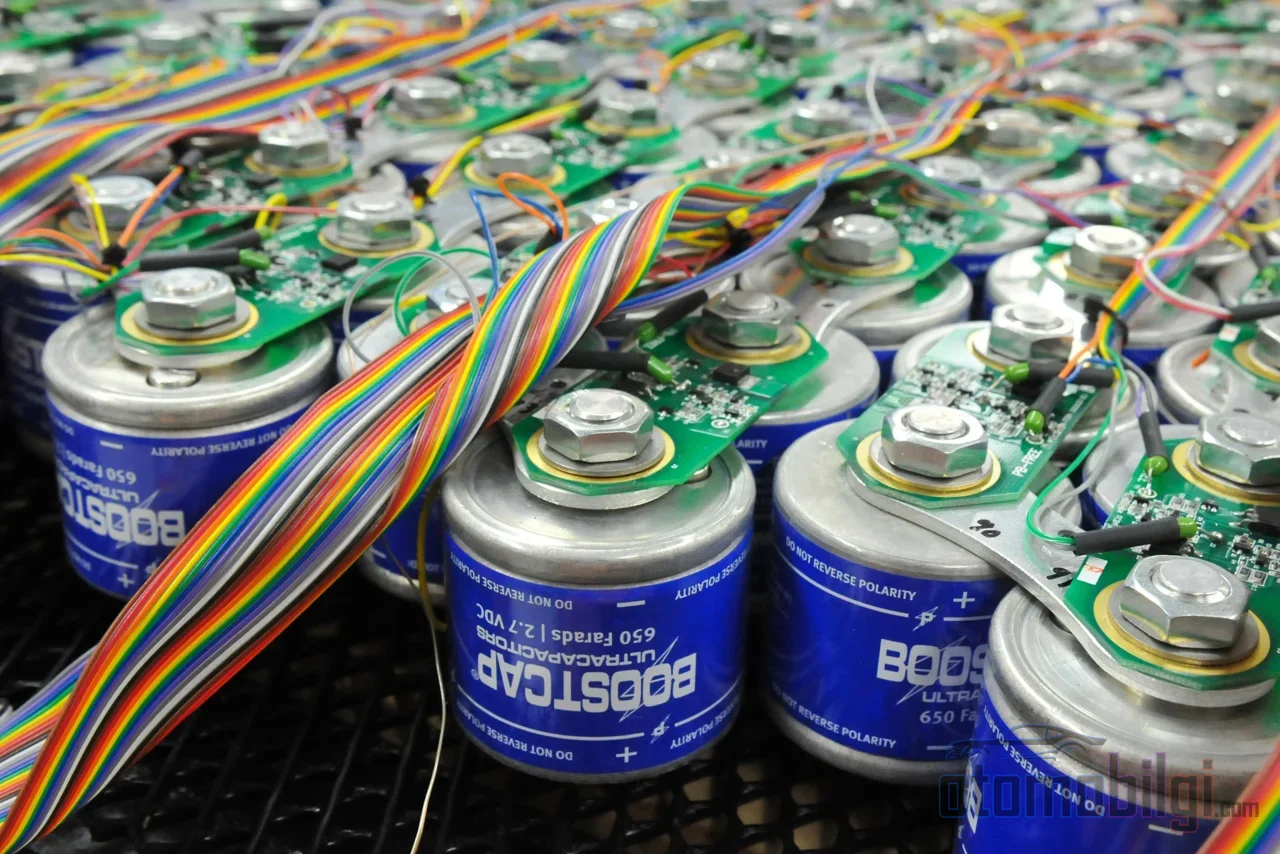
Imagine being able to charge your electric car in 30 seconds. Imagine the tank was full by the time you grabbed your coffee and got in the car. Sounds too good to be true, doesn't it? That's exactly why supercapacitor (i.e. ultracapacitor) technology has been circulating on the internet for years under headlines like "the technology that will kill batteries." But there is another side to the coin: if these devices charge in seconds, why are they still not the main battery of any mass-produced electric car? Let's separate the promise from reality, because the answer is both disappointing and surprisingly interesting.
How Does a Supercapacitor Work? How Is It Different from a Battery?
First, let me use a simple analogy. A battery is like a bucket of water: you can carry a lot of water, but filling and emptying it takes time. A supercapacitor, on the other hand, is like a wide tray: it holds little water, but you can fill and empty it in seconds, spilling as you go. Both work, but they don't do the same job.
On the technical side, the process is as follows: batteries store energy through chemical reactions. Supercapacitors use a purely physical method. At the interface between the electrode and the electrolyte, a formation called the "electric double layer" occurs; oppositely charged ions accumulate on the electrode surface, and energy is held electrostatically. The most common type, the EDLC (Electric Double Layer Capacitor), reaches values of tens to thousands of Farads thanks to activated carbon electrodes with enormous surface area. Think of a capacitor you know, but scaled up millions of times.
This physical storage has a nice side effect: since there is no chemical reaction, wear is kept to a minimum. The structure that degrades over time in a battery is nearly nonexistent here; unlike a battery, there is also no failure point of the "sudden death from behind" kind. So if it's this robust, why isn't it in every car? This is where two concepts come into play: energy density and power density.
Energy or Power? The Battery Showdown in Numbers
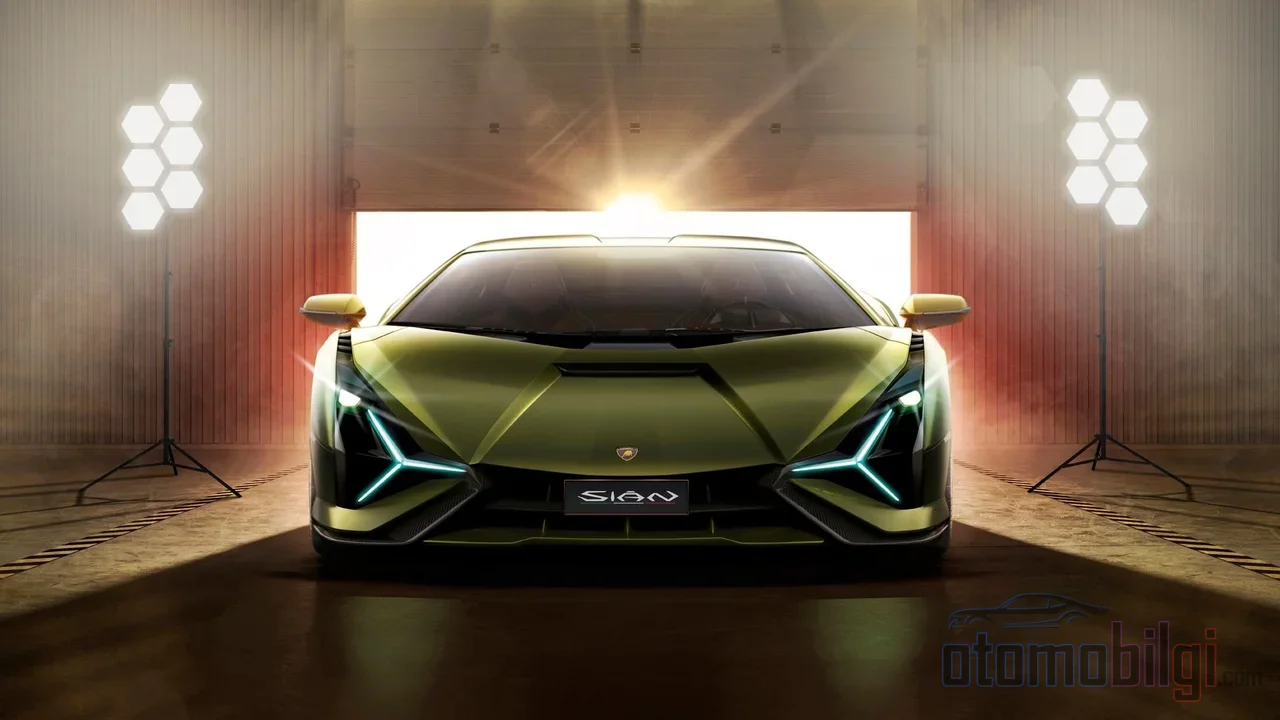
Energy density determines how far you can go, while power density determines how fast you can deliver energy. The supercapacitor wins the second contest by a crushing margin, and loses the first one miserably. Now let's look at the numbers, because the numbers tell the whole story.
Key Takeaways
- The supercapacitor's power density is 10-100 times higher than a battery's, and it charges within seconds.
- Its energy density is only 1-10 Wh/kg; a lithium-ion battery is at the 150-200 Wh/kg level.
- Cycle life can exceed 1 million; batteries range from 300-10,000 cycles.
- Cost is still very high: around $2,000-6,000 per kWh.
- The mainstream solution is not for the technology to replace batteries, but to work alongside them in hybrid energy storage.
| Feature | Lithium-ion battery | Supercapacitor |
|---|---|---|
| Energy density (Wh/kg) | 150-200 | 1-10 |
| Power density | below 2,000 W/kg | up to 10,000 W/kg |
| Fast charging time | 0.5-3 hours | 0.3-30 seconds |
| Cycle life | 300-10,000 | Exceeds 50,000, can reach 1 million |
| Efficiency | 80-90% | above 98% |
| Operating temperature | approximately -20/+40 °C | -40/+85 °C |
| Self-discharge (monthly) | approximately 10% | approximately 30% |
Once you read the table, the situation becomes clear, doesn't it? The supercapacitor is a sprinter, the battery a marathon runner. While a battery stores 100-650 Wh in a liter of volume, a supercapacitor can only hold 1-10 Wh; even the most advanced examples can reach only about 1.5 percent of the battery's energy density. In other words, if you wanted to fill the car to the brim with supercapacitors for the same range, the vehicle would be many times heavier and bulkier than one with a battery. What's more, 30 percent of the energy evaporates on its own every month; if you left the car in the garage for a month, a serious portion would have vanished.
Where Do Supercapacitors Really Shine?
From Formula 1 to KERS: Regenerative Braking
This is the main stage. During braking, the vehicle's kinetic energy is not wasted; it is recovered. The world of Formula 1 has been using this under the name KERS (Kinetic Energy Recovery System) since 2009, and today many motorsport disciplines race with similar systems. The reason the supercapacitor is tailor-made for this job is simple: braking produces massive currents within seconds, and these sudden charge-discharge pulses seriously shorten battery life. The supercapacitor exists precisely to absorb this pulse; thanks to its low internal resistance, it does the same job without heating up, quickly, and for close to a million cycles.
In city buses the situation is even more striking. In a field study conducted on a 48-volt mild-hybrid city bus, regenerative braking with a supercapacitor buffer provided a 30.4% reduction in the time-averaged mechanical load of the internal combustion engine. Moreover, fuel economy improvements of 7-25% are possible in micro-hybrid vehicles with a small 4 kW electric motor and 5-10 kg of ultracapacitor cells. So does that mean the supercapacitor is useless? Quite the opposite - at the right job, it is legendary.
Buses That Charge at the Stop
China has been using supercapacitors in its hybrid buses since 2006, thanks to which the vehicles have become lighter and their range has extended by up to 40 percent. The logic is clever: if a city bus stops for 30 seconds at every stop, those 30 seconds are enough. Supercapacitor-based fast charging stations can fill the vehicle within that time and provide a range of about 10 km; the bus charges bit by bit at every stop along the route. A battery-powered bus, on the other hand, requires a charging break lasting hours. It is necessary to be cautious about the more ambitious figures circulating online, but the principle is real: short route, frequent stops - pure supercapacitor territory.
So Why Can't It Replace the Battery?
The answer to the question is hidden in one word: range. Because its energy density is so low, the supercapacitor cannot serve as a traction battery on its own; this is the common assessment of the engineering world. There is also a cost issue: with current data, the price of supercapacitors is in the $2,000-6,000 per kWh range. Longevity can balance this cost in the long run, but for a daily electric car user this price makes widespread adoption economically impossible. Even the US Department of Energy requires at least 15 Wh/kg specific energy for supercapacitors in electric vehicles; current technology is far below that.
There is also the matter of wildly varying figures, which I will address honestly. Cycle life appears above 50,000 in some tables and above 1 million in others. This is not a contradiction; the device type is the deciding factor. While pure EDLCs withstand millions of cycles, hybrid structures combining batteries and capacitors behave differently. Efficiency figures also vary depending on the measurement method. In short, reading a table without knowing the device type can be misleading.
Graphene Promises: Breakthrough or Laboratory Record?
Here is where speculation boils most. In 2010, a supercapacitor with graphene-based electrodes demonstrated 85.6 Wh/kg specific energy at room temperature and 136 Wh/kg at low temperature, and this study, with roughly 4,000 citations, became one of the milestones of the field. Another device reported 16 kW/kg power density and 73 Wh/kg energy density. In 2026, a volumetric energy density of 99.5 Wh/L was announced with a material based on reduced graphene oxide; that is roughly 10 times that of conventional supercapacitors.
Sounds like "the battery is finished", doesn't it? But slow down. These figures are laboratory records; not at a level to be fitted under a mass-produced car. Moreover, producing graphene at scale is a serious challenge that even the lithium-ion industry still struggles with. The "will store more energy than lithium in the future" framing circulating on popular science sites is not supported by current data. Even if it materializes, the graphene supercapacitor market is forecast to grow only by 2035; so this is a marathon, not an overnight miracle.
Final Verdict: Are Supercapacitors Useful in Electric Cars?
Short and clear answer: yes, useful; but not as a rival to the battery, rather as a teammate. A supercapacitor alone cannot serve as an electric car's battery because its energy density in the 1-10 Wh/kg range is not enough to provide meaningful range, and its cost of 2,000-6,000 dollars per kWh does not make widespread use economical. However, when combined with advantages such as power density, million-cycle lifespan, charging in seconds and carrying no thermal risk, it becomes an indispensable complement.
The future is already moving in this direction: hybrid energy storage systems (HESS). The battery carries the range, while the supercapacitor takes on sprints and braking energy; this reduces stress on the battery and extends its life. Electric buses, port cranes and rail systems are already using this architecture. From Formula 1 to city buses, from trains to cranes, the same lesson emerges: when the right job is given to the right technology, the supercapacitor becomes the star of the show. When it is forced into the wrong job (that is, carrying the entire range), physics simply does not allow it. So the next time you see a "technology that kills batteries" headline, smile and move on: the real story is far more sensible and far more exciting.
Sources
- What is the Difference Between Supercapacitors and Batteries?
- Supercapacitors vs. Batteries: A Comparison in Energy Storage Solutions
- Supercapacitors vs. Batteries
- Technology Strategy Assessment: Supercapacitors
- A regenerative braking system for ICE vehicles using supercapacitors
- Integrated Simulation and Field Analysis of a 48 V Mild-Hybrid Urban Bus
- Applications of Supercapacitors in Electric and Hybrid Vehicles
- Graphene-Based Supercapacitor with an Ultrahigh Energy Density
- When are supercapacitors practically feasible in electric vehicles?
- Capacitor electric vehicle