Does the 4C Ultra-Fast Charging Promise Hold Up?
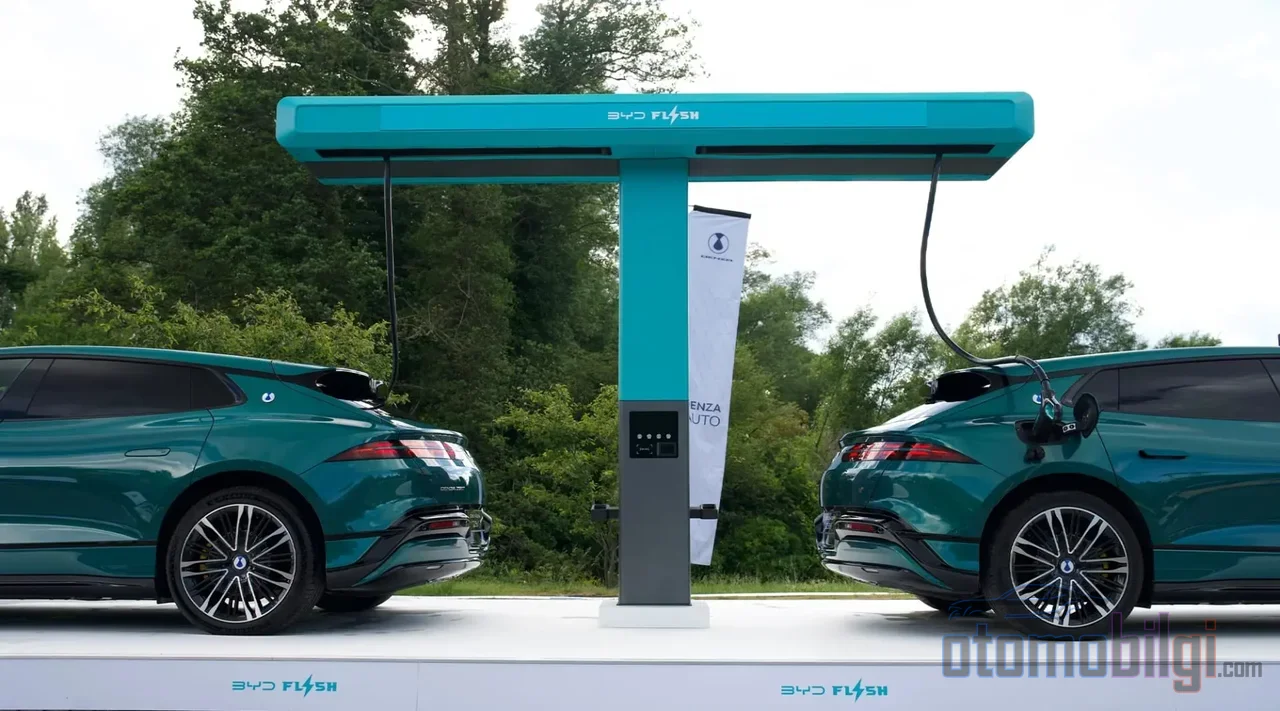
Fifteen minutes. Your car is 80% charged before you can even finish your coffee. Your ears are ringing, aren't they? That's how life looks in marketing videos: the driver stops, grabs their coffee, the car charges, everyone's happy. But have you ever wondered what that giant battery pack under the car is going through during those exact minutes? The promise of 4C and faster ultra-fast charging is one of the hottest topics in the automotive world in 2026. But does this promise really hold up, or does it only live in the cool climate of the laboratory? Let's go, let's look inside the battery.
What Is C-Rate, and What Exactly Does 4C Mean?
Let me explain it simply first, because everything revolves around this letter. C-rate is a unit that measures the charge or discharge current relative to the battery's capacity. 1C means charging the battery in about one hour with a current equal to its full capacity. At 2C this time drops to half an hour, and at 4C to about 15 minutes. The formula is child's play: time in minutes equals 60 divided by the C rate. So for 4C, 60/4 = 15 minutes. The math side is that simple; the real question is what this current does to the battery.
Let me make an analogy: think of the battery as a tunnel. Lithium ions are the tiny cars passing through this tunnel. At 1C, the traffic flows calmly. At 4C, though, the tunnel is being used by traffic four times as dense. What happens if the cars start crashing into each other? Well, in the battery world this collision has a name: heating, efficiency loss and, in the long run, loss of lifespan.
Heat: The Biggest Enemy of 4C Charging
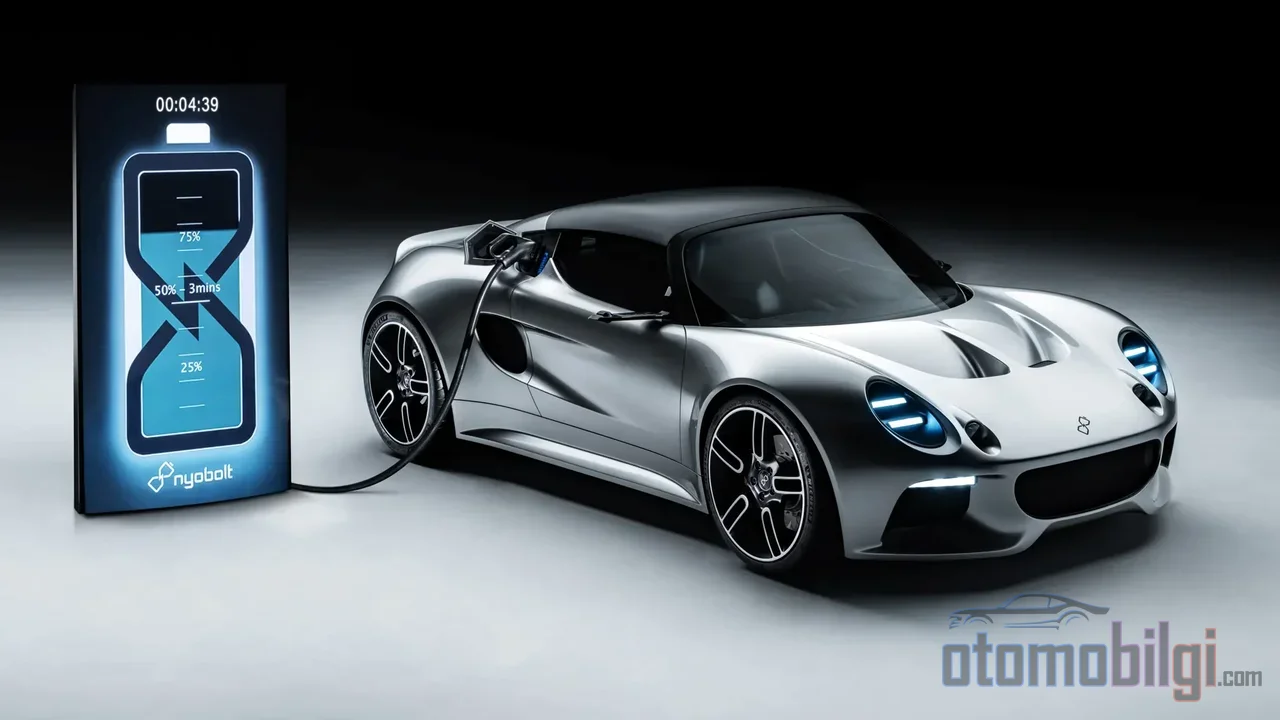
Now we get to the physics part of the matter, but don't worry, it's not hard. When electric current passes through a conductor, it causes heating, and this heating increases with the square of the current. So if you double the current, heat quadruples; if you quadruple it, heat jumps sixteenfold. Let's look at the numbers: At an ambient temperature of 30 degrees, a 1C discharge generates about 0.18 W of heat in the battery, while at 4C this figure rises to about 2.5 W. Imagine it's like having a small heater attached to the small cell in the palm of your hand.
Heat isn't just a comfort issue. During 4C charging, cell temperatures must be kept below 42-45 degrees and the temperature difference within the module must not exceed 5 Kelvin. When 325 Kelvin, i.e. about 52 degrees, is exceeded, capacity loss accelerates and the risk of thermal runaway, i.e. the battery heating uncontrollably, increases. Insufficient cooling can reduce battery life by up to 40% in high-rate charging cycles. Yes, you read that right: forty percent.
Highlights
- In theory, 4C charging fills the battery in about 15 minutes
- The heat generated at 4C current exceeds that at 1C by tenfold
- Insufficient cooling can shorten battery life by up to 40%
- Intensive fast charging use causes annual additional wear of up to 3%
- Fast charging points above 150 kW make up only 11.8% of the public network in Europe
What Is Being Done on the Cooling Side?
Engineers are tackling this heat problem head-on. On the passive side, there are composite layers made of phase-change materials (PCM) and copper fins: A 4 mm bio-based PCM layer managed to keep cell temperature slightly above 310 Kelvin at 4C charging in laboratory measurements. The more ambitious hybrid approach: In systems combining PCM with liquid cooling, the module temperature was measured at 31.8 degrees at 4C charging, while the system using only PCM was at 38.4 degrees. This hybrid architecture can stay below 43.6 degrees at speeds up to 6C.
There are even more creative ideas: approaches that cool the cell from within by flowing the electrolyte very slowly through the porous electrode structure kept the temperature within the safe band with 98 percent capacity utilization in 5.7C simulations; the cell with a static electrolyte remains at 54 percent capacity under the same conditions. On the station side, heat exchangers temporarily paired with the vehicle take the load off onboard cooling, especially in hot climates. Natural air cooling, unfortunately, remains adequate only at 3C and below; there is no journey into the 4C world.
Cell Chemistry: Cathode, Anode, and the Lithium Plating Risk
Thermal management is half the story; the other half is the cell itself. Conventional lithium-ion cell chemistries focused on energy density do not get along well with high currents. Most manufacturers recommend the 0.5C-1C range, that is, a 2-3 hour charge, for energy cells; for long life, 0.8C and below is cited. Why? Because although high current quickly fills the battery to about 70 percent, the subsequent saturation phase drags on, and that final stretch is always slow.
The real danger lies elsewhere: When charging above 4.30 Volts, metallic lithium can deposit on the anode, meaning lithium plating can begin. This plating both steals capacity and creates a safety risk. The thermal runaway threshold of NMC chemistry is around 170-180 degrees; once the threshold is crossed, there is no going back.
Next-Generation Solutions at the Anode
So where is the future heading? Silicon anodes are leading the way: they allow lithium ions to move much faster within the anode matrix, improving both energy density and fast-charging capability. The inclusion of a silicon-carbon composition in Tesla's 4680 cells in its 2026 models is a concrete example of this trend. The graphite anode side is not dead; the University of Maryland study showed that even 50C fast charging is possible with a graphite-anode cell. In other words, the problem lies not in the material itself, but in how the material is designed. On the cathode side, multi-scale design approaches are also being actively researched to improve fast-charging performance.
LFP or NMC?
At high speeds, the choice of chemistry is also critical. LFP cells show superior thermal stability compared to NMC at 4-5C speeds; NMC, on the other hand, typically requires 20-30 percent extra cooling capacity. In return, NMC offers higher energy density. The engineering choice is clear: safety margin, or range?
How Far Are Manufacturer Claims Real?
Now let's get a bit sarcastic, because this is the main question of this page. Some manufacturers are talking about 80 percent charging in under 10 minutes, or even a full charge in 12 minutes. What do these claims have in common? They are all measured under laboratory conditions, at ideal temperatures, with ideal cells. In the real world, you face three obstacles.
- The 80 percent wall: Charging speed slows down significantly after the 80 percent mark. In some vehicles, charging from 10 to 80 percent takes as long as charging from 80 to 100 percent.
- Station power: Not every vehicle can charge at the maximum power of every connector; if the 350 kW on the label exceeds what the vehicle can take, the surplus is written off in vain.
- Thermal limits: The vehicle automatically restricts the speed to protect the battery; in summer heat or winter cold, this restriction increases even more.
The infrastructure side is also an inseparable part of the story. As of 2026, the share of fast points above 150 kW in Europe's public charging network is 11.8 percent; a year ago, this figure was 9.4 percent. So there is progress, but the overwhelming majority of the network still operates at more modest power levels. On the other hand, stations above 350 kW are turning from a niche into the standard, and new-generation infrastructure of up to 600 kW is on the agenda. Compatible vehicles can reach an 80 percent charge level at these points in roughly 15-20 minutes. One of the fastest examples so far, the Hyundai IONIQ 5, adds about 100 miles of range in 5.79 minutes. These figures are real; but everyone's car and everyone's station are still far from this standard. Usage habits are similar: worldwide, electric vehicle owners do about 75 percent of their charging at home or at work, and only 10 percent at public fast-charging points.
How Much Does Fast Charging Cost Your Battery's Lifespan?
Here is the bill that nobody shows in their commercials. A study based on real fleet data found that vehicles making intensive use of DC fast charging above 100 kW show annual degradation of up to 3.0 percent faster. The academic literature is also clear: high C-rates inevitably lead to battery wear. The mechanism is also known: high current first reduces efficiency, then accelerates capacity and power loss. Rapid lithium extraction at high state of charge creates micro-cracks in the crystal structure, especially in NMC cathodes.
But the picture is not entirely bleak. There are also findings that when temperature can be kept under control, degradation depends on temperature rather than speed, and is no different from normal charging. In other words, proper cooling can significantly mitigate the fast-charging penalty. On the other hand, there is one combination of risks that no cooling can save: fast charging in the cold. High current at low temperature is riskier than even high-temperature scenarios due to lithium plating kinetics. Charging at freezing temperatures is not recommended at all. Another critical detail: charging at 4C and above shortens the warning time for thermal runaway and lowers the onset temperature of the runaway; meaning the intervention window narrows when something goes wrong.
A Healthy Fast-Charging Checklist
- Stop at the 80 percent mark; the next 20 percent is usually a waste of time
- Avoid fast charging in extreme heat and especially in freezing cold
- Do daily charging slowly at home, and save fast charging for long trips
- If the battery is cold, wait a few minutes before starting to charge; let pre-heating kick in
So Does It Keep Its Promise? The Clear Answer
Briefly and honestly: 4C ultra-fast charging is technically possible and real when the right cell chemistry, a serious cooling system and a sufficiently powerful station come together. New-generation silicon-containing anodes, advanced cathode designs and hybrid cooling solutions have proven this in the lab and in selected vehicles. But the 15-minutes-to-80-percent promise is not a valid promise in every condition and for every vehicle: most of the charging infrastructure in 2026 does not deliver the power this speed requires, and this speed comes at a cost to battery life.
Here is my take: 4C is like 0-100 acceleration in the car world. On paper everyone cared about it; in real life it only truly matters a few times a year. In daily use, most drivers do nearly three quarters of their charging at home, overnight. The real winning ground for ultra-fast charging will be long-distance driving and commercial fleets; there, minutes are truly money. My advice for now: don't look at the advertised minutes; look at the charging curve and the cooling architecture. There are cars that charge before you finish your coffee; but the question of under which conditions they keep charging is always as important as the promise.