NMC 811's Hidden Bill: Fast-Charging Degradation
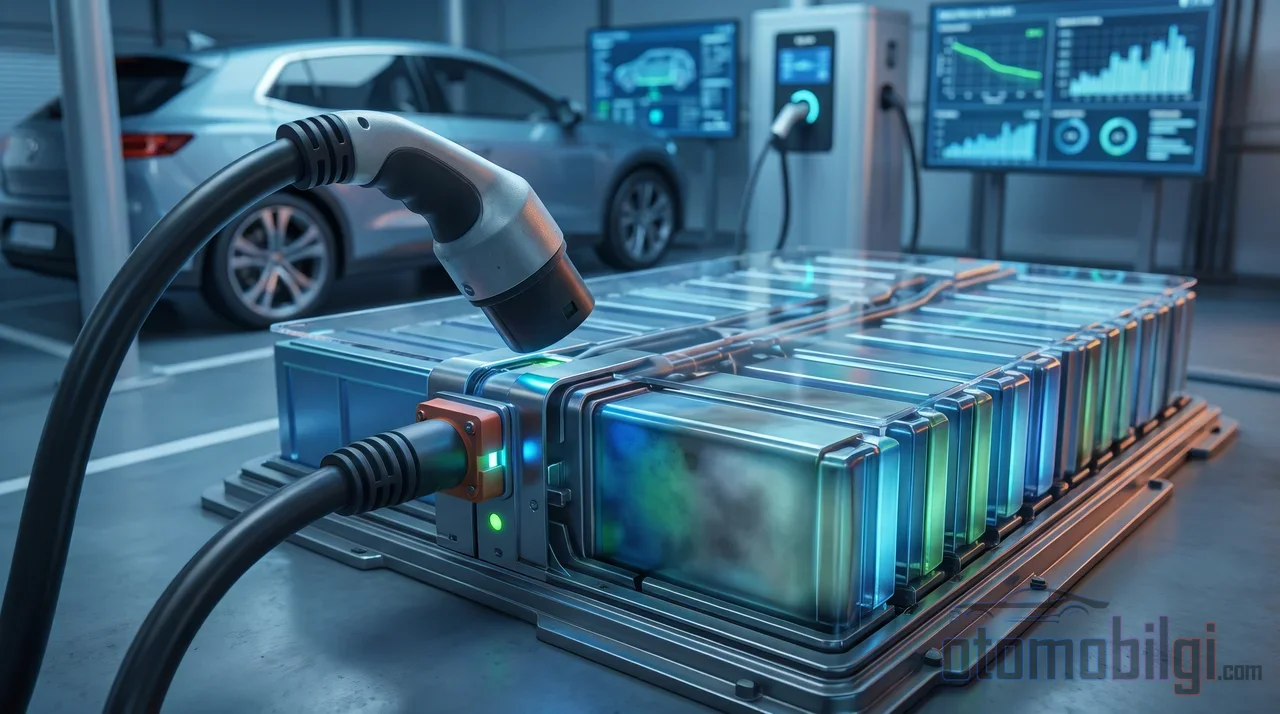
It's one of the most beloved slogans in the electric vehicle world: we're removing cobalt, batteries are getting cheaper, everyone's happy. Sounds great, right? But once we dig in, we come across a chemistry like NMC 811: the 811 in the name describes the material ratio in the cathode, i.e. 80% nickel, 10% manganese, 10% cobalt. The path to reducing cobalt runs through increasing the nickel ratio, and this is a move that sits right at the center of the promise of cheap, long-range batteries. But how realistic is this promise? Who pays the price when nickel is increased? Can cobalt really be eliminated? If you're ready, let the most fiercely contested rivalry in battery chemistries begin.
Why Is Nickel So Important? The Promise of NMC 811
Let's start with a simple analogy: Think of the NMC chemistry like a drink recipe. Nickel is the main ingredient that provides energy, i.e. range; manganese is our balanced stability; and cobalt is that famous third ingredient that provides both stability and capacity, but is expensive and ethically controversial. In NMC 532 the nickel ratio is 50%, while in NMC 811 it shoots up to 80%. So why do they do it? Because as nickel increases, the battery can store more energy per kilogram: NMC 811 delivers a specific capacity of around 200-220 mAh/g at an average discharge voltage of approximately 3.8 V, with an energy density 5-10% higher than NMC 622. Translate that: more range with the same weight, or a lighter vehicle with the same range. That's why most long-range premium electric vehicles choose this chemistry.
The figures on the cobalt side also look impressive at first glance. According to CRU estimates, NMC 811 contains only 70 g of cobalt per kWh, while this is 150 g in NMC 532 and 170 g in NMC 622. In a standard 64 kWh battery, this means a difference between 4.2 kg and 10.9 kg. So in theory, both less cobalt and more range. That's how far the good news goes; so what's the bad news?
Highlights
- The NMC 811 cathode contains 80% nickel, 10% manganese, 10% cobalt; energy density is 5-10% higher than NMC 622.
- A 64 kWh battery with NMC 811 uses approximately 4.2 kg of cobalt; in NMC 622 this is 10.9 kg.
- When cycled at a 2C rate, NMC 811 cells respond by retaining only 72.3% of their capacity after 100 cycles.
- Cobalt supply is predicted to remain abundant for at least 5 years; the real driving force behind the transition to NMC 811 is energy density.
- As of 2026, the NCM-811 price in China is $66.89/kWh; In most regions, pack cost is still above $100/kWh.
The Gap Between Promise and Reality: The Price of Thermal Stability
Here's where things get complicated. As the nickel ratio increases, the structural and interfacial stability of the cathode decreases. As noted on TechXplore, nickel is a less stable element than the other materials in terms of cycle life, thermal stability, and safety. Think of it this way: nickel is a great but temperamental friend as an energy depot; while its performance hits the ceiling, its nervous system becomes just as sensitive. As nickel content increases, problems like structural instability, cation mixing, and accelerated degradation are knocking on the door.
This is not just a theoretical problem. Kia had abandoned using NMC 811 cells in the Niro BEV due to safety concerns and returned to NMC 622. The same cells were later used in a Mercedes-Benz electric SUV. In other words, manufacturers are trying this chemistry - some have stepped back, some are pressing on. Experimental studies on thermal runaway behavior are an active research area where heat and gas production in NMC 811 cells are examined in detail. Even more striking: A study from NREL revealed that a reduced NMC cathode converts polypropylene decomposition hydrocarbons into hydrogen at around 450 degrees C, with cathode-derived hydrogen even more abundant than that coming from the anode. Thermal runaway is already a feared scenario; and when an unexpected hydrogen production mechanism is added on top of it, the safety debate never falls silent.
The Production Side Is Not Easy Either
NMC 811 is a difficult customer not only in the lab but in the factory as well. It has extremely strict requirements in terms of dust, moisture, and contamination control. While the transition from NMC 532 to 622 is relatively easy, moving to 811 requires serious new facility investment to prevent contamination. In fact, moisture is identified as the dominant driving force of irreversible structural degradation in NMC 811; the severity of degradation increases rapidly from pure environment to CO2, and from there to 80% relative humidity. In other words, the cell is affected even by air before it is even mounted into a battery. In short: nickel increases, cobalt decreases, but the manufacturing bill swallows everything.
Lifespan and Durability: The Hidden Cost of Fast Charging
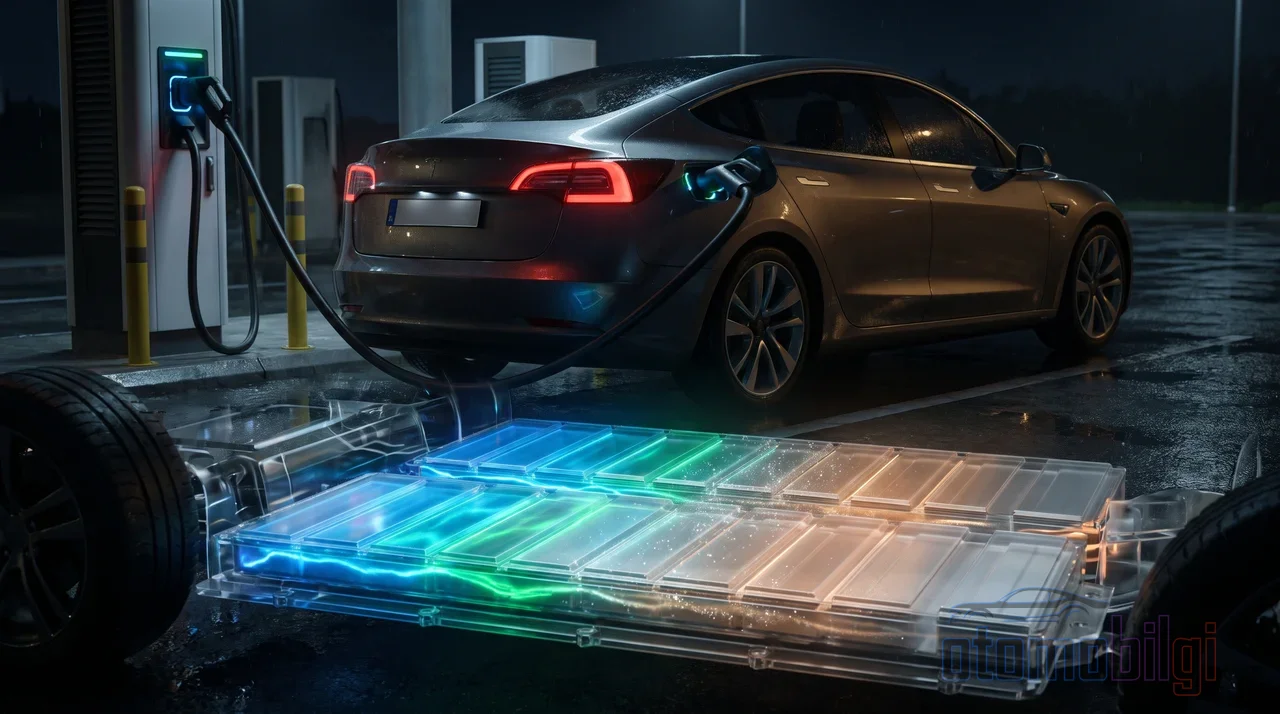
So what happens to the cells over time? Cycling tests performed on commercial NMC 811/graphite cells paint a striking picture: At calm rates like 0.3C and 1C, the cells retain 99.7% of their initial capacity after 100 cycles, which is an excellent result. But at 2C the retained ratio drops to 72.3%, and at 3C to 63.5%. In other words, the problem does not appear in normal use, but in continuous high-current use. Considering today's electric vehicles' obsession with fast charging, this is by no means a detail to be underestimated.
The list of degradation mechanisms is a whole other matter: surface reactions, oxygen loss, cation mixing, mechanically induced microcracks, transition metal dissolution, irreversible phase transitions. Since the polycrystalline structure is prone to cracks, nickel-rich cathodes become sensitive to material failure. There are some promising steps on the research side too; for example, stabilization studies with nickel valence gradients, and a 17% capacity retention improvement in a 100-cycle test under high-voltage application with graphene-doped cathodes has been reported. But the distance between a laboratory finding and mass production, as we all know, is quite long.
Is NMC 811 Really Cheaper? The Cost Picture Is Mixed
The cost side of the matter is not as clear-cut as one might think. When cobalt decreases, batteries don't automatically get cheaper, because cobalt has long since stopped being the cathode's most expensive item and manufacturing difficulty comes into play. The 2026 figures are as follows: In China, NCM-811 stands as the lowest-cost option among ternary chemistries at $66.89/kWh as of April 2026, though this price has risen 14.8% year over year. In most regions, NMC 811 pack prices are still above $100/kWh; even in China, the pack cost is around $103/kWh. Meanwhile, in North America the average cathode cost has fallen 18% year over year, to $85/kWh. Regional divergence is that pronounced.
Since different measurements tell different stories, the numbers need to be read carefully: cell cost, cathode cost, and pack cost are different things from one another, and they vary by region. In summary, it can be said that: NMC 811's nickel-cobalt cathode is 3-4 times more expensive per kilogram, but it delivers 50-60% more energy per kilogram. In range-critical applications, this premium is defensible; for standard use, it is becoming increasingly hard to justify. Fraunhofer analyses point to the same conclusion: the highest energy density is in NMC 811, but it also has the highest cathode cost.
Can Cobalt Be Abandoned Entirely?
Now we come to the real question: can cobalt be eliminated? The short answer: not yet in conventional cathode chemistries. The long answer is more interesting.
Why Cobalt Doesn't Want to Leave
Cobalt gives the cathode both capacity and stability; when it is removed entirely, the cathode's stability is impaired, and while there is a consensus in the lithium-ion industry toward reducing or removing cobalt, the cost of doing so must be acceptable. Moreover, cobalt is largely a byproduct of copper and nickel mining; in other words, even if demand dropped to zero, halting its production entirely would not be easy. Cobalt-free alternatives also compromise on energy density: LiMn2O4 and LiFePO4 are entirely cobalt-free, but they don't provide enough energy for high-end applications. The ethical motivation is real: Roughly 75% of cobalt comes from the Democratic Republic of the Congo alone, and mining conditions, supply security, and environmental impacts create ongoing tension. Governments are also trying to accelerate recycling through battery legislation.
Is Cobalt Scarcity a Real Reason?
Here is the detail most people miss: What actually drove the transition to NMC 811 was not cobalt concern. Industry analyses predict that the battery industry will have an abundant cobalt sulfate supply for at least 5 years and that no scarcity will occur. The engine of the commercialization push is rather the desire for higher energy density. In other words, the cobalt reduction story is partly a genuine ethical and cost concern, and partly a marketed version of a move that was going to be made for range anyway. In 2018, it was thought that NMC 811 gaining market share would take far longer than expected; today, thanks to its superior energy density, this chemistry holds a dominant position in high-performance applications. This gap between expectation and reality is also instructive in its own right.
Recycling Is in Play
A circular economy dimension has also been added to this entire picture. Up to 99% of lithium, cobalt, nickel and manganese can be recovered from spent battery material with minimal processing steps, and NMC 811 cathode precursor can be produced from this material. More interestingly, there are studies reporting that NMC 811 synthesized from spent cells performs better than its commercial counterparts. So while cobalt cannot be done away with entirely, it becomes usable over and over again.
So What's the Conclusion? Cobalt Isn't Ending, But Its Role Is Changing
Let's give the answer we promised: NMC 811 does not eliminate cobalt. It reduces cobalt to 70 g per kWh, bringing it down to 4.2 kg in a 64 kWh battery, but does not eliminate it completely; because in conventional cathode chemistry there is no ready-made solution to fill cobalt's role in supporting capacity and stability. Rather, the price is paid in thermal stability, lifespan and manufacturing complexity. The real story of NMC 811 is not cobalt hostility; it is an expensive trade-off accepted for the sake of range. Capacity dropping to 72.3% over 100 cycles at a 2C rate, moisture-sensitive production lines, and cathode reactions that can produce hydrogen at 450 degrees are the price tags of this trade-off. Cobalt is decreasing, but the debate is not; and at least for the next five years, it is worth reading marketing claims that say the opposite with a bit more skepticism.
Sources
- NMC 811 adoption in the auto sector hits a speed bump
- Lithium redistribution and electrode degradation in commercial NMC/Graphite and LCO/Graphite cells under high-rate cycling conditions
- Investigation of NMC-811 Surface Degradation in Pure CO2 and Humid Air
- Nickel-based cathodes may pave a path to safer, high-energy electric vehicles
- Can Cobalt Be Eliminated from Lithium-Ion Batteries?
- BU-310: How does Cobalt Work in Li-ion?
- Characterizing Hazardous Gases from NMC811 Materials
- Where are EV battery prices headed - Fastmarkets
- RecycLiCo Battery Materials Delivers NMC-811 Cathode Precursor from Recycled Lithium-Ion Battery Material
- Effects of Ni Content on Energy Density, Capacity Fade and Heat Generation