Can an Iron-Air Battery Be Used in Cars?
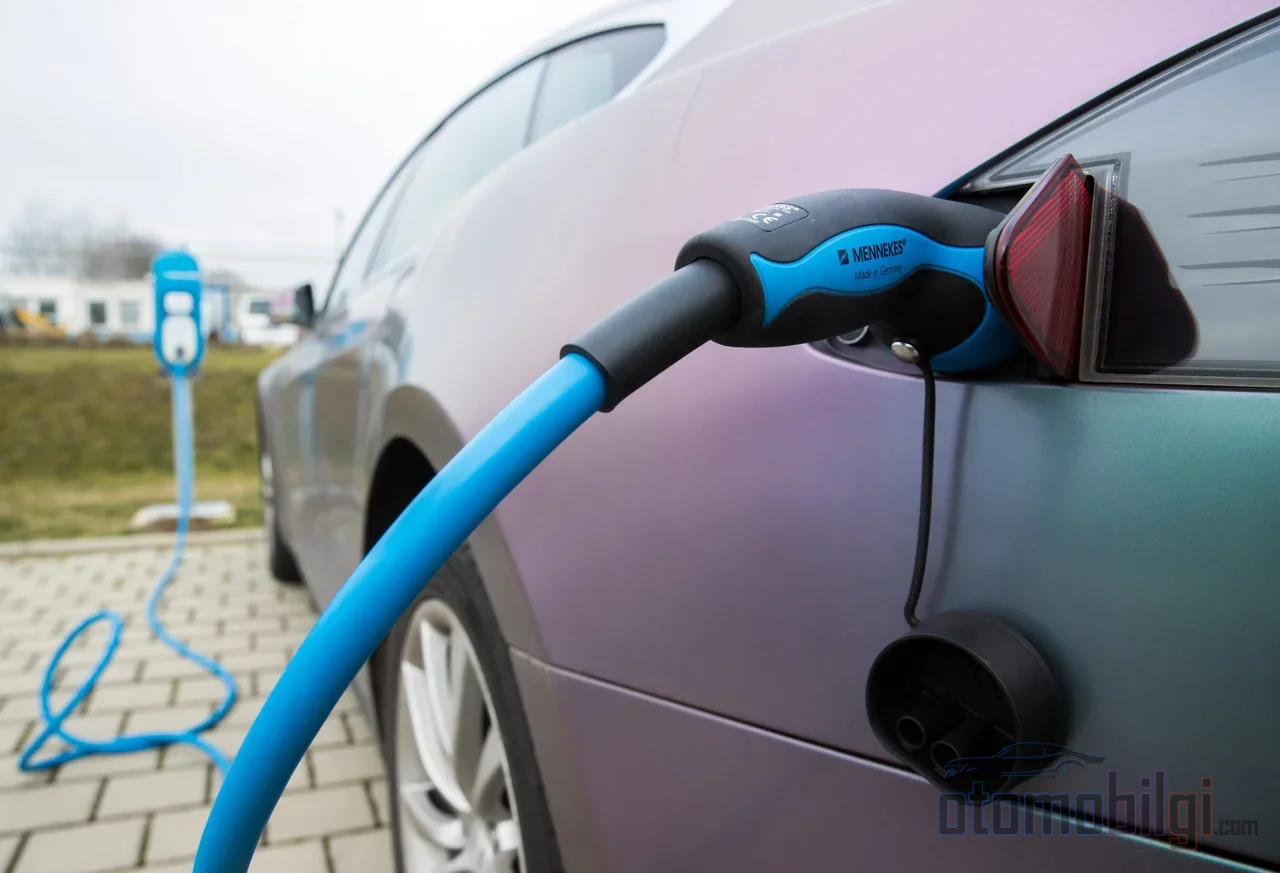
Just think about it: a battery whose main material is iron, meaning a metal doomed to rust, and whose working principle is, in a way, controlled rusting. Sounds like the nightmare of a car dream, doesn't it? But here's the interesting part: this technology is real, its factory has been built, it is signing deals for massive energy projects, and it promises storage at roughly one-tenth the cost of lithium-ion. So we need to ask this question: does the iron-air battery work in cars, or is this technology's place not in our cars but in the electricity grid? The answer is simpler than you think but clearer than you expect.
How the Iron-Air Battery Works: Rust on Prescription
The logic is actually based on something you already know from an old bicycle sitting in your closet: rusting. When the iron-air battery discharges, the iron electrode reacts with oxygen taken from the ambient air, forming iron oxide, in other words, the rust we all know. The electrons released during this reaction flow through an external circuit, generating electricity. When charging, the process reverses: electricity supplied from outside turns the rust back into iron, and the oxygen is released into the air. So you can think of the battery as a machine that visually rusts and then converts the rust back.
Another nice aspect of the system is its open design: the cells draw oxygen directly from the atmosphere, so there is no need to carry oxygen inside the battery. An aqueous potassium hydroxide solution is used as the electrolyte, and this liquid is non-flammable. In other words, there is no counterpart in this chemistry to the thermal runaway fear of lithium-ion; there is no flammable electrolyte and no problem called overheating risk.
But there is also a difficult side to the coin. The bidirectional air electrode, which both reduces and releases oxygen, is the biggest headache of this technology. Corrosion of the iron anode and unwanted hydrogen gas formation are problems engineers are still actively fighting. Historically, one of the reasons this chemistry never quite held up was passivation: when iron rusts, a hard, non-permeable crust forms on its surface and the reaction suffocates itself. So we can summarize it as "rusting is easy, managing rust is hard."
What the Numbers Actually Tell Us
Now let's get to the heart of the matter. There are three fundamental metrics that determine whether we can put a battery technology in a car: energy density, efficiency, and cost. Iron-air has a complete "blowout" profile in all three of these.
Highlights
- The energy density of the iron-air battery is 20-40 Wh/kg, while in lithium-ion this value is 150-300 Wh/kg.
- Round-trip efficiency is around 50-60%; lithium-ion offers 85-95% efficiency.
- The system cost target is ~$20/kWh, roughly one-tenth of lithium-ion.
- Commercial systems are designed for 50-100 hours of continuous discharge.
- The industry view is clear: this chemistry is not suitable for electric vehicles, it is ideal for grid storage.
Energy Density: The Story Told by the Kilos
Energy density shows how much energy the battery can store per kilogram and is of vital importance for vehicles. Iron-air is typically cruising at 20-40 Wh/kg levels today. Lithium-ion? 150-300 Wh/kg. So to store the same energy, you would have to carry several times more weight and volume with iron-air compared to lithium-ion. Iron is already one of nature's heavy children; adding low energy density on top of that makes larger systems inevitable. Yes, theoretically a potential above 1,200 Wh/kg is being discussed, but in practice that is a considerably more challenging target. Even Fraunhofer's ELuStat project has set fairly realistic figures as targets, such as 250 Wh/kg, at least 60% efficiency and 500 full cycles, and even these are values still planned to be achieved.
Efficiency: The Account of Lost Energy
Round-trip efficiency tells you how much of the energy you put into the battery you can get back. Iron-air is currently in the 50-60% range (some measurements point to 40-50%); lithium-ion offers 85-95% efficiency. At grid scale, this can be an acceptable trade-off because the comparison is made with the right figure: there, iron-air's rival is not lithium-ion but gas power plants and pumped storage. But in a car, every lost percentage directly means lost range. Moreover, due to its slow response speed, it is not suitable for any task requiring frequency regulation or sub-second response; cars, on the other hand, demand exactly instantaneous power. If power is not sent to the motor the moment you press the pedal at startup, that vehicle goes nowhere.
| Feature | Iron-Air | Lithium-Ion |
|---|---|---|
| Energy density | 20-40 Wh/kg | 150-300 Wh/kg |
| Round-trip efficiency | 50-60% | 85-95% |
| System cost | ~20 $/kWh | 250-400 $/kWh (LFP) |
| Discharge duration | 50-100+ hours | 2-4 hours (4-8 with LFP) |
| Flammable electrolyte risk | None | Present |
| Critical mineral requirement | None (iron, water, air) | Lithium, nickel, cobalt, etc. |
Why Iron-Air Is So Cheap and So Safe
So if it is this bulky, why is everyone talking about it? Because on the cheapness side, things are close to wild. Iron, which makes up roughly 5% of the Earth's crust, is one of the most abundant elements and is produced in more than 50 countries. By comparison, about 60% of cobalt production is concentrated in a single country, and more than 70% of lithium refining in China. Iron-air batteries contain no lithium, cobalt, nickel or manganese; and no supply chain troubles either. The system cost target of roughly 20 $/kWh means about one tenth of lithium-ion storage. The long-term operating cost is likewise an advantage: while levels of 20-40 $/MWh are discussed for iron-air, this figure is 80-120 $/MWh for vanadium flow batteries.
The safety side is spotless too. Non-flammable, non-toxic materials are used; unlike lithium-ion, it carries no thermal runaway risk. It is also noted to be long-lasting. If any technology deserves to be told "put it in the attic and forget about it for 100 years", iron-air seems to have been born exactly for that job. But that's not what we want from a car battery, is it?
What's Happening on the Grid Side: Real Projects
The most solid part of this story is this: this technology doesn't just live on slides. Form Energy established its first high-volume manufacturing facility in Weirton, West Virginia, and shipments from the plant have begun. The first commercial product is a grid-scale iron-air battery that can store electricity for 100 hours at costs competitive with conventional power plants. Currently, iron-air capacity exceeding 75 GWh is under commercial agreements. The California Energy Commission approved $30 million in funding for a 100-hour long-duration storage project in December 2023. Xcel Energy is developing two systems of 10 MW and 1,000 MWh each in areas of retiring coal plants; as part of this effort, it received support of up to $70 million. Moreover, there is talk of a billion-dollar project targeting 30 GWh that includes both Google and Xcel Energy. So the money, the factory, and the field work are all there.
But the other side of the coin should also be stated honestly: real-world experience with installations actually built and operating is still limited. Lithium-ion has been operating at grid scale for more than a decade; iron-air is the new kid in this comparison. This situation raises the financing costs of projects. Also, in the US, grid interconnection queues can add 3-5 years of delay to large storage projects. So the most accurate thing to say is "huge on promises, still young in reality."
Now, Why Doesn't It Work in Cars
Let's come to our main question and clarify the answer. In an electric car, three things are demanded of the battery: to be small and light, to deliver big power instantly, and to return the energy with reasonable efficiency on every charge. Iron-air falls short in all three of these. Low energy density means bigger and heavier packs; putting a few tons of iron under the car doesn't make a sensible balance even if the range were sufficient. Slow charge and discharge response struggles in any application that requires rapid energy release and fast recharge cycles. Moreover, infrastructure requirements like a consistent and clean air supply increase system complexity and maintenance needs; cramming this into the bottom of a car would be a nightmare in its own right. The industry's common view is already this: residential and electric vehicle applications are not suitable for this chemistry.
In short, iron-air batteries don't work in cars; this technology's strength lies in cheapness and long-duration discharge of up to 100 hours, while its weakness lies in power density, weight, and volume. Cars require exactly the opposite profile. Lithium-ion, meanwhile, according to the IEA, has left its alternatives behind with cost reductions of up to 90% over the past decade, rising energy densities, and longer lifespans; in 2025, LFP packs were more than 40% cheaper per kWh on average compared to NMC. On the electric vehicle side, the race is already far ahead.
The Right Picture: Not Competition, But Division of Labor
So before closing the page, let's make one thing clear: iron-air is not competing with lithium-ion, they are working together. The proposed layered storage strategy draws a very clear division of labor: lithium-ion for 0-4 hour needs, iron-air for 24-100 hour multi-day storage, and hydrogen and similar methods for seasonal scale. Iron-air's advantages make sense not when compared with short-term lithium-ion storage, but when compared with the cost of providing multi-day power from gas plants or pumped storage.
Will an iron-air battery ever carry your car's electricity one day? Everything we see says no to this question. But behind the electricity you touch at the charging station's plug, there could be that rusty chemistry on a windless, sunless winter week. Perhaps iron-air is exactly that: not inside our car, but at the heart of the system that keeps our car running. The difference between promise and reality is exactly this line, and this line leaves no room for speculation.
Sources
- Will Iron-Air Batteries Revolutionize Renewable Energy Storage?
- What Is Iron-Air Battery? Multi-Day Energy Storage Explained
- Battery Technology - Form Energy
- ELuStat: Iron-air battery as stationary energy storage - Fraunhofer UMSICHT
- Iron-Air Vs Lithium-Ion: Energy Density Comparison
- CEC Awards $30 Million to 100-Hour, Long-Duration Energy Storage Project
- Facilities betting big on low-cost, 100-hour iron-air batteries
- Batteries and Secure Energy Transitions - IEA
- Electric vehicle batteries - Global EV Outlook 2026 - IEA
- Iron-Air Batteries 2026: 100-Hour Storage at Under $20/kWh