BMW Is Bringing Level 2 Autonomous Driving to City Streets
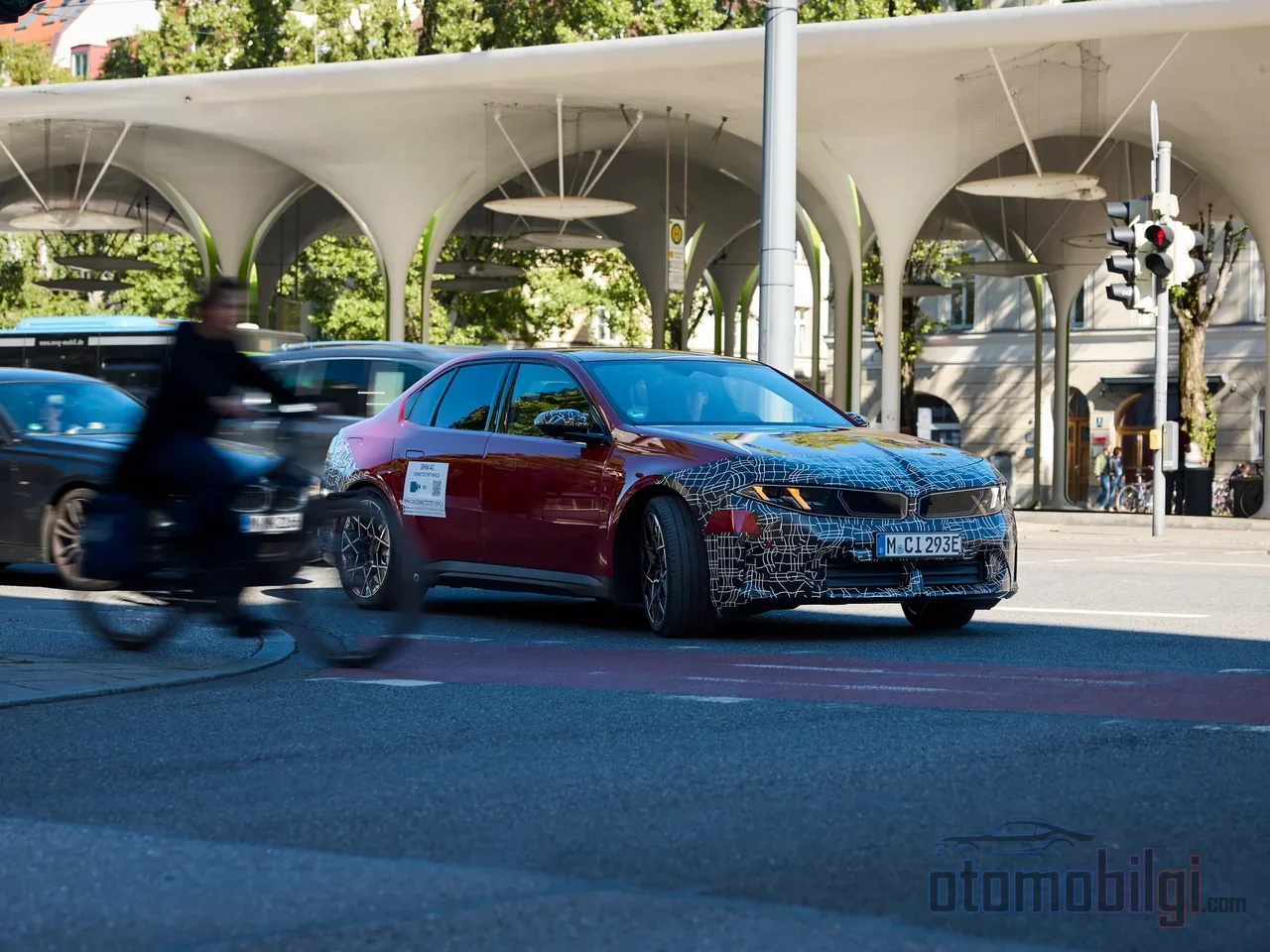
BMW is opening a new chapter in its partial automated driving story: From 2027 onwards, navigation-guided Level 2 driving support will leave highway boundaries and move into urban traffic, with Germany as the first stop. The automotive giant is not promising anyone full autonomy in doing so; the driver must keep their eyes on the road. So why is it so difficult to take a system proven on highways into the chaos of intersections, pedestrians, and traffic lights? The answer to this question also sums up the autonomy strategy BMW has pursued over the past decade.
What Will the 2027 Update Do in the City?
The update announced by BMW takes the partially automated (SAE Level 2) driving capability out of physically separated highway lanes and moves it to the urban road network. The system will assist the driver in city traffic by following the active navigation route: it will provide support at intersection turns, lane changes, roundabouts, and traffic lights. Cooperating with Nvidia in the development work is a clear sign that computing infrastructure is now at the center of strategy in these AI-heavy systems.
One of the most striking aspects of the plan is the goal of offering the system not as an optional package but as standard equipment. For those who remember the era when Level 2 assistance was sold in the luxury segment as a premium-priced add-on, this means a serious paradigm shift in the automotive world. BMW's urban Level 2 system is also read as a move toward urban driver assistance that will compete in the same arena as Tesla's Full Self-Driving package; however, what BMW offers is still Level 2 - meaning that even though the vehicle manages the steering, throttle, and braking, responsibility remains entirely with the driver.
Highlights
- BMW is bringing navigation-guided Level 2 driving to urban roads from 2027 onwards; the first market will be Germany.
- The system will offer intersection turn, lane change, roundabout, and traffic light support; it is being developed in cooperation with Nvidia.
- The new system is planned to be offered as standard equipment.
- The current Highway Assistant provides hands-free highway driving at speeds of up to 130 km/h, and 200 million km of hands-free driving has been accumulated to date.
Where Is the Highway System Today?
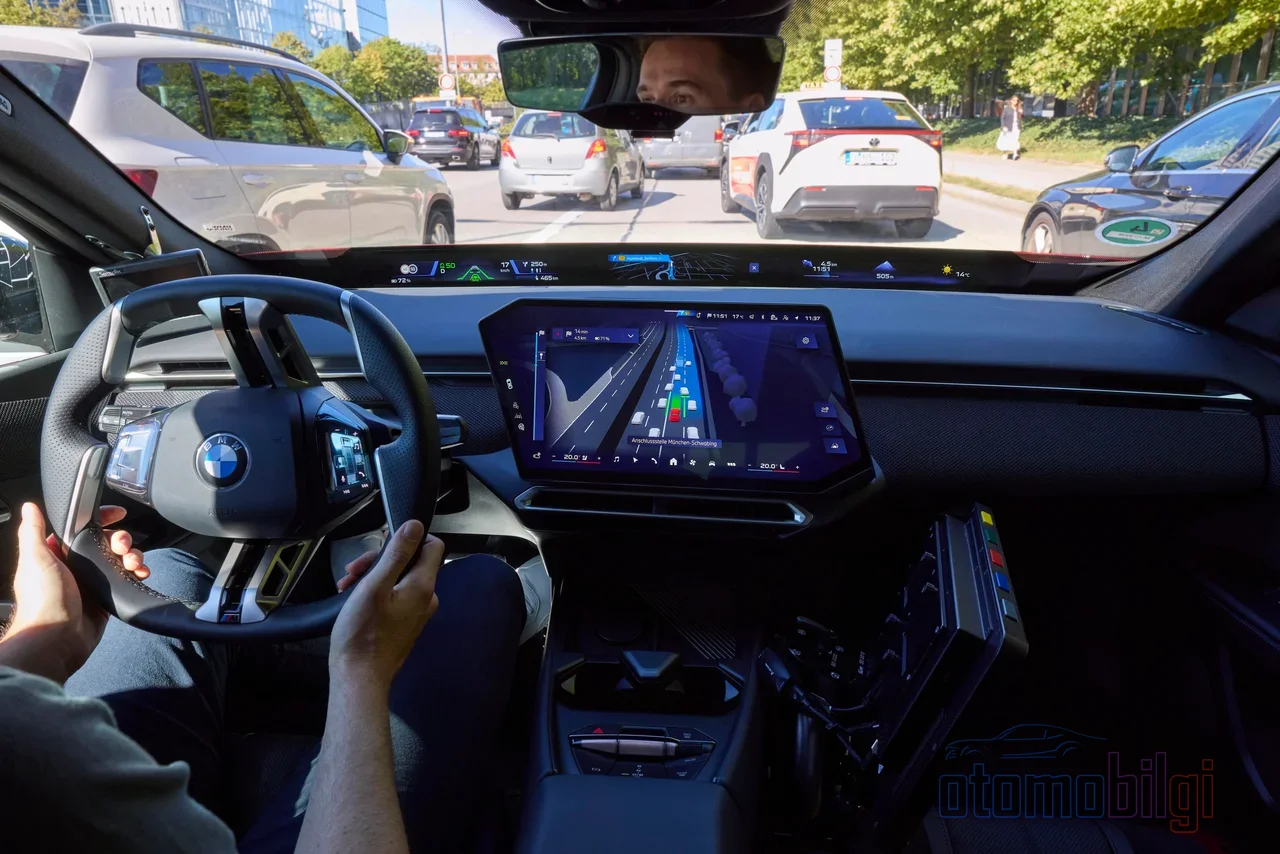
To understand the urban step, we need to look at the limits of the current system. BMW's Highway Assistant, although in the Level 2 class, is a highly impressive capability on highways: on physically divided roads with separated lanes, it allows the driver to keep their hands off the steering wheel for extended periods at speeds of up to 130 km/h (85 mph in the US market). The critical nuance here is that hands-free does not mean eyes-free; the driver must continue to monitor traffic and be ready to take control at any moment.
In the 7 Series, the system has been taken one step further: during active lane changes, the vehicle performs the steering movements, and the driver simply confirms the suggested maneuver by glancing at the exterior mirror. Since March 2024, this hands-free function has been offered in Germany, Canada and the US on the 7 Series, X5, X6 and X7 models. According to BMW's official figures, 200 million kilometers of hands-free driving have been completed with Highway Assistant to date; and the new electric iX3 also offers Level 2 driving with the Highway Assistant package. This track record shows that the 2027 step is no coincidence: BMW has collected data in highway environments for years, and now it is time for more demanding terrain.
Why Is Urban Traffic Harder Than the Highway?
From the perspective of autonomous driving, the highway is a comparatively predictable environment: lanes are separated, entry points are defined, and pedestrians and cyclists are almost nonexistent. Urban driving, however, is an entirely different problem space. Intersections are documented in academic literature as among the most difficult scenarios for autonomous driving; different traffic participants - vehicles, pedestrians, cyclists - interact at the same point, at the same time, most often in unpredictable ways. Even the difference between a signalized intersection and a roundabout is algorithmically two separate worlds.
It is no coincidence that BMW's update targets exactly these points. Making turns at intersections by following the navigation route, stopping and starting at traffic lights, and catching the correct exit at roundabouts; all of these are technically far heavier tasks than highway lane centering. Being developed within a Level 2 framework opens up a testing ground where legal liability is reduced thanks to responsibility remaining with the driver. Still, the industry's general trend toward eyes-off driving continues to fuel debates over safety and legal responsibility; as Reuters also noted, manufacturers' moves in this direction raise the question of who bears responsibility anew every time.
From Level 3 to Advanced Level 2: A Strategic Shift
This move by BMW needs to be placed within the brand's autonomy journey as a whole. In November 2023, BMW announced a Level 3 system for the new 7 Series called Personal Pilot L3: offered only in Germany for 6,000 euros, the system could take over driving entirely at up to 60 km/h on structurally separated highway lanes, including at night. The sensor set consisted of 3D lidar, precise GPS, 5G connectivity, cameras, radars and ultrasonic sensors. In June 2024, BMW became the world's first manufacturer to receive approval for a combination of Level 2 and Level 3 in the same vehicle.
However, in early 2026 the picture changed. News emerged that BMW was stepping back from Level 3 and focusing on advanced Level 2 systems; a similar roadmap shift can be observed on Mercedes' side as well. Although this information is not based on an official BMW statement, it paints a picture consistent with the 2027 urban plan. Industry analysis also supports this direction: Level 3 is weakening in the market against Level 2, which can deliver most of the benefits it offers to customers at far lower cost and complexity. And the real-world data collected from Personal Pilot L3 has not gone to waste; that experience is the nourishment of today's Level 2-focused strategy.
BMW's Position in the Industry Context
BMW is not walking this road alone. Level 2 driver assistance has now become mainstream in new vehicles; market research predicts that Level 2+ capability in newly sold vehicles will rise from 35.6 percent in 2025 to 57.3 percent in 2031, with more than 60 percent of vehicles sold with Level 2 or higher automation. A more ambitious estimate says Level 2 automation will reach 77 percent of new vehicles by 2031. BMW's plan to make its urban system standard equipment sits right on top of this expansion curve.
The Tesla comparison is inevitable. Although Tesla's Full Self-Driving package made a big impact on the public, it is still classified as Level 2 under legislation, where the driver must monitor the road. BMW's difference lies in expanding the system's scope with standard equipment and starting in a market with a strict approval regime such as Germany. Within BMW's own ecosystem, the City Assistant and Traffic Light Assistant concepts were already being introduced in the context of the new operating system; the 2027 update signals that these pieces will merge into a single, holistic driving experience.
Is This System Fully Autonomous, and Who Is Responsible?
The clearest answer is this: no, it is not fully autonomous. By definition, Level 2 provides steering, braking and acceleration support while the driver must maintain full attention and intervene at any moment. BMW's own definition puts this clearly: while the systems take over tasks such as lane and distance control, the eyes must stay on the road. Even capabilities such as automatic stopping and starting at red lights must be evaluated within this framework; the vehicle assists, and responsibility never leaves the driver's hands.
For someone who has been following this industry for thirty years, this picture carries a familiar pattern. Driver assistance used to consist of Cruise Control and simple lane keeping; now come systems that follow the navigation route, turn at intersections and read traffic lights. The scale has changed, but the responsibility architecture has not. No matter how capable a Level 2 BMW offers in the city in 2027, the spiritual owner of the steering wheel will still be the driver. The decisive question is no longer what the system can do, but how confidently and at what cost it can do it - and BMW's answer is clear: standard equipment, broad scope, driver control.
Sources
- Road to autonomous driving: BMW is the first car manufacturer to receive approval for the combination of Level 2 and Level 3
- BMW Is Bringing Partially Automated Driving To Cities
- BMW to Launch Level 3 Automated Driving Function
- BMW steps back from Level 3 autonomous driving in its iX tech flagship
- BMW Goes All Out With AI, Electric Cars and Autonomous Driving