Solid Power Brings Its Solid-State Battery Line Online
Share This Page
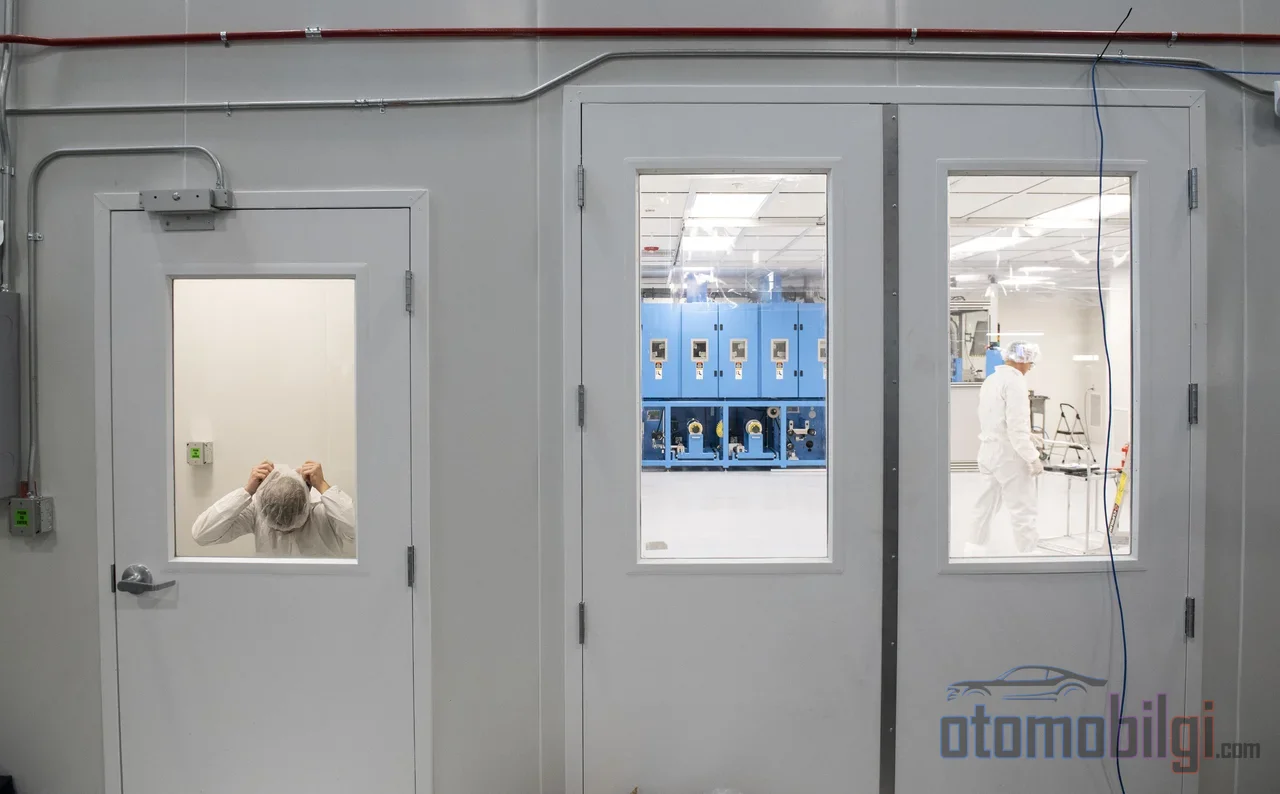
In the solid-state battery race, while most eyes are on companies trying to build complete battery gigafactories, a Colorado startup is fighting from a different angle: the electrolyte. Solid Power announced that it has begun commissioning its MOBIUS pilot line, which will continuously - not batch by batch - produce its sulfide-based solid electrolyte at the SP2 facility in Thornton. So why is moving from batch to continuous production considered such a critical threshold on this technology's path to commercialization?
MOBIUS Commissioning: What Does the Announcement Say?
According to the announcement made on October 26, construction of the MOBIUS line is largely complete and materials have begun being fed into the line. The company has completed the site acceptance test for the primary powder processing section; all acceptance tests are targeted to be finished by the end of this month. Facility verification and operational commissioning, as planned, are looking toward the fourth quarter of 2026.
A site acceptance test is a process that verifies at the pre-production stage that equipment operates in accordance with specifications; Solid Power is running these tests in parallel with the equipment manufacturer. So the line's current state is not a facility where everything is fully in place, but a production system whose settings are still being adjusted. It needs to be read with that in mind.
The figures behind the announcement are also clear. MOBIUS was designed to add an annual capacity of 45 metric tons of solid electrolyte to the SP2 facility. Once commissioning is complete, the facility's total capacity is expected to reach approximately 75 metric tons per year, meaning a 150% increase over current production.
Highlights
- October 26, 2026: Construction of the MOBIUS continuous production pilot line was largely completed and the commissioning process began.
- Capacity target: rising from 30 tons per year to 75 metric tons, a 150% increase.
- The project was supported by the U.S. Department of Energy's federal funding of up to $50 million.
- Roadmap: 75 tons in 2026, 140 tons in 2028; a 500-ton joint production target in Korea is on the table.
- Joint evaluation work with Samsung SDI, BMW and SK On continues.
Why Is Continuous Production So Important?
There is a fact well known to those who have been through this business: the distance between laboratory success and factory scale is longer than one might think in solid-state batteries. In the past, producing a material in grams was considered sufficient; today, the question automotive partners ask is how consistency in ton-scale production can be ensured. This is exactly where MOBIUS's importance begins.
Until now, the SP2 facility had been operating with existing batch production lines; each production run was carried out separately, and each batch went through its own quality control. MOBIUS, however, brings a continuous production architecture for the sulfide-based solid electrolyte, and according to the company it is a world first in this field. Continuous production promises tighter process control and more consistent output than batch production.
Solid Power's argument is this: the foundation for meeting the volume, consistency and cost targets required for commercial electrolyte supply is moving to continuous production. The logic we've been watching in the electric vehicle market for years applies here too; no matter how promising the technology, automakers won't come to the table until scale and cost are discussed in mass production.
The Role of Sulfide Electrolyte in Solid-State Batteries
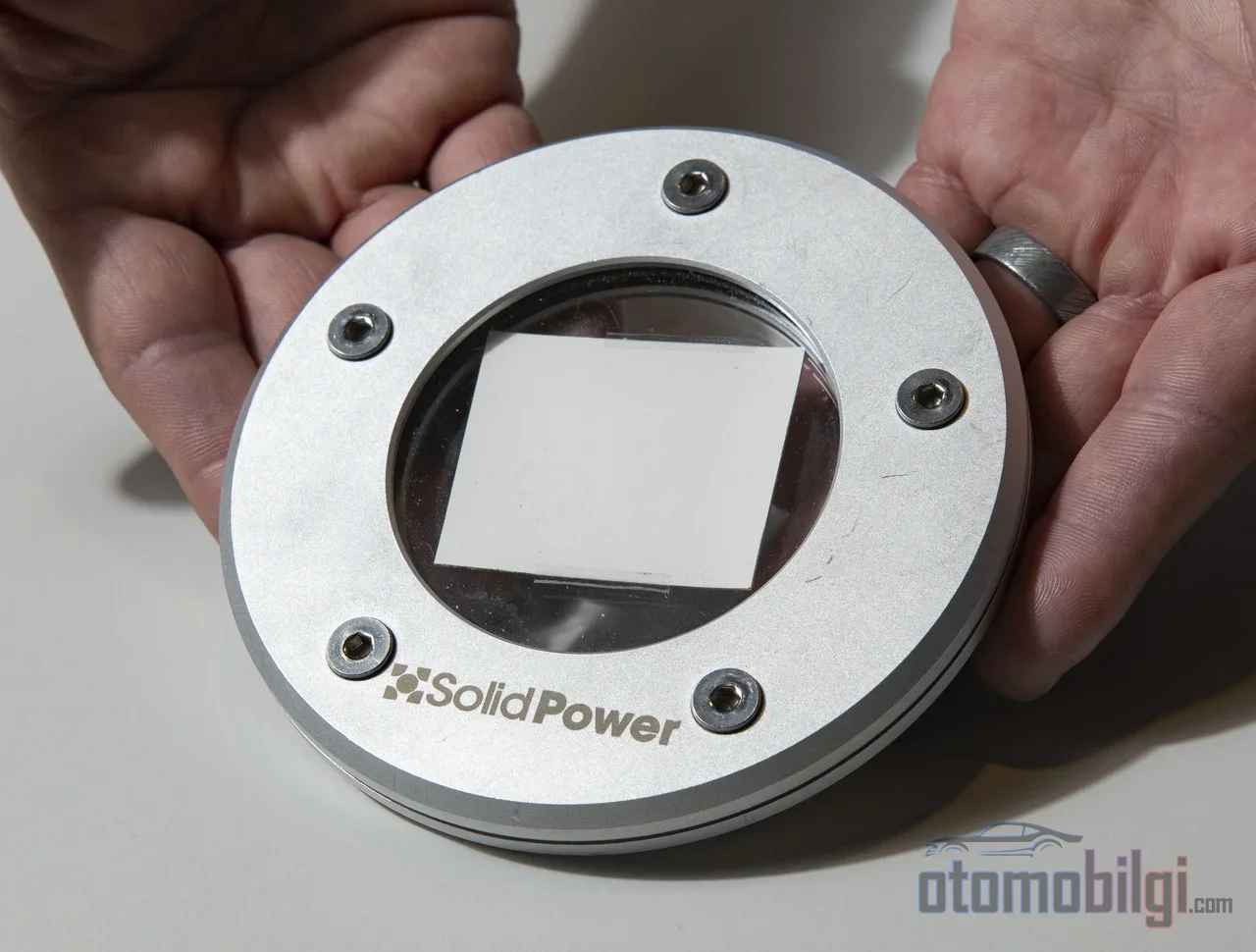
The promise of solid-state batteries is replacing the liquid electrolyte with a solid material. The liquid electrolyte is the main actor in the risk of thermal runaway, the leading cause of battery fires; it can leak and catch fire. A solid electrolyte largely eliminates this risk. In return, we're talking about safer, faster-charging electric vehicles with longer range. Solid Power points to the quartet of extended range, longer battery life, improved safety and low cost for its technology.
Why is sulfide preferred?
Solid electrolyte chemistry is not unique; there are alternatives such as oxide and polymer. The point where sulfide systems stand out is ionic conductivity at room temperature. In academic literature, it is accepted that sulfides set this standard. A wide operating temperature range and relatively low cost are also among the advantages. Moreover, thanks to their soft, deformable structure, they achieve good contact at the electrode interface; in solid materials, one of the hardest problems is precisely this contact.
The picture is not entirely rosy. Chemical stability issues of sulfides with current current collectors are debated, and a wing of the industry holds a different view: QuantumScape opposes the sulfide approach, arguing that sulfides do not prevent dendrite formation and that the external systems requiring high temperature and pressure add weight and volume. As of 2026, yield rates in sulfide-based all-solid-state pilot lines reportedly remain below 70%, and higher yield is needed for commercial success. In other words, MOBIUS is a threshold, not the finish line.
Capacity Roadmap: From 30 Tons to 140 Tons
MOBIUS alone is not the whole story; the roadmap announced with the 2024 Department of Energy announcement clarifies the picture:
| Period | Capacity | Production Type |
|---|---|---|
| Current | 30 tons/year | Batch production (SP2) |
| End of 2026 | 75 tons/year | Batch + MOBIUS continuous pilot line |
| 2028 | 140 tons/year | Colorado expansion |
| Target (Korea) | 500 tons | Production partnership (JV negotiations) |
The project was supported with up to 50 million dollars in federal funding through the Department of Energy's MESC office under the Bipartisan Infrastructure Law; the selection was announced in September 2024. Under the project, employment of 40 full-time production workers at the Thornton facility and up to 100 unionized construction workers during the construction phase was foreseen. The company's 2026 cash investment guidance is 85-100 million dollars; as of June 30, 2026, total liquidity is 419.3 million dollars with no debt financing. In other words, it is possible to say they are not financially strained to bring this line online.
A Business Model Different from Competitors: Selling Electrolyte, Not Batteries
The most fundamental choice that sets Solid Power apart from its competitors lies in its business model. The company does not plan to become a full-scale battery manufacturer; it sells its electrolyte to Tier 1 battery manufacturers and automotive OEMs, and licenses its cell design and production processes. According to the figures management shared in 2024, this approach requires roughly one-tenth of the capital needed to build a full battery factory. They are the sole material supplier on the Department of Energy's list; the commercial value of this position is directly proportional to the technology being available everywhere without taking on full-scale production risk.
Where do the automotive partners stand?
On the table of this spin-off from the University of Colorado Boulder lies a Joint Development Agreement signed with Samsung SDI and BMW; under this agreement, improvements in electrolyte performance have been reported. The line installation agreement with SK On has been completed and the related milestone payment has been received; the parties are negotiating a new cooperation agreement. The most ambitious headline, however, is Korea: in May 2026, the company announced that it was conducting joint venture talks for commercial-scale production of 500 metric tons of electrolyte in South Korea. The commissioning of MOBIUS is the kind of proof that will strengthen its hand in these negotiations; partners do not increase their commitments without seeing that volume and consistency can truly be achieved.
The Industry Stage: Who Is Where, Who Is When?
It must be said that Solid Power has not taken its step into a void. Toyota and Idemitsu Kosan advanced their sulfide solid electrolyte pilot production in February 2026; Idemitsu is ambitious with its pilot plant with a capacity of hundreds of tons per year, whose construction began in January 2026 and which is planned to come online in 2027. SK On opened its own solid-state pilot facility but pushed its commercialization target to 2029; the alliance it formed with Factorial Energy in July 2026 also shows the industry's consolidation trend. Solid-state technology is still being evaluated at the pilot and pre-commercial stage; today's moves are positioning plays that will determine who stands where in the supply chain of the coming decade.
To speak frankly, there is also risk. According to the company's own statements, Solid Power is in the R&D stage and is a company with a history of financial losses; the use of the DOE funding, the conclusion of partnerships, and the timing of commercialization are among the uncertainties. The commissioning of MOBIUS does not resolve these uncertainties on its own, but it aims to produce a concrete answer to one of the most critical of them: the question of scalability.
Conclusion: What Will This Step Add to the Series Production Goal?
The commissioning of MOBIUS does three things at once for Solid Power. First, by increasing capacity from 30 tons to 75 tons, it fulfills the 2026 leg of its roadmap. Second, it gives it the chance to prove at the field level that continuous production works in sulfide electrolyte; The company calls this a critical step for commercial readiness and long-term value creation, and CEO John Van Scoter's assessment that the line's name reflects process control, repeatability and scale sums up this claim. Third, Samsung SDI, BMW, SK On and the 500-ton JV negotiations in Korea strengthen the company's hand at the bargaining table.
There is still no answer to the question of when solid-state batteries will go under a car; that answer depends on yield rates, joint agreements and the 140-ton Colorado expansion in 2028. But one thing became clear on October 26: this company, operating with an electrolyte supply model, opened a tangible door on the road from pilot scale to mass production. The next step is expected to be the line reaching full capacity in the final quarter and the signing of the first commercial supply agreements.
Sources
- Solid Power Announces Significant Advancement in Commercial Pathway, Commissioning MOBIUS™ Continuous Electrolyte Manufacturing Line
- Solid Power Selected by U.S. Department of Energy for Up to $50 Million Award Negotiation
- Solid Power outlines commissioning of SP2.5 by year-end, targets 500 metric ton Korea partnership
- Solid Power Inc. - Investor Relations Overview
- Solid Power and BMW Deepen Joint Development Partnership
- Solid Power and SK On Deepen Partnership with New Agreements
- The Problem with Sulfides
- 2026 roadmap on next-generation solid electrolytes