How Honda's Dynamic Wireless Charging Road Changes Electric Driving?
Share This Page
Dynamic wireless charging road is an infrastructure concept aiming to charge electric vehicles while the driver is still behind the wheel: transmitter coils embedded in the road surface send power to the moving vehicle via electromagnetic induction. The system jointly developed by Honda R&D and Taisei Corporation is a concrete engineering effort trying to carry this idea all the way to large commercial vehicles. When you dig into the details, the technology's problems prove as meaningful as its promise: efficiency losses, per-mile cost, and the lack of standards.
Highlights
- Honda R&D, Taisei and Taisei Rotec announced their magnetically coupled road charging technology on October 5, 2026 was announced
- For large commercial vehicles, output verification of up to 150 kW is planned
- The embedded unit was designed to withstand traffic of vehicles with a gross weight of approximately 20 tons designed to withstand traffic of vehicles
- Public road demonstration tests will begin on the Tateyama Expressway in 2027 in Japan's fiscal year
- The installation cost was announced as approximately 1.2 million dollars per mile for the wireless charging road
How Does Charging While Driving Work?
The basic physics is the same as the old transformer principle: alternating current passing through a coil produces a varying magnetic field, and a second coil sitting within this field picks up energy from the air. In static wireless charging, the vehicle waits stationary over a parking pad; in the dynamic version, that is DWPT (Dynamic Wireless Power Transfer), the same transfer happens while the vehicle is at highway speed. Transmitter units embedded in the road body send power to the vehicle passing over them; the receiver unit mounted on the vehicle collects this energy and transfers it to the battery.
The terminology is laid out in Honda's bulletin: the transmitter units on the road side are called GA (ground assembly), and the receiver unit on the vehicle is called VA (vehicle assembly). The fact that the vehicle does not need to stop to charge sums up this technology's entire appeal. Since the root of range anxiety is charging stops, any solution that reduces those stops targets this anxiety directly.
Anatomy of the Honda and Taisei System
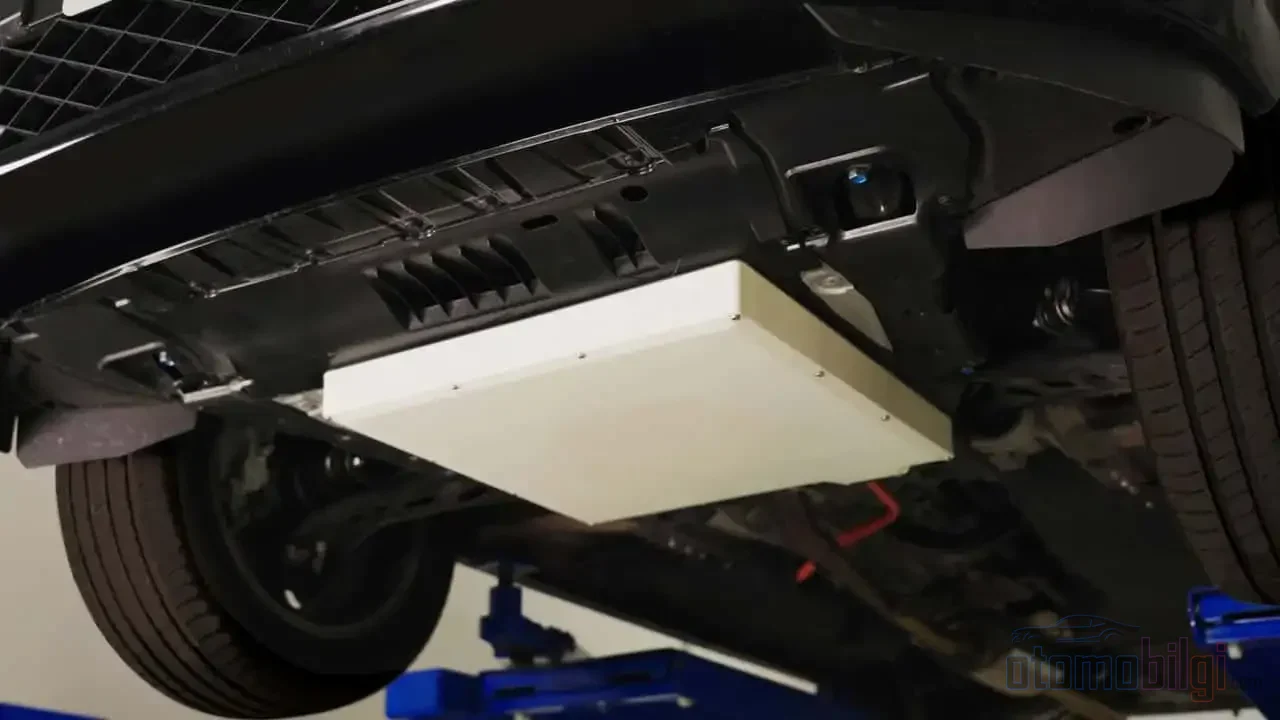
Honda has been working on DWPT since 2021; the joint research with Taisei and Taisei Rotec began in 2025. The announced system consists of three main components: Taisei's above-ground DC power supply system, a GA system based on DC distribution, and the VA receiver unit on the vehicle. Here is the difference: multiple transmitter units are connected to each other via a DC connection inside the road.
This design brings a world first: each GA unit combines the inverter and coil into a single DWPT unit. This simplifies the wiring in the embedded section, reducing the number of components and assembly labor. As someone who has been following this industry for over thirty years, let me say this: the idea of wireless charging is not new; what is new is taking the installation logic seriously. Similar projects previously mostly remained laboratory demonstrations; here the goal is to conform to the existing road surface using the milling-embedding method. The embedding unit and pavement structure are designed to withstand heavy commercial vehicle traffic of roughly 20 tons gross. The system also includes measures against surface irregularities on the milled road. These details may seem tedious, but they are precisely what will determine whether the technology stays on the road.
Test Program: From Laboratory to Public Road
The system's course so far is as follows:
- On the T-FIELD/SATTE test road, pavement structures and construction methods were validated.
- By the end of 2026 A new test road will be built at Taisei's T-FIELD/TAMRA facility; real-vehicle durability tests equivalent to 1 million wheel loads based on a load of 49 kN per wheel, DWPT performance tests, and evaluation of electromagnetic field leakage countermeasures will be carried out.
- In Japanese fiscal year 2027, demonstration tests on a public road will begin as part of the Tateyama Project conducted by NEXCO East on the Tateyama Expressway in Chiba; the aim is to validate reliable power transfer at high speed.
The technology will be showcased at the Japan Mobility Show Bizweek (October 13-16, 2026, Makuhari Messe) and at the ITS World Congress 2026 in Gangneung (October 19-23). Honda, in line with its 2050 carbon neutrality goal, continues its infrastructure work including the Honda Charge charging network; DWPT can be considered the road-side leg of this effort.
Efficiency: Where Is Wireless Charging's Weak Point?
Efficiency in wireless transfer is one of the most debated topics in the industry. The figures vary depending on recognition and measurement methods: for static wireless charging, an efficiency band of 88-93% is stated, equivalent to Level 2 plug-in charging; on the other hand, a 60-80% band suffering losses through heat is also reported for typical wireless chargers. Another common comparison puts static wireless charging at around 85% versus 94% for plug-in charging. In short, plug-in charging still leads, but the gap can narrow depending on the quality of the system.
In the dynamic system the picture is even more complicated, because efficiency varies greatly depending on coil alignment and the vehicle. At low vehicle density, all units on the road standing by actively can turn into energy waste; in systems with long configurations, academic studies report that coil-to-coil efficiency can drop to as low as 8.91%. In other words, the technology's true report card will be measured not under the best demonstration conditions, but in the middle of the night when traffic is sparse.
Cost and Infrastructure: The Big Unanswered Question
The installation cost of the wireless charging road is calculated at approximately $1.2 million per mile, while the receiver cost per vehicle is around $1,000. An investment requirement of around 167 million euros is also cited for the dynamic charging strips. Honda itself acknowledges that the economics need to be evaluated in comparison with conventional fast charging infrastructure - a measured admission straight from the manufacturer's own mouth.
The calculation on the range side is more optimistic: there are claims that installing on only about 1.6% of streets - that is, intersections, stops, and loading zones - could effectively provide unlimited range. If this claim is verified, then instead of looking at the total cost, strip selection becomes strategic. Still, advocates of plug-in alternatives point out that using pantographs, especially for public transport, seems more cost-reasonable, and that the material costs of dynamic wireless charging are excessively high. Honda's milling-and-embedding structure is also an answer to the maintenance difficulty of embedded equipment; the system aims to be integrated into regular road renewal works. This logic is sound: asphalt is already renewed at certain intervals, and if embedding coils becomes part of that job, the additional line item shrinks.
Why Trucks and Fleets First?
Honda is targeting the logistics and transportation sector as its first practical use case, and the rationale is solid: in commercial fleets, every charging stop is a direct operating cost. Charging on the move eases the fundamental burden of fleet operators. The 150 kW power target's focus on large commercial vehicles is part of this strategy; a truck's battery is not small, and if it cannot charge on the road, the range problem is solved with bulky batteries, which means extra weight and cost per vehicle.
This is not just Honda's thesis. Nor is this field unique to Japan: Purdue University engineers successfully tested dynamic wireless power transfer on a highway; a quarter-mile-long inductive charging strip was built in Michigan, and Detroit hosts the first wireless charging electrified road in the US. Such projects used to appear in futuristic concept files; now they are going under real asphalt.
Obstacles to Widespread Adoption
- Standardization: No electric vehicle yet comes with wireless charging as standard, and publicly available wireless chargers are next to nonexistent. China laying the groundwork for wireless EV charging standards signals that the standardization process has begun.
- Investment cost: The per-road figures were counted above; without a government or highway operator, this money will not come out of anyone's pocket.
- Technical barriers: Low coupling coefficients and misaligned power pads reduce efficiency, and maintenance is inherently difficult for equipment buried in the road.
- Road work processes: Unless the technology is tied to regular resurfacing cycles, digging up roads specifically destroys the economics.
Honda's DC distribution approach and its milling-embedding compatibility specifically target the assembly and maintenance side of these obstacles. However, the standardization problem is not one that can be overcome by a single manufacturer's power alone.
An Assessment from a Long-Term Perspective
In the past, charging infrastructure meant one thing: a vehicle plugging into a cabinet installed at a station. Today the picture is becoming layered: home charging, fast charging networks, and now the road itself. Honda and Taisei's DWPT work is the most mature example of a school of thought that seeks to solve range anxiety not by enlarging the battery but by making the infrastructure smarter. The Tateyama tests in 2027 will be the first public examination measuring the distance between the technology's promise and reality. I am hopeful but reserved: physics allows it; the real test lies in the economics.
Sources
- Honda Develops Underlaying Technology for In-motion Wireless Charging of EVs, Including Large Commercial Vehicles
- Honda, Taisei Jointly Develop Wireless EV Charging System
- Wireless Electric Vehicle Charging Market
- Wireless charging: The roads where electric vehicles never need to plug in
- Comparing efficiency: Wireless EV charging vs. plug-in
- Challenges and Barriers of Wireless Charging
- Purdue Engineers successfully test dynamic wireless power transfer on a U.S. highway
- Wireless charging roadway