BYD Offices Raided: JLR Seeks Evidence
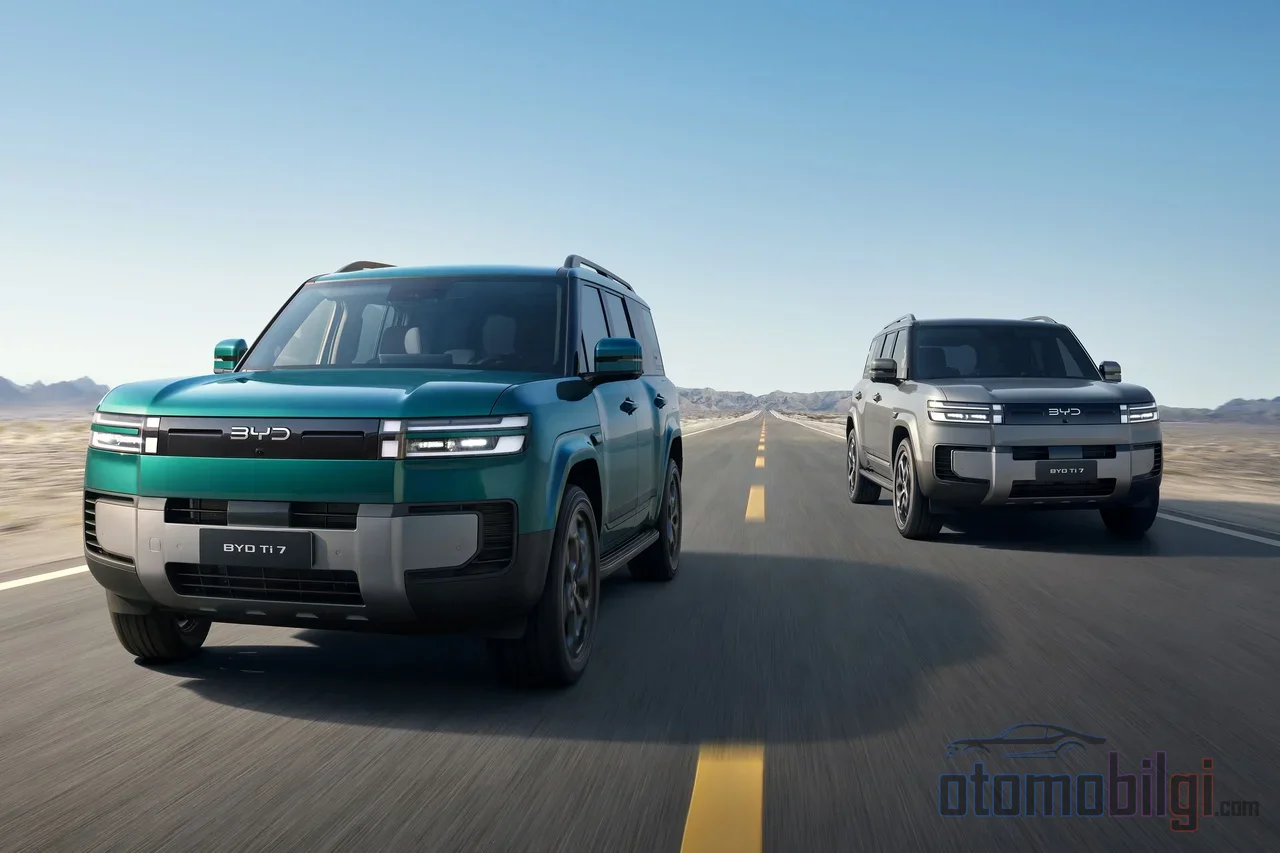
In August 2026, court-appointed bailiffs entered two BYD offices in the Dutch cities of Schiedam and Hoofddorp. What they were after was not an SUV circulating in public; according to JLR's claim, it was documents and digital records likely extracted from the Defender. When details of that raid surfaced in the press at the beginning of November, the design-copy dispute between the Chinese giant and Jaguar Land Rover had taken on an entirely different dimension: a civil compensation lawsuit had turned into an evidence-gathering operation.
Why was the raid carried out: Is it just a lookalike SUV, or a dismantled Defender?
At the center of the case is BYD's mid-size SUV called the Ti7. With its boxy body and strong lines, the vehicle bears a closeness to the Land Rover Defender that clearly cannot be ignored; it is not considered an exact copy, but the proportions and overall silhouette show distinct similarities. JLR's objection, however, goes far beyond visual similarity: the company suspects that BYD dismantled a Defender and used its technology through reverse engineering in developing the Ti7.
This is precisely the legal basis of the raid. The bailiffs acting on behalf of JLR in the case heard in The Hague aimed to access documents concerning the dismantling and examination of the Defender, and seized digital records ahead of the trial. In short, the question being investigated is this: Is the Ti7's design the product of an independent engineering effort, or did it come from the Defender being examined down to its parts?
Highlights
- August 2026 saw a raid on BYD's offices in Schiedam and Hoofddorp in the Netherlands
- The raid was carried out by court-appointed bailiffs on behalf of JLR, and digital records were seized
- The case is being heard at the court in The Hague; according to the claim, BYD dismantled a Defender and reverse-engineered it
- The Ti7 will go on sale in the UK in January 2027 with a starting price of 47,995 pounds
- The Ti7 is more than 20,000 pounds cheaper than the seven-seat Defender 110
Where is the case being heard, and what has happened so far?
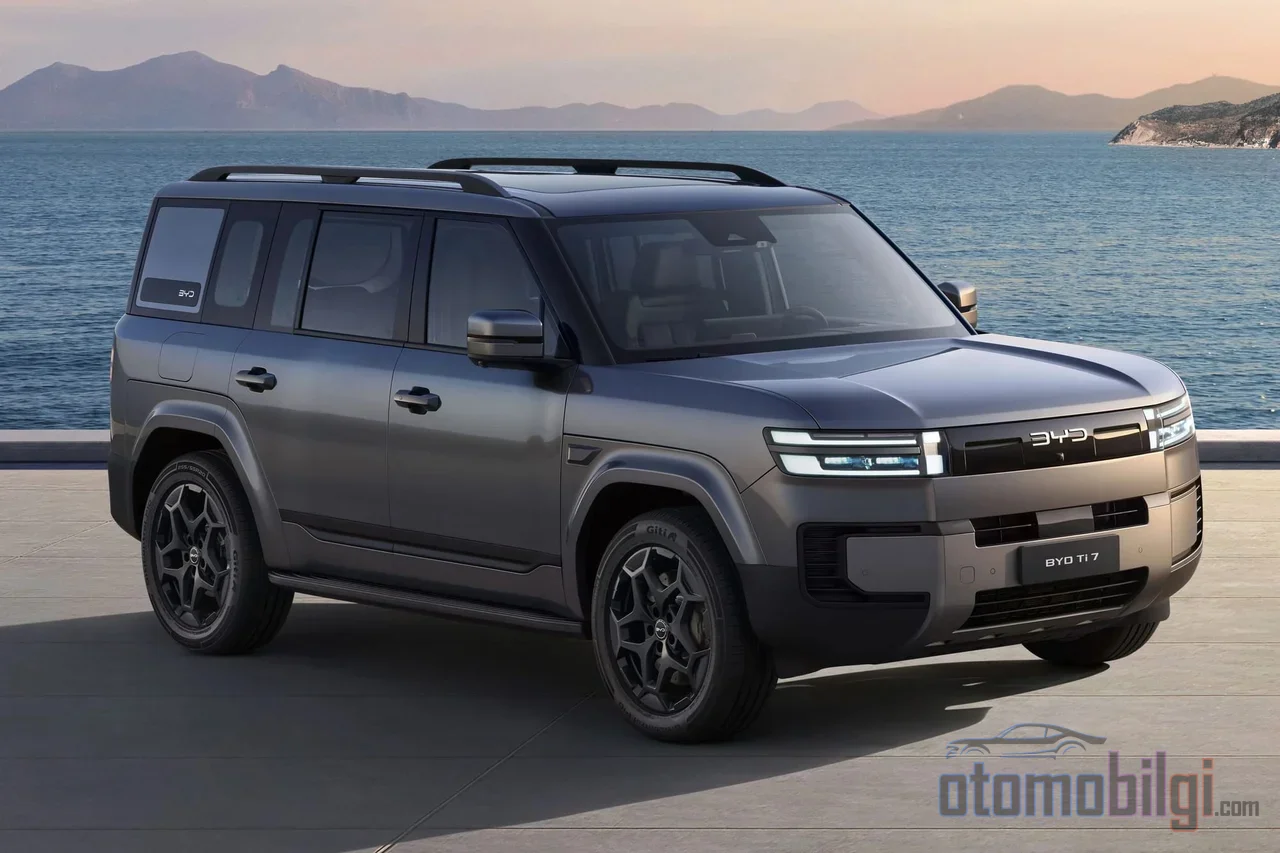
The legal process is underway at the court in The Hague. In early November 2026, the court was expected to decide whether BYD is required to respond to the alleged intellectual property infringement, that is, whether the case is admissible at this stage. As of the second week of November, no verified outcome of this decision has been announced by reliable sources; so for now it remains unclear whether the court has reached a substantive ruling on whether the Ti7 copies the Defender.
Both sides are being cautious in the public sphere. JLR is not commenting on the ongoing legal process; from BYD's side, no detailed defense regarding the raid has emerged yet. This silence is expected to be a stance maintained until the procedural decision, the first critical threshold of the case.
What is the Ti7, and what does it promise against the Defender?
The vehicle at the heart of the dispute is a technically ambitious package: a mid-size SUV with seven seats and a plug-in hybrid powertrain. It will go on sale in the UK market in January 2027, with a starting price of 47,995 pounds. It is already open for pre-orders, and the power output is announced as 402 bhp.
The commercial side is the real pain point: The Ti7 is more than 20,000 pounds cheaper than a seven-seat Defender 110. Moreover, the plug-in hybrid powertrain in the Defender can only be had with a maximum of six seats; a customer wanting seven seats with hybrid power cannot find this combination in JLR's own showroom. The fact that BYD has positioned itself precisely in this gap shows that JLR's strong reaction stems not only from design aesthetics.
Chinese manufacturers and the design-copy disputes: What does precedent say?
This is not the first lawsuit, and JLR is an experienced party in this area. In 2016, it sued China's Jiangling Motor in China over the alleged copying of the Range Rover Evoque and won the case; following this victory that went down in the records, the rival brand's facelifted model hit the market in 2017. At the time, it was rare for an automaker to win a design-copy case in China.
Chinese manufacturers' designs resembling European models had been a subject of controversy for years, with BMW, Mini and Porsche as examples. However, the picture is changing: egregious examples have decreased, and China itself has shifted toward intellectual property protection. Changan suing its rival Geely for design plagiarism in 2023 is the most striking indicator of this shift. Furthermore, under Chinese law, a similar-looking design can be deemed unfair competition; meaning the issue is not only the complaints of foreign brands, but an increasingly maturing domestic market dynamic.
The strange dependence between JLR and China: The Chery partnership
The diplomatic side of the story is also entertaining. JLR has a joint venture with Chery, BYD's Chinese rival. This partnership initially covered Chery's production of the Jaguar, Range Rover Evoque and Land Rover Discovery Sport in China; now it paves the way for Chery to revive the Freelander name as its own brand and sell eight SUV models in Europe and the UK in the future. So while JLR is in a legal battle with BYD on one hand, it is preparing a new brand for the European market with another Chinese partner on the other. The realities of the automotive world are always as clear as court files; but they are not always this straightforward.
Why does this lawsuit matter?
The short answer is this: The dispute between JLR and BYD stands as a precedent in which design-copy allegations for the first time moved beyond the confines of civil compensation to the stage of a court-ordered office raid and digital evidence collection. If the reverse-engineering claim can be proven, the similarity already becomes secondary; because dismantling and examining a technology demolishes the defense of independent design. Conversely, if BYD demonstrates that the design was developed through legitimate means, the case weakens.
The parties' positions will also determine the balance of power. JLR is owned by Tata Motors and is the guardian of an iconic model like the Defender; BYD, on the other hand, has developed its own technologies such as the Blade Battery and e-Platform 3.0, and is a globally scaled manufacturer with a wide lineup ranging from PHEVs to battery electric vehicles and electric bus production. BYD also has another model in its lineup focused on the Defender 110, such as the FangChengBao Bao 5 (to be sold abroad as the Denza B5); Although the Ti7 alone will not decide the fate of the case, the process in The Hague could go down in history as one of the most serious tests Chinese manufacturers have faced against design law in Europe.
Sources
- Chinese carmaker BYD's offices in Netherlands raided over JLR 'copycat car' claim - The Guardian
- JLR raids offices of Chinese rival BYD over 'copycat' claims - The Times
- Jaguar Land Rover escalates legal dispute with BYD over Defender-like Ti7 SUV - Automotive News
- Copycat Defender? JLR has raided BYD's offices over the boxy Ti7 SUV - Top Gear
- This Chinese Defender clone undercuts Land Rover's seven-seat 110 - Top Gear
- BYD offices raided over copycat design allegations - report - CarExpert
- JLR Sues BYD Over Claims It Stripped Down a Defender to Clone It - autoevolution