Coca-Cola 600: A Full NASCAR Marathon
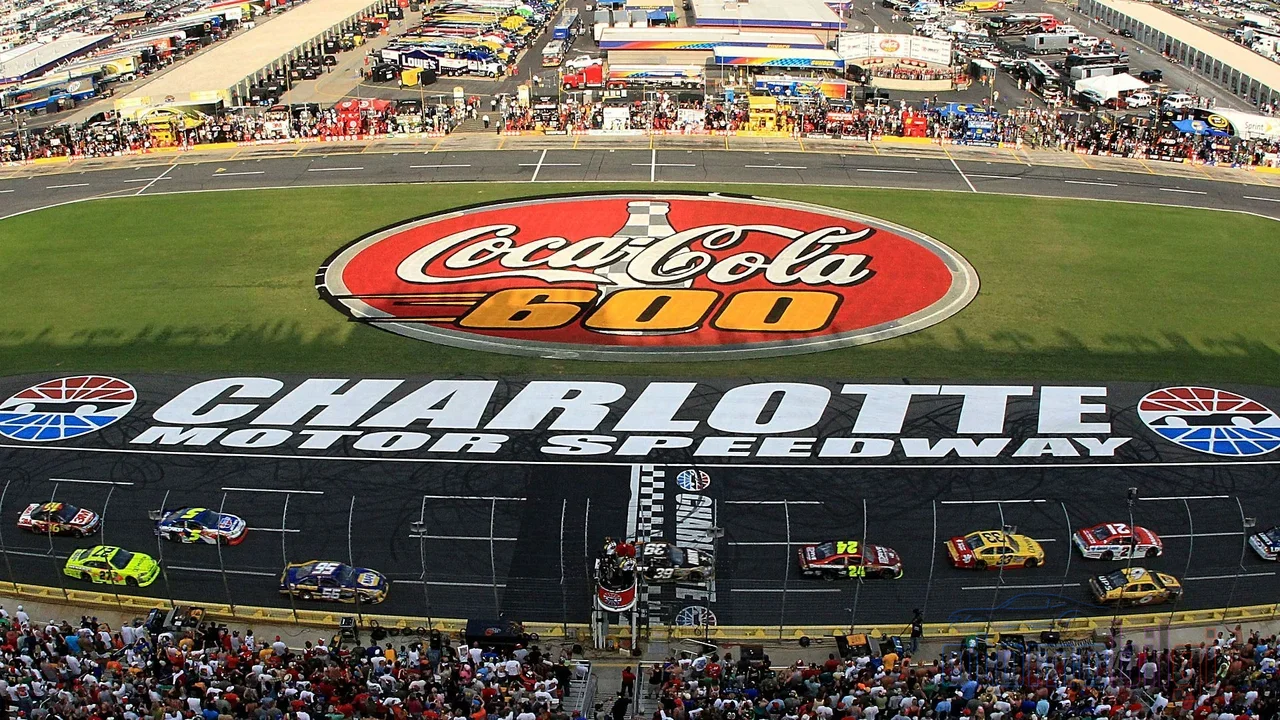
Think of it this way: Winning the Daytona 500 is the brightest showcase in the racing world; you become a legend overnight. But what if there is another test on the same calendar, a little further west, that few people talk about much - and it is actually the harder one? Charlotte Motor Speedway's 600-mile Coca-Cola 600 is exactly that: the longest, most punishing and strategically most intricate marathon on the NASCAR calendar. Here, fame is not granted for a single evening, but earned through a battle of endurance lasting more than four hours.
So why do many people say that, despite the glamour of the Daytona 500, this race is NASCAR's true test? The answer is not in one single thing; it lies in the length, the sunset, tire management and the driver's body. Come on, let's break it down layer by layer.
What Is 600 Miles, and What Kind of Track Is Charlotte Motor Speedway?
The Coca-Cola 600 is the longest race of the NASCAR Cup Series. It is run on the 1.5-mile oval track at Charlotte Motor Speedway in the city of Concord, North Carolina: a total of 400 laps and 600 miles. Most Cup races are 400 or 500 miles; the 600 is the only race that puts an extra 100 miles on top of endurance. The track itself is one of the most defining examples of its kind: it has four turns, with 24 degrees of banking in the turns and 5 degrees on the straightaways; the front straight is 1,980 feet and the back straight is 1,500 feet long. Even the track's own definition is clear: NASCAR's toughest exam for both man and machine.
Highlights
- The Coca-Cola 600, at 400 laps / 600 miles, is the longest race of the NASCAR Cup Series.
- The race duration is usually over 4 hours; even the shortest run in the stage format has exceeded 4 hours and 19 minutes.
- It is the only Cup race run with four stages; a perfect night can earn up to 70 points.
- The race starts under the afternoon sun and finishes under the night lights; track conditions change continuously throughout.
Where Does the Difference Between the Daytona 500 and the Coca-Cola 600 Lie?
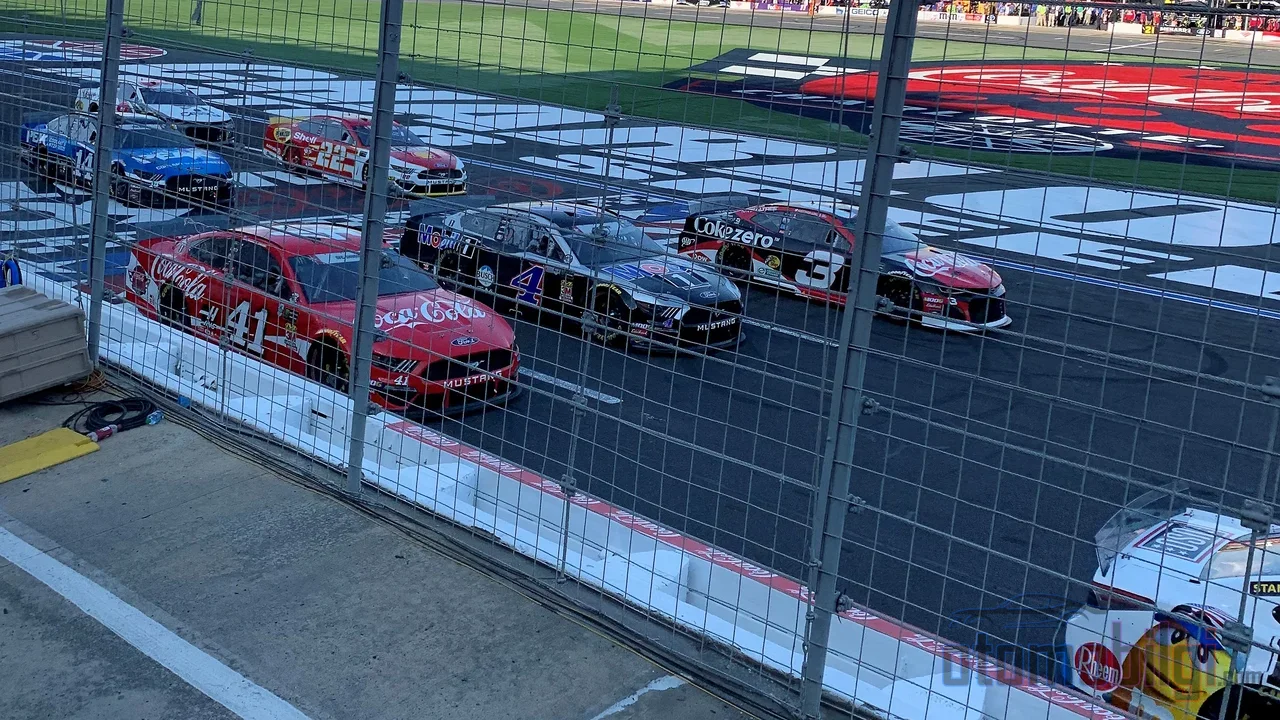
NASCAR has four major races, known as the crown jewel races: the Daytona 500 is known as the richest, the Southern 500 at Darlington the hardest, Indianapolis' Brickyard 400 the most storied, and the Coca-Cola 600 the longest. So each of these four races has its own identity, and the identity of the 600 rests entirely on its length.
But there is an interesting detail hidden in the points side of things: although it is the Coca-Cola 600 and not 500, it carries the same maximum point value as the Daytona 500. A perfect race can bring 70 points; that is 25 percent more than the other races. So for a team that calculates points, 600 miles is one of the most valuable nights of the season. Daytona is a short, explosive duel; the 600 is a marathon of patience, strategy and endurance. The two are different faces of the same coin.
From Sun to Night: Why Do Track Conditions Change Constantly?
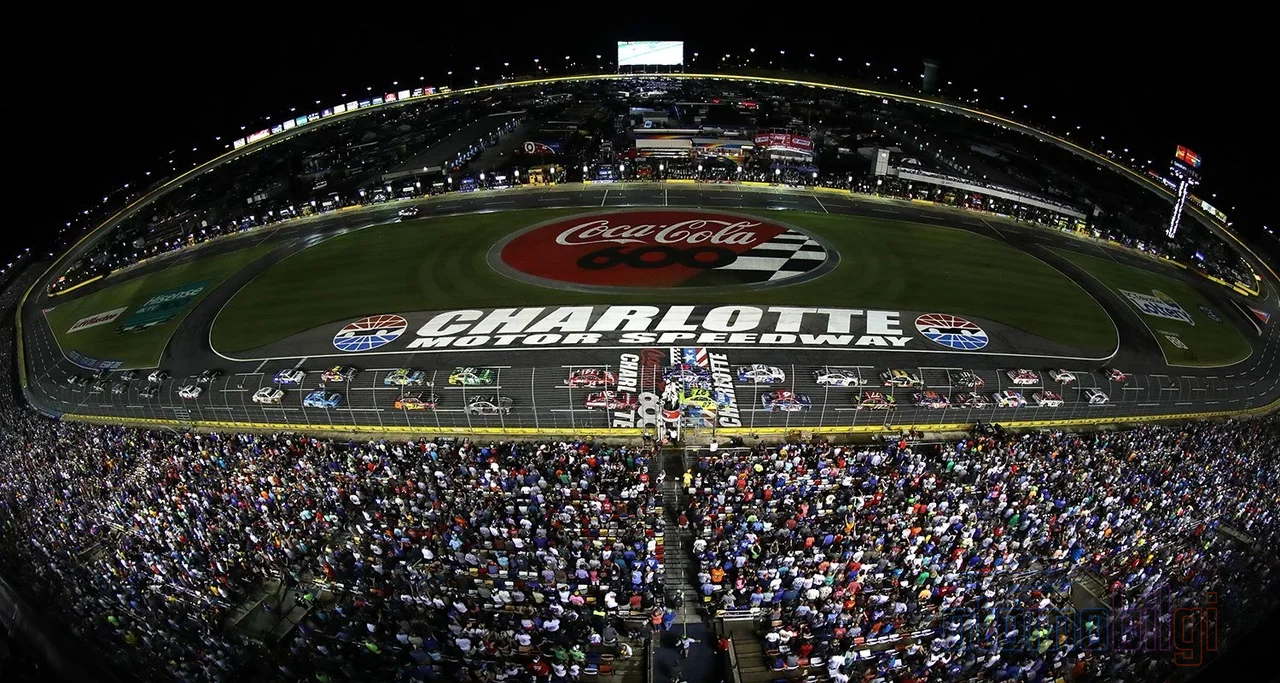
Here is the real magic of this race - yes, I said magic, but this is actually where the difficulty begins. The race starts in the evening hours, usually around 18:20, and this starting time changes everything. The first third of the race is run on sunny asphalt, the second third at sunset, and the final third entirely under night conditions. This is the only race in NASCAR where track conditions change from start to finish throughout the race.
How does the changing grip challenge the teams?
As the sun sets, the asphalt cools and grip, meaning adhesion, increases. The crucial point here is this: a car setup that works great in the evening hours can render the car undrivable before midnight arrives. Charlotte is known as one of the tracks most sensitive to temperature changes. If the crew chief misses the setup during stage breaks, the driver essentially rides along as a passenger for the next 100 laps. To summarize Kyle Busch's approach: since there is time for the transition from daylight to night, you generally don't worry about the car until nightfall, because the prize is handed out at night.
Night lighting and eyes
The night section is made possible by a lighting system with parabolic reflectors that prevents dangerous glare in the drivers' eyes. In other words, the lights don't just illuminate the track; they are specifically designed to preserve the driver's vision even at the end of 600 miles. Details matter this much precisely in this race.
What Happens in the Driver's Body? Physical and Mental Fatigue
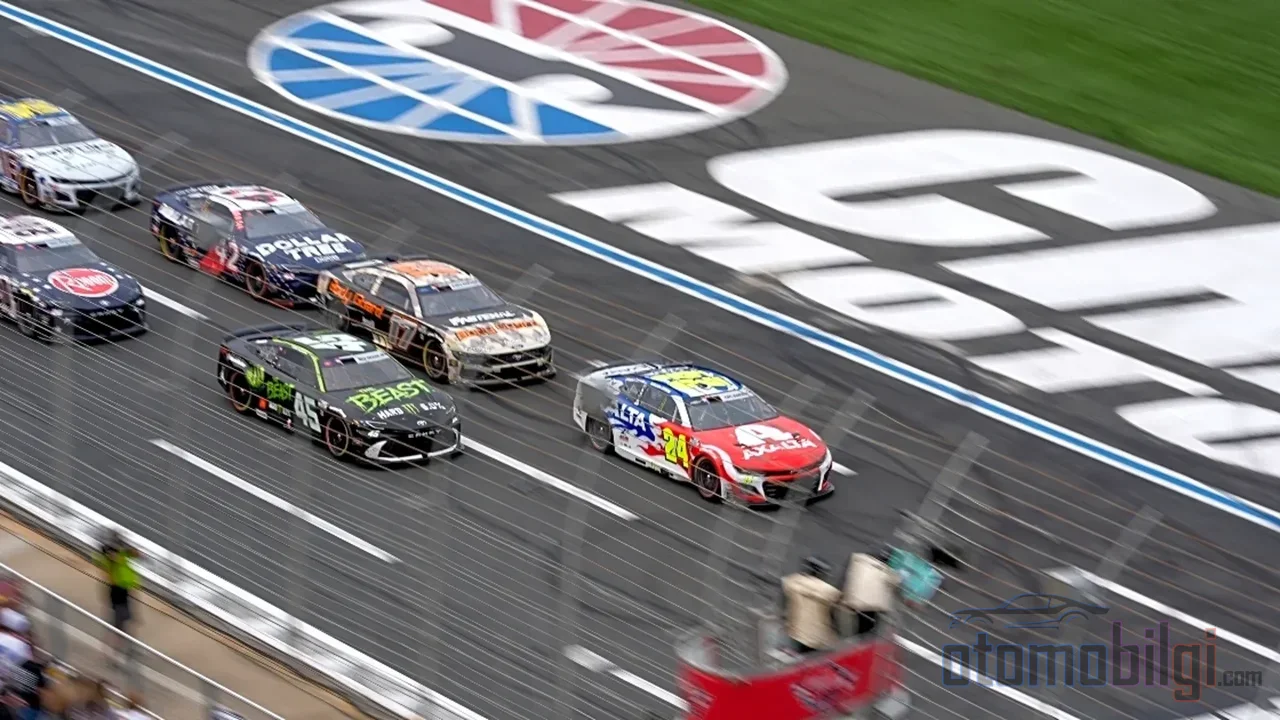
Now let's talk about some harsh realities. The physical tally given by Denny Hamlin is striking: in this race a driver loses about 8 pounds, that is 3.6 kilograms of weight and burns 2,500-2,800 calories. In other words, a Coca-Cola 600 can be compared physically to running a marathon. A researcher from Michigan State University even received the first habeas corpus petition granted to examine heat stroke in NASCAR drivers; the subject is serious enough to be taken seriously scientifically.
Mental fatigue, however, is just as critical as the physical kind. In the eyes of the teams, this is one of the biggest challenges drivers face. Ryan Blaney admits he felt increasingly drained halfway through his first 600; but when he won this race in 2023, the victory opened the door for him to a playoff ticket and his first Cup championship run. In today's competitive environment, there are also those who say the driver has to execute almost flawlessly amid fast pit stops and chaotic restarts. In short, 600 miles is one of the races with the smallest margin for error.
Four Stages and Points Dynamics: The Strategy Dilemma
Since 2017, the Coca-Cola 600 has been run with four stages, compared to the three stages of other races: 1-100, 101-200, 201-300 and 301-finish. Each stage awards 10 points to the winner, 9 to second place, and so on in decreasing fashion; a driver who sweeps all three stages and wins the race can reach 70 points. In some calculations, when the win, stage points and fastest lap bonus combine, the theoretical maximum rises to 86 points.
The fourth stage, because it offers more stage points, puts the teams into a real dilemma: chase the stage win by risking tires, or pit early, in other words short pit, to prepare for the final 40-lap sprint? These decisions turn the final section of the 600 miles into a chess match.
Pit Strategy: Fuel Window and Gambles Paid Off
The typical fuel window is around 22-25 laps; how far you can go on one tank and how many stops are needed are the foundation of every strategy. Of course, there are those who gamble: In 2017, Austin Dillon dared to stretch the tank to its last drop while the leaders pitted. The leaders stopped, he didn't, and he crossed the finish line with an engine nearly dead to snatch the victory. Moments like these show why the 600 is the race of strategy masters.
The Next Gen car made things even more interesting: On a 1.5-mile track, the gap between pole position and 30th place dropped to as little as 0.6 seconds in some races. With the field this tightly packed, pit execution, restarts, and tire management become the deciding factors in winning. Summing up Michael McDowell's approach in simple terms: in a race that starts in daylight and ends at night, battling plenty of cautions and extra restarts, you need a fast car all night and flawless execution on pit road.
Same Day as the Indy 500: The Double Duty Tradition
The Coca-Cola 600 is a Memorial Day weekend tradition. And since 1974 it has been run on the same day as the Indianapolis 500; the two races had already shared the same weekend since 1967. This gave rise to a legendary challenge: running both races on the same day, that is, Double Duty. To date, five drivers have attempted this feat: John Andretti, Robby Gordon, Kurt Busch, Kyle Larson, and Katherine Legge. Legge became the first woman to start both races in 2025 and finished 31st in the 600. place in the 600.
The record holder is Tony Stewart: the only driver to do the Double and finish both races in 1999; his total time was 7 hours 43 minutes 42 seconds. In 2001, he became the only driver in history to finish both races on the lead lap. But note: no driver has ever won both races, either on the same day or in their entire career. Double Duty is a logistical circus involving private jets, helicopters, and IV drips; Kyle Larson's attempts are among the most talked-about examples. Even this picture is proof of how grueling the 600 is.
Too Long or Just Right? The Coca-Cola 600 Debate
Every legend has its critics. After the race that finished near midnight in 2020, some argued the 600 was too long and should be shortened; no race in the stage format went under 4 hours 19 minutes, and the 2020 race exceeded 5 hours. On the other hand, the fan camp thinks exactly the opposite: being the longest race run on an intermediate track makes it a true test of endurance.
The parity era of recent seasons has added a new dimension to this debate. In the 2025 season, victories were spread across garages, and in a 12-race points stretch only three drivers managed to win more than once. Denny Hamlin's observation is striking: the best car wins only about 30 percent of the time; but the 600 always brings out the best in drivers and teams. So long distance reduces the luck factor and rewards true speed. Even Christopher Bell, who won the 2024 race shortened by rain, said he wanted a true 600-mile victory. Notes from history also prove the power of the format: Martin Truex Jr. set a record by leading 588 miles in a single race. In 2025, Ross Chastain started from 40th place, the lowest starting position of any winner in this race's history, meaning from the very last row, and claimed victory; moreover, he raced with a backup car due to a practice crash. And there is also the story of the 1974 fuel crisis: that year the race was shortened to 540 miles, and David Pearson managed to beat Richard Petty.
Conclusion: Why Is the Coca-Cola 600 the Real Test?
Yes, the Daytona 500 is a short-lived burst of fame, a showcase race; but NASCAR's true exam is given at Charlotte. Because the Coca-Cola 600 is the only test that combines its 600-mile length, track conditions that change with sunset, the four-stage scoring dynamics, fuel and tire management, and the fatigue it leaves in the driver's body in a single race, minimizing luck and rewarding true endurance. In a marathon exceeding four hours, both the machine and the human as well as the mind are put to the test; the winner is usually not the best prepared, but the one who endures best. If you are in front of the screen on the next 600 night, remember this while waiting for the checkered flag: what you are watching that night is NASCAR at its purest.
Sources
- Here's all you need to know about the Coca-Cola 600 and Charlotte Motor Speedway
- The Coca-Cola 600, a NASCAR 'crown jewel' race, is too long
- Charlotte NASCAR Viewer's Guide: Everything you need to know for the Coca-Cola 600
- Charlotte NASCAR Viewer's Guide (Motorsport.com)
- Why NASCAR's Coca-Cola 600 still separates the greats
- Tony Stewart's Historic Double Duty
- MSU Scholar Receives First Ever NASCAR Grant to Study Heat Exhaustion
- Analysis: Most dominant driver performances