Darrell Waltrip: From Booed Villain to Most Beloved Driver
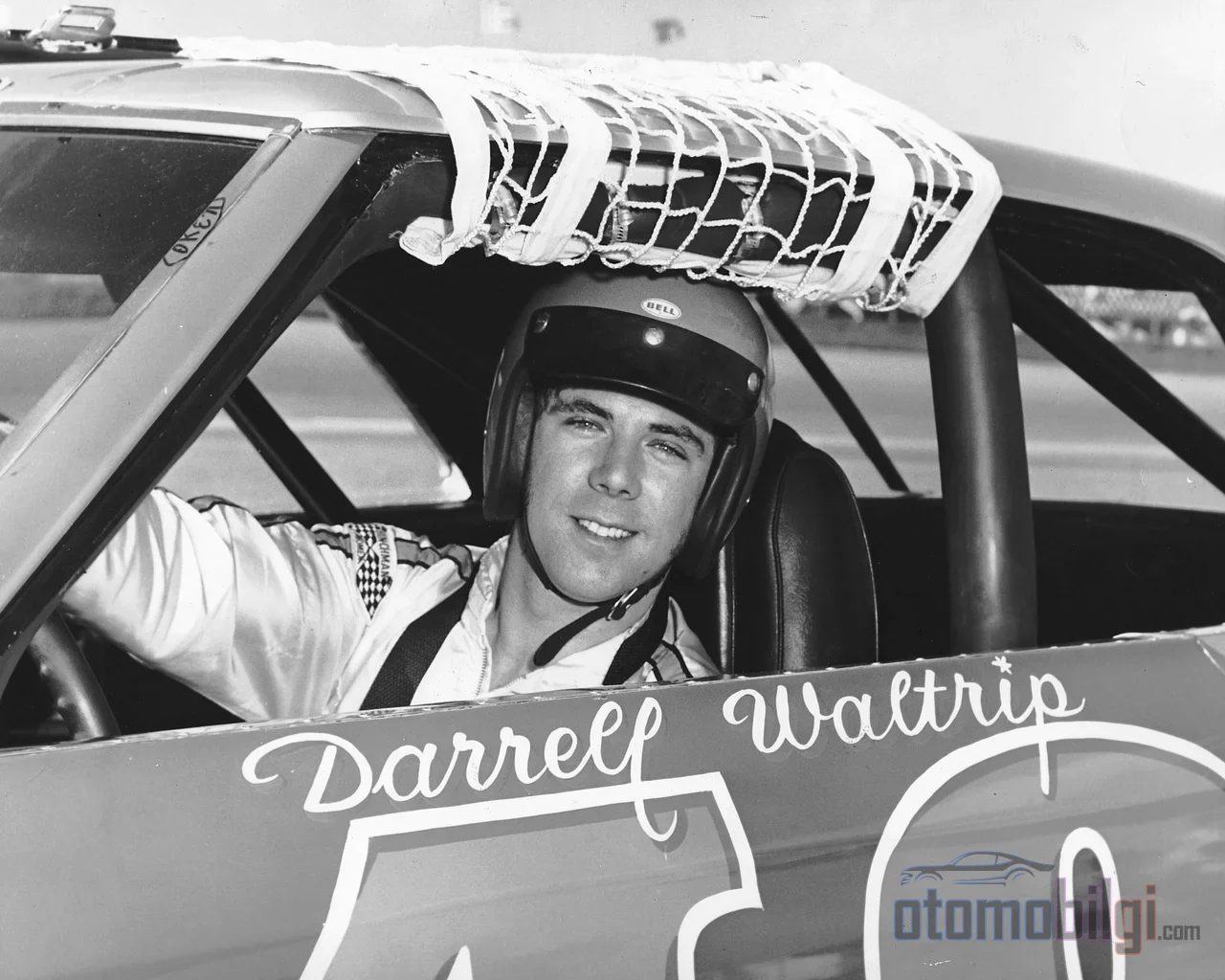
February 1989, Daytona. 53 laps to go until the final pit stop, the crew chief of the No. 17 Tide Chevrolet, Jeff Hammond, gives a single instruction over the radio: push forward without worrying about fuel, drafting off everyone. A full tank normally means 45-46 laps for that car; Hammond wants it to go another 132 miles. The man behind the wheel has been chasing this race for 17 years and still hasn't won it. His career has 84 wins and three championships, but no Daytona 500. The Darrell Waltrip story is built precisely on this contradiction: the most talked-about, most winning driver in NASCAR history who somehow could never win the biggest race of all.
The Kid from Owensboro: How the "Jaws" Nickname Was Born
Darrell Lee Waltrip was born on February 5, 1947, in Owensboro, Kentucky. He made his Cup Series debut on May 7, 1972, at Talladega; he entered that first race with a 1969 Mercury Cyclone he bought from Holman-Moody for 12,500 dollars, finishing 38th due to an engine failure. His first win came on May 10, 1975: the Music City 420 in Nashville, driving his own No. 17 Terminal Transport Chevrolet at the Music City 420 in Nashville. Yes, that famous number 17 had been his since the very beginning of the story.
In mid-1975, Waltrip moved to DiGard Motorsports' No. 88 Chevrolet, and in 1979 he took 7 wins and fought Richard Petty for the championship, but lost the title by 11 points in the season finale at Ontario; it was the third-closest points battle in Cup history. He was young, fast, and too talkative. His aggressive track style and his mouth, never shy about criticizing veteran rivals, earned him a nickname from Cale Yarborough in 1977: Jaws. Waltrip actually preferred to be called D.W. or D-Dubya, but he responded with humor by displaying an inflatable shark in his pit at the next race. Fans either loved him or booed him; there was no in-between.
The Junior Johnson Years: The Recipe for Three Championships
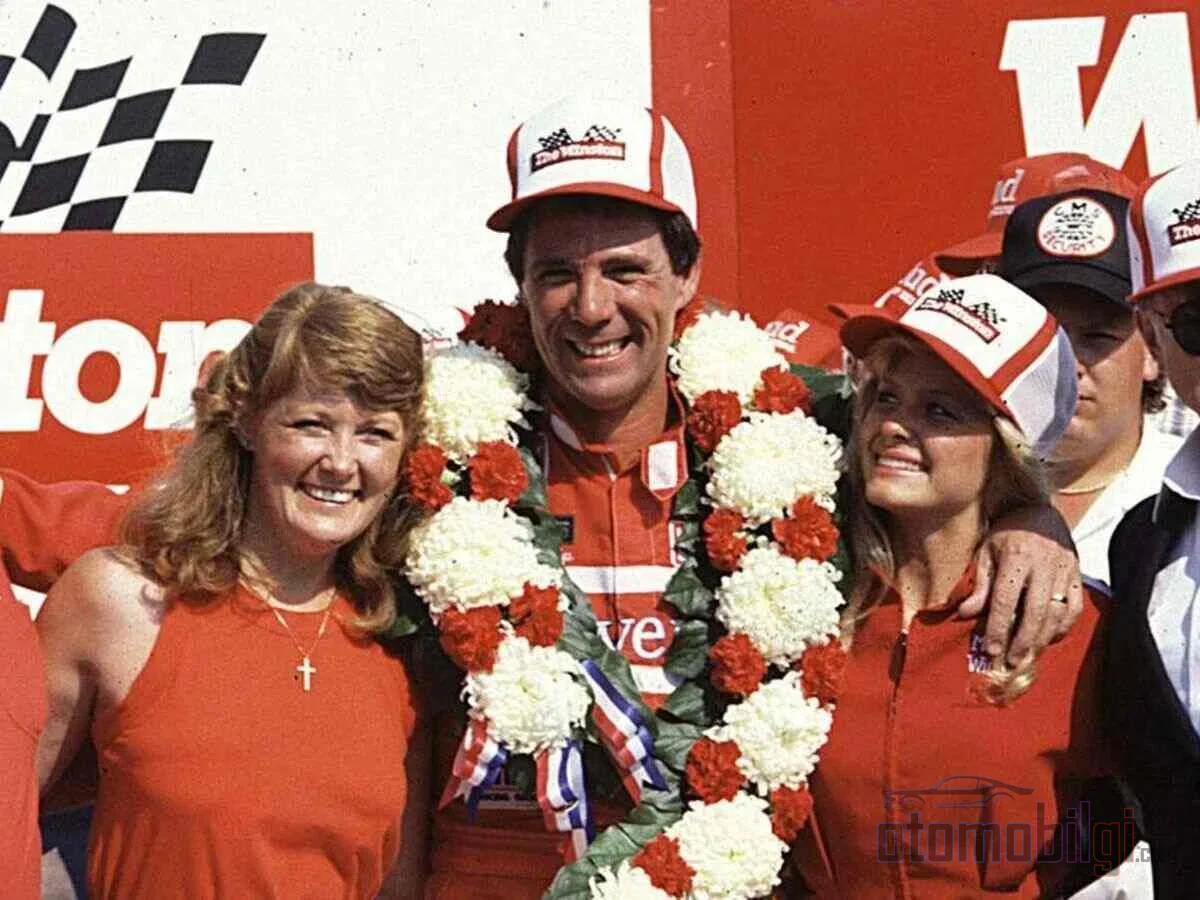
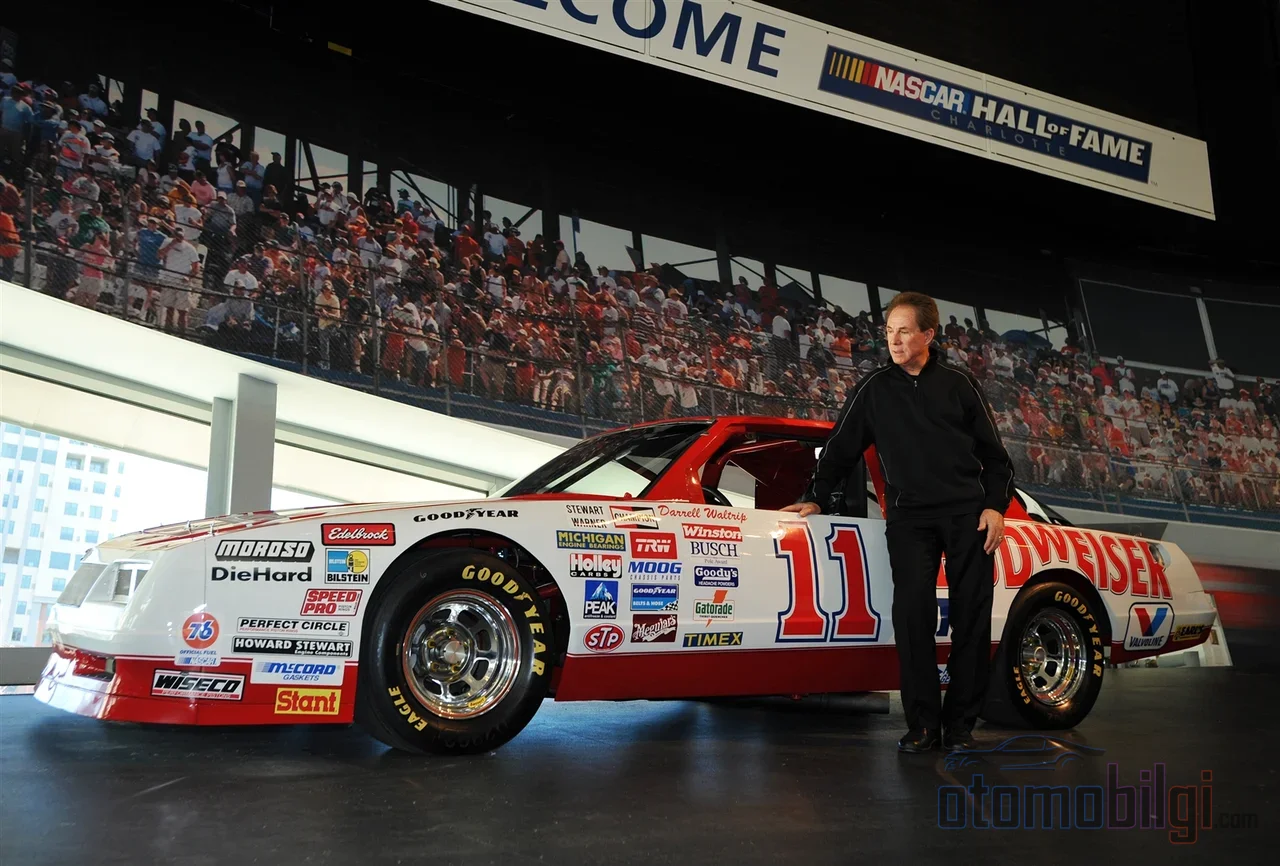
In 1980, his split from DiGard was acrimonious. At that very moment, Cale Yarborough privately told Waltrip that he would be leaving the Junior Johnson team, and in 1981 Waltrip took over the No. 11 in 1981. It was the turning point of his career.
Highlights
- Three Winston Cup championships: 1981, 1982, 1985, all three with the Junior Johnson team
- Career totals: 84 wins, 59 pole positions, 809 race starts
- Daytona 500 victory came at the 17th attempt, in 1989, with fuel strategy
- 12 wins at Bristol, seven of them consecutive between 1981-1984: a track and series record
- The first NASCAR driver to surpass 10 million dollars in career earnings
1981: A 300-Point Comeback
The 1981 season was a lesson in itself. Waltrip collected 12 wins and 11 pole positions; he turned around a championship battle that Bobby Allison had been leading by about 300 points at midsummer, and won the title by a 53-point margin. Two consecutive championships came in 1981 and 1982, when he took 12 wins each year with the Mountain Dew-sponsored Buick Regal; the margin in 1982 was 72 points. Even brand switches like moving from Chevrolet to Buick did not break his rhythm.
The King of Bristol and the Close of 1985
Waltrip had a special relationship with certain tracks. He took 12 wins at Bristol Motor Speedway, seven of them consecutively between 1981-1984; this is both a track and a series record. He holds the race record at the Coca-Cola 600 with 5 wins (1978, 1979, 1985, 1988, 1989), the pole position record at Martinsville with 8, and the all-time track record at Nashville Fairgrounds with 67 wins. In 1983, he broke the modern NASCAR record by scoring 22 top-5 finishes in a single season. His combined totals with Junior Johnson: 3 championships, 43 wins. But at the end of 1986, Waltrip got out of the contract by knowingly breaking one of Johnson's rules and asking for a raise; the Winston Western 500 at Riverside on November 16, 1986 became the final race of this partnership.
Crash, Image, and the Most Popular Driver
The heavy crash he experienced at nearly 200 mph in the 1983 Daytona 500 was the event that changed Waltrip's public image. The man who had been booed until that day was named NASCAR's Most Popular Driver two years in a row in 1989 and 1990. Of course, there was still a major race he had not won.
Between 1987-1990 he raced in Hendrick Motorsports' No. 17 Tide Chevrolet. In 1989 he helped develop the new Chevrolet Lumina and took his fifth Coca-Cola 600 win with that car; he collected 6 wins in total that season. When Rusty Wallace sent him into the wall at the 1989 The Winston, 150,000 fans booing Wallace showed at once how polarizing a figure Waltrip had been until then - and how beloved he was too.
17. The Attempt: How Was the 1989 Daytona 500 Won?
February 19, 1989. Waltrip won the Daytona 500 on his 17th attempt. The secret of the victory was not speed, but math. In the strategy they built with Jeff Hammond, the final pit was made with 53 laps, or 132 miles, to go; the competitors' cars could cover 45-46 laps on one tank. The instruction was simple: take the draft from everyone ahead and conserve fuel. His celebration when he took the checkered flag went down in history:
His jubilation when he took the checkered flag went down in history: He could hardly believe it, to the point of asking whether the race he had won was really the Daytona 500. He did the Ickey Shuffle dance in Victory Lane and, after the victory, was received at the White House by President George H. Bush at the White House. In 1991 at North Wilkesboro, after a winless streak of 34 races, he reached his 80th win, and in 1992 his last win, his 84th, at Bristol. In 1991 at North Wilkesboro, after a winless streak of 34 races, his 80th. he reached his 84th victory, which came at Bristol in 1992 and was his last win. In the 2000 season, however, he bid farewell with a start from the outside pole at the Brickyard 400 and an 11th-place finish; after that race he stepped away from the wheel and moved straight into the broadcast booth.
So where did that famous phrase come from? Second Career
So where did that famous line come from? His signature catchphrase, repeated at every race start during his Fox Sports broadcast career, partly nonsensical but now his trademark, spread not just through Turkiye but across all of NASCAR culture: Boogity, boogity, boogity, let's go racing boys. Waltrip explained the origin of the phrase years later in his own words; there is also a circulating account that he was inspired by a country music song. Whatever its exact origin, the phrase became an inseparable part of the NASCAR race start.
Waltrip became one of the rare figures who went straight from driving to color commentary. From Fox's lead color commentator seat, alongside Mike Joy, Larry McReynolds and later Jeff Gordon, he called more than 330 races and more than 1,500 practice sessions. He left commentary with the broadcast at Sonoma Raceway on June 23, 2019; the last Boogity was said there. But he returned to the booth for one lap at Darlington and shouted the phrase once more. In the 2025-2026 period, his family announced that he was stepping away from public life due to a diagnosis of a progressive brain disease.
So, How Many Championships Did Waltrip Win? The Full Recipe
Here is the answer the title promised, in a single paragraph: Darrell Waltrip won three Winston Cup championships, in 1981, 1982 and 1985, all three with the Junior Johnson team. Add to that 84 Cup wins, 59 pole positions, 271 top-5 and 390 top-10 finishes; with earnings of approximately 19.9 million dollars, he became the first NASCAR driver to cross the 10-million-dollar threshold. As for the Daytona 500, it came on his 17th attempt, in 1989, thanks to fuel strategy. This summary makes him one of the most complete drivers in NASCAR history.
One note: 84 wins puts him fifth on the all-time list, just behind Bobby Allison; some records count him as tied for third with Allison. Depending on the ranking definition, the positions may shift by one or two places, but the number itself is undisputed. In the modern NASCAR era, only Jeff Gordon managed to win more races than Waltrip. His 12 wins at Bristol, 5 victories in the Coca-Cola 600 and record 8 pole positions at Martinsville have still not been surpassed by anyone.
What truly makes Waltrip unique is that he carries two careers in a single person. On the track, the man nicknamed Jaws, who challenged his rivals to duels and won three championships; at the microphone, the narrator who started races by saying Boogity to millions and made NASCAR beloved by a new generation of viewers. From the booed man to Most Popular Driver, from 17 years of Daytona longing to a victory that came through fuel calculations: Darrell Waltrip's story is one of NASCAR's best scripts, and it proves it is no coincidence.
Sources
- Darrell Waltrip
- Daytona 500 2000 - Waltrip prepares for emotional race - ESPN
- Last lap of the 1989 Daytona 500: Darrell Waltrip in the No 17
- Darrell Waltrip, Chevrolet Monte Carlo 1989 Daytona 500 winner
- Waltrip won 84 races and Cup Series championships in 1981, 1982 and 1985
- Darrell Waltrip taking the checkered flag in the 1989 Daytona 500