What Is the 'Big One' in NASCAR and Why Is It Considered Inevitable?
Share This Page
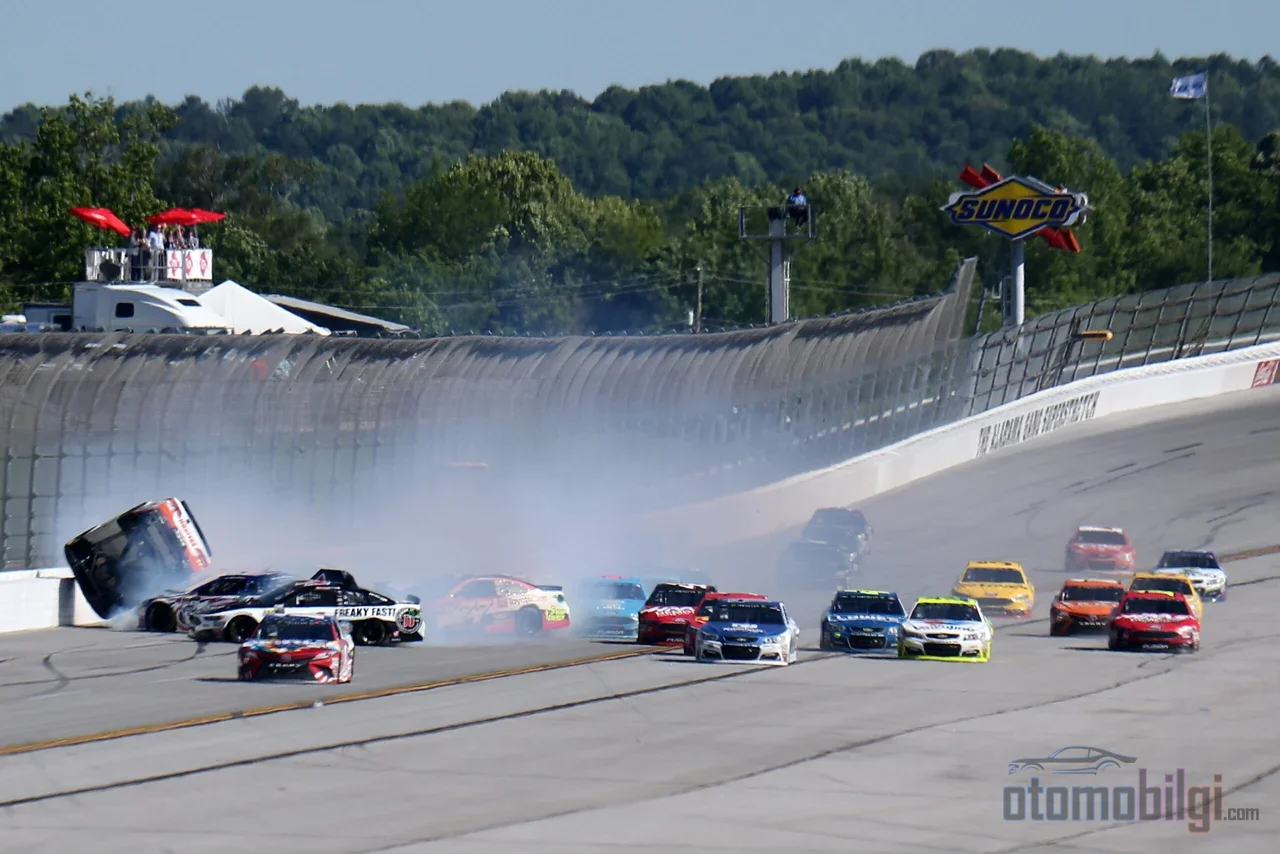
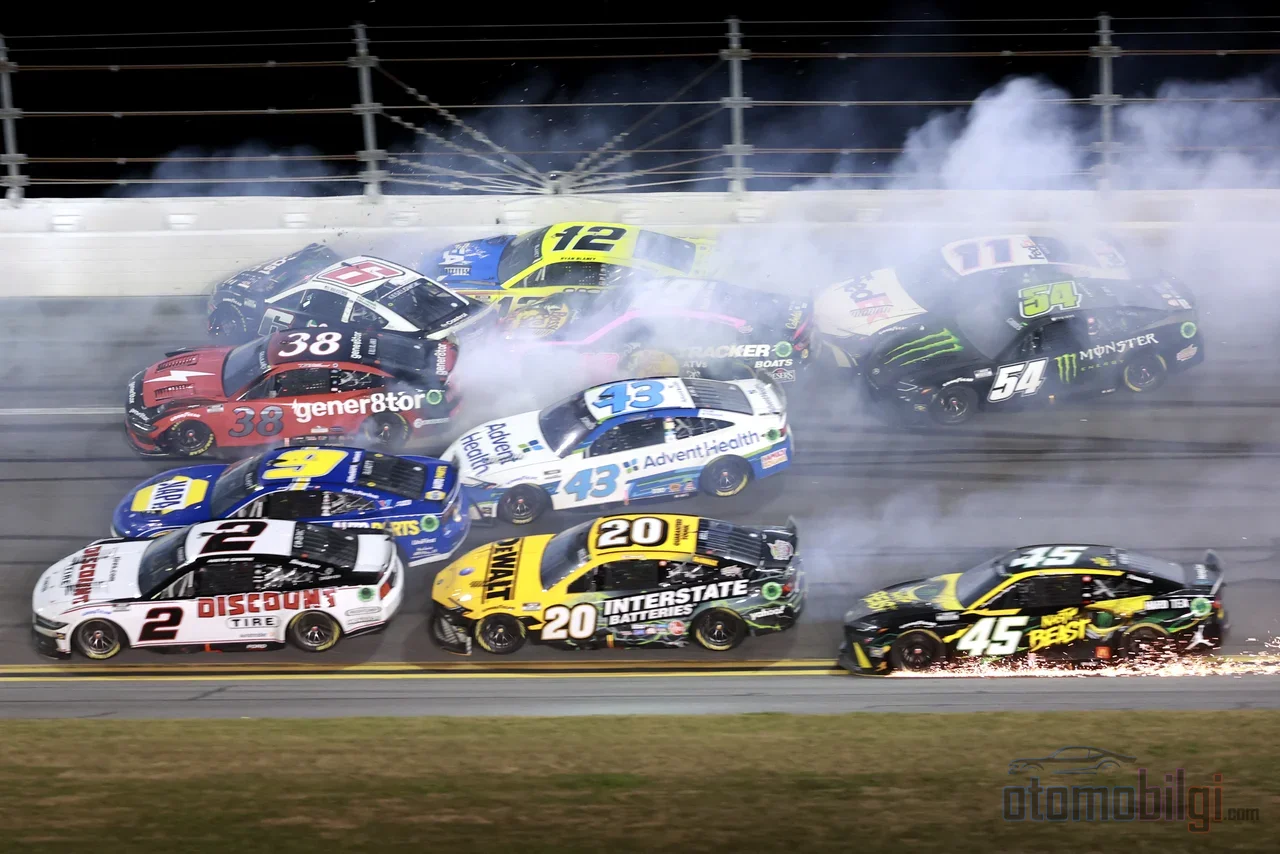
In NASCAR, the "Big One" is the name given to the massive multi-car crash in which dozens of cars get tangled up at the same time in superspeedway races. It is mostly used for crashes involving 10 or more cars; some definitions lower the threshold to 5-6 cars. On giant speedways like Daytona and Talladega, 30-40 cars running bumper to bumper form a pack that can turn into chaos within seconds with a single mistake. That's why the classic question in pre-race talk is not whether the crash will happen, but exactly when it will happen.
Highlights
- The 28-car pileup was the biggest crash of the modern era at the 2024 YellaWood 500.
- The biggest crash in NASCAR history happened at Daytona in 1960: 37 cars were involved.
- The SAFER barrier was developed within a year of Dale Earnhardt's death.
- In 2026, the superspeedway package changed: the spoiler went from 7 inches to 4 inches, and power dropped from 510 to 465 horsepower.
What Exactly Does "Big One" Mean?
The term is not an official rulebook term, but a concept that has moved from commentator and fan language into racing literature. The common understanding is that the number of cars involved in the crash must exceed an ordinary collision: the most widespread definition is 10 cars and above, while more generous definitions include even 5-6 cars under the "Big One". So the threshold is somewhat flexible, but the picture is always the same: smoke, flying debris and dozens of stock cars tangling with each other.
The term became etched into racing culture thanks to two legendary calls. When a massive pileup occurred at Talladega in the 1998 Winston 500, Bob Jenkins, who had served as a race broadcaster for many years, shouted that the big crash they weren't expecting had arrived, and the term stuck. Darrell Waltrip similarly described a crash on the backstretch at the 2001 Daytona 500. Since that day, the most natural name for such scenes has been "the Big One".
Why Does the Big One Seem Inevitable?
The answer is one word: air. At superspeedways, the cars accelerate so fast that passing the car ahead alone is nearly impossible. The solution is to slip into the "dirty" air trail left behind the car ahead, in other words the region of less resistance: this is called drafting, and it lets the car behind gain speed and make a pass. But the price is terrifying - a tight pack forms of 30-40 cars running bumper to bumper with mere inches between them.
Think of it this way: a herd of cars traveling at 305 km/h on the highway, with the distance between cars about the width of a refrigerator. What happens if a car at the back touches lightly? Imagine someone hits the brakes - the reaction time of the 20 drivers behind you is zero. On the track, this math repeats itself every single lap.
Bump Drafting: A Double-Edged Sword
The aggressive version of drafting is touching the car ahead with your bumper on the straights to push it: bump drafting. Timed correctly, it gives both cars extra speed; timed badly, the car ahead loses control, spins, and the moment it ends up sideways, the fuse of a chain-reaction crash is lit. At track speeds, this risk rises sharply.
That is why NASCAR has intervened from time to time; Bump drafting was completely banned in Talladega's corners. Because a push from behind entering a corner can send the car off the track at the very moment it needs grip the most.
Why Is Talladega So Dangerous?
The 2.66-mile Talladega Superspeedway has been standing since 1969, and the track's character feeds the risk: steeply banked turns, long straights, and aerodynamic rules inevitably force the cars into tight packs. There have been multiple incidents of cars flipping and going airborne on this track, which is why Talladega is often described as NASCAR's most dangerous track. These heavy machines, packing thousands of horsepower, carry an incredible amount of kinetic energy at full speed, and that energy doesn't always find a clean way out.
The Biggest Crashes in History
The Big One's identity card is read from the marks it has left on the tracks. Here are some scenes on record in terms of scale:
| Race | Track | What Happened |
|---|---|---|
| 1960 Daytona race | Daytona | 37 of the 37 cars that started the race with 73 cars were involved in a crash: the biggest in history |
| 1997 Pepsi 400 | Daytona | The last-lap crash was remembered as "the Big Wreck" |
| A Daytona 500 | Daytona | 21 cars were eliminated; among them were Paul Menard, Matt DiBenedetto, and Ryan Blaney |
| 2024 YellaWood 500 | Talladega | A 28-car pileup on the backstretch with 5 laps to go: the biggest crash of the modern era |
| 2026 Jack Link's 500 | Talladega | When leader Bubba Wallace was spun entering turn 3, 26 cars crashed |
If you've noticed, the two biggest modern crashes both happened at Talladega, and both coincided with the most critical moments of the race. That's no coincidence: as the finish approaches, those who don't take risks can't win, everyone tries more aggressive drafts and bumps - and the pack is at its most fragile at exactly that moment. In a pack of 30-40 cars running bumper to bumper, a single mistake is doomed to turn into a chain-reaction avalanche.
The SAFER Barrier: The Safety Revolution Born After a Crash
The Big One's wounds don't stay on the track; a stock car hitting the barriers used to bounce back off the flexible walls, and the impact energy passed directly to the driver. Dale Earnhardt's death at the 2001 Daytona 500 turned this flaw overnight into the number one agenda item of American motorsport, and within just one year the SAFER barrier (Steel And Foam Energy Reduction) came to life.
The system is simple but clever: a high-strength tubular steel shell distributes the impact load across the surface; the structure behind it absorbs the kinetic energy, significantly reducing the g-forces the driver feels. The proportion of energy absorbed can vary considerably depending on the angle of impact. After a crash involving Kyle Busch, an extra 130 linear feet of protective barrier was installed along the track edges - meaning these barriers keep growing after every new lesson.
After the Crash: Overtime and Restart Rules
The Big One brings out the yellow flag, the remaining laps melt away, and the race is often left with little chance of finishing under the green flag. This is where NASCAR's overtime rules come into play: a restart attempt consists of a green flag lap, a white flag lap and a checkered flag finish. Since 2017, the Overtime Line has been placed at the start/finish line as standard, and restarts are made in two rows; for the driver on the outside row, the entire hope is a single lap.
This rule can turn the crash into the deciding factor of the race result. At Talladega, a final restart sent half of the cars in the race straight to the garage. At Nashville, it took a full 5 overtime attempts to finish the race - a record number of restarts. So the Big One is not just an explosion on the scene, but a risk calculation that race strategy carries all the way to the end.
Could the 2026 Rules End the Big One?
NASCAR made sweeping changes to the superspeedway package: the rear spoiler was lowered from 7 inches to 4 inches, and engine power was reduced from 510 to 465 horsepower. The aim is to improve passing at Daytona and reduce the increasingly boring fuel-saving racing. Officials' expectations regarding crashes are also interesting: fewer multi-car pileups, but in return more single-car crashes. Less grip means less pack drafting; but at the same time, the margin for error also narrows.
The rule change was announced ahead of the 2026 Daytona summer race and the Talladega fall race. The picture on the driver front is not yet clear; even Dale Earnhardt Jr. argues that everyone needs to show a little patience for the new package to settle in. On the other hand, we should not forget the old observation from trackside: every superspeedway package run so far has produced a Big One. Will the new rules change that, we will see - I'm not even telling myself my prediction.
Is It Possible to Avoid the Big One? Short Answer
As a driving technique, no; as a strategy, partially. On the track, everyone wrestles with the same physics: without the draft you lose positions, but if you enter with the draft you are condemned to the pack. Drivers can avoid risk by running at the back, but then the chance of victory stays at the back too. History says the same: from 37 cars in 1960 to 28 cars in 2024, the rules and cars changed but the phenomenon did not. The Big One is not an accident, it is the very nature of superspeedway racing. We can only hope that while you are watching, your favorite driver has slipped clear of the pack.
Sources
- NASCAR: What Does 'The Big One' Mean?
- Analysis: How 'Big One' shapes Talladega strategy
- The Big One (motorsport)
- How NASCAR Drafting Works
- Stock Car Bump Draft
- NASCAR bans bump-drafting in Talladega turns
- SAFER barrier
- SAFER Barriers at NASCAR
- NASCAR SAFER Barrier
- NASCAR: Start/finish line to serve as Overtime Line
- NASCAR Overtime Rules and Stats
- Daytona summer Cup race gets rules changes
- NASCAR announces changes to Talladega rules package
- NASCAR Drivers Unsure of New Superspeedway Package
- Talladega Superspeedway
- NASCAR: What Makes Talladega So Dangerous
- Wildest Wrecks in Recent Daytona 500 History