What Happens to a NASCAR Driver's Body When They Hit the Track?
Share This Page
When a NASCAR driver hits the track, their body endures the ordeal of a true athlete: a heart rate of 150-170 bpm for three hours, cornering loads of 3-4G, and cabin temperatures reaching 60 degrees. Sitting behind the wheel is the easy part; the real work is carrying this physical burden the car imposes on the driver for four or five hours. Let's take a look at what exactly these people endure.
Highlights
- Forces of 3-4G in corners, exceeding 30G in crashes
- Cockpit temperature can climb into the 130-140°F (54-60°C) range
- Some drivers lose about 4.5 kg of fluid in a single race
- Race heart rate can reach up to 89% of the age-based estimated maximum
- Next Gen cars have fueled the cabin temperature debate since 2022
G-Forces: Why Do You Weigh Three Times More in a Corner?
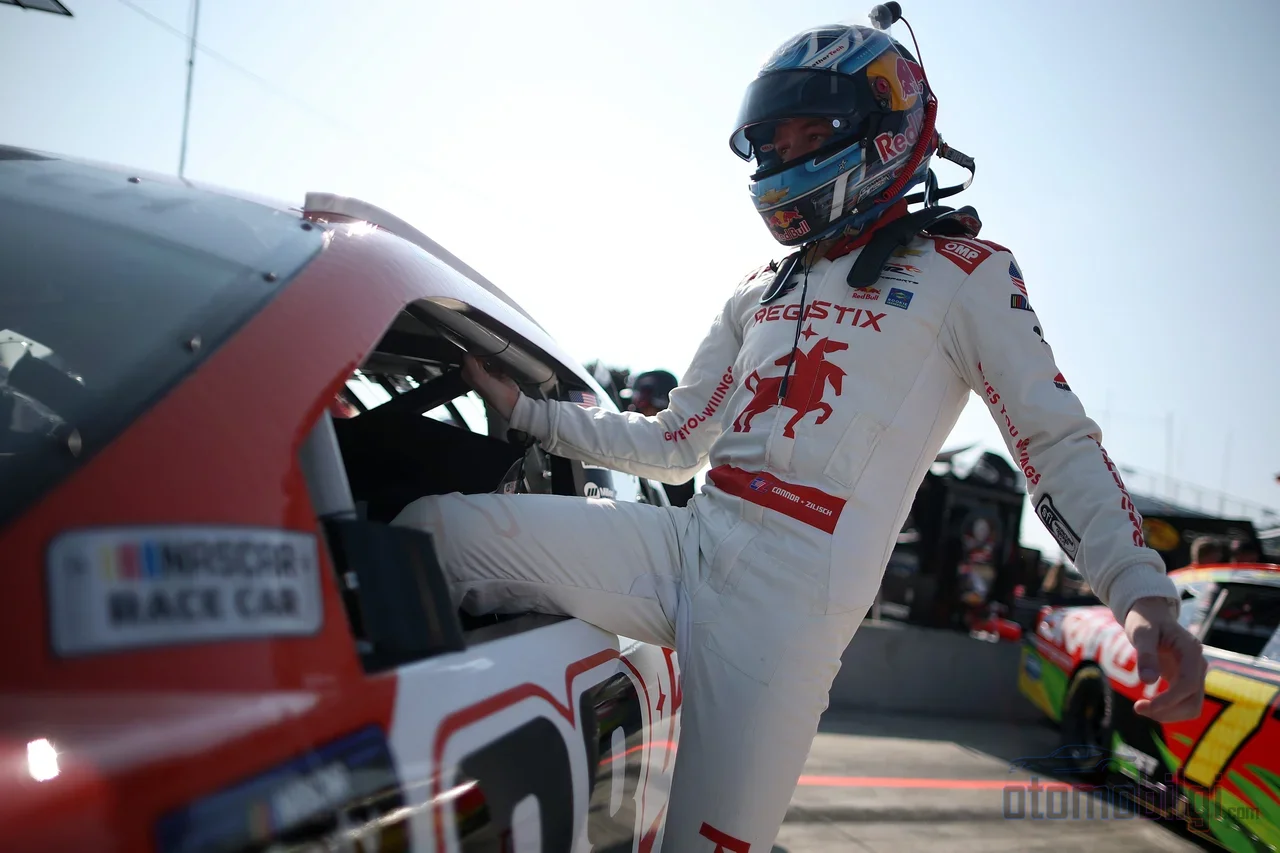
Think of it this way: on a normal road, the force acting on your body is 1G - your own weight. When a NASCAR car enters a corner, centrifugal force starts pushing you out of the seat, toward the outside of the turn. On fast ovals, this force reaches 3-4G. That means your head, along with your helmet, suddenly weighs three to four times more. Even holding your head upright becomes an exercise.
And this doesn't apply to just one corner. On oval tracks, most of the race consists of a throttle-and-corner cycle; as you accelerate your body sinks into the seat, and as you brake you pitch forward. F1 cars produce higher peak G values, but only for short durations. NASCAR's challenge is entirely different: carrying this moderate load continuously for hours. You can think of it as the difference between a marathon runner and a 100-meter sprinter.
In crashes, though, things move to a whole different league. At the moment of impact, forces exceeding 30G, even briefly over 40G, can be measured. That's why drivers wear the HANS device fitted between helmet and neck, and the SAFER barriers along the edges of the track absorb crash energy. Teams also monitor the G data of every corner and every contact using the accelerometers installed in the car.
Why Is the Cabin Temperature Like an Oven?
A NASCAR car has no air conditioning. Zero. What's more, engine heat, exhaust heat, and the metal body baked by the sun overhead turn the cockpit into an oven. When the outside temperature rises above 85°F (about 30°C), temperatures of around 140°F, that is 60°C, can be measured inside the car. Even on a day that looks cold, things go differently inside: On a mild day of 70°F, the cabin interior is estimated to climb up to 157°F (about 69°C). Of course, this value also depends on the teams' insulation and air routing measures.
Drivers wear liquid-cooled suits to cope with this heat; these systems pass cold fluid through the body and make a difference in the hottest races. But it's not always enough. The Next Gen car that entered the Cup Series with the 2022 season brought the cabin temperature back into the spotlight. The radiator airflow circulating around the car was making the cockpit feel hotter than before. Chase Elliott, explaining why the Next Gen cars are hotter, noted that the air can get hot enough to burn. Kurt Busch also described one race as the hottest race he had ever experienced in his life and called on NASCAR to listen to the drivers.
NASCAR did not sit idle either: Brandon Thomas, the executive responsible for the vehicle systems team, explained the Next Gen cooling system updates for managing cockpit temperature. So the temperature war continues; while drivers sweat, engineers are sweating too.
Heart Rate and Dehydration: The Marathon Runner at the Wheel
So how does the body handle this load? Here is the striking part. Drivers routinely maintain a heart rate of 150-170 bpm throughout a three-hour race; at restart moments - the critical seconds when the field lines up again and hits the gas - this value can jump above 190. A scientific study showed that post-race heart rates reached 89% of the drivers' estimated age-based maximum heart rate. That is a picture very close to the exertion level of a long-distance run.
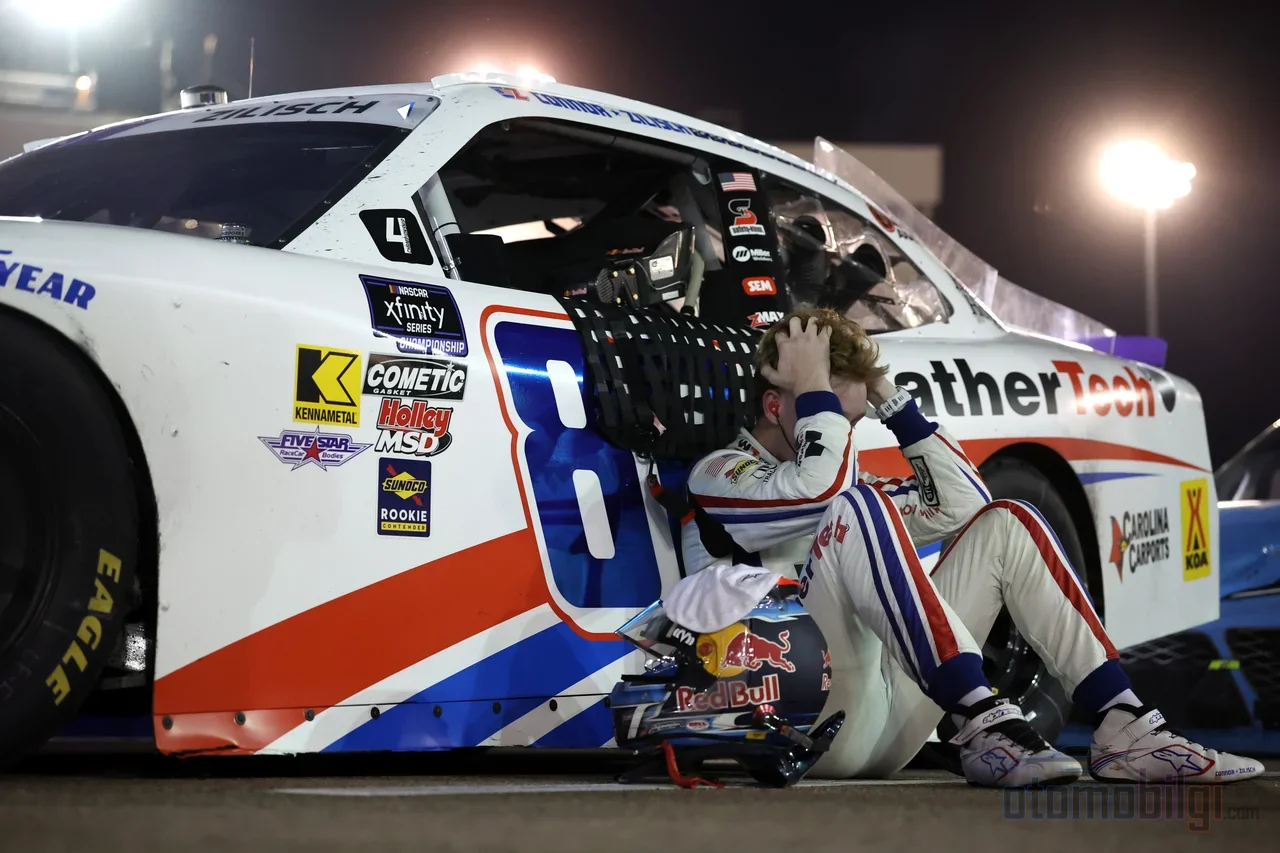
Fluid loss is also serious. Landon Cassill shared that he lost about 10 pounds, that is 4.5 kg, over the course of a race, and that his maximum heart rate was measured at 173 bpm. Kasey Kahne, meanwhile, finished a race with difficulty, saying that his heart was beating too fast due to dehydration and that he struggled to breathe. So the battle is fought not only to keep the car running, but also to keep the body going. That is why drinks, salt balance, and cooling are critical during race breaks and pit stops.
Fluid loss has another interesting side effect: concentration. As dehydration progresses, focus and reaction time deteriorate; in a car traveling at 300 km/h, the price of that is unimaginable. That is why drivers plan fluid loss in advance and take in fluids systematically before and during the race.
Superspeedway or Short Track: Which One Wears the Body Down More?
They are not all the same race, actually. Tracks under 1 mile count as short tracks; those over 2 miles fall into the superspeedway class. Both put strain on the body: on short tracks there are many corners, the brake-throttle cycle is constant, and mechanical precision and patience come to the fore. On superspeedways, high speed is sustained uninterrupted for long periods; drafting - the game of tucking into the airflow of the car ahead - determines everything, and the load on the nervous system is indescribable.
| Track | Type | Approximate cornering G | How the body feels |
|---|---|---|---|
| Daytona | Superspeedway (2.66 miles) | 2-3G | Sustained high speed, nervous strain |
| Talladega | Superspeedway | 2-3G | Draft wars, attention stacking |
| Bristol | Short track | 3-4G | Frequent corners, constant brake-throttle |
| Martinsville | Short track | 2-3G | Tight corners, braking load |
| Charlotte | Intermediate oval | 3-4G | High banking, strong lateral load |
| Sonoma | Road course | 1-2G | Lower G, technical corners |
As you can see, the highest G doesn't always occur on the fastest track; short and narrow tracks can surpass super speedways in cornering load. To summarize physiologically: the short track driver's body battles with intermittent but intense loads, while the superspeedway driver grapples with prolonged high alertness and moderate sustained G forces. Neither is easy; only the type of challenge differs.
How Are Drivers Preparing Their Bodies for This?
If you think driving a car is done sitting down, you're wrong. Drivers build extreme endurance with CrossFit-style training; for example, Denny Hamlin said he works with his personal trainer 3-5 times a week. Programs aren't one-size-fits-all, but there are common points:
- Core and neck muscles: the most critical areas against G forces. The muscles that keep the head upright have to endure until the end of the race.
- Cardiovascular condition: High G affects blood flow and makes it harder for the heart to pump blood to the brain. A good cardio base maintains focus and reaction time.
- Heat acclimatization: Preparing the body in advance for hot cabin conditions reduces the effects of dehydration.
- Flexibility: Essential for muscle and joint health during prolonged seated positions.
The pit crew, that is the pit stop team, also trains, but their focus is different; they are athletes who change tires within seconds. So NASCAR isn't just a sport on the steering wheel side - the pit lane is a sports stage too. From legendary names like Richard Petty to Dale Earnhardt and Jimmie Johnson, it's worth remembering that the stars of this sport also prepared their bodies for racing. The fact that the lowest point on Jimmie Johnson's heart rate graph during a race appears right after a major crash during a yellow flag vividly illustrates the psychological swings of this sport.
So, Are NASCAR Drivers Real Athletes?
For those still asking this question, our answer is clear: Yes. For people who endure 3-4G cornering loads, spend hours in 60-degree cabins, keep their heart rate at 170 bpm, and lose weight per race, we can't think of another definition. Comparisons are made with F1; F1 offers higher peak G values, but NASCAR's challenge is sustaining this load for close to 4-5 hours. They are different disciplines, and both require real athleticism. If it were you, which challenge would you choose?
Sources
- What G Force Do NASCAR Drivers Experience?
- G-Force and Formula One: Explained
- Next Gen cooling system upgrade controls cockpit heat
- Next Gen (NASCAR)
- How NASCAR drivers keep their cool in 140-degree cockpits
- How NASCAR drivers keep from overheating
- NASCAR Cup: Chase Elliott Explains Why Next Gen Cars Feel Hotter
- How Fit Are NASCAR Cup Series Drivers Compared to Other Elite Athletes?
- Superspeedway Racing vs. Short Track Racing: Which Demands More from Cup Drivers?
- Hydration Status and Thermoregulatory Responses in Professional Auto Racing Drivers
- NASCAR driver lost nearly 10 pounds during Cup Series race
- Kasey Kahne says behind wheel dehydration issues
- Do NASCAR Drivers Work Out?
- The Right Body for the Track
- How Hot Does A NASCAR Car Get?
- Race Driver Fitness Training